
Search
found 153 results
Images for Canterbury earthquakes; more images...
The Canterbury Earthquake Memorial
Audio, Radio New Zealand
When the new Canterbury Earthquake Memorial was revealed last month, something unusual happened for a work of public art. It was universally appreciated! Christchurch filmmaker Rick Harvie has documented the two year long project from seeking submissions though to the official ceremony. Rick tells Lynn Freeman he's about to put his now finished documentary, including footage of the ceremony and feedback from a range of people, online.
Digital Photograph: First Responders at the Canterbury Earthquake Memorial…
Images, Canterbury Museum
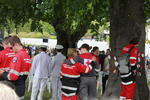
One landscape colour digital photograph taken 22 February 2017 showing first responders at the Canterbury Earthquake Memorial Service.
Digital Photograph: Guests Arriving at the Canterbury Earthquake Memorial …
Images, Canterbury Museum
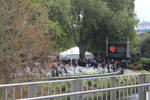
One landscape colour digital photograph taken 22 February 2017 showing guests being seated prior to the Canterbury Earthquake Memorial Service.
Digital Photograph: Members of the Media at the Canterbury Earthquake Memo…
Images, Canterbury Museum
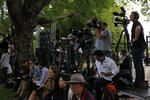
One landscape colour digital photograph taken 22 February 2017 showing cameramen and journalists at the Canterbury Earthquake Memorial Service.
Digital Photograph: Media Viewing Area at the Canterbury Earthquake Memori…
Images, Canterbury Museum
One landscape colour digital photograph taken 22 February 2017 showing the appointed media viewing area at the Canterbury Earthquake Memorial Service.
Digital Photograph: First Responders Laying Wreaths at the Canterbury Eart…
Images, Canterbury Museum
One landscape colour digital photograph taken 22 February 2017 showing first responders laying wreaths at the Canterbury Earthquake Memorial Service.
Digital Photograph: Commemoration Board at the Canterbury Earthquake Memor…
Images, Canterbury Museum
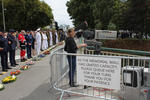
One landscape colour digital photograph taken 22 February 2017 showing a gentleman reading messages on a commemoration board at the Canterbury Earthquake Memorial Service.
Digital Photograph: Earthquake Memorial Trellis
Images, Canterbury Museum
One landscape colour digital photograph taken 22 February 2017 showing an earthquake memorial trellis at the site of the former Canterbury Television building.
Digital Photograph: Earthquake Memorial Trellis
Images, Canterbury Museum
One landscape colour digital photograph taken 22 February 2017 showing an earthquake memorial trellis at the site of the former Canterbury Television building.
Digital Photograph: First Responders and Public Viewing Areas at the Cante…
Images, Canterbury Museum
One landscape colour digital photograph taken 22 February 2017 showing the appointed first responders and public viewing areas at the Canterbury Earthquake Memorial Service.
Digital Photograph: Brass Band at the Canterbury Earthquake Memorial Servi…
Images, Canterbury Museum
One landscape colour digital photograph taken 22 February 2017 showing brass band members at the Canterbury Earthquake Memorial Service. Behind the band is a digital screen showing words of thanks from survivors.
Digital Photograph: Brass Band at the Canterbury Earthquake Memorial Servi…
Images, Canterbury Museum
One landscape colour digital photograph taken 22 February 2017 showing brass band members at the Canterbury Earthquake Memorial Service. Behind the band is a digital screen showing an image of flowers floating in the Avon River.
Digital Photograph: Flowers on an Earthquake Memorial Trellis
Images, Canterbury Museum
One landscape colour digital photograph taken 22 February 2017 showing a bouquet of flowers and a note attached to an earthquake memorial trellis at the site of the former Canterbury Television building.
Digital Photograph: Karen Bishop at an Earthquake Memorial Trellis
Images, Canterbury Museum
One landscape colour digital photograph taken 22 February 2017 showing Karen Bishop attaching a windmill to an earthquake memorial trellis in memory of her son Andrew Bishop at the site of the former Canterbury Television building.
Digital Photograph: Windmill Attached to an Earthquake Memorial Trellis
Images, Canterbury Museum
One landscape colour digital photograph taken 22 February 2017 showing a windmill attached to an earthquake memorial trellis by Karen Bishop in memory of her son Andrew Bishop at the site of the former Canterbury Television building.
Digital Photograph: Flowers Floating in the Avon River
Images, Canterbury Museum
One landscape colour digital photograph taken 22 February 2017 showing flowers floating in the Avon River as part of the Canterbury Earthquake Memorial Service.
Digital Photograph: Flowers at the Site of the Former Canterbury Televisio…
Images, Canterbury Museum
One landscape colour digital photograph taken 22 February 2017 showing bouquets of flowers and gifts left at the site of the former Canterbury Television building in memory of earthquake victims.
Digital Photograph: Sunflower Atop a Road Works Cone
Images, Canterbury Museum
One landscape colour digital photograph taken 22 February 2017 showing a sunflower sitting atop a road works cone as part of the Canterbury Earthquake Memorial Service.
Digital Photograph: Flowers at the Site of the Former Canterbury Televisio…
Images, Canterbury Museum
One landscape colour digital photograph taken 22 February 2017 showing a bouquet of flowers left at the site of the former Canterbury Television building by the Toyama Language School in memory of earthquake victims.
Families attend Chch earthquake memorial unveiling
Audio, Radio New Zealand
The Canterbury Earthquake National Memorial was unveiled to the public at a memorial attended by more than 3000 people.
Digital Photograph: Commemorative Note to Andrew Bishop
Images, Canterbury Museum
One landscape colour digital photograph taken 22 February 2017 showing a commemorative note to, and photograph of, Andrew Bishop attached to an earthquake memorial trellis at the site of the former Canterbury Television building.
Digital Photograph: Flowers at the Site of the Former Canterbury Televisio…
Images, Canterbury Museum
One landscape colour digital photograph taken 22 February 2017 showing a bouquet of flowers left at the site of the former Canterbury Television building by St John New Zealand in memory of earthquake victims and in appreciation of first responders.
Annie Potts - Animals and earthquakes
Audio, Radio New Zealand
After the magnitude 7.1 earthquake struck Canterbury on 4 September 2010, most media reports claimed that no lives had been lost. But In fact, this first earthquake killed at least 3000 chickens, eight cows, one dog, a lemur and 150 aquarium fish. University of Canterbury associate professor Annie Potts, along with co-author Donelle Gadenne, wrote Animals in Emergencies: Learning from the Christchurch Earthquakes, revealing what happened to the animals during and after the series of quakes. Annie Potts will give a public lecture, 'Animals and natural disasters: Learning from recent earthquakes', on Thursday 16 March, 7pm at UC Ilam campus, Christchurch. Register to attend free at: www.canterbury.ac.nz/ucconnect
Quake claims affect Suncorp NZ result
Audio, Radio New Zealand
The insurance arms of Suncorp New Zealand have reported lower profits off the back of the Kaikoura earthquake and a rise in Canterbury earthquake claims. .
Empirical vulnerability assessment of reinforced concrete frame with mason…
Research papers, The University of Auckland Library
During the 2010/2011 Canterbury earthquakes, Reinforced Concrete Frame with Masonry Infill (RCFMI) buildings were subjected to significant lateral loads. A survey conducted by Christchurch City Council (CCC) and the Canterbury Earthquake Recovery Authority (CERA) documented 10,777 damaged buildings, which included building characteristics (building address, the number of storeys, the year of construction, and building use) and post-earthquake damage observations (building safety information, observed damage, level of damage, and current state of the buildings). This data was merged into the Canterbury Earthquake Building Assessment (CEBA) database and was utilised to generate empirical fragility curves using the lognormal distribution method. The proposed fragility curves were expected to provide a reliable estimation of the mean vulnerability for commercial RCFMI buildings in the region http://www.13thcms.com/wp-content/uploads/2017/05/Symposium-Info-and-Presentation-Schedule.pdf VoR - Version of Record
Investigation of systematic ground motion effects through ground motion si…
Research papers, University of Canterbury Library
Liquefaction Performance & Characterisation of 55 Chrictchurch Sites
Research papers, University of Canterbury Library
To identify key ground characteristics that led to different liquefaction manifestations during the Canterbury earthquakes
Canterbury land can't be farmed due to earthquake
Audio, Radio New Zealand
Tourism, native planting, and bee keeping are all possibilities a community lead working group is waiting on government funding to explore.
North Canterbury locals struggling after Kaikoura quake
Audio, Radio New Zealand
Thirty properties are unlivable while another 170 have restricted access following the Kaikoura earthquake last year. RNZ reporter Conan Young reports from a town meeting.
The continued response of the New Zealand Government to the Canterbury ear…
Research papers, University of Canterbury Library
The Canterbury earthquakes of 2010 and 2011 caused significant damage and disruption to the city of Christchurch, New Zealand. A Royal Commission was established to report on the causes of building failure as a result of the earthquakes as well as look at the legal and best-practice requirements for buildings in New Zealand Central Business Districts. The Royal Commission made 189 recommendations on a variety of matters including managing damaged buildings after an earthquake, the adequacy of building codes and standards, and the processes of seismic assessments of existing buildings to determine their earthquake vulnerability. In response the Ministry of Business, Innovation and Employment, the agency responsible for administering building regulation in New Zealand, established a work programme to assist with the Canterbury rebuild and to implement the lessons learned throughout New Zealand. The five primary work streams in the programme are: • Facilitating the Canterbury Rebuild • Structural Performance and Design Standards • Geotechnical and structural guidance • Existing Building Resilience • Post Disaster Building Management This paper provides more detail on each of the work streams. There has been significant collaboration between the New Zealand Government and the research community, technical societies, and engineering consultants, both within New Zealand and internationally, to deliver the programme and improve the resilience of the New Zealand built environment. This has presented major challenges for an extremely busy industry in the aftermath of the Canterbury earthquakes. The paper identifies the items of work that have been completed and the work that is still in progress at the time of writing.