
Search
found 41 results
Images for Canterbury Social History; more images...

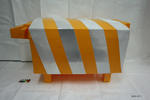
Sculpture: Sheep
Images, Canterbury Museum
One yellow plastic sheep of cuboid shape with reflective stripes around body.
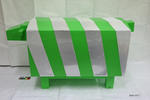
Sculpture: Sheep
Images, Canterbury Museum
One green plastic sheep of cuboid shape with reflective stripes around body.
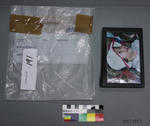
Framed photograph of a girl
Images, Canterbury Museum
Framed photograph of an Asian girl retrieved from the CTV building. Stored in a plastic New Zealand Police exhibit bag.
Hard Hat: SCIRT
Images, Canterbury Museum
One white hard hat with a SCIRT logo at the front.
High Viz Vest: SCIRT
Images, Canterbury Museum
One orange High Viz vest with a SCIRT logo on the front.
The Quakebox: A container for post-quake oral history
Research papers, University of Canterbury Library
In this paper Paul Millar outlines the development of the University of Canterbury Quakebox project, a collaborative venture between the UC CEISMIC Canterbury Earthquakes Digital Archive and the New Zealand Institute of Language Brain and Behaviour to preserve people’s earthquake stories for the purposes of research, teaching and commemoration. The project collected over 700 stories on high definition video, and Millar is now looking at using the corpus to underpin a longitudinal study of post-quake experience.
Stretcher: St John 'scoop' stretcher
Images, Canterbury Museum
One silver metal 'scoop' stretcher used by St John staff on 22 February 2011 in emergency first aid response to the Christchurch earthquakes.
Pink Polar Fleece Jacket: CTV Building
Images, Canterbury Museum
One child's pink polar fleece jacket retrieved from the CTV building and a New Zealand Police exhibit label stored in plastic NZ Police exhibit bag.
Model: Wastewater Systems in an Earthquake
Images, Canterbury Museum
One interactive model which demonstrates how different types of pipes perform in an earthquake.
Display Board: Underground Infrastructure
Images, Canterbury Museum
One large display board featuring an illustration of the various pipes under the roads.
Eyeglasses and Cloth with Case: CTV Building
Images, Canterbury Museum
One pair of eyeglasses with LensCrafters cleaning cloth in blue case retrieved from the CTV building. Stored in a plastic New Zealand Police exhibit bag.
Photograph of woman
Images, Canterbury Museum
One colour photograph of a smiling woman standing outside in front of a bush or tree retrieved from the CTV building. Stored in a sealed plastic New Zealand Police exhibit bag.
Nissan car keys
Images, Canterbury Museum
One set of Nissan car keys on ring containing a key, remote lock/unlock and key identification tag retrieved from the CTV building. Stored in a plastic New Zealand Police exhibit bag.
Certificate: The Press Champion Canterbury Supreme Award
Images, Canterbury Museum
One framed certificate issued to SCIRT in 2013 to mark winning The Press Champion Canterbury Supreme Award in the Medium-Large Enterprise category.
Award: Canstruction Christchurch
Images, Canterbury Museum
One glass trophy presented to SCIRT IST to mark winning the Jurors Favourite Category in the 2014 Canstruction Christchurch competition.
Certificate: Canstruction Christchurch
Images, Canterbury Museum
One framed certificate presented to SCIRT IST to mark winning the Jurors Favourite Category in the 2014 Canstruction Christchurch competition.
Framed Poster: SCIRT Takes Off - 22 September 2011
Images, Canterbury Museum
One framed poster signed by all the staff who were working for SCIRT on its first day, 22 September 2011.
Award: The Press Champion Canterbury Supreme Award
Images, Canterbury Museum
One green koru shaped trophy issued to SCIRT in 2013 to mark winning The Press Champion Canterbury Supreme Award in the Medium-Large Enterprise category. Includes storage box, envelope and leaflet.
Poster with tube: United We Stand
Images, Canterbury Museum
One limited edition poster with tube and information sheet. The poster has initial letters of the cities of New Zealand arranged to form an outline of the country. All are printed in black, except the 'C' of Christchurch which stands out in red. "United We Stand, 22 Feb 2011, 12.51pm" is printed in black. Poster commemorates the 2011 Christchurc...
Four Person Emergency Kit: After Shake
Images, Canterbury Museum
One comprehensive emergency kit contained within a 68 litre heavy duty plastic storage case; includes four personal essentials packs, a survival first aid kit, an After Shake base pack and two 20 litre water storage canisters. Designed by the company After Shake to support a four person household following an emergency. This comprehensive emerg...
Quilt: Quilt for Christchurch
Images, Canterbury Museum
One red and black fabric quilt comprised of pieced and appliquéd block work with both hand and machine stitching; machine quilted with embellishments and a one piece bordered back; an image of the ChristChurch Cathedral is in the centre and features pen work. Designed and quilted by the Coast Quilters of Whangaroa from fabric sent in by listener...
Cosmetic Bag with Cosmetics: CTV Building
Images, Canterbury Museum
One pink and yellow Asian floral designed fabric cosmetic bag with cosmetics retrieved from the CTV building. Cosmetics include four Bobbi Brown lipstick products, two Christian Dior lipstick products, a Lancome lip treatment bottle, two cosmetic sharpeners, a pair of tweezers and a Q-tips box with cotton buds. Stored in a plastic New Zealand P...
Seiko watches and instruction booklet
Images, Canterbury Museum
Two Seiko men's watches and instruction booklet retrieved from the Pyne Gould Corporation building. Taped inside the cover is a small bag with spare watch band pieces. Buyer guarantee card located in envelope on front page. All items stored in a plastic New Zealand Police exhibit bag.
Road Sign: Rebuild Zone
Images, Canterbury Museum
One white metal road sign with a picture of an orange road cone with a heart on it. The sign reads 'Rebuild Zone Open for Business'.
Medal: The Brunel Medal
Images, Canterbury Museum
One silver medal awarded to SCIRT in October 2013 from the Institution of Civil Engineers in the United Kingdom in recognition of the excellent in civil engineering. Includes storage case and explanation sheet.
Soft Sculpture Kakapo: Little Ra
Images, Canterbury Museum
One green and yellow soft sculpture kakapo with wire feet, stuffed body and black plastic eyes. Has an attached card naming the bird Little Ra and explaining it is part of the 'Journey - The Kakapo of Christchurch' project by artist Sayraphim Lothian.
Model: Temple for Christchurch
Images, Canterbury Museum
One model of the Temple for Christchurch with a rectangular base of Jarrah and solid silver conical shapes and wave like walls representing the movement of the 22 February 2011 earthquake. Based on the Temple for Christchurch sculpture that was designed by Hippathy Valentine.
Artwork: Chair: 185 Empty Chairs
Images, Canterbury Museum
One metal chair with fabric components that has been painted white. This chair was part of the 185 Empty Chairs art installation which consisted of 185 different white chairs that represented those who died as a result of the Christchurch earthquake on 22nd February 2011.
Award: Canned Appreciation
Images, Canterbury Museum
One trophy made from a can attached to a wooden base issued to SCIRT as a thank you for participating in Canstruction Christchurch. Features a custom printed label which celebrates teamwork in place of the usual nutritional information.
Painting ruins : graffiti and street art in post-earthquake Christchurch.
Research papers, University of Canterbury Library
This thesis considers the presence and potential readings of graffiti and street art as part of the wider creative public landscape of Christchurch in the wake of the series of earthquakes that significantly disrupted the city physically and socially. While documenting a specific and unprecedented period of time in the city’s history, the prominence of graffiti and street art throughout the constantly changing landscape has also highlighted their popularity as increasingly entrenched additions to urban and suburban settings across the globe. In post-quake Christchurch, graffiti and street art have often displayed established tactics, techniques and styles while exploring and exposing the unique issues confronting this disrupted environment, illustrating both a transposable nature and the entwined relationship with the surrounding landscape evident in the conception of these art forms. The post-quake city has afforded graffiti and street art the opportunity to engage with a range of concepts: from the re-activation and re-population of the empty and abandoned spaces of the city, to commentaries on specific social and political issues, both angry and humorous, and notably the reconsideration of entrenched and evolving traditions, including the distinction between guerrilla and sanctioned work. The examples of graffiti and street art within this work range from the more immediate post-quake appearance of art in a group of affected suburbs, including the increasingly empty residential red-zone, to the use of the undefined spaces sweeping the central city, and even inside the Canterbury Museum, which housed the significant street art exhibition Rise in 2013-2014. These settings expose a number of themes, both distinctive and shared, that relate to both the post-disaster landscape and the concerns of graffiti and street art as art movements unavoidably entangled with public space.
- 1
- »