
Search
found 319 results
Images for Earthquake aftershocks; more images...
Post-earthquake structural design for fire - a New Zealand perspective
Research papers, University of Canterbury Library
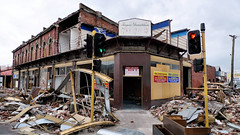
On Tuesday 22 February 2011, a 6.3 magnitude earthquake struck Christchurch, New Zealand’s second largest city. The ‘earthquake’ was in fact an aftershock to an earlier 7.1 magnitude earthquake that had occurred on Saturday 4 September 2010. There were a number of key differences between the two events that meant they had dramatically different results for Christchurch and its inhabitants. The 22 February 2011 event resulted in one of New Zealand’s worst natural disasters on record, with 185 fatalities occurring and hundreds more being injured. In addition, a large number of buildings either collapsed or were damaged to the point where they needed to be totally demolished. Since the initial earthquake in September 2010, a large amount of building-related research has been initiated in New Zealand to investigate the impact of the series of seismic events – the major focus of these research projects has been on seismic, structural and geotechnical engineering matters. One project, however, conducted jointly by the University of Canterbury, the Fire Protection Association of New Zealand and BRANZ, has focused on the performance of fire protection systems in the earthquakes and the effectiveness of the systems in the event of post-earthquake fires occurring. Fortunately, very few fires actually broke out following the series of earthquake events in Christchurch, but fire after earthquakes still has significant implications for the built environment in New Zealand, and the collaborative research has provided some invaluable insight into the potential threat posed by post-earthquake fires in buildings. As well as summarising the damage caused to fire protection systems, this paper discusses the flow-on effect for designing structures to withstand post-earthquake fires. One of the underlying issues that will be explored is the existing regulatory framework in New Zealand whereby structural earthquake design and structural design for fire are treated as discrete design scenarios.
Performance-based seismic assessment of an historic high-rise masonry buil…
Research papers, The University of Auckland Library
The Manchester Courts building was a heritage building located in central Christchurch (New Zealand) that was damaged in the Mw 7.1 Darfield earthquake on 4 September 2010 and subsequently demolished as a risk reduction exercise. Because the building was heritage listed, the decision to demolish the building resulted in strong objections from heritage supporters who were of the opinion that the building had sufficient residual strength to survive possible aftershock earthquakes. On 22 February 2011 Christchurch was struck by a severe aftershock, leading to the question of whether building demolition had proven to be the correct risk reduction strategy. Finite element analysis was used to undertake a performance-based assessment, validating the accuracy of the model using the damage observed in the building before its collapse. In addition, soil-structure interaction was introduced into the research due to the comparatively low shear wave velocity of the soil. The demolition of a landmark heritage building was a tragedy that Christchurch will never recover from, but the decision was made considering safety, societal, economic and psychological aspects in order to protect the city and its citizens. The analytical results suggest that the Manchester Courts building would have collapsed during the 2011 Christchurch earthquake, and that the collapse of the building would have resulted in significant fatalities
Nisbet, Alistair, 1958- :"Hey Bob ... how about a re-write... 'We will rai…
Images, Alexander Turnbull Library
Text at the top reads 'Bob's next speech?... The cartoon shows Christchurch Mayor Bob Parker making a speech - 'We shall fight on the beaches... We shall fight in the liquefaction... We shall fight in the cracks... We shall fight on the falling rocks and in the sinkholes... We shall fight in the portaloos... We shall fight in the sewage pipes... We shall fight in the polluted waters and subsided streets... We shall fight in the heritage buildings including the Dux de Lux... We shall NEVER surrender! A man leans over a fence and yells 'Hey Bob... How about a rewrite..."We shall raise the white flag and shall get the hell out!"' Context - The continuing earthquakes and aftershocks are causing serious problems in Christchurch, both practical and emotional. Many people are considering leaving the city. Quantity: 1 digital cartoon(s).
Fairfax Video, May 2013 (5)
Videos, UC QuakeStudies
A video of a helicopter using a monsoon bucket to wash loose debris off a cliff in Redcliffs. The debris is from an earthquake-damaged building on the edge of the cliff which has had to be urgently demolished after wet weather and aftershocks made it unstable. The video also includes an interview with Brenden Winder, Red Zone Cordon and Access Manager at CERA, about the removal of the debris and the need to check other properties.
Christchurch's "shaky" tourism: How to rebuild a destination
Research papers, Lincoln University
Modern cities are surprisingly dependent on tourism and competition among them for tourist dollars—both domestically and internationally—can be extreme. New Zealand’s second city, Christchurch, is no exception. In 2009, tourism reportedly earned $2.3 billion and accounted for more than 12 per cent of the region’s employment. Then came a series of devastating earthquakes that claimed 185 lives and decimated the city’s infrastructure. More than 10,000 earthquakes and aftershocks have radically altered Christchurch’s status as a tourism destination. Two years on, what is being done to recover from one of the world’s largest natural disasters? Can the “Garden City” reassert itself as a highly-desirable Australasian destination with a strong competitive advantage over rivals that have not been the target of natural disasters.
Brownlee disputes cost of EQC re-repairs to Christchurch homes
Audio, Radio New Zealand
It could be up to 18 months before 660 Christchurch homeowners know who will pay for earthquake damage repairs with a $1 billion price tag. The bill to fix houses in Christchurch that weren't repaired properly the first time round, or have suffered more damage in aftershocks, is climbing - and the government can't say who's liable. The problem is the homes have new owners who can't claim on theri insurance because the damage pre-dates them owning the home. Earlier Greater Christchurch Regeneration Minister Megan Woods told us the previous National government put no plan in place, and the current government is being left to pick up the pieces. Former Christchurch earthquake recovery minister Gerry Brownlee disputes the issue.
Nisbet, Alistair, 1958-: Christchurch displays portaloos... 8 March 2011
Images, Alexander Turnbull Library
Text at top left reads 'Christchurch display portaloos' Four different styles of portaloo are shown; the "Merivale", the 'Sumner", the "Heritage" and the "Eastsider"; someone inside the 'Eastsider says 'At least I'm open plan AND mobile!' Context - After the tow Christchurch earthquakes and hundreds of aftershocks that have hit Christchurch one of the problems is lack of toilets because of damage to buildings and also damage to sewage systems so many portaloos and chemical toilets have been sent to Christchurch. However many people have resorted to the good old kiwi way and dug long-drops in the backyard. A website 'showusyourlongdrop.co.nz' has been developed by Christchurch man Jason Moore, who was inspired by photographs of Christchurch dunnies uploaded to Facebook. There has been a competition. Quantity: 1 digital cartoon(s).
The impacts of the Canterbury earthquakes on educational inequalities and …
Research papers, University of Canterbury Library
During 2010 and 2011, major earthquakes caused widespread damage and the deaths of 185 people in the city of Christchurch. Damaged school buildings resulted in state intervention which required amendment of the Education Act of 1989, and the development of ‘site sharing agreements’ in undamaged schools to cater for the needs of students whose schools had closed. An effective plan was also developed for student assessment through establishing an earthquake impaired derived grade process. Previous research into traditional explanations of educational inequalities in the United Kingdom, the United States of America, and New Zealand were reviewed through various processes within three educational inputs: the student, the school and the state. Research into the impacts of urban natural disasters on education and education inequalities found literature on post disaster education systems but nothing could be found that included performance data. The impacts of the Canterbury earthquakes on educational inequalities and achievement were analysed over 2009-2012. The baseline year was 2009, the year before the first earthquake, while 2012 is seen as the recovery year as no schools closed due to seismic events and there was no state intervention into the education of the region. National Certificate of Educational Achievement (NCEA) results levels 1-3 from thirty-four secondary schools in the greater Christchurch region were graphed and analysed. Regression analysis indicates; in 2009, educational inequalities existed with a strong positive relationship between a school’s decile rating and NCEA achievement. When schools were grouped into decile rankings (1-10) and their 2010 NCEA levels 1-3 results were compared with the previous year, the percentage of change indicates an overall lower NCEA achievement in 2010 across all deciles, but particularly in lower decile schools. By contrast, when 2011 NCEA results were compared with those of 2009, as a percentage of change, lower decile schools fared better. Non site sharing schools also achieved higher results than site sharing schools. State interventions, had however contributed towards student’s achieving national examinations and entry to university in 2011. When NCEA results for 2012 were compared to 2009 educational inequalities still exist, however in 2012 the positive relationship between decile rating and achievement is marginally weaker than in 2009. Human ethics approval was required to survey one Christchurch secondary school community of students (aged between 12 and 18), teachers and staff, parents and caregivers during October 2011. Participation was voluntary and without incentives, 154 completed questionnaires were received. The Canterbury earthquakes and aftershocks changed the lives of the research participants. This school community was displaced to another school due to the Christchurch earthquake on 22 February 2011. Research results are grouped under four geographical perspectives; spatial impacts, socio-economic impacts, displacement, and health and wellbeing. Further research possibilities include researching the lag effects from the Canterbury earthquakes on school age children.
Nisbet, Alistair, 1958-: Why Christchurch should have the World Cup... 13 …
Images, Alexander Turnbull Library
Text at top left reads 'Why Christchurch should have the World Cup' Following are four cameos that show tents representing 'Lots if low cost accommodation', 'Plenty of toilet facilities', 'aftershock home advantage' as the ball misses the goal post because it sways, and a 'free hard-hat with each ticket' Context - Anxiety about whether Christchurch can still hold the Rugby World Cup fixtures that are planned. A decision was made that it was not possible. Quantity: 1 digital cartoon(s).
The Spatial and Temporal Patterns of Anxiety and Chest Pain Resulting From…
Research papers, University of Canterbury Library
The aim of this thesis was to examine the spatial and the temporal patterns of anxiety and chest pain resulting from the Canterbury, New Zealand earthquaeks. Three research objectives were identified: examine any spatial or termporal clusters of anxiety and chest pain; examine the associations between anxiety, chest pain and damage to neighbourhood; and determine any statistically significant difference in counts of anxiety and chest pain after each earthquake or aftershock which resulted in severe damage. Measures of the extent of liquefaction the location of CERA red-zones were used as proxy measures for earthquake damage. Cases of those who presented to Christchurch Public Hospital Emergency Department with either anxiety or chest pain between May 2010 and April 2012 were aggregated to census area unit (CAU) level for analysis. This thesis has taken a unique approach to examining the spatial and spatio-temporal variations of anxiety and chest pain after an earthquake and offers unique results. This is the first study of its kind to use a GIS approach when examining Canterbury specific earthquake damage and health variables at a CAU level after the earthquakes. Through the use of spatio-termporal scan modelling, negative and linear regression modelling and temporal linear modelling with dummy variables this research was able to conclude there are significant spatial and temporal variations in anxiety and chest pain resulting from the earthquakes. The spatio-termporal scan modelling identified a hot cluster of both anxiety and chest pain within Christchurch at the same time the earthquakes occurred. The negative binomial model found liquefaction to be a stronger predictor of anxiety than the Canterbury Earthquake Recovery Authority's (CERA) land zones. The linear regression model foun chest pain to be positively associated with all measures of earthquake damage with the exception of being in the red-zone. The temporal modelling identified a significant increase in anxiety cases one month after a major earthquake, and chest pain cases spiked two weeks after an earthquake and gradually decreased over the following five weeks. This research was limited by lack of control period data, limited measures of earthquake damage, ethical restrictions, and the need for population tracking data. The findings of this research will be useful in the planning and allocation of mental wellbeing resources should another similar event like the Canterbury Earthquakes occur in New Zealand.
Back of the Princess Cinema
Images, UC QuakeStudies
Detail of damage to the former Princess Cinema in New Brighton. Bricks have fallen from the wall, exposing the interior. The photographer comments, "This is the side view of the back of the old Princess Cinema in New Brighton after the earthquake in Christchurch, New Zealand on 22 February. The bricks seem to be just about to fall, but stayed in place after several big aftershocks. This building has now been knocked down as it was so dangerous".
Evaluation of the Earthquake Support Coordination Service
Research papers, University of Canterbury Library
The Canterbury earthquakes, which started with the 7.1 magnitude event on September 4, 2010, caused significant damage in the region. The September 4 earthquakes brought substantial damage to land, buildings, and infrastructure, while the 6.3 magnitude earthquake on February 22, 2011 (and its subsequent aftershocks), brought even greater property damage, but also significant loss of life in addition to the region. Thousands were injured, and 185 persons died. A national State of Emergency was declared and remained in effect until April 30, 2011. A significant number of people required immediate assistance and support to deal with loss, injury, trauma experiences, and property damages. Many had to find alternate accommodation as their houses were too damaged to stay in. Of those affected, many were already vulnerable, and others had been too traumatized by the events to effectively deal with the challenges they were faced with. A number of human service organizations in the region, from both government and non-government sectors, joined forces to be able to more effectively and efficiently help those in need. This was the start of what would become known as the Earthquake Support Coordination Service. The aim of this report is to present an evaluation of the Earthquake Support Coordination Service and its collaborative organization, based on documentation and interviews with key stakeholders of the service. The aim is also to evaluate the service based on perspectives gathered among the clients as well as the coordinators working in the service. The final aim is to offer a reflection on the service model, and on what factors enabled the service, as well as recommendations regarding aspects of the service which may require review, and aspects which may be useful in other contexts.
Assessment of Residual Capacity and Fragility-Based Fatigue of Concrete St…
Research papers, University of Canterbury Library
The Canterbury earthquake and aftershock sequence in New Zealand during 2010-2011 subjected the city’s structures to a significant accumulated cyclic demand and raised significant questions regarding the low-cycle fatigue demands imposed upon the structures. There is a significant challenge to quantify the level of cumulative demand imposed on structures and to assess the percentage of a structure's fatigue life that has been consumed as a result of this earthquake sequence. It is important to be able to quantify the cumulative demand to determine how a building will perform in a subsequent large earthquake and inform repair and re-occupancy decisions. This paper investigates the cumulative fatigue demand for a structure located within the Christchurch Central Business District (CBD). Time history analysis and equivalent cycle counting methods are applied across the Canterbury earthquake sequence, using key events from September 4th 2010 and February 22nd , 2011 main shocks. The estimate of the cumulative fatigue demand is then compared to the expected capacity of a case study reinforced concrete bridge pier, to undertake a structure-specific fatigue assessment. The analysis is undertaken to approximate the portion of the structural fatigue capacity that has been consumed, and how much residual capacity remains. Results are assessed for recordings at the four Christchurch central city strong motion recording sites installed by the GeoNet programme, to provide an estimate of variation in results. The computed cyclic demand results are compared to code-based design methods and as assessment of the inelastic displacement demand of the reinforcing steel. Results are also presented in a fragility context where a de minimis (inconsequential), irreparable damage and full fatigue fracture are defined to provide a probabilistic assessment of the fatigue damage incurred. This methodology can provide input into the overall assessment of fatigue demands and residual capacity.
Quake-proofing essential... 19 September 2010
Images, Alexander Turnbull Library
Labour leader Phil Goff is being 'shored up' and strengthened by reinforced steel beams which represent his 'leadership. He tells ACT leader Rodney Hide who holds a newspaper with a headline reading 'ACT rattled again' that he needs to 'strengthen now before the next shake up!' As an insecure leader he is showing sympathy to Rodney Hide who is even more insecure because of the recent embarrassment of the David Garrett debacle. The title of the cartoon is 'Quake-proofing essential...' which is a reference to the Christchurch earthquake of 4th September and the continuing aftershocks. Quantity: 1 digital cartoon(s).
The Week in Review - week ending 17 September 2010
Audio, Radio New Zealand
A review of the week's news including the latest on the Canterbury earthquake as aftershocks continue to hit the region, ACT MP David Garrett quits the party amid shocking revelations, a report into the Air New Zealand crash off the French coast in 2008 blames poor maintenance and pilot error, first steps are taken to repeal the Foreshore and Seabed Act, the New Zealand Airforce evacuates an ill man from Antarctica, New Zealand's athletes could pull out of the Commonwealth Games and immigrant birds that mimic the native species.
Seismic Performance of Reinforced Concrete Buildings in the 22 February Ch…
Research papers, University of Canterbury Library
Six months after the 4 September 2010 Mw 7.1 Darfield (Canterbury) earthquake, a Mw 6.2 Christchurch (Lyttelton) aftershock struck Christchurch on the 22 February 2011. This earthquake was centred approximately 10km south-east of the Christchurch CBD at a shallow depth of 5km, resulting in intense seismic shaking within the Christchurch central business district (CBD). Unlike the 4 Sept earthquake when limited-to-moderate damage was observed in engineered reinforced concrete (RC) buildings [35], in the 22 February event a high number of RC Buildings in the Christchurch CBD (16.2 % out of 833) were severely damaged. There were 182 fatalities, 135 of which were the unfortunate consequences of the complete collapse of two mid-rise RC buildings. This paper describes immediate observations of damage to RC buildings in the 22 February 2011 Christchurch earthquake. Some preliminary lessons are highlighted and discussed in light of the observed performance of the RC building stock. Damage statistics and typical damage patterns are presented for various configurations and lateral resisting systems. Data was collated predominantly from first-hand post-earthquake reconnaissance observations by the authors, complemented with detailed assessment of the structural drawings of critical buildings and the observed behaviour. Overall, the 22 February 2011 Mw 6.2 Christchurch earthquake was a particularly severe test for both modern seismically-designed and existing non-ductile RC buildings. The sequence of earthquakes since the 4 Sept 2010, particularly the 22 Feb event has confirmed old lessons and brought to life new critical ones, highlighting some urgent action required to remedy structural deficiencies in both existing and “modern” buildings. Given the major social and economic impact of the earthquakes to a country with strong seismic engineering tradition, no doubt some aspects of the seismic design will be improved based on the lessons from Christchurch. The bar needs to and can be raised, starting with a strong endorsement of new damage-resisting, whilst cost-efficient, technologies as well as the strict enforcement, including financial incentives, of active policies for the seismic retrofit of existing buildings at a national scale.
People in Disasters Conference - Understanding Immediate Human Behaviour t…
Videos, UC QuakeStudies
A video of a presentation by Professor David Johnston during the fourth plenary of the 2016 People in Disasters Conference. Johnston is a Senior Scientist at GNS Science and Director of the Joint Centre for Disaster Research in the School of Psychology at Massey University. The presentation is titled, "Understanding Immediate Human Behaviour to the 2010-2011 Canterbury Earthquake Sequence, Implications for injury prevention and risk communication".The abstract for the presentation reads as follows: The 2010 and 2011 Canterbury earthquake sequences have given us a unique opportunity to better understand human behaviour during and immediately after an earthquake. On 4 September 2010, a magnitude 7.1 earthquake occurred near Darfield in the Canterbury region of New Zealand. There were no deaths, but several thousand people sustained injuries and sought medical assistance. Less than 6 months later, a magnitude 6.2 earthquake occurred under Christchurch City at 12:51 p.m. on 22 February 2011. A total of 182 people were killed in the first 24 hours and over 7,000 people injured overall. To reduce earthquake casualties in future events, it is important to understand how people behaved during and immediately after the shaking, and how their behaviour exposed them to risk of death or injury. Most previous studies have relied on an analysis of medical records and/or reflective interviews and questionnaire studies. In Canterbury we were able to combine a range of methods to explore earthquake shaking behaviours and the causes of injuries. In New Zealand, the Accident Compensation Corporation (a national health payment scheme run by the government) allowed researchers to access injury data from over 9,500 people from the Darfield (4 September 2010) and Christchurch (22 February 2011 ) earthquakes. The total injury burden was analysed for demography, context of injury, causes of injury, and injury type. From the injury data inferences into human behaviour were derived. We were able to classify the injury context as direct (immediate shaking of the primary earthquake or aftershocks causing unavoidable injuries), and secondary (cause of injury after shaking ceased). A second study examined people's immediate responses to earthquakes in Christchurch New Zealand and compared responses to the 2011 earthquake in Hitachi, Japan. A further study has developed a systematic process and coding scheme to analyse earthquake video footage of human behaviour during strong earthquake shaking. From these studies a number of recommendations for injury prevention and risk communication can be made. In general, improved building codes, strengthening buildings, and securing fittings will reduce future earthquake deaths and injuries. However, the high rate of injuries incurred from undertaking an inappropriate action (e.g. moving around) during or immediately after an earthquake suggests that further education is needed to promote appropriate actions during and after earthquakes. In New Zealand - as in US and worldwide - public education efforts such as the 'Shakeout' exercise are trying to address the behavioural aspects of injury prevention.
A statistical analysis of lunisolar-earthquake connections.
Research papers, University of Canterbury Library
Despite over a century of study, the relationship between lunar cycles and earthquakes remains controversial and difficult to quantitatively investigate. Perhaps as a consequence, major earthquakes around the globe are frequently followed by 'prediction' claims, using lunar cycles, that generate media furore and pressure scientists to provide resolute answers. The 2010-2011 Canterbury earthquakes in New Zealand were no exception; significant media attention was given to lunarderived earthquake predictions by non-scientists, even though the predictions were merely 'opinions' and were not based on any statistically robust temporal or causal relationships. This thesis provides a framework for studying lunisolar earthquake temporal relationships by developing replicable statistical methodology based on peer reviewed literature. Notable in the methodology is a high accuracy ephemeris, called ECLPSE, designed specifically by the author for use on earthquake catalogs, and a model for performing phase angle analysis. The statistical tests were carried out on two 'declustered' seismic catalogs, one containing the aftershocks from the Mw7.1 earthquake in Canterbury, and the other containing Australian seismicity from the past two decades. Australia is an intraplate setting far removed from active plate boundaries and Canterbury is proximal to a plate boundary, thus allowing for comparison based on tectonic regime and corresponding tectonic loading rate. No strong, conclusive, statistical correlations were found at any level of the earthquake catalogs, looking at large events, onshore events, offshore events, and the fault type of some events. This was concluded using Schuster's test of significance with α=5% and analysis of standard deviations. A few weak correlations, with p-5-10% of rejecting the null hypothesis, and anomalous standard deviations were found, but these are difficult to interpret. The results invalidate the statistical robustness of 'earthquake predictions' using lunisolar parameters in this instance. An ambitious researcher could improve on the quality of the results and on the range of parameters analyzed. The conclusions of the thesis raise more questions than answers, but the thesis provides an adaptable methodology that can be used to further investigation the problem.
How important is the CERA recovery strategy to Canterbury refugees?
Research papers, University of Canterbury Library
For the people of Christchurch and its wider environs of Canterbury in New Zealand, the 4th of September 2010 earthquake and the subsequent aftershocks were daunting. To then experience a more deadly earthquake five months later on the 22nd of February 2011 was, for the majority, overwhelming. A total of 185 people were killed and the earthquake and continuing aftershocks caused widespread damage to properties, especially in the central city and eastern suburbs. A growing body of literature consistently documents the negative impact of experiencing natural disasters on existing psychological disorders. As well, several studies have identified positive coping strategies which can be used in response to adversities, including reliance on spiritual and cultural beliefs as well as developing resilience and social support. The lifetime prevalence of severe mental health disorders such as posttraumatic stress disorder (PTSD) occurring as a result of experiencing natural disasters in the general population is low. However, members of refugee communities who were among those affected by these earthquakes, as well as having a past history of experiencing traumatic events, were likely to have an increased vulnerability. The current study was undertaken to investigate the relevance to Canterbury refugee communities of the recent Canterbury Earthquake Recovery Authority (CERA) draft recovery strategy for Christchurch post-earthquakes. This was accomplished by interviewing key informants who worked closely with refugee communities. These participants were drawn from different agencies in Christchurch including Refugee Resettlement Services, the Canterbury Refugee Council, CERA, and health promotion and primary healthcare organisations, in order to obtain the views of people who have comprehensive knowledge of refugee communities as well as expertise in local mainstream services. The findings from the semi-structured interviews were analysed using qualitative thematic analysis to identify common themes raised by the participants. The key informants described CERA’s draft recovery strategy as a significant document which highlighted the key aspects of recovery post disaster. Many key informants identified concerns regarding the practicality of the draft recovery strategy. For the refugee communities, some of those concerns included the short consultation period for the implementation phase of the draft recovery strategy, and issues surrounding communication and collaboration between refugee agencies involved in the recovery. This study draws attention to the importance of communication and collaboration during recovery, especially in the social reconstruction phase following a disaster, for all citizens but most especially for refugee communities.
Two Coffees and a Muffin to Takeaway
Images, UC QuakeStudies
Two cardboard coffee cups in a takeaway tray sit on a wooden counter. The photographer comments, "What is the story of these coffees and that sad muffin? Were these an order when the earthquake struck Christchurch on 22 February 2011? Were these a workman's and a colleague's having a quick coffee break when a later aftershock caused them to leave everything behind when they fled the red zoned building, or were they just forgotten when the building was cleared out and abandoned?".
From darkness comes light: music as a reflection of the lived experience o…
Research papers, University of Canterbury Library
Context of the project: On 4 September 2010, 22 February 2011, 13 June 2011 and 23 December 2011 Christchurch suffered major earthquakes and aftershocks (well over 10,000) that have left the central city in ruins and many of the eastern suburbs barely habitable even now. The earthquakes on 22 February caused catastrophic loss of life with 185 people killed. The toll this has taken on the residents of Christchurch has been considerable, not least of all for the significant psychological impact and disruption it has had on the children. As the process of rebuilding the city commenced, it became clear that the arts would play a key role in maintaining our quality of life during difficult times. For me, this started with the children and the most expressive of all the art forms – music.
Geotechnical reconnaissance of the 2010 Darfield (New Zealand) earthquake
Research papers, University of Canterbury Library
On 4 September 2010, a magnitude Mw 7.1 earthquake struck the Canterbury region on the South Island of New Zealand. The epicentre of the earthquake was located in the Darfield area about 40 km west of the city of Christchurch. Extensive damage occurred to unreinforced masonry buildings throughout the region during the mainshock and subsequent large aftershocks. Particularly extensive damage was inflicted to lifelines and residential houses due to widespread liquefaction and lateral spreading in areas close to major streams, rivers and wetlands throughout Christchurch and Kaiapoi. Despite the severe damage to infrastructure and residential houses, fortunately, no deaths occurred and only two injuries were reported in this earthquake. From an engineering viewpoint, one may argue that the most significant aspects of the 2010 Darfield Earthquake were geotechnical in nature, with liquefaction and lateral spreading being the principal culprits for the inflicted damage. Following the earthquake, a geotechnical reconnaissance was conducted over a period of six days (10–15 September 2010) by a team of geotechnical/earthquake engineers and geologists from New Zealand and USA (GEER team: Geo-engineering Extreme Event Reconnaissance). JGS (Japanese Geotechnical Society) members from Japan also participated in the reconnaissance team from 13 to 15 September 2010. The NZ, GEER and JGS members worked as one team and shared resources, information and logistics in order to conduct thorough and most efficient reconnaissance covering a large area over a very limited time period. This report summarises the key evidence and findings from the reconnaissance.
Rural Organisational Impacts, Responses, and Recoveries to Natural Disaste…
Research papers, University of Canterbury Library
Natural disasters are increasingly disruptive events that affect livelihoods, organisations, and economies worldwide. Research has identified the impacts and responses of organisations to different types of natural disasters, and have outlined factors, such as industry sector, that are important to organisational vulnerability and resilience. One of the most costly types of natural disasters in recent years has been earthquakes, and yet to date, the majority of studies have focussed on the effects of earthquakes in urban areas, while rural organisational impact studies have primarily focused on the effects of meteorological and climatic driven hazards. As a result, the likely impacts of an earthquake on rural organisations in a developed context is unconstrained in the literature. In countries like New Zealand, which have major earthquakes and agricultural sectors that are significant contributors to the economy, it is important to know what impacts an earthquake event would have on the rural industries, and how these impacts compare to that of a more commonly analysed, high-frequency event. In September of 2010, rural organisations in Canterbury experienced the 4 September 2010 Mw 7.1 `Darfield' earthquake and the associated aftershocks, which came to be known as the Canterbury earth- quake sequence. The earthquake sequence caused intense ground shaking, creating widespread critical service outages, structural and non-structural damage to built infrastructure, as well as ground surface damage from ooding, liquefaction and surface rupture. Concurrently on September 18 2010, rural organisations in Southland experienced an unseasonably late snowstorm and cold weather snap that brought prolonged sub-zero temperatures, high winds and freezing rain, damaging structures in the City of Invercargill and causing widespread livestock losses and production decreases across the region. This thesis documents the effects of the Canterbury earthquake sequence and Southland snowstorm on farming and rural non-farming organisations, utilizing comparable methodologies to analyse rural organisational impacts, responses and recovery strategies to natural disasters. From the results, a short- term impact assessment methodology is developed for multiple disasters. Additionally, a regional asset repair cost estimation model is proposed for farming organisations following a major earthquake event, and the use of social capital in rural organisational recovery strategies following natural disasters is analysed.
Integrated Data and Recovery: The UC CEISMIC Federated Archive
Research papers, University of Canterbury Library
The UC CEISMIC Canterbury Earthquakes Digital Archive was built following the devastating earthquakes that hit the Canterbury region in the South Island of New Zealand from 2010 – 2012. 185 people were killed in the 6.3 magnitude earthquake of February 22nd 2011, thousands of homes and businesses were destroyed, and the local community endured over 10,000 aftershocks. The program aims to document and protect the social, cultural, and intellectual legacy of the Canterbury community for the purposes of memorialization and enabling research. The nationally federated archive currently stores 75,000 items, ranging from audio and video interviews to images and official reports. Tens of thousands more items await ingestion. Significant lessons have been learned about data integration in post-disaster contexts, including but not limited to technical architecture, governance, ingestion process, and human ethics. The archive represents a model for future resilience-oriented data integration and preservation products.
Organisational resilience after the Canterbury earthquakes : a contextual …
Research papers, University of Canterbury Library
Following a disaster, an organisation’s ability to recover is influenced by its internal capacities, but also by the people, organisations, and places to which it is connected. Current approaches to organisational resilience tend to focus predominantly on an organization's internal capacities and do not adequately consider the place-based contexts and networks in which it is embedded. This thesis explores how organisations’ connections may both hinder and enable organisational resilience. Organisations in the Canterbury region of New Zealand experienced significant and repeated disruptions as a result of two major earthquakes and thousands of aftershocks throughout 2010 and 2011. This thesis draws upon 32 case studies of organisations located in three severely damaged town centres in Canterbury to assess the influence that organisations’ place-based connections and relational networks had on their post-earthquake trajectories. The research has four objectives: 1) to examine the ways organisations connected to their local contexts both before and after the earthquakes, 2) to explore the characteristics of the formal and informal networks organisations used to aid their response and recovery, 3) to identify the ways organisations’ connections to their local contexts and support networks influenced their ability to recover following the earthquakes, and finally, 4) to develop approaches to assess resilience that consider these extra-organisational connections. The thesis contests the fiction that organisations recover and adapt independently from their contexts following disasters. Although organisations have a set of internal capacities that enable their post-disaster recovery, they are embedded within external structures that constrain and enable their adaptive options following a disaster. An approach which considers organisations’ contexts and networks as potential sources of organisational resilience has both conceptual and practical value. Refining our understanding of the influence of extra-organisational connections can improve our ability to explain variability in organisational outcomes following disasters and foster new ways to develop and manage organisational resilience.
The Drunken Lampposts
Images, UC QuakeStudies
A residential street in New Brighton. Liquefaction still lines the street, and lampposts are leaning in different directions. The photographer comments, "This is the New Brighton red zone, which is parallel to the Avon River. The area suffered serious liquefaction during the numerous earthquakes/aftershocks and the land is being bought by the government. Although the houses do not look too bad in the background they have suffered badly. On the day I took this picture the council had just hours before cut the grass, which made the area look less abandoned".
Radio Quake: Broadcasting in Post-Quake Christchurch
Research papers, University of Canterbury Library
The Civil Defense understanding of the role of radio in disaster tends to focus on its value in providing essential information during and after the event. However this role is compromised when a station’s premises are destroyed, or rendered inaccessible by official cordons. The Radio Quake study examines how radio stations in Christchurch managed to resume broadcasting in the aftermath of the earthquake of February 22, 2011. In New Zealand’s heavily networked and commercialised radio environment there is a significant disparity between networked and independent stations’ broadcast commitments and resourcing. All Christchurch radio broadcasters were forced to improvise new locations, complex technical workarounds, and responsive styles of broadcasting after the February 22 earthquake, but the need to restore, or maintain, a full on air presence after the earthquake, rested entirely on often financially tenuous, locally owned and staffed independent radio: student, Iwi, community access, and local commercial stations. This paper will explore the resourcefulness and resilience of broadcasters riding out the aftershocks in hotels, motels, bedrooms, and a horse truck, using digital technologies in new ways to reimagine the practice of radio in Christchurch.
Investigating the relationship between depression and psychosocial factors…
Research papers, University of Canterbury Library
Earthquake events can be sudden, stressful, unpredictable, and uncontrollable events in which an individual’s internal and external assumptions of their environment may be disrupted. A number of studies have found depression, and other psychological symptoms may be common after natural disasters. They have also found an association between depression, losses and disruptions for survivors. The present study compared depression symptoms in two demographically matched communities differentially affected by the Canterbury (New Zealand) earthquakes. Hypotheses were informed by the theory of learned helplessness (Abramson, Seligman & Teasdale, 1978). A door-to-door survey was conducted in a more physically affected community sample (N=67) and a relatively unaffected community sample (N=67), 4 months after the February 2011 earthquake. Participants were again assessed approximately 10 months after the quake. Measures of depression, acute stress, anxiety, aftershock anxiety, losses, physical disruptions and psychological disruptions were taken. In addition, prior psychological symptoms, medication, alcohol and cigarette use were assessed. Participants in the more affected community reported higher depression scores than the less affected community. Overall, elevated depressive score at time 2 were predicted by depression at time 1, acute stress and anxiety symptoms at time 2, physical disruptions following the quake and psychosocial functioning disruptions at time 2. These results suggest the influence of acute stress, anxiety and disruptions in predicting depression sometime after an earthquake. Supportive interventions directed towards depression, and other psychological symptoms, may prove helpful in psychological adjustment following ongoing disruptive stressors and uncontrollable seismic activity.
Examining the Role of Craft in Post-Earthquake Recovery: Implications for …
Research papers, University of Canterbury Library
This article reports on research conducted in Christchurch, New Zealand, after the 22 February 2011 earthquake. This quake and thousands of subsequent aftershocks have left the city of Christchurch with serious infrastructure damage to roads, sewage supply, housing and commercial buildings. The emergence of a vibrant art and craft movement in the Christchurch region post earthquake has been an unexpected aspect of the recovery process. The article begins with a review of the literature on traditional responses to disaster recovery illustrating how more contemporary approaches are community-focused. We review the links between crafting and well-being, and report on qualitative research conducted with five focus groups and nine individuals who have contributed to this movement in Christchurch. The findings illustrate the role crafting has played post earthquake, in terms of processing key elements of the disaster for healing and recovery, creating opportunities for social support; giving to others; generating learning and meaning making and developing a vision for the future. The data analysis is underpinned by theory related to post-traumatic growth and ecological concerns. The role of social work in promoting low-cost initiatives such as craft groups to foster social resilience and aid in the recovery from disaster trauma is explored. This discussion considers why such approaches are rare in social work.
Bottom-up governance after a natural disaster: a temporary post-earthquake…
Research papers, Lincoln University
Creative temporary or transitional use of vacant urban open spaces is seldom foreseen in traditional urban planning and has historically been linked to economic or political disturbances. Christchurch, like most cities, has had a relatively small stock of vacant spaces throughout much of its history. This changed dramatically after an earthquake and several damaging aftershocks hit the city in 2010 and 2011; temporary uses emerged on post-earthquake sites that ran parallel to the “official” rebuild discourse and programmes of action. The paper examines a post-earthquake transitional community-initiated open space (CIOS) in central Christchurch. CIOS have been established by local community groups as bottom-up initiatives relying on financial sponsorship, agreements with local landowners who leave their land for temporary projects until they are ready to redevelop, and volunteers who build and maintain the spaces. The paper discusses bottom-up governance approaches in depth in a single temporary post-earthquake community garden project using the concepts of community resilience and social capital. The study analyses and highlights the evolution and actions of the facilitating community organisation (Greening the Rubble) and the impact of this on the project. It discusses key actors’ motivations and values, perceived benefits and challenges, and their current involvement with the garden. The paper concludes with observations and recommendations about the initiation of such projects and the challenges for those wishing to study ephemeral social recovery phenomena.