
Search
found 1546 results
Images for Earthquake Services; more images...
Peter Walker Photograph 30
Images, UC QuakeStudies
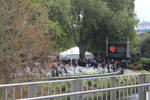
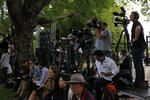
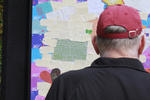
The public memorial service held at Hagley Park to mark the first anniversary of the 2011 Christchurch earthquake.
Peter Walker Photograph 32
Images, UC QuakeStudies
The public memorial service held at Hagley Park to mark the first anniversary of the 2011 Christchurch earthquake.
The Panel, with David McPhail, Tim Watkin and Islay McLeod (Part 1)
Audio, Radio New Zealand
Topics - New Zealanders paid tribute to the victims of the Christchurch earthquake today - with two minutes' silence marking the moment the disaster struck last week. The emergency ambulance service provider, St John, has hit out at hoax callers who have been wasting valuable time and ambulance service resources following Tuesday's earthquake.
Preliminary Observations of the Impacts the 22 February Christchurch Earth…
Research papers, University of Canterbury Library
On 22 February 2011, Canterbury and its largest city Christchurch experienced its second major earthquake within six months. The region is facing major economic and organisational challenges in the aftermath of these events. Approximately 25% of all buildings in the Christchurch CBD have been “red tagged” or deemed unsafe to enter. The New Zealand Treasury estimates that the combined cost of the February earthquake and the September earthquake is approximately NZ$15 billion[2]. This paper examines the national and regional economic climate prior to the event, discusses the immediate economic implications of this event, and the challenges and opportunities faced by organisations affected by this event. In order to facilitate recovery of the Christchurch area, organisations must adjust to a new norm; finding ways not only to continue functioning, but to grow in the months and years following these earthquakes. Some organisations relocated within days to areas that have been less affected by the earthquakes. Others are taking advantage of government subsidised aid packages to help retain their employees until they can make long-term decisions about the future of their organisation. This paper is framed as a “report from the field” in order to provide insight into the early recovery scenario as it applies to organisations affected by the February 2011 earthquake. It is intended both to inform and facilitate discussion about how organisations can and should pursue recovery in Canterbury, and how organisations can become more resilient in the face of the next crisis.
Characteristics of vertical ground motions in the Canterbury earthquakes
Research papers, University of Canterbury Library
This paper presents a critical evaluation of vertical ground motions observed in the Canterbury earthquake sequence. The abundance of strong near-source ground-motion recordings provides an opportunity to comprehensively review the estimation of vertical ground motions via the New Zealand Standard for earthquake loading, NZS1170.5:2004, and empirical ground motion prediction equations (GMPEs). An in-depth review of current GMPEs is carried out to determine the existing trends and characteristics present in the empirical models. Results illustrate that vertical ground motion amplitudes estimated based on NZS1170.5:2004 are significantly unconservative at short periods and near-source distances. While conventional GMPEs provide an improved prediction, in many instances they too underpredict vertical ground motion accelerations at short periods and near-source distances.
Building pounding damage observed in the 2011 Christchurch earthquake
Research papers, University of Canterbury Library
This paper describes the pounding damage sustained by buildings in the February 2011 Christchurch earthquake. Approximately 6% of buildings in Christchurch CBD were observed to have suffered some form of serious pounding damage. Typical and exceptional examples of building pounding damage are presented and discussed. Almost all building pounding damage occurred in unreinforced masonry buildings, highlighting their vulnerability to this phenomenon. Modern buildings were found to be vulnerable to pounding damage where overly stiff and strong ‘flashing’ components were installed in existing building separations. Soil variability is identified as a key aspect that amplifies the relative movement of buildings, and hence increases the likelihood of pounding damage. Building pounding damage is compared to the predicted critical pounding weaknesses that have been identified in previous analytical research.
Building pounding damage observed in the 2011 Christchurch earthquake
Research papers, University of Canterbury Library
This paper describes the pounding damage sustained by buildings in the February 2011 Christchurch earthquake. Approximately 6% of buildings in Christchurch CBD were observed to have suffered some form of serious pounding damage. Typical and exceptional examples of building pounding damage are presented and discussed. Almost all building pounding damage occurred in unreinforced masonry buildings, highlighting their vulnerability to this phenomenon. Modern buildings were found to be vulnerable to pounding damage where overly stiff and strong ‘flashing’ components were installed in existing building separations. Soil variability is identified as a key aspect that amplifies the relative movement of buildings, and hence increases the likelihood of pounding damage. Building pounding damage is compared to the predicted critical pounding weaknesses that have been identified in previous analytical research.
Lifelines Performance and Management following the 22 February 2011 Christ…
Research papers, University of Canterbury Library
A magnitude 6.3 earthquake struck the city of Christchurch at 12:51pm on Tuesday 22 February 2011. The earthquake caused 182 fatalities, a large number of injuries, and resulted in widespread damage to the built environment, including significant disruption to the lifelines. The event created the largest lifeline disruption in a New Zealand city in 80 years, with much of the damage resulting from extensive and severe liquefaction in the Christchurch urban area. The Christchurch earthquake occurred when the Canterbury region and its lifelines systems were at the early stage of recovering from the 4 September 2010 Darfield (Canterbury) magnitude 7.1 earthquake. This paper describes the impact of the Christchurch earthquake on lifelines by briefly summarising the physical damage to the networks, the system performance and the operational response during the emergency management and the recovery phase. Special focus is given to the performance and management of the gas, electric and road networks and to the liquefaction ejecta clean-up operations that contributed to the rapid reinstatement of the functionality of many of the lifelines. The water and wastewater system performances are also summarized. Elements of resilience that contributed to good network performance or to efficient emergency and recovery management are highlighted in the paper.
Shake Table Testing of a Near Full Scale Three-storey Friction Based Low D…
Research papers, University of Canterbury Library
Recent severe earthquakes, such as the 2010-2011 Christchurch earthquake series, have put emphasis on building resilience all over the world. To achieve such resilience, procedures for low damage seismic design have been developed to satisfy both life safety requirements and the need to minimize undesirable economic effects of required building repair or structural member replacement following a major earthquake. Seismic resisting systems following this concept are expected to withstand severe earthquakes without requiring major post-earthquake repairs, using isolating mechanisms or sacrificial systems that either do not need repair or are readily repairable or replaceable. These include the sliding hinge joint with asymmetric friction connections (SHJAFCs) in beam-to-column connections of the moment resisting steel frames (MRSFs) and symmetric friction connections (SFCs) in braces of the braced frames. A 9 m tall, configurable three-storey steel framed composite floor building incorporating frictionbased connections is to be tested using two linked bi-directional shake tables at the International joint research Laboratory of Earthquake Engineering (ILEE) facilities, Shanghai, China. The structural systems are configurable, allowing different moment and braced frame structural systems tested in two horizontal directions. The structure is designed and detailed to undergo, at worst, minor damage under a planned series of severe earthquakes.
Liquefaction case histories from the West Coast of the South Island, New Z…
Research papers, University of Canterbury Library
Liquefaction is a phenomenon that results in a loss of strength and stability of a saturated soil mass due to dynamic excitation such as that imposed by an earthquake. The granular nature of New Zealand soils and the location of many of our cities and towns on fluvial foundations are such that the effects of liquefaction can be very important. Research was undertaken to build on the past work undertaken at the University of Canterbury studying the effects of the 1929 Murchison earthquake, the 1968 Inangahua earthquake and the 1991 Hawks Crag earthquakes on the West Coast. Additional archival information has been gathered from newspapers and reports and from discussions with people who experienced one or all of these large earthquakes that occurred on the West Coast during the 20th Century. Further, some twenty Cone Penetrometer Tests were carried out, with varying success, in Greymouth and Karamea using the Department of Civil Engineering's Drilling Rig. These, combined with the basic site investigation information, consolidate and add to the liquefaction case history data bank at the University of Canterbury. Many of the sites have liquefied in some but not all of the three earthquakes and thus provide both upper and lower bounds for the calibration of empirical models. While a lack of knowledge of the 1929 source location reduces the value of information from that event, the data form a useful set of liquefaction case histories and will become more so as further earthquakes occur. A list of critical sites for checking of the future earthquakes is provided and recommendations are made for the installation of downhole arrays of accelerometers and pore water pressure transducers at a number of sites.
Photographic Services Photograph 01
Images, UC QuakeStudies
A photograph of Graeme Kershaw, Technician at the University of Canterbury Department of Physics and Astronomy, sitting among the damaged parts of the Townsend Telescope. The telescope was damaged during the 22 February 2011 earthquake, when the Observatory tower at the Christchurch Arts Centre collapsed. Kershaw has been given the task of restoring the telescope. In this photograph he is holding the telescope's clock drive.
Photographic Services Photograph 02
Images, UC QuakeStudies
A photograph of Graeme Kershaw, Technician at the University of Canterbury Department of Physics and Astronomy, sitting among the damaged parts of the Townsend Telescope. The telescope was damaged during the 22 February 2011 earthquake, when the Observatory tower at the Christchurch Arts Centre collapsed. Kershaw has been given the task of restoring the telescope. In this photograph he is holding the telescope's clock drive.
Photographic Services Photograph 03
Images, UC QuakeStudies
A photograph of Graeme Kershaw, Technician at the University of Canterbury Department of Physics and Astronomy, sitting among the damaged parts of the Townsend Telescope. The telescope was damaged during the 22 February 2011 earthquake, when the Observatory tower at the Christchurch Arts Centre collapsed. Kershaw has been given the task of restoring the telescope. In this photograph he is holding the telescope's clock drive.
Photographic Services Photograph 04
Images, UC QuakeStudies
A photograph of Graeme Kershaw, Technician at the University of Canterbury Department of Physics and Astronomy, sitting among the damaged parts of the Townsend Telescope. The telescope was damaged during the 22 February 2011 earthquake, when the Observatory tower at the Christchurch Arts Centre collapsed. Kershaw has been given the task of restoring the telescope. In this photograph he is holding the telescope's clock drive.
Photograph number UC 10-0498-128
Images, UC QuakeStudies
UC Senior Management Team at the Emergency House after the September earthquakes.
Photograph number UC 10-0492-41
Images, UC QuakeStudies
Students in the Student Volunteer Army cleaning up silt after the earthquake.
Photograph number UC 10-0498-060
Images, UC QuakeStudies
A toppled filing baniet in the Engineering library after the September earthquake.
Photograph number UC 10-0490-29
Images, UC QuakeStudies
Students in the Student Volunteer Army cleaning up silt after the earthquake.
Photograph number UC 10-0490-59
Images, UC QuakeStudies
Students in the Student Volunteer Army cleaning up silt after the earthquake.
Photograph number UC 10-0490-61
Images, UC QuakeStudies
Students in the Student Volunteer Army cleaning up silt after the earthquake.
Photograph number UC 10-0492-34
Images, UC QuakeStudies
Students in the Student Volunteer Army cleaning up silt after the earthquake.
Photograph number UC 11-0054-22
Images, UC QuakeStudies
Post-earthquake progressive re-start, outside the entrance to the NZi3.
Photograph number UC 10-0490-28
Images, UC QuakeStudies
Students in the Student Volunteer Army cleaning up silt after the earthquake.
The landscape record of blind fault earthquakes
Research papers, University of Canterbury Library
Active faults capable of generating highly damaging earthquakes may not cause surface rupture (i.e., blind faults) or cause surface ruptures that evade detection due to subsequent burial or erosion by surface processes. Fault populations and earthquake frequency-‐magnitude distributions adhere to power laws, implying that faults too small to cause surface rupture but large enough to cause localized strong ground shaking densely populate continental crust. The rupture of blind, previously undetected faults beneath Christchurch, New Zealand in a suite of earthquakes in 2010 and 2011, including the fatal 22 February 2011 moment magnitude (Mw) 6.2 Christchurch earthquake and other large aftershocks, caused a variety of environmental impacts, including major rockfall, severe liquefaction, and differential surface uplift and subsidence. All of these effects occurred where geologic evidence for penultimate effects of the same nature existed. To what extent could the geologic record have been used to infer the presence of proximal, blind and / or unidentified faults near Christchurch? In this instance, we argue that phenomena induced by high intensity shaking, such as rock fragmentation and rockfall, revealed the presence of proximal active faults in the Christchurch area prior to the recent earthquake sequence. Development of robust earthquake shaking proxy datasets should become a higher scientific priority, particularly in populated regions.
Contested meanings of recovery: a critical exploration of the Canterbury e…
Research papers, University of Canterbury Library
The Canterbury earthquakes of 2010-2012 have been generation shaping. People living and working in and around the city during this time have had their lives and social landscapes changed forever. The earthquake response, recovery and rebuild efforts have highlighted unheralded social strengths and vulnerabilities within individuals, organisations, communities and country writ large. It is imperative that the social sciences stand up to be counted amongst the myriad of academic research, commentary and analysis.
Observed Ground Motions in the 4 September 2010 Darfield and 22 February 2…
Research papers, University of Canterbury Library
This paper provides an overview of the salient aspects of the dense array of ground motions observed in the 4 September 2010 Darfield and 22 February 2011 Christchurch earthquakes. Particular attention is given to inferred physical reasons for the observed ground motions, which include: (i) source features such as forward directivity effects; (ii) The effects of the Canterbury Plains sedimentary basin on basin-generated surface waves, and waveguide effects through the region; and (iii) the importance of local site response as evidenced by observations of large long period amplification and liquefaction. The significance of vertical ground motion intensity is also examined.
Photograph number UC 12-0044-03
Images, UC QuakeStudies
Nikki Evans, Department of Social Work and Human Services, who has been researching human-animal relationships after the earthquakes.
Photograph number UC 12-0044-02
Images, UC QuakeStudies
Nikki Evans, Department of Social Work and Human Services, who has been researching human-animal relationships after the earthquakes.
Christchurch Press Image: John Kirk-Anderson 2010:09:06 13:04:17
Images, UC QuakeStudies
Photograph captioned by Fairfax, "Sean Crawford, fire service radio communication engineer, at the Woolston USAR base, following Canterbury's earthquake".
Coroner to investigate Christchurch rescue operations
Audio, Radio New Zealand
Complaints about the response of emergency services after the February earthquake in Christchurch will be examined by a Coroner.