
Search
found 6322 results
Images for CANTERBURY EARTHQUAKE; more images...

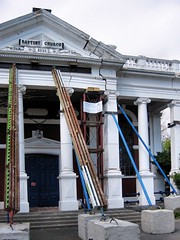
Christchurch - Earthquake Rebuild - Temporary CBD
Images, eqnz.chch.2010
Christchurch - Earthquake Rebuild - Temporary CBD Christchurch City CBD Cashel Street Christchurch Canterbury New Zealand © 2011 Phil Le Cren Photo Taken With: Canon EOS 1000D + Canon EF/EF-S lenses + 10.1 effective megapixels + 2.5-inch TFT color LCD monitor + Eye-level pentamirror SLR + Live View shooting. + EOS Built-in Sensor...
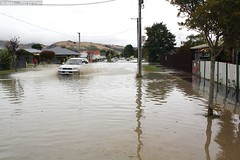
Christchurch - Earthquake Rebuild - Temporary CBD
Images, eqnz.chch.2010
Christchurch - Earthquake Rebuild - Temporary CBD Christchurch City CBD Cashel Street Christchurch Canterbury New Zealand © 2011 Phil Le Cren Photo Taken With: Canon EOS 1000D + Canon EF/EF-S lenses + 10.1 effective megapixels + 2.5-inch TFT color LCD monitor + Eye-level pentamirror SLR + Live View shooting. + EOS Built-in Sensor...
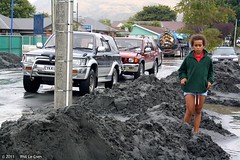
Christchurch - Earthquake Rebuild - Temporary CBD
Images, eqnz.chch.2010
Christchurch - Earthquake Rebuild - Temporary CBD Christchurch City CBD Cashel Street Christchurch Canterbury New Zealand © 2011 Phil Le Cren Photo Taken With: Canon EOS 1000D + Canon EF/EF-S lenses + 10.1 effective megapixels + 2.5-inch TFT color LCD monitor + Eye-level pentamirror SLR + Live View shooting. + EOS Built-in Sensor...
A comparison of historical and paleoseismicity in a newly formed fault zon…
Research papers, Lincoln University
The timing of large Holocene prehistoric earthquakes is determined by dated surface ruptures and landslides at the edge of the Australia-Pacific plate boundary zone in North Canterbury, New Zealand. Collectively, these data indicate two large (M > 7) earthquakes during the last circa 2500 years, within a newly formed zone of hybrid strike-slip and thrust faulting herein described as the Porter's Pass-to-Amberley Fault Zone (PPAFZ). Two earlier events during the Holocene are also recognized, but the data prior to 2500 years are presumed to be incomplete. A return period of 1300–2000 years between large earthquakes in the PPAFZ is consistent with a late Holocene slip rate of 3–4 mm/yr if each displacement is in the range 4–8 m. Historical seismicity in the PPAFZ is characterized by frequent small and moderate magnitude earthquakes and a seismicity rate that is identical to a region surrounding the structurally mature Hope fault of the Marlborough Fault System farther north. This is despite an order-of-magnitude difference in slip rate between the respective fault zones and considerable differences in the recurrence rate of large earthquakes. The magnitude-frequency distribution in the Hope fault region is in accord with the characteristic earthquake model, whereas the rate of large earthquakes in the PPAFZ is approximated (but over predicted) by the Gutenberg-Richter model. The comparison of these two fault zones demonstrates the importance of the structural maturity of the fault zone in relation to seismicity rates inferred from recent, historical, and paleoseismic data.
Interview with Matthew Hughes
Audio, UC QuakeStudies
Interview with Canterbury Earthquakes Geospatial Reserach Fellow, Matthew Hughes. This interview was conducted by Emma Kelland as part of Deirdre Hart's Coastal and River Earthquake Research project.
Ruth Gardner's Blog 04/09/2010: Our Earthquake
Articles, UC QuakeStudies
An entry from Ruth Gardner's blog for 4 September 2010 entitled, "Our Earthquake".
Henry Allison's Red Zone video - Part 2
Videos, UC QuakeStudies
Part 2 of a video contributed by Henry Allison, a participant in the Understanding Place research project. The video has the description "Henry Allison talks about the architecture that was lost in the central city".
P9051042
Images, eqnz.chch.2010
None
Photograph number UC 11-0445-07
Images, UC QuakeStudies
Hit Lab, Mark Billinghurst with android application that creates and augmented reality of Christchurch buildings pre- earthquake.
Photograph number UC 10-0514-15
Images, UC QuakeStudies
The Shelley Common Room, previously a social space, converted into a study space after the September earthquake.
Photograph number UC 10-0491-44
Images, UC QuakeStudies
A student in the Student Volunteer Army cleaning up silt on a residential property after the earthquake.
Photograph number UC 10-0492-46
Images, UC QuakeStudies
A local resident photographed with students in the Student Volunteer Army cleaning up silt after the earthquake.
Photograph number UC 10-0503-10
Images, UC QuakeStudies
Staff in the Registry Building back at work after cleaning up the mess left by the earthquake.
Photograph number UC 10-0514-17
Images, UC QuakeStudies
The Shelley Common Room, previously a social space, converted into a study space after the September earthquake.
Photograph number UC 10-0514-16
Images, UC QuakeStudies
The Shelley Common Room, previously a social space, converted into a study space after the September earthquake.
Photograph number UC 10-0490-03
Images, UC QuakeStudies
Students in the Student Volunteer army at Chisnallwood Intermediate preparing to clean up silt after the earthquake.
Photo 013
Images, UC QuakeStudies
Police tape cordons off large cracks in the road beside large piles of liquefaction dug from people's houses on a street in Avonside after the September 4th earthquake.
Photo 036
Images, UC QuakeStudies
Workers digging up the road on the corner of Avonside Drive and Retreat Road in Avonside, with road cones and "Road Closed" sign, after the September 4th earthquake.
An inventory of community-led and non-governmental organisations and initi…
Research papers, Lincoln University
The impact of the Canterbury earthquake sequence of 2010-12 and its aftermath has been enormous. This inventory lists some of the thousands of community-led groups and initiatives across the region that have developed or evolved as a result of the quake. This inventory is the third such inventory to have been produced. The Christchurch Earthquake Activity Inventory was released by Landcare Research in May 2011, three months after the devastating 22 February 2011 earthquake. The second inventory, entitled An Inventory of Community-led Recovery Initiatives in Canterbury, was collated by Bailey Peryman and Dr Suzanne Vallance (Lincoln University) approximately one year after the February earthquake. The research for this third inventory was undertaken over a four month period from June to September 2013, and was conducted primarily through online searches.This research was undertaken with funding support from the Natural Hazards Platform and GNS, New Zealand.
Library services without a library: post-earthquake use of virtual referen…
Research papers, University of Canterbury Library
Following the September 2010 earthquake and the closure of a number of campus libraries, library staff at the University of Canterbury was forced to rethink how they connected with their users. The established virtual reference service now meant library staff could be contacted regardless of their physical location. After the February earthquake, with University library closures ranging from 3 weeks to indefinite, this service came into its own as a vital communication tool. It facilitated contact between the library and both students and academics, as well as proving invaluable as a means for library staff to locate and communicate with each other. Transcripts from our post-earthquake interactions with users were analyzed using NVivo and will be presented in poster format showing the increase in usage of the service following the earthquakes, who used the service most, and the numbers and types of questions received. Our virtual reference tool was well used in the difficult post-earthquake periods and we can see this usage continuing as university life returns to normal.
SPCA Canterbury Photograph 03
Images, UC QuakeStudies
A photograph of members from SPCA Canterbury meeting with Massey University's Veterinary Emergency Response Team (VERT). VERT travelled to Christchurch after the 22 February 2011 earthquake in order to assist with caring for animals.
SPCA Canterbury Photograph 04
Images, UC QuakeStudies
A photograph of members from Massey University's Veterinary Emergency Response Team (VERT) ready to depart. VERT travelled to Christchurch after the 22 February 2011 earthquake in order to assist with the caring of animals.
Report: Registration Report for a Historic Place Homebush Station
Images, Canterbury Museum
One Historic Places Trust report for Homebush Station. Homebush was in the process of being registered as a Historic Place, and this report was underway, when the homestead was severely damaged by the 4 September 2010 earthquake. Homebush Station was in the process of being registered as an historic place by the New Zealand Historic Places Trus...
Lunch Bag: Rechurch
Images, Canterbury Museum
One expandable oblong brown fabric bag produced by Christchurch church group Rechurch; black and green writing on the front and back. Used to deliver lunch to Student Volunteer Army clean up parties after the 4 September 2010 earthquake. This reusable fabric bag from the church group Rechurch, Christchurch was used to deliver lunches to the stu...
Dust Mask: 3M
Images, Canterbury Museum
One white dust mask with elastic strap to secure around the head. Black printing on the front reads: '3M 8000 / P1 / AS/NZS 1716'. Used by Student Volunteer Army in the clean up after 4 September 2010 earthquake. Face masks were recommended by Christchurch Public Health staff as a safety precaution for those handling liquefaction. Liquefaction ...
Wheelbarrow: Kelso
Images, Canterbury Museum
One black plastic barrelled wheelbarrow with a blue metal frame, black rubber handles and a pneumatic tyre; manufacturer's name in white on long sides and torn promotional label on short side near handles. Barrel is well used and contains remnants of liquefaction. Used by Student Volunteer Army in the clean up after 4 September 2010 earthquake. ...
Conductors Baton: Sir Malcolm Sargent
Images, Canterbury Museum
One white painted conductor's baton with wand made of balsa wood and handle from lime tree wood. Green holly leaf maker's mark on wand near handle indicates it was made by English baton maker Mr Hollyoak. Baton was used by Sir Malcolm Sargent and gifted to the Christchurch following the 22 February 2011 earthquake. This conductor's baton was ma...
Ireos Search Light: White Light of Hope
Images, Canterbury Museum
One Space Cannon VH Ireos 7000 search light with pan and tilt ability and 7000 watt Xenon lamp. Reading on hour meter 02954.75 hours. One of the White Lights of Hope used as a symbol of support for Christchurch following the 22 February 2011 earthquake. The White Lights of Hope lit up the skies of Christchurch every night from 4 September 2011 ...
Brooch: Host A Brooch #14
Images, Canterbury Museum
One steel, brick and concrete brooch created from debris collected after the 22 February 2011 earthquake; steel from a gas heater has been woven to create three enclosures for the piece of brick and two pieces of concrete; a stainless steel pin has been woven on the reverse for attachment. Worn by numerous people as part of the Host A Brooch pro...
Heart for Christchurch: Blue Bird
Images, Canterbury Museum
One cream cotton 'Heart for Christchurch' decorated with a bird in blue stitching; a blue loop with a bead is at the top centre so the item can be displayed. Inscription on reverse reads 'With / love / from / Denice Ostman / Finland / 2011' Made for the people of Christchurch following the 22 February earthquake. Denice Ostman from Finland sent...