

Search
found 2009 results
Images for Earthquake Services; more images...

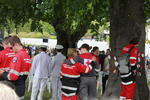
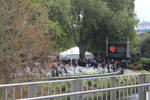
New Zealand Defence Force photograph 814
Images, UC QuakeStudies
A man performing a haka at the Christchurch Earthquake Memorial Service in Hagley Park.
Christchurch Press Image: John Kirk-Anderson 2010:09:06 12:29:39
Images, UC QuakeStudies
Photograph captioned by Fairfax, "Mayor Bob Parker with Fire Service staff following Canterbury's earthquake".
Christchurch Press Image: John Kirk-Anderson 2010:09:06 12:33:22
Images, UC QuakeStudies
Photograph captioned by Fairfax, "Mayor Bob Parker with Fire Service staff following Canterbury's earthquake".
Christchurch Press Image: John Kirk-Anderson 2010:09:06 13:44:12
Images, UC QuakeStudies
Photograph captioned by Fairfax, "Mayor Bob Parker with Fire Service staff, following Canterbury's earthquake".
Christchurch Press Image: John Kirk-Anderson 2010:09:06 12:31:54
Images, UC QuakeStudies
Photograph captioned by Fairfax, "Mayor Bob Parker with Fire Service staff following Canterbury's earthquake".
Christchurch Press Image: John Kirk-Anderson 2010:09:06 12:29:22
Images, UC QuakeStudies
Photograph captioned by Fairfax, "Mayor Bob Parker and Fire Service staff following Canterbury's earthquake".
Christchurch Press Image: John Kirk-Anderson 2010:09:06 13:05:16
Images, UC QuakeStudies
Photograph captioned by Fairfax, "Mayor Bob Parker with Fire Service staff following Canterbury's earthquake".
Christchurch quake victims remembered at memorial service
Audio, Radio New Zealand
The names of each individual killed by the Christchurch earthquake were read one after the other at a memorial service to commemorate the quake's seventh anniversary today.
Prince to speak at next week's memorial service
Audio, Radio New Zealand
The Prime Minister says Prince William will speak at next week's national memorial service being held for the victims of the Christchurch earthquake.
Elizabeth Ackermann Photograph 260
Images, UC QuakeStudies
A photograph of students at the University of Canterbury attending an earthquake memorial service on the C Block Lawn on the anniversary of the 22 February 2011 earthquake.
Elizabeth Ackermann Photograph 261
Images, UC QuakeStudies
A photograph of students at the University of Canterbury attending an earthquake memorial service on the C Block Lawn on the anniversary of the 22 February 2011 earthquake.
Elizabeth Ackermann Photograph 262
Images, UC QuakeStudies
A photograph of students at the University of Canterbury attending an earthquake memorial service on the C Block Lawn on the anniversary of the 22 February 2011 earthquake.
Low frequency (f=1Hz) ground motion simulations of 10 events in the 2010-2…
Research papers, University of Canterbury Library
Ceiling systems design and installation lessons from the Canterbury Earthq…
Research papers, University of Canterbury Library
Damage to ceiling systems resulted in a substantial financial loss to building owners in the Canterbury earthquakes. In some buildings, collapse of ceilings could easily have resulted in severe injury to occupants. This paper summarizes the types of ceiling damage observed in the Canterbury earthquakes, and draws useful lessons from the observed performance of different types of ceiling systems. Existing ceiling manufacturing and installing practices/regulations in New Zealand are critically scrutinized to identify deficiencies, and measures are suggested to improve the practice so that the damage to ceilings and the resulting loss are minimized in future earthquakes.
Systematic vertical ground motion observations in the Canterbury earthquak…
Research papers, University of Canterbury Library
The 2010-2011 Canterbury earthquake sequence was extremely damaging to structures in Christchurch and continues to have a large economic and social impact on the city and surrounding regions. In addition to strong ground shaking (Bradley and Cubrinovski 2011 SRL; Bradley 2012 SDEE), extensive liquefaction was observed, particularly in the 4 September 2010 Darfield earthquake and the 22 February 2011 Christchurch earthquake (Cubrinovski et al. 2010 BNZSEE; 2011 SRL). Large observed vertical ground motion amplitudes were recorded in the events in this sequence, with vertical peak ground accelerations of over 2.2g being observed at the Heathcote Valley Primary School during the Christchurch earthquake, and numerous other vertical motions exceeding 1.0g (Bradley and Cubrinovski 2011 SRL; Bradley 2012 SDEE; Fry et al 2011 SRL). Vertical peak ground accelerations of over 1.2g were observed in the Darfield earthquake.
Jetstar cutting services partly due to ChCh quake
Audio, Radio New Zealand
The budget airline Jetstar is cutting back on some of its flights out of Christchurch partly because of the earthquake.
Fire Service honours teams for actions after February quake
Audio, Radio New Zealand
The Fire Service is recognising fire crews who responded to the February earthquake at an event this evening in Christchurch.
Letter from General Manager of Community Services for the Christchurch Cit…
Articles, UC QuakeStudies
General Manager of Community Services for the Christchurch City Council Michael Aitken writes about the 2010 Canterbury Earthquake.
Performance of masonry buildings during the 2010 Darfield (New Zealand) ea…
Research papers, The University of Auckland Library
The M7.1 Darfield earthquake shook the town of Christchurch (New Zealand) in the early morning on Saturday 4th September 2010 and caused damage to a number of heritage unreinforced masonry buildings. No fatalities were reported directly linked to the earthquake, but the damage to important heritage buildings was the most extensive to have occurred since the 1931 Hawke‟s Bay earthquake. In general, the nature of damage was consistent with observations previously made on the seismic performance of unreinforced masonry buildings in large earthquakes, with aspects such as toppled chimneys and parapets, failure of gables and poorly secured face-loaded walls, and in-plane damage to masonry frames all being extensively documented. This report on the performance of the unreinforced masonry buildings in the 2010 Darfield earthquake provides details on typical building characteristics, a review of damage statistics obtained by interrogating the building assessment database that was compiled in association with post-earthquake building inspections, and a review of the characteristic failure modes that were observed
Elizabeth Ackermann Photograph 152
Images, UC QuakeStudies
A photograph of a banner reading, "Rise Up Christchurch", flying above the Christchurch Earthquake Memorial Service in Hagley Park.
Digital Photograph: Flowers Floating in the Avon River
Images, Canterbury Museum
One landscape colour digital photograph taken 22 February 2017 showing flowers floating in the Avon River as part of the Canterbury Earthquake Memorial Service.
Disaster Waste Management on the Road to Recovery: L’Aquila Earthquake cas…
Research papers, University of Canterbury Library
Earthquakes impacting on the built environment can generate significant volumes of waste, often overwhelming existing waste management capacities. Earthquake waste can pose a public and environmental health hazard and can become a road block on the road to recovery. Specific research has been developed at the University of Canterbury to go beyond the current perception of disaster waste as a logistical hurdle, to a realisation that disaster waste management is part of the overall recovery process and can be planned for effectively. Disaster waste decision-makers, often constrained by inappropriate institutional frameworks, are faced with conflicting social, economic and environmental drivers which all impact on the overall recovery. Framed around L’Aquila earthquake, Italy, 2009, this paper discusses the social, economic and environmental effects of earthquake waste management and the impact of existing institutional frameworks (legal, financial and organisational). The paper concludes by discussing how to plan for earthquake waste management.
IMG_2058
Images, eqnz.chch.2010
Rescue services out in full force at the Christchurch Arts Centre following the magnitude 7 earthquake in Christchurch on Saturday 4-9-2010.
IMG_2059
Images, eqnz.chch.2010
Rescue services out in full force at the Christchurch Arts Centre following the magnitude 7 earthquake in Christchurch on Saturday 4-9-2010.
Quake victim hopes to leave hospital to attend service
Audio, Radio New Zealand
The memorial service for those who died in the Christchurch earthquake will take place in Hagley Park just after midday today.
Photograph number UC 11-0055-05
Images, UC QuakeStudies
UBS has reopened following the February earthquake.
Photograph number UC 10-0498-094
Images, UC QuakeStudies
Facilities Management staff meet after the earthquake.
Photograph number UC 10-0498-100
Images, UC QuakeStudies
Facilities Management staff meet after the earthquake.
Photograph number UC 10-0498-098
Images, UC QuakeStudies
Facilities Management staff meet after the earthquake.
Photograph number UC 10-0498-095
Images, UC QuakeStudies
Facilities Management staff meet after the earthquake.