
Search
found 3220 results
Images for house; more images...

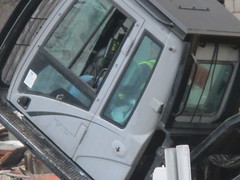
BeckerFraserPhotos June 2012 photograph 011
Images, UC QuakeStudies
Photograph captioned by BeckerFraserPhotos, "Theosophy House on Cambridge Terrace being prepared for demolition".
BeckerFraserPhotos November 2011 photograph 165
Images, UC QuakeStudies
Photograph captioned by BeckerFraserPhotos, "Bismark House, 140 Lichfield Street".
BeckerFraserPhotos February 2011 photograph 349
Images, UC QuakeStudies
A house on Avonside Drive showing a substantial gap between the foundations and the rest of the house.
BeckerFraserPhotos November 2011 photograph 059
Images, UC QuakeStudies
Photograph captioned by BeckerFraserPhotos, "Procope Coffee House on Victoria Street, under repair from earthquake damage".
Rebekah Rogers WEMO Photograph 110
Images, UC QuakeStudies
A photograph of a USAR code spray-painted on the window of a house on Gloucester Street.
UC Restarts - Photograph 17
Images, UC QuakeStudies
Okeover House, which was used to house the University of Canterbury's Senior Management Team after the Registry building was closed. The photographer comments, "SMT moved to Okeover".
WEMO ERT Set 1 - March 2011 - Photograph 09
Images, UC QuakeStudies
A photograph of bricks and wooden framing piled up in between a house and fence in Christchurch.
WEMO ERT Set 1 - March 2011 - Photograph 04
Images, UC QuakeStudies
A photograph of a house in Christchurch. There is earthquake damage to the roof on the right.
Raymond Morris's painting, 'Nydfa House, Upper Riccarton'
Images, UC QuakeStudies
A digital copy of a pen and ink and watercolour painting by Raymond Morris, titled, 'Nydfa House, Upper Riccarton'.
Mike Cameron WEMO Photograph 11
Images, UC QuakeStudies
A photograph of rubble from a demolished house on the corner of Springfield Road and Bealey Avenue.
BeckerFraserPhotos February 2011 photograph 350
Images, UC QuakeStudies
A house on Avonside Drive showing a substantial gap between the foundations and the rest of the house.
BeckerFraserPhotos December 2011 photograph 2427
Images, UC QuakeStudies
A photograph of a damaged house captioned by BeckerFraserPhotos, "An earthquake-damaged house on Locksley Avenue".
BeckerFraserPhotos December 2011 photograph 2425
Images, UC QuakeStudies
A photograph of a damaged house captioned by BeckerFraserPhotos, "An earthquake-damaged house on Locksley Avenue".
Damage to the Dolls House night club and the Coffee Queen cafe
Images, UC QuakeStudies
Damage to the Dolls House night club and the Coffee Queen cafe on Gloucester Street, beside Chancery Lane.
Photograph by Paul Corliss 1831
Images, UC QuakeStudies
A photograph of a partly-demolished house. The photograph is captioned by Paul Corliss, "220 and 218 Peterborough Street".
BeckerFraserPhotos March 2011 photograph 065
Images, UC QuakeStudies
A house on Main Road in Redcliffs. The tiles on the house's roof have warped during the 22 February 2011 earthquake.
UC Restarts - Photograph 18
Images, UC QuakeStudies
Okeover House, which was used to house the University of Canterbury's Senior Management Team after the Registry building was closed. The photographer comments, "SMT moved to Okeover".
BeckerFraserPhotos November 2011 photograph 150
Images, UC QuakeStudies
Photograph captioned by BeckerFraserPhotos, "Highlight House, 171-177 Manchester Street".
June 2011 Earthquake - Photograph 01
Images, UC QuakeStudies
Flooding and liquefaction surround a house in Richmond. Bricks have fallen from the walls of the house, exposing the wooden framework beneath.
Demolition Day - Photograph 20
Images, UC QuakeStudies
A house in Richmond being demolished. Workers drive a truck up to the house. The photographer comments, "The end of 393 River Rd".
Damage to the Librarian's house
Images, eqnz.chch.2010
File reference: CCL-2011-08-12-CanterburyPublic Library pre-demolition-003 From the collection of Christchurch City Libraries.
WEMO ERT Set 1 - March 2011 - Photograph 16
Images, UC QuakeStudies
A photograph of members of the New Zealand Police using a rescue dog to inspect an earthquake-damaged house in Christchurch. The front and side of the house has collapsed, the bricks and other rubble spilling onto the garden, exposing the rooms inside.
22 February Earthquake - Photograph 14
Images, UC QuakeStudies
Damage to a house in Richmond. The brick wall is badly cracked and twisted, and some bricks have fallen, exposing the lining paper below. The driveway is cracked and covered in liquefaction. The photographer comments, "These photos show our old house in River Rd. More shaking damage on the east wall of the living room at our house".
The Effectiveness of Retrofit Technologies in Wooden-Framed Houses in Well…
Research papers, University of Canterbury Library
New Zealand has a long tradition of using light timber frame for construction of its domestic dwellings. After the most recent earthquakes (e.g. Canterbury earthquakes sequence), wooden residential houses showed satisfactory life safety performance. However, poor performance was reported in terms of their seismic resilience. Although numerous innovative methods to mitigate damage have been introduced to the New Zealand community in order to improve wooden house performance, these retrofit options have not been readily taken up. The low number of retrofitted wooden-framed houses leads to questions about whether homeowners are aware of the necessity of seismic retrofitting their houses to achieve a satisfactory seismic performance. This study aims to explore different retrofit technologies that can be applied to wooden-framed houses in Wellington, taking into account the need of homeowners to understand the risk, likelihood and extent of damage expected after an event. A survey will be conducted in Wellington about perceptions of homeowners towards the expected performance of their wooden-framed houses. The survey questions were designed to gain an understanding of homeowners' levels of safety and awareness of possible damage after a seismic event. Afterwards, a structural review of a sample of the houses will be undertaken to identify common features and detail potential seismic concerns. The findings will break down barriers to making improvements in the performance of wooden-framed houses and lead to enhancements in the confidence of homeowners in the event of future seismic activity. This will result in increased understanding and contribute towards an accessible knowledge base, which will possibly increase significantly the use of these technologies and avoid unnecessary economic and social costs after a seismic event.
BeckerFraserPhotos June 2012 photograph 443
Images, UC QuakeStudies
Photograph captioned by BeckerFraserPhotos, "Bonnington House, aka Red Cross building, at 227 High Street".
Umut Akguzel Photograph 180
Images, UC QuakeStudies
A photograph of a gap between the Craig's Investment Partner House and the Victoria Apartments on Armagh Street
Umut Akguzel Photograph 263
Images, UC QuakeStudies
A photograph of the rubble from the demolished Manchester Securities House on the corner of Madras and Gloucester Streets.
Photograph by Neil Macbeth 346
Images, UC QuakeStudies
Liquefaction in the front yard of a house in Dallington. The chimney of the house has also collapsed and is lying against the roof.
Umut Akguzel Photograph 511
Images, UC QuakeStudies
A photograph of a red sticker notice on the Community Trust House building, indicating that the building is unsafe to enter.
BeckerFraserPhotos June 2011 photograph 391
Images, UC QuakeStudies
Debris from a fallen house lying among rocks at the base of the cliff above Peacock's Gallop. Above, other houses teeter on the cliff edge.