
Search
found 14133 results
Images for Christchurch earthquakes; more images...


Preliminary examination of kinematic rupture parameter variability in simu…
Research papers, University of Canterbury Library
This paper investigates the effects of variability in source rupture parameters on site-specific physics-based simulated ground motions, ascertained through the systematic analysis of ground motion intensity measures. As a preliminary study, we consider simulations of the 22 February 2011 Christchurch earthquake using the Graves and Pitarka (2015) methodology. The effects of source variability are considered via a sensitivity study in which parameters (hypocentre location, earthquake magnitude, average rupture velocity, fault geometry and the Brune stress parameter) are individually varied by one standard deviation. The sensitivity of simulated ground motion intensity measures are subsequently compared against observational data. The preliminary results from this study indicate that uncertainty in the stress parameter and the rupture velocity have the most significant effect on the high frequency amplitudes. Conversely, magnitude uncertainty was found to be most influential on the spectral acceleration amplitudes at low frequencies. Further work is required to extend this preliminary study to exhaustively consider more events and to include parameter covariance. The ultimate results of this research will assist in the validation of the overall simulation method’s accuracy in capturing various rupture parameters, which is essential for the use of simulated ground motion models in probabilistic seismic hazard analysis.
Development of deep Vs profiles and site periods for the Canterbury region
Research papers, University of Canterbury Library
Recent field investigations were carried out to define the shear wave velocity (VS) profile and site periods across the Canterbury region, supplementing earlier efforts in urban Christchurch. Active source surface wave testing, ambient wave field (passive) and H/V spectral ratio methods were used to characterise the soil profile in the region. H/V spectral ratio peaks indicate site periods in the range of 5-7 seconds across much of the Canterbury Plains, broadly consistent with those based on a 1D velocity model for the region. Site periods decrease rapidly in the vicinity of the Canterbury foothills and the Banks Peninsula outcrops. In Christchurch, the Riccarton Gravels result in a significant mode of vibration that has a much shorter period than the site period of the entire soil column down to basement rock.
Developing Workforce Resourcing Best Practice for Subcontractors in Christ…
Research papers, The University of Auckland Library
The skills agenda has grown in prominence within the construction industry. Indeed, skill shortages have been recognised as a perennial problem the construction industry faces, especially after a major disaster. In the aftermath of the Christchurch earthquakes, small and medium construction companies were at the forefront of rebuilding efforts. While the survival of these companies was seen to be paramount, and extreme events were seen to be a threat to survival, there is a dearth of research centring on their resourcing capacity following a disaster. This research aims to develop workforce resourcing best practice guidelines for subcontractors in response to large disaster reconstruction demands. By using case study methods, this research identified the challenges faced by subcontracting businesses in resourcing Christchurch recovery projects; identified the workforce resourcing strategies adopted by subcontracting businesses in response to reconstruction demand; and developed a best practice guideline for subcontracting businesses in managing the workforce at the organisational and/or project level. This research offers a twofold contribution. First, it provides an overview of workforce resourcing practices in subcontracting businesses. This understanding has enabled the development of a more practical workforce resourcing guideline for subcontractors. Second, it promotes evidence-informed decision-making in subcontractors’ workforce resourcing. Dynamics in workforce resourcing and their multifaceted interactions were explicitly depicted in this research. More importantly, this research provides a framework to guide policy development in producing a sustainable solution to skill shortages and establishing longterm national skill development initiatives. Taken together, this research derives a research agenda that maps under-explored areas relevant for further elaboration and future research. Prospective researchers can use the research results in identifying gaps and priority areas in relation to workforce resourcing.
WEMO ERT Set 1 - February 2011 - Photograph 19
Images, UC QuakeStudies
A photograph of the earthquake damage to the Country Theme store on the corner of Manchester and St Asaph Streets. Sections of the second storey walls have crumbled, and the bricks have fallen onto the footpath below. Wire fences have been placed around the building as a cordon. Red stickers on the front door and the wire fence indicate that the building is not safe to enter.
The impact of repeated earthquakes on the cognition of Canterbury’s elderl…
Research papers, University of Canterbury Library
Objective: The nature of disaster research makes it difficult to adequately measure the impact that significant events have on a population. Large, representative samples are required, ideally with comparable data collected before the event. When Christchurch, New Zealand, was struck by multiple, devastating earthquakes, there presented an opportunity to investigate the effects of dose-related quakes (none, one, two or three over a 9-month period) on the cognition of Canterbury’s elderly population through the New Zealand Brain Research Institute’s (NZBRI’s) cognitive screening study. The related effects of having a concomitant medical condition, sex, age and estimated- full scale IQ (Est-FSIQ) on cognition were also investigated. Method: 609 participants were tested on various neuropsychological tests and a self-rated dementia scale in a one hour interview at the NZBRI. Four groups were established, based on the number of major earthquakes experienced at the time of testing: “EQ-dose: None” (N = 51) had experienced no quakes; “EQ-dose: One” (N = 193) had experienced the initial quake in September 2010; “EQ-dose: Two” (N = 82) also experienced the most devastating February 2011 quake; and “EQ-dose: Three” (N = 265) also the June 2011 quake at testing. Results: Two neuropsychological variables of Trail A and the AD8 were impacted by an EQ-dose effect, while having a medical condition was associated with poorer function on the MoCA, Rey Copy and Recall, Trail A, and AD8. Having a major medical condition led to worse performance on the Rey Copy and Recall following the major February earthquake. Males performed significantly better on Trail A and Rey Planning, while females better on the MoCA. Older participants (>73) had significantly lower scores on the MoCA than younger participants (<74), while those with a higher Est-FSIQ (>111) had better scores on the MoCA and Rey Recall than participants with a lower Est-FSIQ. Finally, predicted variable analysis (based on calculated, sample-specific Z-scores) failed to find a significant earthquake effect when variables of age, sex and Est-FSIQ were controlled for, while there was a significant effect of medical condition on each measure. Conclusion: The current thesis provides evidence suggesting resilience amongst Canterbury’s elderly population in the face of the sequence of significant quakes that struck the region over a year from September 2010. By contrast, having a major medical condition was a ‘more significant life event’ in terms of impact on cognition in this group.
Quake-proofing essential... 19 September 2010
Images, Alexander Turnbull Library
Labour leader Phil Goff is being 'shored up' and strengthened by reinforced steel beams which represent his 'leadership. He tells ACT leader Rodney Hide who holds a newspaper with a headline reading 'ACT rattled again' that he needs to 'strengthen now before the next shake up!' As an insecure leader he is showing sympathy to Rodney Hide who is even more insecure because of the recent embarrassment of the David Garrett debacle. The title of the cartoon is 'Quake-proofing essential...' which is a reference to the Christchurch earthquake of 4th September and the continuing aftershocks. Quantity: 1 digital cartoon(s).
Hawkey, Allan Charles, 1941- : NZ Government BUDGET May 2011. 22 March 2011
Images, Alexander Turnbull Library
Finance Minister Bill English takes a chain saw to a huge tome that represents the 'NZ Government BUDGET May 2011'. Context - the Government says cutting budget spending is necessary because it is going to have to pay back money borrowed to rebuild Christchurch. The Government will face the biggest budget deficit in New Zealand's history at the end of the current financial year, Finance Minister Bill English says. (NZ Herald 31 March 2011) Quantity: 1 digital cartoon(s).
A model for nonlinear total stress analysis with consistent stiffness and …
Research papers, University of Canterbury Library
The paper discusses modelling of cyclic stress-strain behaviour of soil, in particular a simple model that can produce a desired stiffness and hysteretic damping for a given strain level as observed in laboratory testing is formulated. The unloading-reloading relationship is developed for total stress seismic site response analysis with appropriate damping at large strain. The constitutive model employs a hyperbolic equation as the backbone curve, and uses a modification of the extended Masing unloading-reloading relationship leading to correct measured modulus reduction and damping curves simultaneously. A quasi-static cyclic loading of increasing amplitude is used to demonstrate the model’s performance and its capability to allow improved modelling of the magnitude of energy dissipation based on an experimental program on native sandy soils from Christchurch, New Zealand.
Women's Voices: Findings solace out of disaster
Research papers, University of Canterbury Library
War and natural disasters share many features including great loss of life, traumatised populations and haunting memories. The Christchurch earthquakes were the third most costly event of 2011 with total costs of up to $NZ30 billion. Many homes, communities, families and an established way of life have gone for ever. The paper comes from the Women’s Voices project that documents women’s narratives of earthquake trauma and loss and examines their profiles of emotional expression associated with coping. For these women in Christchurch, solace is not about talking experiences of suffering but by doing practical things that inform and are shaped by existing personal narratives. As they relayed this common arc, they also entered into national (and gendered) narrative themes of being practical, stoic, independent and resourceful in the face of tragedy and loss and so embody communal aspects of coping with loss and grief particular to the New Zealand even ‘the South Island settler’ identity narrative. These narratives suggest it useful to rethink key concepts that inform our understanding of coping with disaster and loss.
A line of best fit: Re-stitching earthquake prone buildings and re-connect…
Research papers, Victoria University of Wellington
A Line of Best Fit explores weakness and disconnection in the city. Weakness: There are over 600 earthquake prone buildings in Wellington. The urgency to strengthen buildings risks compromising the aesthetic integrity of the city through abrasive strengthening techniques, or losing a large portion of our built environment to demolition. The need for extensive earthquake strengthening in Wellington, Christchurch and other New Zealand cities provides an exciting opportunity for architecture. Disconnection: In Wellington pedestrian activity is focused around three main routes: Cuba Street, Lambton Quay and Courtney Place. The adjacent areas are often disconnected and lack vibrancy due to large building footprints, no-exit laneways and lack of public spaces. The Design proposes a strategy for earthquake strengthening, preserving and upgrading the built environment, and expanding and connecting the pedestrian realm. The site is two earthquake prone buildings on the block between Marion Street and Taranaki Street in central Wellington. A cut through the centre of the Aspro and Cathie Buildings ties the buildings together to strengthen and create a new arcade as public space. The cut aligns with existing pedestrian routes connecting the block with the city. The Design is divided into three components: Void, Curve, and Pattern and Structure. Void investigates the implications of cutting a portion out the existing buildings and the opportunities this provides for connection, urban interaction, and light. Curve discusses the unusual form of The Design in terms of scale, the human response and the surrounding spaces. Pattern and Structure considers the structural requirements of the project and how a void enveloped in perforated screens can strengthen the earthquake prone buildings. The importance of connection, providing strength in the city, a dialogue between old and new, and engagement with the unexpected are evaluated. Opportunities for further development and research are discussed, with particular reference to how the principles of The Design could be implemented on a larger scale throughout our cities. A Line of Best Fit is an architectural proposal that creates strength and connection.
Resurrecting the Ruins
Research papers, Victoria University of Wellington
<b>Construction and Demolition (C&D) waste contributes to over 50% of New Zealand’s overall waste. Materials such as timber, plasterboard, and concrete make up 81% of the C&D waste that goes into landfills each year. Alongside this, more than 235 heritage-listed buildings have been demolished in Christchurch since the 2011 earthquakes. This research portfolio aims to find a solution to decrease C&D waste produced by demolishing heritage buildings.</b> With the recent announcement of The Cathedral of the Blessed Sacrament’s demolition, this will be another building added to the list of lost heritage in Christchurch. This research portfolio aims to bridge the relationship between heritage and waste through the recycling and reuse of the demolished materials, exploring the idea that history and heritage are preserved through building material reuse. This research portfolio mainly focuses on reducing construction and demolition waste in New Zealand, using the design of a new Catholic Cathedral as a vessel. This thesis will challenge how the construction and design industry deals with the demolition of heritage buildings and their contribution to New Zealand’s waste. It aims to explore the idea of building material reuse not only to reduce waste but also to retain the history and heritage of the demolished building within the materials.
The self-reported holistic mental health and wellbeing of adolescents livi…
Research papers, University of Canterbury Library
Background: There has been a psychopathology focus in disaster research examining adolescent mental health and wellbeing, but recently studies have begun to also examine wellbeing-related constructs. Although an increased risk of posttraumatic stress disorder has been established in disaster-exposed adolescents, comparatively little is known about how disasters impact adolescent wellbeing, nor how factors within the post-disaster environment interact to influence holistic adolescent mental health and wellbeing. Objective: The objective of this study was to describe the holistic mental health and wellbeing of adolescents living in an earthquake-struck city by considering a range of mental health and wellbeing indicators, as well as risk and protective factors hypothesised to influence mental health and wellbeing. The dual-factor model of mental health was used as a framework to guide this study. Method: A survey of Christchurch secondary school students was used to gather data about their subjective wellbeing, risk of low wellbeing, psychological distress, quality of life, exposure to Adverse Childhood Experiences, social support from friends and family, school connectedness, and expectations about future quality of life. Results: A slim majority of students reported good subjective wellbeing (52.3%) and high current quality of life (56.4%), whereas a larger majority reported low risk of psychological distress (79%). An equal proportion of students reported high and low risk of low wellbeing. There were no statistically significant differences in any of the variables measured between adolescents who did and did not live through the Christchurch earthquakes. Regression analyses identified that school connectedness, social support from friends and family, and future expectations of quality of life significantly predicted subjective wellbeing, risk of low wellbeing, risk of psychological distress, and current quality of life. The number of Adverse Childhood Experiences significantly predicted only risk of psychological distress when the effects of other variables were controlled for. Conclusion: The findings of this study indicate that there is a low mean level of wellbeing and quality of life in this sample of adolescents living in a severely earthquake- affected community. School connectedness, social support from family and friends, and expectations about future quality of life were shown to significantly predict variance in subjective wellbeing, quality of life, and psychological distress. This suggests that there are social and environmental factors that can be targeted to improve holistic mental health and wellbeing in disaster-affected adolescents who have experienced high levels of trauma. Conclusions in this study are limited by the representativeness of the sample, the cross- sectional nature of the study, and potential sampling bias.
The self-reported holistic mental health and wellbeing of adolescents livi…
Research papers, University of Canterbury Library
Background: There has been a psychopathology focus in disaster research examining adolescent mental health and wellbeing, but recently studies have begun to also examine wellbeing-related constructs. Although an increased risk of posttraumatic stress disorder has been established in disaster-exposed adolescents, comparatively little is known about how disasters impact adolescent wellbeing, nor how factors within the post-disaster environment interact to influence holistic adolescent mental health and wellbeing. Objective: The objective of this study was to describe the holistic mental health and wellbeing of adolescents living in an earthquake-struck city by considering a range of mental health and wellbeing indicators, as well as risk and protective factors hypothesised to influence mental health and wellbeing. The dual-factor model of mental health was used as a framework to guide this study. Method: A survey of Christchurch secondary school students was used to gather data about their subjective wellbeing, risk of low wellbeing, psychological distress, quality of life, exposure to Adverse Childhood Experiences, social support from friends and family, school connectedness, and expectations about future quality of life. Results: A slim majority of students reported good subjective wellbeing (52.3%) and high current quality of life (56.4%), whereas a larger majority reported low risk of psychological distress (79%). An equal proportion of students reported high and low risk of low wellbeing. There were no statistically significant differences in any of the variables measured between adolescents who did and did not live through the Christchurch earthquakes. Regression analyses identified that school connectedness, social support from friends and family, and future expectations of quality of life significantly predicted subjective wellbeing, risk of low wellbeing, risk of psychological distress, and current quality of life. The number of Adverse Childhood Experiences significantly predicted only risk of psychological distress when the effects of other variables were controlled for. Conclusion: The findings of this study indicate that there is a low mean level of wellbeing and quality of life in this sample of adolescents living in a severely earthquake-affected community. School connectedness, social support from family and friends, and expectations about future quality of life were shown to significantly predict variance in subjective wellbeing, quality of life, and psychological distress. This suggests that there are social and environmental factors that can be targeted to improve holistic mental health and wellbeing in disaster-affected adolescents who have experienced high levels of trauma. Conclusions in this study are limited by the representativeness of the sample, the cross-sectional nature of the study, and potential sampling bias.
The self-reported holistic mental health and wellbeing of adolescents livi…
Research papers, University of Canterbury Library
Background: There has been a psychopathology focus in disaster research examining adolescent mental health and wellbeing, but recently studies have begun to also examine wellbeing-related constructs. Although an increased risk of posttraumatic stress disorder has been established in disaster-exposed adolescents, comparatively little is known about how disasters impact adolescent wellbeing, nor how factors within the post-disaster environment interact to influence holistic adolescent mental health and wellbeing. Objective: The objective of this study was to describe the holistic mental health and wellbeing of adolescents living in an earthquake-struck city by considering a range of mental health and wellbeing indicators, as well as risk and protective factors hypothesised to influence mental health and wellbeing. The dual-factor model of mental health was used as a framework to guide this study. Method: A survey of Christchurch secondary school students was used to gather data about their subjective wellbeing, risk of low wellbeing, psychological distress, quality of life, exposure to Adverse Childhood Experiences, social support from friends and family, school connectedness, and expectations about future quality of life. Results: A slim majority of students reported good subjective wellbeing (52.3%) and high current quality of life (56.4%), whereas a larger majority reported low risk of psychological distress (79%). An equal proportion of students reported high and low risk of low wellbeing. There were no statistically significant differences in any of the variables measured between adolescents who did and did not live through the Christchurch earthquakes. Regression analyses identified that school connectedness, social support from friends and family, and future expectations of quality of life significantly predicted subjective wellbeing, risk of low wellbeing, risk of psychological distress, and current quality of life. The number of Adverse Childhood Experiences significantly predicted only risk of psychological distress when the effects of other variables were controlled for. Conclusion: The findings of this study indicate that there is a low mean level of wellbeing and quality of life in this sample of adolescents living in a severely earthquake- affected community. School connectedness, social support from family and friends, and expectations about future quality of life were shown to significantly predict variance in subjective wellbeing, quality of life, and psychological distress. This suggests that there are social and environmental factors that can be targeted to improve holistic mental health and wellbeing in disaster-affected adolescents who have experienced high levels of trauma. Conclusions in this study are limited by the representativeness of the sample, the cross- sectional nature of the study, and potential sampling bias.
The role of landscape architecture in designing for urban transformations …
Research papers, Lincoln University
Millions of urban residents around the world in the coming century will experience severe landscape change – including increased frequencies of flooding due to intensifying storm events and impacts from sea level rise. For cities, collisions of environmental change with mismatched cultural systems present a major threat to infrastructure systems that support urban living. Landscape architects who address these issues express a need to realign infrastructure with underlying natural systems, criticizing the lack of social and environmental considerations in engineering works. Our ability to manage both society and the landscapes we live in to better adapt to unpredictable events and landscape changes is essential if we are to sustain the health and safety of our families, neighbourhoods, and wider community networks. When extreme events like earthquakes or flooding occur in developed areas, the feasibility of returning the land to pre-disturbance use can be questioned. In Christchurch for example, a large expanse of land (630 hectares) within the city was severely damaged by the earthquakes and judged too impractical to repair in the short term. The central government now owns the land and is currently in the process of demolishing the mostly residential houses that formed the predominant land use. Furthermore, cascading impacts from the earthquakes have resulted in a general land subsidence of .5m over much of eastern Christchurch, causing disruptive and damaging flooding. Yet, although disasters can cause severe social and environmental distress, they also hold great potential as a catalyst to increasing adaption. But how might landscape architecture be better positioned to respond to the potential for transformation after disaster? This research asks two core questions: what roles can the discipline of landscape architecture play in improving the resilience of communities so they become more able to adapt to change? And what imaginative concepts could be designed for alternative forms of residential development that better empower residents to understand and adapt the infrastructure that supports them? Through design-directed inquiry, the research found landscape architecture theory to be well positioned to contribute to goals of social-ecological systems resilience. The discipline of landscape architecture could become influential in resilience-oriented multi disciplinary collaborations, with our particular strengths lying in six key areas: the integration of ecological and social processes, improving social capital, engaging with temporality, design-led innovation potential, increasing diversity and our ability to work across multiple scales. Furthermore, several innovative ideas were developed, through a site-based design exploration located within the residential red zone, that attempt to challenge conventional modes of urban living – concepts such as time-based land use, understanding roads as urban waterways, and landscape design and management strategies that increase community participation and awareness of the temporality in landscapes.
“Not another Katrina.” Interpersonal communication at interagency interfac…
Research papers, University of Canterbury Library
Background: We are in a period of history where natural disasters are increasing in both frequency and severity. They are having widespread impacts on communities, especially on vulnerable communities, those most affected who have the least ability to prepare or respond to a disaster. The ability to assemble and effectively manage Interagency Emergency Response Teams (IERTs) is critical to navigating the complexity and chaos found immediately following disasters. These teams play a crucial role in the multi-sectoral, multi-agency, multi-disciplinary, and inter-organisational response and are vital to ensuring the safety and well-being of vulnerable populations such as the young, aged, and socially and medically disadvantaged in disasters. Communication is key to the smooth operation of these teams. Most studies of the communication in IERTs during a disaster have been focussed at a macro-level of examining larger scale patterns and trends within organisations. Rarely found are micro-level analyses of interpersonal communication at the critical interfaces between collaborating agencies. This study set out to understand the experiences of those working at the interagency interfaces in an IERT set up by the Canterbury District Health Board to respond to the needs of the vulnerable people in the aftermath of the destructive earthquakes that hit Canterbury, New Zealand, in 2010-11. The aim of the study was to gain insights about the complexities of interpersonal communication (micro-level) involved in interagency response coordination and to generate an improved understanding into what stabilises the interagency communication interfaces between those agencies responding to a major disaster. Methods: A qualitative case study research design was employed to investigate how interagency communication interfaces were stabilised at the micro-level (“the case”) in the aftermath of the destructive earthquakes that hit Canterbury in 2010-11 (“the context”). Participant recruitment was undertaken by mapping which agencies were involved within the IERT and approaching representatives from each of these agencies. Data was collected via individual interviews using a semi-structured interview guide and was based on the “Critical Incident Technique”. Subsequently, data was transcribed verbatim and subjected to inductive analysis. This was underpinned theoretically by Weick’s “Interpretive Approach” and supported by Nvivo qualitative data analysis software. Results: 19 participants were interviewed in this study. Out of the inductive analysis emerged two primary themes, each with several sub-factors. The first major theme was destabilising/disruptive factors of interagency communication with five sub-factors, a) conflicting role mandates, b) rigid command structures, c) disruption of established communication structures, d) lack of shared language and understanding, and e) situational awareness disruption. The second major theme stabilising/steadying factors in interagency communication had four sub-factors, a) the establishment of the IERT, b) emergent novel communication strategies, c) establishment of a liaison role and d) pre-existing networks and relationships. Finally, there was a third sub-level identified during inductive analysis, where sub-factors from both primary themes were noted to be uniquely interconnected by emergent “consequences” arising out of the disaster context. Finally, findings were synthesised into a conceptual “Model of Interagency Communication at the Micro-level” based on this case study of the Canterbury earthquake disaster response. Discussion: The three key dimensions of The People, The Connections and The Improvisations served as a framework for the discussion of what stabilises interagency communication interfaces in a major disaster. The People were key to stabilising the interagency interfaces through functioning as a flexible conduit, guiding and navigating communication at the interagency interfaces and improving situational awareness. The Connections provided the collective competence, shared decision-making and prior established relationships that stabilised the micro-level communication at interagency interfaces. And finally, The Improvisations i.e., novel ideas and inventiveness that emerge out of rapidly changing post-disaster environments, also contributed to stabilisation of micro-level communication flows across interagency interfaces in the disaster response. “Command and control” hierarchical structures do provide clear processes and structures for teams working in disasters to follow. However, improvisations and novel solutions are also needed and often emerge from first responders (who are best placed to assess the evolving needs in a disaster where there is a high degree of uncertainty). Conclusion: This study highlights the value of incorporating an interface perspective into any study that seeks to understand the processes of IERTs during disaster responses. It also strengthens the requirement for disaster management frameworks to formally plan for and to allow for the adaptive responsiveness of local teams on the ground, and legitimise and recognise the improvisations of those in the role of emergent boundary spanners in a disaster response. This needs to be in addition to existing formal disaster response mechanisms. This study provides a new conceptual model that can be used to guide future case studies exploring stability at the interfaces of other IERTs and highlights the centrality of communication in the experiences of members of teams in the aftermath of a disaster. Utilising these new perspectives on stabilising communication at the interagency interfaces in disaster responses will have practical implications in the future to better serve the needs of vulnerable people who are at greatest risk of adverse outcomes in a disaster.
People in Disasters Conference - The Mental Health Impacts of the Canterbu…
Videos, UC QuakeStudies
A video of a keynote presentation by Professor Jonathan Davidson during the fifth plenary of the 2016 People in Disasters Conference. The presentation is titled, "Resilience in People".The abstract for this presentation reads as follows: Resilience is the ability to bounce back or adapt successfully in the face of change, and is present to varying degrees in everybody. For at least 50 years resilience has been a topic of study in medical research, with a marked increase occurring in the past decade. In this presentation the essential features of resilience will be defined. Among the determining or mediating factors are neurobiological pathways, genetic characteristics, temperament, and environment events, all of which will be summarized. Adversity, assets, and adjustment need to be taken into account when assessing resilience. Different approaches to measuring the construct include self-rating scales which evaluate: traits and copying, responses to stress, symptom ratings after exposure to actual adversity, behavioural measures in response to a stress, e.g. Trier Test, and biological measures in response to stress. Examples will be provided. Resilience can be a determinant of health outcome, e.g. for coronary heart disease, acute coronary syndrome, diabetes, Human Immunodeficiency Virus (HIV) positive status and successful aging. Total score and individual item levels of resilience predict response to dug and psychotherapy in post-traumatic stress disorder and depression. Studies have repeatedly demonstrated that resilience is modifiable. Different treatments and interventions can increase resilience in a matter of weeks, and with an effect size larger than the effect size found for the same treatments on symptoms of illness. There are many ways to enhance resilience, ranging from 'Outward Bound' to mindfulness-based meditation/stress reduction to wellbeing therapy and antidepressant drugs. Treatments that reduce symptoms of depression and anxiety recruit resiliency processes at the same time. Examples will be given.
Brenda Woolley on training search and rescue dogs
Audio, Radio New Zealand
Urban Search and Rescue's lead dog trainer, Brenda Woolley talks about her 17 years of training dogs to step up in dangerous and chaotic situations - including in the aftermath of the 2011 Christchurch earthquakes. Her lifelong ability to build rapport with dogs, and spot which ones have potential to do the tough jobs, led to Brenda working in animal control for the Christchurch City Council - she and her husband Rex have run the Council's dog shelter for 29 years - before she got into Land Search and Rescue and later, Urban SAR. She has a QSM for services to Urban Search and Rescue. If you think your dog fits the requirements Brenda outlines in this interview, and you're keen to register your interest with Urban Search and Rescue, you can visit the team's website, http://www.usardogs.org.nz/
Close the Schools and Build the Jails
Images, UC QuakeStudies
A protest sign painted on a fence shows a bulldozer labelled "Govt." driven by a woman (presumably representing Education Minister Hekia Parata) running over a sheep labelled "Chch schools", next to the words "Every time you close a school you have to build a jail - Mark Twain." The photographer comments, "Due to the earthquakes in Christchurch and parents leaving the area to give their children a quieter and more education friendly life a lot of the local schools especially in the East of Christchurch are to be closed or amalgamated. This was a decision by the government without consultation with any other authorities. Mark Twain actually said 'Every time you stop a school, you will have to build a jail'".
Southern Response in court contesting class action
Audio, Radio New Zealand
Southern Response is back in court today - this time having a final go at arguing that a class action against it should not be an 'opt-out'. Christchurch residents Brendan and Colleen Ross say the state insurer deliberately withheld the true cost of repairing their home which was damaged in the Canterbury earthquakes. They are now among 3000 people represented in a class action led by Christchurch lawyer Grant Cameron. In September last year the Court of Appeal decided the class action could proceed on an 'opt-out' basis - which means it would cover more people and potentially cost the state-owned insurer more money if it loses. Southern Response is challenging that decision in the Supreme Court, a two day hearing wrapped up on Tuesday. Checkpoint reporter Logan Church was there.
20130901_2890_1D3-70 10:26am Gone!
Images, eqnz.chch.2010
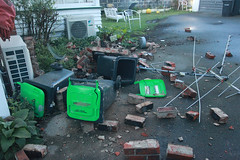
See previous photo (exactly 3 hours earlier). Demolition of the support structure for NZ Breweries smokestack in Christchurch. CERES NZ's nibbler is at work, the pipe stack having been removed yesterday (Saturday). This is three hours after the previous photo, and just a pile of rubble sits beside the tree (largely undamaged despite being next...
From Rupture to Rhythm: An Autoethnographic Exploration of Dance as a Soma…
Research papers, The University of Auckland Library
This thesis explores the intricate relationship between dance and trauma, focusing on how embodied practices facilitate psychological recovery. Dominant narratives often prioritise cognitive experiences, limiting our understanding of healing. By employing a qualitative, post-positivist and critical autoethnographic approach, I reflect on my journey through trauma following the Christchurch earthquakes, utilising journal entries from the point of view of my younger self to illustrate the transformative power of movement and dance. The key themes of this research are structure and routine, socialisation, and alleviation of anxious thoughts, demonstrating how engaging with the body challenges conventional notions of recovery. Furthermore, it highlights the complementary role of Dance Movement Therapy in trauma- informed practices, advocating for a holistic approach that recognises the mind-body connection. The findings underscore the necessity of viewing trauma as an embodied experience and propose a shift toward movement-based therapeutic practices that empower individuals through their lived experiences. Ultimately, this research calls for reimagining therapeutic frameworks, emphasising dance's potential to complement current trauma- informed therapies and promote a bottom-up approach to recovery.
Possible impacts of workplace-based school zoning in Christchurch, New Zea…
Research papers, University of Canterbury Library
Home address-based school zoning regulations are widely used in many countries as one means of selecting pupils and estimating future enrolment. However, there is little research regarding an alternative system of zoning for parents’ place of employment. Previous research has failed to analyse potential impacts from workplace-based zoning, including negating the effects of chain migration theory and settlement patterns to facilitate cultural integration, promoting the physical and mental wellbeing of families by enabling their close proximity during the day, as well as positive results concerning a volatile real estate market. As the modern family more often consists of one or both parents working full-time, the requirement of children to attend school near their home may not be as reasonably convenient as near their parents’ workplace. A case study was performed on one primary school in Christchurch, consisting of surveys and interviews of school stakeholders, including parents and staff, along with GIS mapping of school locations. This found deeper motivations for choosing a primary school, including a preference for cultural integration and the desire to school children under 14 years near their parents’ place of employment in case of illness or earthquake. These data suggest that the advantages of workplace-based zoning may be worth considering, and this thesis creates a framework for the Ministry of Education to implement this initiative in a pilot programme for primary schools in Christchurch.
Coastal modelling of sea level rise for the Christchurch coastal environme…
Research papers, The University of Auckland Library
Predictive modelling provides an efficient means to analyse the coastal environment and generate knowledge for long term urban planning. In this study, the numerical models SWAN and XBeach were incorporated into the ESRI ArcGIS interface by means of the BeachMMtool. This was applied to the Greater Christchurch coastal environment to simulate geomorphological evolution through hydrodynamic forcing. Simulations were performed using the recent sea level rise predictions by the Intergovernmental Panel on Climate Change (2013) to determine whether the statutory requirements outlined in the New Zealand Coastal Policy Statement 2010 are consistent with central, regional and district designations. Our results indicate that current land use zoning in Greater Christchurch is not consistent with these predictions. This is because coastal hazard risk has not been thoroughly quantified during the process of installing the Canterbury Earthquake Recovery Authority residential red zone. However, the Christchurch City Council’s flood management area does provide an extent to which managed coastal retreat is a real option. The results of this research suggest that progradation will continue to occur along the Christchurch foreshore due to the net sediment flux retaining an onshore direction and the current hydrodynamic activity not being strong enough to move sediment offshore. However, inundation during periods of storm surge poses a risk to human habitation on low lying areas around the Avon-Heathcote Estuary and the Brooklands lagoon.
WEMO ERT Team Set 1 - June 2011 - Photograph 2
Images, UC QuakeStudies
A photograph of Fred Mecoy, the Wellington City Council's Emergency Preparedness Manager, speaking at a graduation ceremony for more than 40 new civil defence volunteers in the Wellington Town Hall. Members of the Wellington Emergency Management Office team were presented certificates of appreciation during this event. The certificates were presented to the members to honour their involvement in the emergency response to the 22 February 2011 earthquakes in Christchurch.
Back of the Old Princess Cinema in New Brighton (2)
Images, UC QuakeStudies
Detail of damage to the former Princess Cinema in New Brighton. Bricks have fallen from the wall, exposing the interior. The photographer comments, "This is the back of the old Princess Cinema in New Brighton after the earthquake in Christchurch, New Zealand on 22 February. The bricks seem to be just on the edge of falling. This building has now been knocked down as it was so dangerous".
New Zealand Defence Force photograph 690
Images, UC QuakeStudies
Damage to buildings along Norwich Quay in Lyttelton. To the left is the Lyttelton Hotel with a crumbled top. Bricks have fallen on the awning and all along the footpath. To the right is a cafe that was damaged severely in the earthquake. The front wall of the top storey has crumbled onto the street, crushing a car. Wire fencing and road cones have been used to create a cordon around the buildings.
Facilitating community involvement in council-community master planning
Research papers, Lincoln University
The focus of this paper is to identify potential benefits of community involvement in master planning in the post-earthquake recovery context in Christchurch; and to identify considerations for planners involved in the design of master planning processes that involve the community. Findings are based on the results of an information sharing event on these topics convened by The Habitat Project in December 2011, and a review of the relevant literature.
Spatial effects of the Canterbury earthquakes on inanga spawning habitat a…
Research papers, University of Canterbury Library
The Canterbury earthquakes resulted in numerous changes to the waterways of Ōtautahi Christchurch. These included bank destabilisation, liquefaction effects, changes in bed levels, and associated effects on flow regimes and inundation levels. This study set out to determine if these effects had altered the location and pattern of sites utilised by īnanga (Galaxias maculatus) for spawning, which are typically restricted to very specific locations in upper estuarine areas. Extensive surveys were carried out in the Heathcote/Ōpāwaho and Avon/Ōtākaro catchments over the four peak months of the 2015 spawning season. New spawning sites were found in both rivers and analysis against pre-earthquake records identified that other significant changes have occurred. Major changes include the finding of many new spawning sites in the Heathcote/Ōpāwaho catchment. Sites now occur up to 1.5km further downstream than the previously reported limit and include the first records of spawning below the Woolston Cut. Spawning sites in the Avon/Ōtākaro catchment also occur in new locations. In the mainstem, sites now occur both upstream and downstream of all previously reported locations. A concentrated area of spawning was identified in Lake Kate Sheppard at a distinctly different location versus pre-quake records, and no spawning was found on the western shores. Spawning was also recorded for the first time in Anzac Creek, a nearby waterway connected to Lake Kate Sheppard via a series of culverts.
Earthquake Induced Fissuring in Banks Peninsula Loessial Soils: a Geotechn…
Research papers, University of Canterbury Library
One of the less understood geotechnical responses to the cyclic loading from the MW6.2 Christchurch Earthquake, on the 22nd of February 2011, is the fissuring in the loessial soil-mantled, footslope positions of the north-facing valleys of the Port Hills. The fissures are characterized by mostly horizontal offset (≤500mm), with minor vertical displacement (≤300mm), and they extend along both sides of valleys for several hundred metres in an approximately contour-parallel orientation. The fissure traces correspond to extensional features mapped in other studies. Previous studies have suggested that the fissures are the headscarps of incipient landslides, but the surface and subsurface features are not typical of landslide movement. Whilst there are some features that correlate with landslide movement, there are many features that contradict the landslide movement hypothesis. Of critical importance to this investigation was the fact that there are no landslide flanks, there has been no basal shear surface found, there is little deformation in the so-called ‘landslide body’, and there have been no recorded zones of low shear strength in the soil deposit that are indicative of a basal shear surface. This thesis is a detailed geotechnical study on the fissures along part of Ramahana Road in the Hillsborough Valley, Christchurch. Shallow and deep investigation methods found that the predominant soil is loess-colluvium, to depths of ~20m, and this soil has variable geotechnical characteristics depending on the layer sampled. The factor that has the most influence on shear strength was found to be the moisture content. Direct shear-box testing of disturbed, recompacted loess-colluvium found that the soil had a cohesion of 35-65kPa and a friction angle of 38-43° when the soil moisture content was at 8-10%. However when the moisture content was at 19-20% the soil’s cohesion decreased to 3-5kPa and its friction angle decreased to 33-38°, this moisture content is at or slightly above the plastic limit. An electrical resistivity geophysical survey was conducted perpendicular to multiple fissure traces and through the compressional zone at 17 Ramahana Road. The electrical resistivity line found that there was an area of high resistivity at the toe of the slope, and an area of high conductivity downslope of this and at greater depths. This area correlated to the compressional zone recorded by previous studies. Moisture content testing of the soil in these locations showed that the soil in the resistive area was relatively dry (9%) compared to the surrounding soil (13%), whilst the soil in the conductive area was relatively wet (22%)compared to the surrounding soil (19%). Density tests of the soil in the compressional zone recorded that the resistive area had a higher dry density than the surrounding soil (~1790 kg/m3 compared to ~1650 kg/m3). New springs arose downslope of the compressional zone contemporaneously with the fissures, and it is interpreted that these have arisen from increased hydraulic head in the Banks Peninsula bedrock aquifer system, and earthquake induced-bedrock fracturing. A test pit was dug across an infilled fissure trace at 17 Ramahana Road to a depth of 3m. The fissure trace had an aperture of 450-470mm at the ground surface, but it gradually lost aperture with depth until 2.0-2.1m where it became a segmented fissure trace with 1-2mm aperture. A mixed-colluvium layer was intercepted by the fissure trace at 2.4m depth, and there was no observable vertical offset of this layer. The fissure trace was at an angle of 78° at the ground surface, but it also flattened with depth, which gave it a slightly curved appearance. The fissure trace was at an assumed angle of 40-50° near the base of the test pit. Rotational slide, translational slide and lateral spread landslide movement types were compared and contrasted as possibilities for landslide movement types, whilst an alternative hypothesis was offered that the fissures are tensile failures with a quasi-toppling motion involving a cohesive block of loessial soil moving outwards from the slope, with an accommodating compressional strain in the lower less cohesive soil. The mechanisms behind this movement are suggested to be the horizontal earthquake inertia forces from the Christchurch Earthquake, the static shear stress of the slope, and bedrock uplift of the Port Hills in relation to the subsidence of the Christchurch city flatlands. Extremely high PGA is considered to be a prerequisite to the fissure trace development, and these can only be induced in the Hillsborough Valley from a Port Hills Fault rupture, which has a recurrence interval of ~10,000 years. The current understanding of how the loess-colluvium soil would behave under cyclic loading is limited, and the mechanisms behind the suggested movement type are not completely understood. Further research is needed to confirm the proposed mechanism of the fissure traces. Laboratory tests such as the cyclic triaxial and cyclic shear test would be beneficial in future research to quantitatively test how the soil behaves under cyclic loading at various moisture contents and clay contents, and centrifuge experiments would be of great use to qualitatively test the suggested mode of movement in the loessial soil.