
Search
found 1867 results
Images for CANTERBURY EARTHQUAKE; more images...


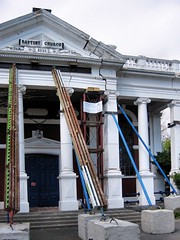
St John the Evangelist Anglican Church - 1863
Images, eqnz.chch.2010
Okains Bay Banks Peninsula New Zealand
sand volcano craters
Images, eqnz.chch.2010
None
sand volcano versus shed
Images, eqnz.chch.2010
None
sand volcano versus shed
Images, eqnz.chch.2010
None
sand volcano gushing
Images, eqnz.chch.2010
None
sand volcano versus path
Images, eqnz.chch.2010
None
sand volcano versus vegetables
Images, eqnz.chch.2010
None
IMG_2319
Images, eqnz.chch.2010
Damage to the St John The Evangelist Catholic Church in Leeston suffered during the magnitude 7.1 earthquake that struck mid-Canterbury on Saturday 4 September 2010.
Asko's rubble
Images, eqnz.chch.2010
None
In Sydenham
Images, eqnz.chch.2010
None
Watched Over
Images, eqnz.chch.2010
None
Pretty Things
Images, eqnz.chch.2010
None
Cheesemongers Before
Images, eqnz.chch.2010
None
Robbie and his new lawn feature
Images, eqnz.chch.2010
One of the many sand volcanos erupting from the ground after the Christchurch earthquake.
sand volcano
Images, eqnz.chch.2010
And, yes, the newspaper always gets through! The Press newspapers were delivered in our area of Hoon Hay in the hours after the earthquake.
IMG_2254
Images, eqnz.chch.2010
Slipping of the tectonic plates caused tension cracks on this previously unknown faultline that runs through this paddock; magnitude 7.1 earthquake in mid-Canterbury on Saturday 4 September 2010.
IMG_2421
Images, eqnz.chch.2010
Slipping of the tectonic plates caused tension cracks on this previously unknown faultline that runs through this paddock; magnitude 7.1 earthquake in mid-Canterbury on Saturday 4 September 2010.
IMG_2412
Images, eqnz.chch.2010
Slipping of the tectonic plates caused tension cracks on this previously unknown faultline that runs through this paddock; magnitude 7.1 earthquake in mid-Canterbury on Saturday 4 September 2010.
IMG_2235
Images, eqnz.chch.2010
Slipping of the tectonic plates caused tension cracks on this previously unknown faultline that runs through this paddock; magnitude 7.1 earthquake in mid-Canterbury on Saturday 4 September 2010.
IMG_2238
Images, eqnz.chch.2010
Slipping of the tectonic plates caused tension cracks on this previously unknown faultline that runs through this paddock; magnitude 7.1 earthquake in mid-Canterbury on Saturday 4 September 2010.
IMG_2234
Images, eqnz.chch.2010
Slipping of the tectonic plates caused tension cracks on this previously unknown faultline that runs through this paddock; magnitude 7.1 earthquake in mid-Canterbury on Saturday 4 September 2010.
IMG_2253
Images, eqnz.chch.2010
Slipping of the tectonic plates caused tension cracks on this previously unknown faultline that runs through this paddock; magnitude 7.1 earthquake in mid-Canterbury on Saturday 4 September 2010.
IMG_2237
Images, eqnz.chch.2010
Slipping of the tectonic plates caused tension cracks on this previously unknown faultline that runs through this paddock; magnitude 7.1 earthquake in mid-Canterbury on Saturday 4 September 2010.
IMG_2240
Images, eqnz.chch.2010
Slipping of the tectonic plates caused tension cracks on this previously unknown faultline that runs through this paddock; magnitude 7.1 earthquake in mid-Canterbury on Saturday 4 September 2010.
IMG_2419
Images, eqnz.chch.2010
Slipping of the tectonic plates caused tension cracks on this previously unknown faultline that runs through this paddock; magnitude 7.1 earthquake in mid-Canterbury on Saturday 4 September 2010.
IMG_2236
Images, eqnz.chch.2010
Slipping of the tectonic plates caused tension cracks on this previously unknown faultline that runs through this paddock; magnitude 7.1 earthquake in mid-Canterbury on Saturday 4 September 2010.
IMG_2256
Images, eqnz.chch.2010
Slipping of the tectonic plates caused tension cracks on this previously unknown faultline that runs through this paddock; magnitude 7.1 earthquake in mid-Canterbury on Saturday 4 September 2010.
IMG_2255
Images, eqnz.chch.2010
Slipping of the tectonic plates caused tension cracks on this previously unknown faultline that runs through this paddock; magnitude 7.1 earthquake in mid-Canterbury on Saturday 4 September 2010.
IMG_2420
Images, eqnz.chch.2010
Slipping of the tectonic plates caused tension cracks on this previously unknown faultline that runs through this paddock; magnitude 7.1 earthquake in mid-Canterbury on Saturday 4 September 2010.
Geotechnical reconnaissance of the 2010 Darfield (New Zealand) earthquake
Research papers, University of Canterbury Library
On 4 September 2010, a magnitude Mw 7.1 earthquake struck the Canterbury region on the South Island of New Zealand. The epicentre of the earthquake was located in the Darfield area about 40 km west of the city of Christchurch. Extensive damage occurred to unreinforced masonry buildings throughout the region during the mainshock and subsequent large aftershocks. Particularly extensive damage was inflicted to lifelines and residential houses due to widespread liquefaction and lateral spreading in areas close to major streams, rivers and wetlands throughout Christchurch and Kaiapoi. Despite the severe damage to infrastructure and residential houses, fortunately, no deaths occurred and only two injuries were reported in this earthquake. From an engineering viewpoint, one may argue that the most significant aspects of the 2010 Darfield Earthquake were geotechnical in nature, with liquefaction and lateral spreading being the principal culprits for the inflicted damage. Following the earthquake, a geotechnical reconnaissance was conducted over a period of six days (10–15 September 2010) by a team of geotechnical/earthquake engineers and geologists from New Zealand and USA (GEER team: Geo-engineering Extreme Event Reconnaissance). JGS (Japanese Geotechnical Society) members from Japan also participated in the reconnaissance team from 13 to 15 September 2010. The NZ, GEER and JGS members worked as one team and shared resources, information and logistics in order to conduct thorough and most efficient reconnaissance covering a large area over a very limited time period. This report summarises the key evidence and findings from the reconnaissance.