
Search
found 132 results
Images for christchurch OR past OR heritage OR historic; more images...
The Outsider, Help is On The Way
Audio, Radio New Zealand
Film and TV reviewer Tamar Munch takes a look at the new US drama The Outsider, based on the Stephen King novel of the same name, and Help Is On The Way, a Kiwi documentary based on the 6.3 Christchurch earthquake and what happened to the 36 guest trapped on the top floors of the Hotel Grand Chancellor.
Tsunami evacuation dynamics following the 2016 Kaikōura earthquake in Chri…
Research papers, University of Canterbury Library
Recent global tsunami events have highlighted the importance of effective tsunami risk management strategies (including land-use planning, structural and natural defences, warning systems, education and evacuation measures). However, the rarity of tsunami means that empirical data concerning reactions to tsunami warnings and tsunami evacuation behaviour is rare when compared to findings about evacuations to avoid other sources of hazard. To date empirical research into tsunami evacuations has focused on evacuation rates, rather than other aspects of the evacuation process. More knowledge is required about responses to warnings, pre-evacuation actions, evacuation dynamics and the return home after evacuations. Tsunami evacuation modelling has the potential to inform evidence-based tsunami risk planning and response. However to date tsunami evacuation models have largely focused on timings of evacuations, rather than evacuation behaviours. This Masters research uses a New Zealand case study to reduce both of these knowledge gaps. Qualitative survey data was gathered from populations across coastal communities in Banks Peninsula and Christchurch, New Zealand, required to evacuate due to the tsunami generated by the November 14th 2016 Kaikōura Earthquake. Survey questions asked about reactions to tsunami warnings, actions taken prior to evacuating and movements during the 2016 tsunami evacuation. This data was analysed to characterise trends and identify factors that influenced evacuation actions and behaviour. Finally, it was used to develop an evacuation model for Banks Peninsula. Where appropriate, the modelling inputs were informed by the survey data. Three key findings were identified from the results of the evacuation behaviour survey. Although 38% of the total survey respondents identified the earthquake shaking as a natural cue for the tsunami, most relied on receiving official warnings, including sirens, to prompt evacuations. Respondents sought further official information to inform their evacuation decisions, with 39% of respondents delaying their evacuation in order to do so. Finally, 96% of total respondents evacuated by car. This led to congestion, particularly in more densely populated Christchurch city suburbs. Prior to this research, evacuation modelling had not been completed for Banks Peninsula. The results of the modelling showed that if evacuees know how to respond to tsunami warnings and where and how to evacuate, there are no issues. However, if there are poor conditions, including if people do not evacuate immediately, if there are issues with the roading network, or if people do not know where or how to evacuate, evacuation times increase with there being more bottlenecks leading out of the evacuation zones. The results of this thesis highlight the importance of effective tsunami education and evacuation planning. Reducing exposure to tsunami risk through prompt evacuation relies on knowledge of how to interpret tsunami warnings, and when, where and how to evacuate. Recommendations from this research outline the need for public education and engagement, and the incorporation of evacuation signage, information boards and evacuation drills. Overall these findings provide more comprehensive picture of tsunami evacuation behaviour and decision making based on empirical data from a recent evacuation, which can be used to improve tsunami risk management strategies. This empirical data can also be used to inform evacuation modelling to improve the accuracy and realism of the evacuation models.
Transcript of Andrea's earthquake story
Articles, UC QuakeStudies
A pdf transcript of Andrea's second earthquake story, captured by the UC QuakeBox Take 2 project. Interviewer: Samuel Hope. Transcriber: Josie Hepburn.
EQC found by inquiry to be poorly prepared for quakes
Audio, Radio New Zealand
An inquiry into the Earthquake Commission has found it was poorly prepared for the Canterbury earthquakes - and has left people with a "deep mistrust of government" that will take years to overcome. The government has this morning released findings from the inquiry, chaired by Dame Silvia Cartwright. Our Christchurch reporter, Conan Young, has been reading through the details and spoke with Māni Dunlop.
'Needle not moving' as botched EQC re-repairs still coming in - Megan Woods
Audio, Radio New Zealand
Some 10 years on from the devastating Canterbury quakes, the wait is still not over when it comes to law changes needed to improve the Earthquake Commission. The government will not get it done until 2021, if it's re-elected. Meanwhile cases of botched quake repairs needing a fix are still flooding into EQC, Greater Christchurch Regeneration Minister Megan Woods told Checkpoint.
Christ Church Cathedral restoration: Massive steel frame being installed t…
Audio, Radio New Zealand
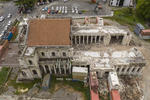
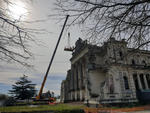
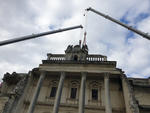
Moves towards returning the famed rose window to Christ Church Cathedral begin today. An eighteen-tonne steel frame is being installed onto the cathedral's west facade as part of restoration work. It will eventually housing the rose window. The cathedral was critically damaged in the Christchurch earthquake of 2011. Project director Keith Paterson is in Cathedral Square. He speaks to Susie Ferguson.
EQC's legacy a degraded housing stock, inquiry finds
Audio, Radio New Zealand
The chair of the inquiry in to the Earthquake Commission has grave concerns about the state of the housing stock in Christchurch due to EQC's failure to properly fix quake damage. It's just one of a raft of findings released by Dame Silvia Cartwright today, after a year and a half long inquiry that heard from hundreds of homeowners and key players. Conan Young has the story.
How can tiny homes encourage adaptive community development in response to…
Research papers, University of Canterbury Library
The affect that the Christchurch Earthquake Sequence(CES) had on Christchurch residents was severe, and the consequences are still being felt today. The Ōtākaro Avon River Corridor (OARC) was particularly impacted, a geographic zone that had over 7,000 homes which needed to be vacated and demolished. The CES demonstrated how disastrous a natural hazard can be on unprepared communities. With the increasing volatility of climate change being felt around the world, considering ways in which communities can reduce their vulnerabilities to natural hazards is vital. This research explores how communities can reduce their vulnerabilities to natural hazards by becoming more adaptable, and in particular the extent to which tiny homes could facilitate the development of adaptive communities. In doing so, three main themes were explored throughout this research: (1) tiny homes, (2) environmental adaptation and (3) community adaptability. To ensure that it is relevant and provides real value to the local community, the research draws upon the local case study of the Riverlution Tiny House Village(RTHV), an innovative community approach to adaptable, affordable, low-impact, sustainable living on margins of land which are no longer suitable for permanent housing. The main findings of the research are that Christchurch is at risk of climate change and natural hazards and it is therefore important to consider ways in which communities can stay intact and connected while adapting to the risks they face. Tiny homes provide an effective way of doing so, as they represent a tangible way that people can take adaptation into their own hands while maintaining a high-quality lifestyle.
Meet local hero 86 year old Māori warden Peggy Hughes
Audio, Radio New Zealand
Meet a local town hero from Auckland's Northshore - 86-year-old Māori Warden Peggy Hughes. Peggy has been serving in her community as a volunteer for about 60 years and officially as a Māori Warden for almost 50 years. She's won dozens of awards for her services - from working at the 1981 Springbok tour protests, supporting Christchurch residents after the 2011 earthquakes, serving at many memorable Waitangi Day events to the recent Black Lives Matter protests.
Porirua earthquake simulation to help hillside homes
Audio, Radio New Zealand
There are hopes an earthquake simulation in Porirua might result in homes being better prepared for a big shake. Houses on Christchurch's Port Hills suffered more damage than houses in other areas during the Canterbury Earthquakes - even though the ground shaking was roughly the same. Now the Earthquake Commission is on a mission to find out why that was - and prevent the same level of damage in a future quake. Checkpoint reporter Logan Church and video journalist Dom Thomas start their report up on a hilly farm above Wellington.
Coronavirus: Schools warned to be careful of mental health on reopening
Audio, Radio New Zealand
Education advisors are warning that children could suffer mental health problems for years to come if schools botch their return to the classroom. They say the Christchurch earthquakes and Australian bushfires show teachers should resist the temptation to launch straight back into normal lessons after a major event. Principals are hoping to learn today when they will move into alert level two and how many of their students will be able to return to school. RNZ's education correspondent John Gerritsen reports.
School leader says Ministry of Education wasted taxpayer money
Audio, Radio New Zealand
A school leader says the Ministry of Education of wasted millions of taxpayer dollars over years of earthquake repairs, and was obstructive and misleading. The building budget at Christchurch Girls High School has blown out by 50 percent to $40 million and it's not finished, even after five years of work. Mike Lay, who was chair of the board of trustees for most of those years, until 2018, says the ministry botched the job then targeted him when he tried to hold it accountable. He told Phil Pennington about the school's struggle to get the school re-built properly.
Residents fed up with red zone rubbish
Audio, Radio New Zealand
Christchurch red zone residents say the area is experiencing an increasing amount of petty crime and dumped rubbish, due to a lack of people. The red zone was established after thousands of houses - and the land underneath them - suffered severe damage in the 2010 and 2011 earthquakes. Last year (2019), a Regeneration Plan for the area was signed off by the government - which included building walkways, cycleways, forests, wetlands, and sport and recreation areas. That's all designed to get people back into the red zone area - but much of the work is still years away. Logan Church met a resident who told him that in the meantime, things are deteriorating.
Seismic isolation of light frame wood buildings in New Zealand
Research papers, University of Canterbury Library
Seismic isolation is an effective technology for significantly reducing damage to buildings and building contents. However, its application to light-frame wood buildings has so far been unable to overcome cost and technical barriers such as susceptibility of light-weight buildings to movement under high-wind loading. The 1994 Northridge Earthquake (6.7 MW) in the United States, 1995 Kobe Earthquake (6.9 MW) in Japan and 2011 Christchurch Earthquake (6.7 Mw) all highlighted significant loss to light-frame wood buildings with over half of earthquake recovery costs allocated to their repair and reconstruction. This poster presents a value case to highlight the benefits of seismically isolated residential buildings compared to the standard fixed-base dwellings for the Wellington region. Loss data generated by insurance claim information from the 2011 Christchurch Earthquake has been used to determine vulnerability functions for the current light-frame wood building stock. By using a simplified single degree of freedom (SDOF) building model, methods for determining vulnerability functions for seismic isolated buildings are developed. Vulnerability functions are then applied directly in a loss assessment to determine the Expected Annual Loss. Vulnerability was shown to dramatically reduce for isolated buildings compared to an equivalent fixed-base building resulting in significant monetary savings, justifying the value case. A state-of-the-art timber modelling software, Timber3D, is then used to model a typical residential building with and without seismic isolation to assess the performance of a proposed seismic isolation system which addresses the technical and cost issues.
EQC ill-prepared to handle Canterbury repairs - Dame Silvia Cartwright
Audio, Radio New Zealand
EQC was ill-prepared to deal with the wide spread damage of the Christchurch Earthquakes and as a consequence its reputation been left in tatters with many seeing the commission as uncaring, miserly and inefficient. That is according to the findings of the inquiry into EQC and its handling of quake claims in Canterbury and Kaikōura. Inquiry Chair Dame Silvia Cartwright lays out a raft of inadequacies including EQC not being equiped to handle a mass scale managed repair programme - leading to multiple mistakes, poor staffing decisions and inadequate quality control. Damage assessments were the root of claimants disputes time and time again. Dame Silvia Cartwright described to Checkpoint the way claimants have been treated by EQC.
CH Earthquake:CTV victims' families continue push for justice
Audio, Radio New Zealand
The families of those who died in the CTV building's collapse during the Christchurch Earthquake in February of 2011 are vowing to continue their Fight For Justice after The Independent Police Conduct Authority rejected their complaint about the Police Investigation . The Police decided 3 years ago not to lay charges against the building's designer. Yesterday the families announced that the IPCA, the body that advised the Police, had told them that it had no jurisdiction over Crown Law. Families spokesperson, Maan Alkaisi, told reporter Conan Young that they will continue to push for somebody to be held to account. He wants a retired judge to take another look at the decision not to prosecute.
Government sets up package for Southern Response claimants
Audio, Radio New Zealand
A lawyer acting for Christchurch home-owners short changed in earthquake settlements says a new plan announced by the government is likely to run into trouble. Last year in a landmark case, the High Court found the government's claim settlement agency, Southern Response, misled and deceived Karl and Alison Dodds. It ordered the government to pay the couple nearly $180,000. The government has now set up a package for other Southern Response claimants who settled before October 2014. Its estimated about 3000 people will be eligible to benefit. But most of them are already taking part in a class action led by Brendan and Colleen Ross. Their lawyer Grant Cameron speaks to Corin Dann.
Transcending chaos: spirituality and coping in post-earthquake Canterbury,…
Research papers, Lincoln University
When an “I thought I was going to die quake” occurs amidst four additional major earthquakes and 15,000 aftershocks during a sixteen-month period, it challenges people’s ability to cope and recover. Residents of Canterbury, New Zealand endured this extended, chaotic state in 2010/11; and continue to deal with lingering effects on their devastated central city, Christchurch. Stress and coping theory suggests that finding meaning in such situations can help people recover, and that religion and spirituality often play a role in post-disaster resilience. Despite this, there is very little research literature examining this phenomenon and even less that considers spirituality separate from religion. This research focuses on this underrepresented area by considering the personal spiritual or meaningful experiences of people in post-earthquake Canterbury. Data from sixteen in-depth, minimally directed interviews were thematically analyzed to understand each individual’s meaning construction and coping/recovery process and identify connective themes and patterns amongst their experiences. Four core elements of acceptance, clarity and choice, connection, and transcendence emerged from the thematic analysis to conceptualize a model of transcendent coping. Transcendent coping represents an additional type of coping in the transactional model of stress and coping, which serves to support the previous denoted problem-, emotion-, and meaning-focused coping approaches. Transcendent coping offers openness, empowerment, comfort and expansion not necessarily reliant upon theistic or religious beliefs and practices. Rather, this secular spiritual coping is inherent in everyday, mundane practices such as being in the moment, aligning to and acting from personal values, connecting to that and those who bring comfort, and experiencing transcendence in moments of awe and expansion. This research contributes to the growing interest in spirituality as an important facet of human nature that can support wellbeing in the face of stress.
How would changes to serviceability limit state design criteria impact lik…
Research papers, University of Canterbury Library
The earthquake engineering community is currently grappling with the need to improve the post-earthquake reparability of buildings. As part of this, proposals exist to change design criteria for the serviceability limit state (SLS). This paper reviews options for change and considers how these could impact the expected repair costs for typical New Zealand buildings. The expected annual loss (EAL) is selected as a relevant measure or repair costs and performance because (i) EAL provides information on the performance of a building considering a range of intensity levels, (ii) the insurance industry refers to EAL when setting premiums, and (iii) monetary losses are likely to be correlated with loss of building functionality. The paper argues that because the expected annual loss is affected by building performance over a range of intensity levels, the definition of SLS criteria alone may be insufficient to effectively limit losses. However, it is also explained that losses could be limited effectively if the loadings standard were to set the SLS design intensity considering the potential implications on EAL. It is shown that in order to achieve similar values of EAL in Wellington and Christchurch, the return period intensity for SLS design would need to be higher in Christchurch owing to differences in local hazard conditions. The observations made herein are based on a simplified procedure for EAL estimation and hence future research should aim to verify the findings using a detailed loss assessment approach applied to a broad range of case study buildings.
Pathways to urban health and well-being: measuring and modelling of commun…
Research papers, University of Canterbury Library
<jats:p>Social and natural capital are fundamental to people’s wellbeing, often within the context of local community. Developing communities and linking people together provide benefits in terms of mental well-being, physical activity and other associated health outcomes. The research presented here was carried out in Christchurch - Ōtautahi, New Zealand, a city currently re-building, after a series of devastating earthquakes in 2010 and 2011. Poor mental health has been shown to be a significant post-earthquake problem, and social connection has been postulated as part of a solution. By curating a disparate set of community services, activities and facilities, organised into a Geographic Information Systems (GIS) database, we created i) an accessibility analysis of 11 health and well-being services, ii) a mobility scenario analysis focusing on 4 general well-being services and iii) a location-allocation model focusing on 3 primary health care and welfare location optimisation. Our results demonstrate that overall, the majority of neighbourhoods in Christchurch benefit from a high level of accessibility to almost all the services; but with an urban-rural gradient (the further away from the centre, the less services are available, as is expected). The noticeable exception to this trend, is that the more deprived eastern suburbs have poorer accessibility, suggesting social inequity in accessibility. The findings presented here show the potential of optimisation modelling and database curation for urban and community facility planning purposes.</jats:p>
Between the cracks: The intersection of individuals, social processes and …
Research papers, Lincoln University
This research investigates creativity in a post-disaster setting. The data explore creativity at the intersection of the affected community of Christchurch, New Zealand and the social processes that followed the earthquakes of 2010 - 2012. Personal and contextual influences on creative ideas implemented for community or commercial benefit are also examined. Viewed as creative, unique approaches to post-disaster problem solving were celebrated locally, nationally and internationally (Bergman, 2014; Wesener, 2015; Cloke & Conradson, 2018). Much has been written about creativity, particularly creativity in organisations and in business. However, little is known with regards to who creates after a disaster, why individuals choose to do so and what impact the post-disaster context has on their creative activity. This exploratory study draws on the literature from the fields of creativity, disasters, psychology, sociology and entrepreneurship to interpret first-hand accounts of people who acted on creative ideas in a physically and socially altered environment. A mixed method - albeit predominantly qualitative - approach to data gathering was adopted that included interviews (n=45) with participants who had been the primary drivers of creative ideas implemented in Christchurch after September 2010 – the first major (7.1 magnitude) earthquake in a prolonged sequence of thousands of aftershocks. Key findings include that a specific type of creativity results from the ‘collision’ between individuals and social processes activated by a disaster situation. This type of creativity could be best categorised as ‘little c’ or socially adaptive and emerges through a prosocial filter. There is wide consensus amongst creativity researchers - principally social psychologists - that for output to be considered creative it must be both novel and useful (Runco & Jaegar, 2012). There is greater tolerance for the novelty component after a disaster as novelty itself has greater utility, either as a distraction or because alternatives are few. Existing creativity models show context as input – an additional component of the creative process – but after a disaster the event itself becomes the catalyst for social processes that result in the creativity seen. Most participants demonstrated characteristics commonly associated with creativity and could be categorised as either a ‘free thinker’ and/or an ‘opportunist’. Some appear preadapted to create and thrive in unstable circumstances. Findings from participants’ completion of a Ten Item Personality Inventory (TIPI) showed an apparent reduced need for extraversion in relation to implementing creative ventures in society. This factor, along with higher levels of agreeableness may indicate a potentially detrimental effect on the success of creative ideas established after a disaster, despite earnest intentions. Three new models are presented to illustrate the key findings of this study. The models imply that disasters enhance both the perceived value of creativity and the desire to act creatively for prosocial ends. The models also indicate that these disaster influenced changes are likely to be temporary.
A CPT-based effective stress analysis procedure for liquefaction assessment
Research papers, University of Canterbury Library
There is a growing awareness of the need for the earthquake engineering practice to incorporate in addition to empirical approaches in evaluation of liquefaction hazards advanced methods which can more realistically represent soil behaviour during earthquakes. Currently, this implementation is hindered by a number of challenges mainly associated with the amount of data and user-experience required for such advanced methods. In this study, we present key steps of an advanced seismic effective-stress analysis procedure, which on the one hand can be fully automated and, on the other hand, requires no additional input (at least for preliminary applications) compared to simplified cone penetration test (CPT)-based liquefaction procedures. In this way, effective-stress analysis can be routinely applied for quick, yet more robust estimations of liquefaction hazards, in a similar fashion to the simplified procedures. Important insights regarding the dynamic interactions in liquefying soils and the actual system response of a deposit can be gained from such analyses, as illustrated with the application to two sites from Christchurch, New Zealand.
Southern Response appeal on Dodds decision largely dismissed
Audio, Radio New Zealand
A Christchurch couple locked in an ongoing legal battle with state-owned quake insurer Southern Response says it is sobering for a Court of Appeal decision to go their way, one decade on from the harrowing earthquakes. An earlier High Court decision found Southern Response guilty of misleading and deceptive behaviour when it short-changed Karl and Alison Dodds tens of thousands of dollars after their quake damaged house was written off. The Dodds say they were tricked into accepting a lower offer from Southern Response only to later discover the insurer had kept secret from them a second higher estimate to rebuild their damaged house, a so-called second secret detailed repair and rebuild analysis (DRA). The High Court ordered Southern Response to pay the Dodds almost $180,000 in damages, plus costs. But the government appealed the decision, saying it needed clarity, because of the thousands of similar cases it could be liable for. The Court of Appeal reduced the damages Southern Response has to pay $10,656.44 due to an earlier error in calculations. The Minister responsible Grant Robertson has declined to be interviewed. Southern Response also declined to be interviewed. Neither have ruled out appealing the decision in the Supreme Court.
FRONTLINE: The nexus of political documentary and alternative journalism:
Research papers, The University of Auckland Library
<jats:p>This article is a critical commentary of how political documentary embodies the traits and functions of alternative journalism. I explore this notion through Obrero (‘worker’) my independent documentary project about the labour migration of Filipino workers to Christchurch, Aotearoa New Zealand, after the earthquake in 2011. This article maps out the points at where the theories and practices of alternative media and documentary intersect. Analysing political documentary as a format of alternative journalism has links to the long tradition of film and video production as a tool for social critique. As a form of practice-based research, Obrero falls under the rubric of alternative journalism—able to represent the politically marginal sectors of the polity and report on issues underreported in the mainstream press. This article concludes that a distribution plan that is responsive to fragmenting audiences works best when alternative journalism no longer targets a niche but transborder audiences.</jats:p>
The glass scaffold : women in construction responding to industry conditio…
Research papers, University of Canterbury Library
Exploring women’s experiences of entering, working in, or leaving the Christchurch construction industry between 2010 and 2018 led to the creation of the theory of “deferential tailoring.” Deferential tailoring explains how women shape their responses to industry conditions as an intentional behavioural adjustment process. Most importantly, this theory provides insight into women’s unseen efforts to build positive workplace relationships, their capability to advance, and challenges to existing views of gender roles in this context. Research on women in construction focusses primarily on identifying and explaining barriers that impact on women’s entry, progression, and retention in the industry. There is an absence of process studies that explain the actions women take to manage industry conditions in business-as-usual, let alone post-disaster contexts. In the eight years following the 2010 Canterbury (New Zealand) earthquakes, rapid changes to the construction industry meant women had unprecedented access and new opportunities in this historically male-dominated domain. This setting provided a unique context within which to investigate how women respond to industry opportunities and challenges. The aim of this interpretive research was to construct a response theory, particular to women working in the Christchurch construction industry. Applying a constructivist grounded theory approach, theoretical sampling, coding and memo writing allowed for the collection and comparative analysis of 36 semi-structured interviews conducted with women working in a cross-section of industry occupations. Three inter- related categories were built: capitalising on opportunity, building capability and token tolerance, which together constitute the deferential tailoring process. Akin to building an invisible glass scaffold, women intentionally regulate their behaviours to successfully seize opportunities and manage social challenges. In building this scaffold, women draw heavily on personal values and positive, proactive attributes as a response to industry conditions. In contrast to previous research, which suggests that women conform to the male-dominated norms of the industry, the theory of deferential tailoring proposes that women are prepared to regulate their behaviour to address the gendered norms that impact on their work experiences. This research contributes towards an evolving body of knowledge that aims to understand how women’s entry into the construction industry, retention, and workplace relationships can be improved. By expanding the view of how women respond to industry conditions over time, this research has generated knowledge that addresses gaps in construction industry literature relating to the management of coping strategies, capitalising on opportunities, and building positive workplace relationships. Knowledge and concepts generated from this research could be integrated into recruitment and training programmes to enhance women’s professional development, shift perceptions of women’s work, and address cultural norms that impact on women’s retention in the construction industry.
The effects of managed retreat (red zoning) on the relocated households in…
Research papers, University of Canterbury Library
The question of whether forced relocation is beneficial or detrimental to the displaced households is a controversial and important policy question. After the 2011 earthquake in Christchurch, the government designated some of the worst affected areas as Residential Red Zones. Around 20,000 people were forced to move out of these Residential Red Zone areas, and were compensated for that. The objective of this paper is twofold. First, we aim to estimate the impact of relocation on the displaced households in terms of their income, employment, and their mental and physical health. Second, we evaluate whether the impact of relocation varies by the timing of to move, the destination (remaining within the Canterbury region or moving out of it) and demographic factors (gender, age, ethnicity). StatisticsNZ’s Integrated Data Infrastructure (IDI) from 2008 to 2017, which includes data on all households in Canterbury, and a difference-in-difference (DID) technique is used to answer these questions. We find that relocation has a negative impact on the income of the displaced household group. This adverse impact is more severe for later movers. Compared to the control group (that was not relocated), the income of relocated households was reduced by 3% for people who moved immediately after the earthquake in 2011, and 14% for people who moved much later in 2015.
Teaching together: Reflections on developing a collaborative interdiscipli…
Research papers, University of Canterbury Library
The Bachelor of Youth and Community Leadership (BYCL) was launched by the University of Canterbury (UC) in 2020. The genesis of this new degree was a Stage One service-learning course that, in turn, arose from the innovative and active response of many of the university’s students in the aftermath of the Christchurch earthquakes in 2010 and 2011. That innovative action saw the formation of the Student Volunteer Army as well as the adoption of a new set of Graduate Attributes for every undergraduate at the university. The idea of a specialist undergraduate degree that captured this unique chain of events began to take form from 2016. The resulting degree was developed as a flexible, transdisciplinary programme for young (and not so young) leaders wanting an academic grounding for their passions in community leadership and social action. In 2020, the inaugural intake of students commenced their studies. In this reflection, we discuss our experience of teaching within the BYCL for the first time, using a collaborative approach to teaching that we based on what we understand, individually and collectively, to draw on principles of democratic pedagogy.
Obrero (“worker”): Practising and theorising political documentary across …
Research papers, The University of Auckland Library
This thesis is a creative and critical exploration of how transmedia storytelling meshes with political documentary’s nature of representing social realities and goals to educate and promote social change. I explore this notion through Obrero (“worker”), my independently produced transmedia and transjournalistic documentary project that explores the conditions and context of the Filipino rebuild workers who migrated to Christchurch, New Zealand after the earthquake in 2011. While the project should appeal to New Zealanders, it is specifically targeted at an audience from the Philippines. Obrero began as a film festival documentary that co-exists with strategically refashioned Web 2.0 variants, a social network documentary and an interactive documentary (i-doc). Using data derived from the production and circulation of Obrero, I interrogate how the documentary’s variants engage with differing audiences and assess the extent to which this engagement might be effective. This thesis argues that contemporary documentary needs to re-negotiate established film aesthetics and practices to adapt in the current period of shifting technologies and fragmented audiences. Documentary’s migration to new media platforms also creates a demand for filmmakers to work with a transmedia state of mind—that is, the capacity to practise the old canons of documentary making while comfortably adjusting to new media production praxis, ethics, and aesthetics. Then Obrero itself, as the creative component of this thesis, becomes an instance of research through creative practice. It does so in two respects: adding new knowledge about the context, politics, and experiences of the Filipino workers in New Zealand; and offering up a broader model for documentary engagement, which I analyse for its efficacy in the digital age
Digital storytelling in mediating caldera risk literacy in secondary schoo…
Research papers, University of Canterbury Library
Lake Taupō in New Zealand is associated with frequent unrest and small to moderate eruptions. It presents a high consequence risk scenario with immense potential for destruction to the community and the surrounding environment. Unrest associated with eruptions may also trigger earthquakes. While it is challenging to educate people about the hazards and risks associated with multiple eruptive scenarios, effective education of students can lead to better mitigation strategies and risk reduction. Digital resources with user-directed outcomes have been successfully used to teach action oriented skills relevant for communication during volcanic crisis [4]. However, the use of choose your own adventure strategies to enhance low probability risk literacy for Secondary school outreach has not been fully explored. To investigate how digital narrative storytelling can mediate caldera risk literacy, a module “The Kid who cried Supervolcano” will be introduced in two secondary school classrooms in Christchurch and Rotorua. The module highlights four learning objectives: (a) Super-volcanoes are beautiful but can be dangerous (b) earthquake (unrest) activity is normal for super-volcanoes (c) Small eruptions are possible from super-volcanoes and can be dangerous in our lifetimes (d) Super-eruptions are unlikely in our lifetimes. Students will create their digital narrative using the platform Elementari (www.elementari.io). The findings from this study will provide clear understanding of students’ understanding of risk perceptions of volcanic eruption scenarios and associated hazards and inform the design of educational resources geared towards caldera risk literacy.
Shake Table Testing of a Near Full Scale Three-storey Friction Based Low D…
Research papers, University of Canterbury Library
Recent severe earthquakes, such as the 2010-2011 Christchurch earthquake series, have put emphasis on building resilience all over the world. To achieve such resilience, procedures for low damage seismic design have been developed to satisfy both life safety requirements and the need to minimize undesirable economic effects of required building repair or structural member replacement following a major earthquake. Seismic resisting systems following this concept are expected to withstand severe earthquakes without requiring major post-earthquake repairs, using isolating mechanisms or sacrificial systems that either do not need repair or are readily repairable or replaceable. These include the sliding hinge joint with asymmetric friction connections (SHJAFCs) in beam-to-column connections of the moment resisting steel frames (MRSFs) and symmetric friction connections (SFCs) in braces of the braced frames. A 9 m tall, configurable three-storey steel framed composite floor building incorporating frictionbased connections is to be tested using two linked bi-directional shake tables at the International joint research Laboratory of Earthquake Engineering (ILEE) facilities, Shanghai, China. The structural systems are configurable, allowing different moment and braced frame structural systems tested in two horizontal directions. The structure is designed and detailed to undergo, at worst, minor damage under a planned series of severe earthquakes.