

Search
found 100457 results
Images for NEW-ZEALAND; more images...


Kaikoura: Tourist travel behaviour and recovery framework
Research Papers, Lincoln University
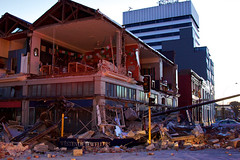
Initial recovery focus is on road access (especially the inland SH70) although attention also needs to be focussed on the timelines for reopening SH1 to the south. Information on progress and projected timelines is updated daily via NZTA (www.nzta.govt.nz/eq-travel ). Network analyses indicate potential day trip access and re-establishment of the Alpine Pacific triangle route. When verified against ‘capacity to host’ (Part 2 (15th December) there appears to potential for the reestablishment of overnight visits. Establishing secure road access is the key constraint to recovery. In terms of the economic recovery the Kaikoura District has traditionallyattracted a large number of visitors which can be grouped as: second home (and caravan) owners, domestic New Zealand and international travellers. These have been seen through a behaviour lens as “short stop”, ‘day” (where Kaikoura is the specific focal destination) and overnight visitors. At the present restricted access appears to make the latter group less amenable to visiting Kaikoura, not the least because the two large marine mammal operators have a strong focus on international visitors. For the present the domestic market provides a greater initial pathway to recovery. Our experiences in and reflections on Christchurch suggest Kaikoura will not go back to what it once was. A unique opportunity exists to reframe the Kaikoura experience around earthquake geology and its effects on human and natural elements. To capitalise on this opportunity there appears to be a need to move quickly on programming and presenting such experiences as part of a pathway to re-enabling domestic tourists while international visitor bookings and flows can be re-established. The framework developed for this study appears to be robust for rapid post disaster assessment. It needs to be regularly updated and linked with emerging governance and recovery processes.
Diversity and public engagement in planning: A case study of Chinese migra…
Research Papers, Lincoln University
Aotearoa New Zealand’s population has grown rapidly from 3.85 million in 2000, to 5 million in 2020. Ethnic diversity has consequently increased. Territorial Authorities (TAs) undertaking statutory consultation and wider public engagement processes need to respond to increased diversity and foster inclusivity. Inclusivity is necessary to facilitate a greater understanding of TA statutory functions, as well as to encourage awareness and participation in annual planning processes, and resource management plans and consents. We examined perceptions, and experiences, of planning within the ethnic Chinese immigrant population of Christchurch. The Chinese ethnic group is a significant part of the city’s population and is in itself derived from diverse cultural and language backgrounds. We surveyed 111 members of this community, via social media and in person, to identify environmental and planning issues of concern to them. We sought to ascertain their previous engagement with planning processes and to gauge their willingness for future involvement. We also undertook a small number of semi-structured interviews with Chinese immigrants to explore their experiences with planning in more detail. Results showed only 6% of respondents had been engaged in any planning processes, despite only 20% being unwilling to participate. We analysed these responses by gender, age, visa category, and length of time resident in Christchurch. Notwithstanding the low level of reported engagement, earthquake recovery (70% of respondents) along with water quality, transport, and air quality were the most important issues of concern. However, there was a general lack of awareness of the ability to make public submissions on these and other issues, and of the statutory responsibilities of TAs. We discuss possible explanations and provide several suggestions for TAs to increase awareness and to improve engagement. This includes further research to assist in identifying the nature of barriers as well as the effectiveness of trialling different solutions.
Sink or swim? The planner’s predicament in a changing Christchurch
Research Papers, Lincoln University
The world is constantly changing. Christchurch, New Zealand, has recently experienced drastic changes after earthquakes struck the city. The earthquakes caused the city to physically shake, and the land to sink in some places and rise in others. Now further change is forcast and parts of Christchurch could be under water by 2115 according to experts. Climate change induced sea level rise is recognised as a international issue with potential impacts for coastal communities all over the world. The Chrischtchurch City Council is required to have a 100-year planning horizon for sea level rise and this means planning for at least one meter, and possibly up to two meters, of sea level rise by 2115. This dissertation investigates the planning response to slow onset disasters, change, and uncertainty, using the example of sea-level rise in Christchurch, and it examines the role of public participation in this. To achieve this, the ways in which planning theory and practice acknowledge uncertainty, and cope with change, were critically analysed along with the Christchurch City Council’s response to the Tonkin and Taylor predictions and modelling. Semi-structured interviews with professionals in natural hazards risk reduction, policy, and planning were conducted, and the previous and proposed Christchurch City District Plans were compared. Planning for sea level rise in Christchurch provides an example of how planners may cope with slow onset change. The results of this dissertation suggests that the favoured risk reduction strategy for coastal communities in Christchurch is an adaptation strategy, and at present there is no sign of managed retreat being employed. The results also suggests using a planning approach that involves public participation for best results when planning for change, uncertainty or slow onset disasters.
Experimental pull-out test program of wall-to-diaphragm adhesive connectio…
Research papers, The University of Auckland Library
The connections between walls of unreinforced masonry (URM) buildings and flexible timber diaphragms are critical building components that must perform adequately before desirable earthquake response of URM buildings may be achieved. Field observations made during the initial reconnaissance and the subsequent damage surveys of clay brick URM buildings following the 2010/2011 Canterbury, New Zealand earthquakes revealed numerous cases where anchor connections joining masonry walls or parapets with roof or floor diaphragms appeared to have failed prematurely. These observations were more frequent for adhesive anchor connections than for through-bolt connections (i.e. anchorages having plates on the exterior façade of the masonry walls). Subsequently, an in-field test program was undertaken in an attempt to evaluate the performance of adhesive anchor connections between unreinforced clay brick URM walls and roof or floor diaphragm. The study consisted of a total of almost 400 anchor tests conducted in eleven existing URM buildings located in Christchurch, Whanganui and Auckland. Specific objectives of the study included the identification of failure modes of adhesive anchors in existing URM walls and the influence of the following variables on anchor load-displacement response: adhesive type, strength of the masonry materials (brick and mortar), anchor embedment depth, anchor rod diameter, overburden level, anchor rod type, quality of installation and the use of metal mesh sleeve. In addition, the comparative performance of bent anchors (installed at an angle of minimum 22.5o to the perpendicular projection from the wall surface) and anchors positioned horizontally was investigated. Observations on the performance of wall-to-diaphragm connections in the 2010/2011 Canterbury earthquakes, a snapshot of the performed experimental program and the test results and a preliminary proposed pull-out capacity of adhesive anchors are presented herein. http://www.confer.co.nz/nzsee/ VoR - Version of Record
Winter, Mark, 1958-: Cordon Blur. 22 March 2011
Images, Alexander Turnbull Library
Text above reads 'Central Christchurch business owners protest' and the words 'Cordon Blur' (wordplay on famous cookery schools 'Cordon Bleu' and 'blur' as in 'unclear'). The cartoon shows a striped barrier bearing the words 'KEEP OUT' that is being torn to pieces. A second version continues the text to read 'Central Christchurch business owners protest as future directions unclear'. Context - Protests from angry Christchurch business owners locked out of the damaged CBD have intensified today, with police physically intervening when several protesters went inside the cordon. They are worried about the state of their businesses inside the red zone, and say they have not been allowed in to collect critical records and basic tools so they can carry on working outside the cordon. (NZ Herald 21 March 2011) Quantity: 2 digital cartoon(s).
Winter, Mark 1958-:Red & black - Kia kaha Christchurch. 5 March 2011
Images, Alexander Turnbull Library
The cartoon has stripes above the words 'RED & BLACK kia kaha Christchurch'. Context - red and black are the Canterbury colours - the cartoon is a tribute to the people of Christchurch after the disastrous earthquake of 22 February 2011. 'Kia kaha' means 'forever strong'. Quantity: 1 digital cartoon(s).
Winter, Mark 1958- :[Christchurch one year on]. 22 February 2012
Images, Alexander Turnbull Library
The three versions of this cartoon show words reading 'rumble' and 'crack' and refer to problems in relationships between the Christchurch City Council and the government about how to manage the rebuilding of Christchurch after the second most damaging earthquake that occured one year ago today (22 February 2011) Quantity: 3 digital cartoon(s).
Rock 'n roll... 19 October 2010
Images, Alexander Turnbull Library
The cartoon shows the name 'Christchurch' shaking so that bits fly off it; the letters 'H', 'I', and 'T' spelling 'hit' are the only ones not shaking. A second version has the words 'Rock'n Roll' as a title. Refers to the earthquake of 4th September 2010 and its hundreds of aftershocks which continue on now into November. Two versions of this cartoon are available Quantity: 1 digital cartoon(s).
AFTERSHOCK$$$$$$$$$$ $2 Billion/ $4 Billion. [Canterbury earthquake]. 9 Se…
Images, Alexander Turnbull Library
Text reads 'AFTERSHOCK$$$$$$$$$$$ $2 billion $4 billion'. Refers to the estimated costs resulting from the Canterbury earthquake of 4th September 2010 - The '2' is crossed out and the 'Treasury' pen writes '4' in its place. Quantity: 1 digital cartoon(s).
Winter, Mark 1958-: Chim chim-in-ey, chim chim-in-ey... 7 April 2011
Images, Alexander Turnbull Library
Text reads 'City's old chimneys are considered the no. 1 earthquake danger'. Below are several angry-looking chimneys which sing 'Chim chim-in-ey. Chim chim-in-ey, chim chim cher-oo! When the big shake's on - we're coming to get you!' Context - Invercargill City council building services manager Simon Tonkin has seen first-hand the massive damage falling chimneys inflicted on homes and nearby vehicles following the massive Christchurch quake, and says that Invercargill's old brick chimneys are the No1 danger to the city's residents and homes if a major earthquake strikes and should be removed if they are not being used. (Southland Times 6 April 2011) Quantity: 1 digital cartoon(s).
SIZE-mic does matter. 7.1 on the richter scale. $2 billion on the WRECKter…
Images, Alexander Turnbull Library
A graph shows an earthquake registering 7.1 on the Richter scale and $2 billion on the 'Wreckter' scale. An arrow shoots upwards from the $2 billion anticipating that the cost will rise higher. Text above reads 'SIZE-mic does matter'. Refers to the Christchurch earthquake of Saturday 4th September 2010 and the cost of the damage. No-one was killed. Quantity: 1 digital cartoon(s).
2010 [Canterbury earthquake]. 31 December 2010
Images, Alexander Turnbull Library
The title reads 'All shook up.... The cartoon shows the year '2010' shaking and dropping bits off the ends of the numbers. A second version has pupils inside the two zeros so that they look like eyes. Context - The Christchurch earthquake of 4 September 2010 and aftershocks which are continuing into 2011. 'All shook up' is the name of a song made famous by Elvis Presley. Quantity: 2 digital cartoon(s).
2010 [Canterbury earthquake]. 31 December 2010
Images, Alexander Turnbull Library
Shows singer Elvis Presley wearing '2010' dark glasses and singing 'I'm all shook up!' Context - The Christchurch earthquake of 4 September 2010 and aftershocks which are continuing into 2011. Quantity: 1 digital cartoon(s).
Christchurch Earthquake 027
Images, eqnz.chch.2010
Cupcake Parlour on Kilmore St :(
Christchurch Earthquake 025
Images, eqnz.chch.2010
Kilmore St and Barbadoes St Intersection
Christchurch Earthquake 020
Images, eqnz.chch.2010
Kilmore St and Barbadoes St Intersection
Christchurch Earthquake 014
Images, eqnz.chch.2010
Barbadoes St
Christchurch Earthquake 013
Images, eqnz.chch.2010
Barbadoes St
Christchurch Earthquake 003
Images, eqnz.chch.2010
Fitzgerald Ave
Christchurch Earthquake 001
Images, eqnz.chch.2010
Fitzgerald Panorama
Christchurch Earthquake 023
Images, eqnz.chch.2010
Kilmore St and Barbadoes St Intersection
Christchurch Earthquake 021
Images, eqnz.chch.2010
Kilmore St and Barbadoes St Intersection
Christchurch Earthquake 024
Images, eqnz.chch.2010
Kilmore St and Barbadoes St Intersection
Christchurch Earthquake 015
Images, eqnz.chch.2010
Suburbs
Christchurch Earthquake 016
Images, eqnz.chch.2010
Suburbs
Christchurch Earthquake 005
Images, eqnz.chch.2010
St Marys Church
Christchurch Earthquake 012
Images, eqnz.chch.2010
Our Garage
Christchurch Earthquake 028
Images, eqnz.chch.2010
Our front door.
Christchurch Earthquake 010
Images, eqnz.chch.2010
Fitzgerald Ave
Christchurch Earthquake 026
Images, eqnz.chch.2010
Cupcake Parlour on Kilmore St :(