

Search
found 100457 results
Images for NEW-ZEALAND; more images...
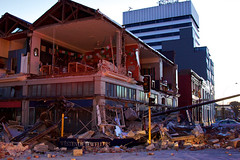


sand volcano versus driveway
Images, eqnz.chch.2010
None
sand volcano versus lawn
Images, eqnz.chch.2010
None
sand volcano
Images, eqnz.chch.2010
None
sand volcano in a Wyn Street lawn
Images, eqnz.chch.2010
None
Rydal Park sand volcano
Images, eqnz.chch.2010
These were scattered across the park.
sand volcano versus shed
Images, eqnz.chch.2010
None
sand volcano versus shed
Images, eqnz.chch.2010
None
sand volcano gushing
Images, eqnz.chch.2010
None
sand volcano versus path
Images, eqnz.chch.2010
None
sand volcano
Images, eqnz.chch.2010
(I righted the bird bath after the initial earthquake. None of the after-shocks were sufficient to knock it over again.)
sand volcano versus vegetables
Images, eqnz.chch.2010
None
sand volcano
Images, eqnz.chch.2010
None
sand volcano
Images, eqnz.chch.2010
This one was really flowing out of the ground.
Smith, Hayden James, 1976- :'185 reasons to remember'. 22 February 2012
Images, Alexander Turnbull Library
A red and black flag - Canterbury colours - showing silhouettes of the 185 people who died in the Christchurch earthquake of February 22nd 2011. Quantity: 1 digital cartoon(s).
"If crisis reveals CHARACTER, I think Christchurch can be proud of itself.…
Images, Alexander Turnbull Library
Debbie says brightly that Christchurch has 'demonstrated the classic Kiwi quality of stoicism and behaving decently towards each other!' Jaimee replies that it's the same stoicism that means we complain a lot about our problems but never really do anything and Debbie tells her that applies just to her. Refers to the Christchurch earthquake of 4th September. Quantity: 1 digital cartoon(s).
Walker, Malcolm, 1950- :"The following suburbs and my hopes of a reputatio…
Images, Alexander Turnbull Library
The cartoon shows the Minister for Earthquake Recovery, Gerry Brownlee, who wears a jacket with 'CERA' printed on it, reading from the 'Doomsday Book'. He reads 'The following suburbs and my hopes of a reputation as an effective minister, are now officially listed as munted...' Context - On 23rd June Prime Minister, John Key, officially announced which streets and suburbs in earthquake-ravaged Christchurch would be abandoned. For many residents, there has been too much delay and too little information regarding progress towards resolving questions about which land can or cannot be used for rebuilding for Gerry Brownlee's reputation to remain unsullied. Quantity: 1 digital cartoon(s).
You get better with age : wellbeing and health status assessment in older …
Research papers, University of Canterbury Library
People aged 65 years and older are the fastest growing age group in New Zealand. By the mid-2070s, there are predictions that this age group is likely to comprise approximately one third of the population. Older people are encouraged to stay in their own homes within their community for as long as possible with support to encourage the extension of ageing in place. Currently around 14% of those aged 75 years or older, make the move into retirement villages. This is expected to increase. Little is known by retirement villages about the wellbeing and health of those who decide to live independently in these facilities. Predicting the need for a continuum of care is challenging. This research measured the wellbeing and health of older adults. It was situated in a critical realist paradigm, overlaid with an empathetic axiology. A focused literature review considered the impact on wellbeing from the aspects of living place, age, gender, health status and the 2010/2011 Canterbury earthquakes. Longitudinal studies used the Enlightenment Scale and the interRAI Community Health Assessment (CHA) to measure the wellbeing and health of one group of residents (n=120) living independently in one retirement village in Canterbury, New Zealand. The research was extended to incorporate two cross-section studies when initial results for wellbeing were found to be higher than anticipated. These additional studies included participants living independently from other retirement villages (n=115) and those living independently within the community (n=354). A total of 589 participants, aged 65 – 97 years old, completed the Enlightenment Scale across the four studies. Across the living places, wellbeing continued to significantly improve with age. The Enlightenment Scale was a useful measure of wellbeing with older adults. Participants in the longitudinal studies largely maintained a relatively good health status, showing little change over the study period of 15 months. Predictions for the need for a move to supportive care were not able to be made using the CHA. The health status of participants did not influence their level of wellbeing. The key finding of note is that the wellbeing score of older adults increases by 1.27 points per year, using the Enlightenment Scale, irrespective of where they live.
A line of best fit: Re-stitching earthquake prone buildings and re-connect…
Research papers, Victoria University of Wellington
A Line of Best Fit explores weakness and disconnection in the city. Weakness: There are over 600 earthquake prone buildings in Wellington. The urgency to strengthen buildings risks compromising the aesthetic integrity of the city through abrasive strengthening techniques, or losing a large portion of our built environment to demolition. The need for extensive earthquake strengthening in Wellington, Christchurch and other New Zealand cities provides an exciting opportunity for architecture. Disconnection: In Wellington pedestrian activity is focused around three main routes: Cuba Street, Lambton Quay and Courtney Place. The adjacent areas are often disconnected and lack vibrancy due to large building footprints, no-exit laneways and lack of public spaces. The Design proposes a strategy for earthquake strengthening, preserving and upgrading the built environment, and expanding and connecting the pedestrian realm. The site is two earthquake prone buildings on the block between Marion Street and Taranaki Street in central Wellington. A cut through the centre of the Aspro and Cathie Buildings ties the buildings together to strengthen and create a new arcade as public space. The cut aligns with existing pedestrian routes connecting the block with the city. The Design is divided into three components: Void, Curve, and Pattern and Structure. Void investigates the implications of cutting a portion out the existing buildings and the opportunities this provides for connection, urban interaction, and light. Curve discusses the unusual form of The Design in terms of scale, the human response and the surrounding spaces. Pattern and Structure considers the structural requirements of the project and how a void enveloped in perforated screens can strengthen the earthquake prone buildings. The importance of connection, providing strength in the city, a dialogue between old and new, and engagement with the unexpected are evaluated. Opportunities for further development and research are discussed, with particular reference to how the principles of The Design could be implemented on a larger scale throughout our cities. A Line of Best Fit is an architectural proposal that creates strength and connection.
Winter, Mark, 1958-: 'GRIEF the price we pay for LOVE' 19 March 2011
Images, Alexander Turnbull Library
The cartoon shows stenciled text in black and white that reads 'GRIEF THE PRICE WE PAY FOR LOVE'. Context - The earliest stages of the rebuilding of Christchurch after the earthquakes of 4 September 2010 and 22 February 2011. Quantity: 1 digital cartoon(s).
Winter, Mark, 1958-: The Garden City. 19 March 2011
Images, Alexander Turnbull Library
The cartoon depicts a little plant with two tiny leaves; text reads 'THE GARDEN CITY'. A second version includes the words 'Begins to grow again'. Context - The earliest stages of the rebuilding of Christchurch after the earthquakes of 4 September 2010 and 22 February 2011. Quantity: 2 digital cartoon(s).
sand volcano tours
Images, eqnz.chch.2010
Yes, it was a joke. The tours, that is, not the yard filled with earthquake-caused sand volcanos. They were very real. You can see one covering the driveway in this photo. The signs read as follows. "Tours run 1/2 hourly. $5.25 admission. Eftpos unavailable." "If you think this is bad... you should see the back!"
King Kapisi
Images, eqnz.chch.2010
Band Together - Concert for Canterbury www.bandtogetherforcanterbury.co.nz 23rd October 2010 Free concrete in Hagley Park following the 4th September 2010 earthquake
sand volcano landscape
Images, eqnz.chch.2010
None
sand volcano crater
Images, eqnz.chch.2010
An usual thing to see coming from the ground in Hoon Hay, Christchurch.
sand volcano
Images, eqnz.chch.2010
None
sand volcano craters
Images, eqnz.chch.2010
None
Geologic and anthropogenic influences on rockfall and liquefaction in the …
Research papers, University of Canterbury Library
Geologic phenomena produced by earthquake shaking, including rockfalls and liquefaction features, provide important information on the intensity and spatiotemporal distribution of earthquake ground motions. The study of rockfall and liquefaction features produced in contemporary well- instrumented earthquakes increases our knowledge of how natural and anthropogenic environments respond to earthquakes and improves our ability to deduce seismologic information from analogous pre-contemporary (paleo-) geologic features. The study of contemporary and paleo- rockfall and liquefaction features enables improved forecasting of environmental responses to future earthquakes. In this thesis I utilize a combination of field and imagery-based mapping, trenching, stratigraphy, and numerical dating techniques to understand the nature and timing of rockfalls (and hillslope sedimentation) and liquefaction in the eastern South Island of New Zealand, and to examine the influence that anthropogenic activity has had on the geologic expressions of earthquake phenomena. At Rapaki (Banks Peninsula, NZ), field and imagery-based mapping, statistical analysis and numerical modeling was conducted on rockfall boulders triggered by the fatal 2011 Christchurch earthquakes (n=285) and compared with newly identified prehistoric (Holocene and Pleistocene) boulders (n=1049) deposited on the same hillslope. A significant population of modern boulders (n=26) travelled farther downslope (>150 m) than their most-travelled prehistoric counterparts, causing extensive damage to residential dwellings at the foot of the hillslope. Replication of prehistoric boulder distributions using 3-dimensional rigid body numerical models requires the application of a drag-coefficient, attributed to moderate to dense slope vegetation, to account for their spatial distribution. Radiocarbon dating provides evidence for 17th to early 20th century deforestation at the study site during Polynesian and European colonization and after emplacement of prehistoric rockfalls. Anthropocene deforestation enabled modern rockfalls to exceed the limits of their prehistoric predecessors, highlighting a shift in the geologic expression of rockfalls due to anthropogenic activity. Optical and radiocarbon dating of loessic hillslope sediments in New Zealand’s South Island is used to constrain the timing of prehistoric rockfalls and associated seismic events, and quantify spatial and temporal patterns of hillslope sedimentation including responses to seismic and anthropogenic forcing. Luminescence ages from loessic sediments constrain timing of boulder emplacement to between ~3.0 and ~12.5 ka, well before the arrival of Polynesians (ca AD 1280) and Europeans (ca AD 1800) in New Zealand, and suggest loess accumulation was continuing at the study site until 12-13 ka. Large (>5 m3) prehistoric rockfall boulders preserve an important record of Holocene hillslope sedimentation by creating local traps for sediment aggradation and upbuilding soil formation. Sediment accumulation rates increased considerably (>~10 factor increase) following human arrival and associated anthropogenic burning of hillslope vegetation. New numerical ages are presented to place the evolution of loess-mantled hillslopes in New Zealand’s South Island into a longer temporal framework and highlight the roles of earthquakes and humans on hillslope surface process. Extensive field mapping and characterization for 1733 individual prehistoric rockfall boulders was conducted at Rapaki and another Banks Peninsula site, Purau, to understand their origin, frequency, and spatial and volumetric distributions. Boulder characteristics and distributions were compared to 421 boulders deposited at the same sites during the 2010-2011 Canterbury earthquake sequence. Prehistoric boulders at Rapaki and Purau are comprised of two dominant lithofacies types: volcanic breccia and massive (coherent) lava basalt. Volcanic breccia boulders are found in greatest abundance (64-73% of total mapped rockfall) and volume (~90-96% of total rockfall) at both locations and exclusively comprise the largest boulders with the longest runout distances that pose the greatest hazard to life and property. This study highlights the primary influence that volcanic lithofacies architecture has on rockfall hazard. The influence of anthropogenic modifications on the surface and subsurface geologic expression of contemporary liquefaction created during the 2010-2011 Canterbury earthquake sequence (CES) in eastern Christchurch is examined. Trench observations indicate that anthropogenic fill layer boundaries and the composition/texture of discretely placed fill layers play an important role in absorbing fluidized sand/silt and controlling the subsurface architecture of preserved liquefaction features. Surface liquefaction morphologies (i.e. sand blows and linear sand blow arrays) display alignment with existing utility lines and utility excavations (and perforated pipes) provided conduits for liquefaction ejecta during the CES. No evidence of pre-CES liquefaction was identified within the anthropogenic fill layers or underlying native sediment. Radiocarbon dating of charcoal within the youngest native sediment suggests liquefaction has not occurred at the study site for at least the past 750-800 years. The importance of systematically examining the impact of buried infrastructure on channelizing and influencing surface and subsurface liquefaction morphologies is demonstrated. This thesis highlights the importance of using a multi-technique approach for understanding prehistoric and contemporary earthquake phenomena and emphasizes the critical role that humans play in shaping the geologic record and Earth’s surface processes.
Seismic Performance of Precast Hollow-core Floor Units and Residual Capaci…
Research papers, The University of Auckland Library
The susceptibility of precast hollow-core floors to sustain critical damage during an earthquake is now well-recognized throughout the structural engineering community in New Zealand. The lack of shear reinforcement in these floor units is one of the primary reasons causing issues with the seismic performance of these floors. Recent research has revealed that the unreinforced webs of these floor units can crack at drift demands as low as 0.6%. Such observation indicates that potentially many of the existing building stock incorporating hollow-core flooring systems in cities of relatively high seismic activity (e.g. Wellington and Christchurch) that probably have already experienced a level of shaking higher than 0.6% drift in previous earthquakes might already have their floor units cracked. However, there is little information available to reliably quantify the residual gravity load-carrying capacity of cracked hollow-core floor units, highlighting the need to understand the post-cracking behavior of hollow-core floor units to better quantify the extent of the risk that cracked hollow-core floor units pose.
Liquefaction Constitutive Model Validation Using Pore Pressure Records fro…
Research papers, University of Canterbury Library
Well-validated liquefaction constitutive models are increasingly important as non-linear time history analyses become relatively more common in industry for key projects. Previous validation efforts of PM4Sand, a plasticity model specifically for liquefaction, have generally focused on centrifuge tests; however, pore pressure transducers installed at several free-field sites during the Canterbury Earthquake Sequence (CES) in Christchurch, New Zealand provide a relatively unique dataset to validate against. This study presents effective stress site response analyses performed in the finite difference software FLAC to examine the capability of PM4Sand to capture the generation of excess pore pressures during earthquakes. The characterization of the subsurface is primarily based on extensive cone penetration tests (CPT) carried out in Christchurch. Correlations based on penetration resistances are used to estimate soil parameters, such as relative density and shear wave velocity, which affect liquefaction behaviour. The resulting free-field FLAC model is used to estimate time histories of excess pore pressure, which are compared with records during several earthquakes in the CES to assess the suitability of PM4Sand.
Facilitating teachers’ reflections on their affect 18 months after the Feb…
Research papers, University of Canterbury Library
This article presents a subset of findings from a larger mixed methods CEISMIC1 funded study of twenty teachers’ earthquake experiences and post-earthquake adjustment eighteen months after a fatal earthquake struck Christchurch New Zealand, in the middle of a school day (Geonet Science, 2011; O’Toole & Friesen, 2016). This earthquake was a significant national and personal disaster with teachers’ emotional self-management as first responders being crucial to the students’ immediate safety (O’Toole & Friesen, 2016). At the beginning of their semi-structured interviews conducted eighteen months later, the teachers shared their earthquake stories (O’Toole & Friesen, 2016). They recalled the moment it struck in vivid detail, describing their experiences in terms of what they saw (destruction), heard (sonic boom, screaming children) and felt (fright and fear) as though they were back in that moment similar to flashbulb memory (Brown & Kulik, 1977). Their memories of the early aftermath were similarly vivid (Rubin & Kozin, 1984). This article focuses on how the mood meter (Brackett & Kremenitzer, 2011) was then used (with permission) to further explore the teachers’ perceived affect to enlighten their lived experiences.