

Search
found 100457 results
Images for NEW-ZEALAND; more images...


Geotechnical Aspects of the 2010 Darfield (Canterbury) Earthquake
Research papers, University of Canterbury Library
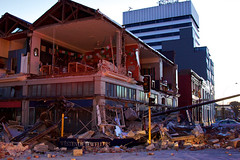
On 4 September 2010, a magnitude Mw 7.1 earthquake struck the Canterbury region on the South Island of New Zealand. The epicentre of the earthquake was located in the Darfield area about 40 km west of the city of Christchurch. Extensive damage was inflicted to lifelines and residential houses due to widespread liquefaction and lateral spreading in areas close to major streams, rivers and wetlands throughout Christchurch and Kaiapoi. Unreinforced masonry buildings also suffered extensive damage throughout the region. Despite the severe damage to infrastructure and residential houses, fortunately, no deaths occurred and only two injuries were reported in this earthquake. From an engineering viewpoint, one may argue that the most significant aspects of the 2010 Darfield Earthquake were geotechnical in nature, with liquefaction and lateral spreading being the principal culprits for the inflicted damage. Following the earthquake, an intensive geotechnical reconnaissance was conducted to capture evidence and perishable data from this event. This paper summarizes the observations and preliminary findings from this early reconnaissance work.
Consistency of Seismicity and Ground Motion Modelling with the Canterbury …
Research papers, University of Canterbury Library
This paper examines the consistency of seismicity and ground motion models, used for seismic hazard analysis in New Zealand, with the observations in the Canterbury earthquakes. An overview is first given of seismicity and ground motion modelling as inputs of probabilistic seismic hazard analysis, whose results form the basis for elastic response spectra in NZS1170.5:2004. The magnitude of earthquakes in the Canterbury earthquake sequence are adequately allowed for in the current NZ seismicity model, however the consideration of ‘background’ earthquakes as point sources at a minimum depth of 10km results in up to a 60% underestimation of the ground motions that such events produce. The ground motion model used in conventional NZ seismic hazard analysis is shown to provide biased predictions of response spectra (over-prediction near T=0.2s , and under-predictions at moderate-to-large vibration periods). Improved ground motion prediction can be achieved using more recent NZ-specific models.
Learning From Disasters
Research papers, University of Canterbury Library
Two projects are documented within this MEM Report: I. The first project examined what was learnt involving the critical infrastructure in the aftermath of natural disasters in the Canterbury region of New Zealand – the most prominent being the series of earthquakes between 2010 and 2011. The project identified several learning gaps, leading to recommendations for further investigations that could add significant value for the lifeline infrastructure community. II. Following the Lifeline Lesson Learnt Project, the Disaster Mitigation Guideline series was initiated with two booklets, one on Emergency Potable Water and a second on Emergency Sanitation. The key message from both projects is that we can and must learn from disasters. The projects described are part of the emergency management, and critical infrastructure learning cycles – presenting knowledge captured by others in a digestible format, enabling the lessons to be reapplied. Without these kinds of projects, there will be fewer opportunities to learn from other’s successes and failures when it comes to preparing for natural disasters.
Organisational resilience following the Darfield earthquake of 2010
Research papers, University of Canterbury Library
This paper presents the preliminary findings of a study on the resilience and recovery of organisations following the Darfield earthquake in New Zealand on 4 September 2010. Sampling included organisations proximal and distal to the fault trace, organisations located within central business districts, and organisations from seven diverse industry sectors. The research captured information on the challenges to, the impacts on, and the reflections of the organisations in the first months of recovery. Organisations in central business districts and in the hospitality sector were most likely to close while organisations that had perishable stock and livestock were more heavily reliant on critical services. Staff well-being, cash flow, and customer loss were major concerns for organisations across all sectors. For all organisations, the most helpful factors in mitigating the effects of the earthquake to be their relationship with staff, the design and type of buildings, and critical service continuity or swift reinstatement of services.
Using machine learning techniques to predict seismic damage in Dunedin
Research papers, University of Canterbury Library
Unreinforced masonry (URM) structures comprise a majority of the global built heritage. The masonry heritage of New Zealand is comparatively younger to its European counterparts. In a country facing frequent earthquakes, the URM buildings are prone to extensive damage and collapse. The Canterbury earthquake sequence proved the same, causing damage to over _% buildings. The ability to assess the severity of building damage is essential for emergency response and recovery. Following the Canterbury earthquakes, the damaged buildings were categorized into various damage states using the EMS-98 scale. This article investigates machine learning techniques such as k-nearest neighbors, decision trees, and random forests, to rapidly assess earthquake-induced building damage. The damage data from the Canterbury earthquake sequence is used to obtain the forecast model, and the performance of each machine learning technique is evaluated using the remaining (test) data. On getting a high accuracy the model is then run for building database collected for Dunedin to predict expected damage during the rupture of the Akatore fault.
Improving community resilience to natural events
Research papers, University of Canterbury Library
Improving community resilience requires a way of thinking about the nature of a community. Two complementary aspects are proposed: the flows connecting the community with its surrounding environment and the resources the community needs for its ongoing life. The body of necessary resources is complex, with many interactions between its elements. A systems approach is required to understand the issues adequately. Community resilience is discussed in general terms together with strategies for improving it. The ideas are then illustrated and amplified by an extended case study addressing means of improving the resilience of a community on the West Coast of New Zealand to natural disasters. The case study is in two phases. The first relies on a mix of on-the-ground observations and constructed scenarios to provide recommendations for enhancing community resilience, while the second complements the first by developing a set of general lessons and issues to be addressed from observations of the Christchurch earthquakes of 2010 and 2011.
Testing of Reinforced Concrete Frames Extracted from a Building Damaged du…
Research papers, The University of Auckland Library
In the aftermath of the 2010-2011 Canterbury earthquakes in New Zealand, the residual capacity and reparability of damaged reinforced concrete (RC) structures was an issue pertinent to building owners, insurers, and structural engineers. Three precast RC moment-resisting frame specimens were extracted during the demolition of the Clarendon Tower in Christchurch after sustaining earthquake damage. These specimens were subjected to quasi-static cyclic testing as part of a research program to determine the reparability of the building. It was concluded that the precast RC frames were able to be repaired and retrofitted to an enhanced strength capacity with no observed reduction in displacement capacity, although the frames with “shear-ductile” detailing exhibited less displacement ductility capacity and energy dissipation capacity than the more conventionally detailed RC frames. Furthermore, the cyclic test results from the earthquake-damaged RC frames were used to verify the predicted inelastic demands applied to the specimens during the 2010-2011 Canterbury earthquakes. https://www.concrete.org/publications/acistructuraljournal.aspx
Transect Survey as a Post-Disaster Global Rapid Damage Assessment Tool
Research papers, The University of Auckland Library
Following a damaging earthquake, the immediate emergency response is focused on individual collapsed buildings or other "hotspots" rather than the overall state of damage. This lack of attention to the global damage condition of the affected region can lead to the reporting of misinformation and generate confusion, causing difficulties when attempting to determine the level of postdisaster resources required. A pre-planned building damage survey based on the transect method is recommended as a simple tool to generate an estimate of the overall level of building damage in a city or region. A methodology for such a transect survey is suggested, and an example of a similar survey conducted in Christchurch, New Zealand, following the 22 February 2011 earthquake is presented. The transect was found to give suitably accurate estimates of building damage at a time when information was keenly sought by government authorities and the general public. VoR - Version of Record
Makeshift memory: engaging an aesthetic of transition
Research papers, The University of Auckland Library
To address the provocation provided by the editors I wish to reflect upon the ongoing civic and artistic responses to the earthquakes in Christchurch, New Zealand, 2010-11, in which 185 people lost their lives (largely due to poor engineering and construction practices). Whilst the example is very different in character from that of efforts to memorialize July 22, 2011, I wish to use the case to briefly respond to the issue of temporality as raised by Jacques Rancière in his critique of the ‘endless work of mourning’ produced by testimonial art. The orientation of this mourning, he argues, is always backward-looking, characterized by, ‘a reversal of the flow of time: the time turned towards an end to be accomplished – progress, emancipation or the Other – is replaced by that turned towards the catastrophe behind us.’ How might memorial practices divide their gaze between remembered pasts and possible futures? AM - Accepted Manuscript
Lessons from the 2011 Christchurch earthquake for improving the seismic pe…
Research papers, The University of Auckland Library
The 2011, 6.3 magnitude Christchurch earthquake in New Zealand caused considerable structural damage. It is believed that this event has now resulted in demolition of about 65-70% of the building stock in the Central Business District (CBD), significantly crippling economic activities in the city of Christchurch. A major concern raised from this event was adequacy of the current seismic design practice adopted for reinforced concrete walls due to their poor performance in modern buildings. The relatively short-duration earthquake motion implied that the observed wall damage occurred in a brittle manner despite adopting a ductile design philosophy. This paper presents the lessons learned from the observed wall damage in the context of current state of knowledge in the following areas: concentrating longitudinal reinforcement in wall end regions; determining wall thickness to prevent out-of-plane wall buckling; avoiding lap splices in plastic hinge zones; and quantifying minimum vertical reinforcement. http://www.2eceesistanbul.org/
The limits of resilience: A discussion of resilience from the perspectives…
Research papers, The University of Auckland Library
Mechanistic and scientific approaches to resilience assume that there is a “tipping point” at which a system can no longer absorb adversity; after this point, it is liable to collapse. Some of these perspectives, particularly those stemming from ecology and psychology, recognise that individuals and communities cannot be perpetually resilient without limits. While the resilience paradigm has been imported into the social sciences, the limits to resilience have often been disregarded. This leads to an overestimation of “human resourcefulness” within the resilience paradigm. In policy discourse, practice, and research, resilience seems to be treated as a “limitless” and human quality in which individuals and communities can effectively cope with any hazard at any time, for as long as they want and with any people. We critique these assumptions with reference to the recovery case in Ōtautahi Christchurch, Aotearoa New Zealand following the 2010-11 Canterbury earthquake sequence. We discuss the limits to resilience and reconceptualise resilience thinking for disaster risk reduction and sustainable recovery and development.
MARYROSE CROOK, PURPLE PILGRIMS, THJE
Images, UC QuakeStudies
A poster advertising performers Maryrose Crook, Purple Pilgrims and Thje. The photographer comments, "Maryrose Crook, Purple Pilgrims, Thje. Saturday 26 Feb (2011). HSP 9PM $5. HSP stands for High Street Project. Here is the introduction for her concert 'Maryrose Crook's spectral voice and calenture tunes float through New Zealand giants, The Renderers' psychic country-punk and splatter rock, and emerge in her solo encounters with horripilated grace and filigree menace. Purple pilgrims' wraithish hymns evolve through a braided field of curled nautical drone and distant littoral roar, abstract thrums and change-rung celestial rustle'. She was supposed to perform on 26 February, but I am guessing the concert was cancelled due to the major earthquake in Christchurch on the 22nd. The horrendous quake made the venue at 84 Lichfield Street out of limits due to it being in the dangerous earthquake red zone. It looks like she next performed on the 17 May at the Loons in Lyttelton".
Review of transect of Christchurch CBD following 22 February 2011 earthqua…
Research papers, The University of Auckland Library
Two days after the 22 February 2011 M6.3 earthquake in Christchurch, New Zealand, three of the authors conducted a transect of the central city, with the goal of deriving an estimate of building damage levels. Although smaller in magnitude than the M7.1 4 September 2010 Darfield earthquake, the ground accelerations, ground deformation and damage levels in Christchurch central city were more severe in February 2011, and the central city was closed down to the general public. Written and photographic notes of 295 buildings were taken, including construction type, damage level, and whether the building would likely need to be demolished. The results of the transect compared favourably to Civil Defence rapid assessments made over the following month. Now, more than one year and two major aftershocks after the February 2011 earthquake these initial estimates are compared to the current demolition status to provide an updated understanding of the state of central Christchurch.
A simple and rapid approach to post-earthquake assessment of bridge condit…
Research papers, The University of Auckland Library
The paper proposes a simple method for quick post-earthquake assessment of damage and condition of a stock of bridges in a transportation network using seismic data recorded by a strong motion array. The first part of the paper is concerned with using existing free field strong motion recorders to predict peak ground acceleration (PGA) at an arbitrary bridge site. Two methods are developed using artificial neural networks (a single network and a committee of neural networks) considering influential parameters, such as seismic magnitude, hypocentral depth and epicentral distance. The efficiency of the proposed method is explored using actual strong motion records from the devastating 2010 Darfield and 2011 Christchurch earthquakes in New Zealand. In the second part, two simple ideas are outlined how to infer the likely damage to a bridge using either the predicted PGA and seismic design spectrum, or a broader set of seismic metrics, structural parameters and damage indices.
The Christchurch earthquakes impact on inner city "colonisers"
Research papers, Lincoln University
The 2010 and 2011 earthquakes have had a devastating impact on the city of Christchurch, New Zealand. The level of destruction has been especially evident in the central business district where it has been estimated over 1000 buildings have already been or will eventually require demolition. Although, contrary to expectations, most of the fatalities were in relatively modern buildings, the Victorian and Edwardian era building stock was especially hard hit in terms of property damage. Unfortunately this era and style of building were also the focus of the most successful inner city revitalisation projects to date. A major research project is now underway examining the impact on the earthquakes on one of these revitalisation areas. The first step is to examine the international literature on similar inner city revitalisation or gentrification areas and in particular the characteristics of owners and occupiers attracted to this type of environment. This is the focus of this paper.
Māori and the Christchurch earthquakes: The interplay between Indigenous e…
Research papers, Lincoln University
The disastrous earthquakes that struck Christchurch in 2010 and 2011 seriously impacted on the individual and collective lives of Māori residents. This paper continues earlier, predominantly qualitative research on the immediate effects on Māori by presenting an analysis of a survey carried out 18 months after the most destructive event, on 22 February 2011. Using a set-theoretic approach, pathways to Māori resilience are identified, emphasising the combination of whānau connectivity and high incomes in those who have maintained or increased their wellbeing post-disaster. However, the results show that if resilience is used to describe a “bounce back” in wellbeing, Māori are primarily enduring the post-disaster environment. This endurance phase is a precursor to any resilience and will be of much longer duration than first thought. With continued uncertainty in the city and wider New Zealand economy, this endurance may not necessarily lead to a more secure environment for Māori in the city.
Authentic collaboration with local communities in post-disaster reconnaiss…
Research papers, University of Canterbury Library
Geological research in the immediate aftermath of the 2016 Kaikōura Earthquake, New Zealand, was necessary due to the importance and perishability of field data. It also reflects a real desire on the part of researchers to contribute not only to immediate scientific understanding but also to the societal recovery effort by enhancing knowledge of the event for the benefit of affected communities, civil defence organizations and regional and national decision makers. This commitment to outreach and engagement is consistent with the recent IAPG statement of Geoethics. More immediately, it was informed by experience of the 2010-2011 Canterbury Earthquake sequence. After that earlier disaster, intense interactions between researchers and various response agencies as well as local communities informed the development and dissemination of a set of ethical guidelines for researchers immediately following the Mw7.8 14 November 2016 Kaikōura Earthquake. In this presentation, I argue that ethical engagement of this kind is the key to gathering high quality research data immediately after the event. Creating trusting and mutually respectful, mutually beneficial relationships is also vital to ongoing engagement to facilitate further “in depth” research in collaboration with communities.
Smith, Ashley W, 1948- :[Bob Parker and Jim Anderton]. 20 September 2010
Images, Alexander Turnbull Library
Depicts Christchurch Mayor Bob Parker striking a pose under a spotlight while standing astride broken masonry. He is being interviewed by media. On the right of frame, Progressive Party leader and MP Jim Anderton is under dark clouds and caught under the Beehive. Refers to the 2010 Christchurch mayoral elections in which Parker won over Anderton. Prior to the 2010 Canterbury earthquake, Anderton was ahead in the polls. The quake devastation was said to have given Parker a bigger profile than Anderton and been a factor in his win (TV3 9 October 2010). Quantity: 1 digital cartoon(s).
Winter, Mark 1958- :Earthquake... aftershock.. or 'new event'... one thing…
Images, Alexander Turnbull Library
Text at top left reads 'Earthquake... aftershock... or "new event"... one thing remains constant...' Below is a snail with 'EQC payments' printed on its shell. Context - This is a reference to the problems that Christchurch people are having in getting payments from the EQC (Earthquake Commission) Disgruntled tradespeople who are owed hundreds of thousands of dollars by EQC are considering legal action. Remaining unpaid can mean that companies may have to consider laying people off. The Amalgamated Workers Union says delays in EQC payments for housing repair work in quake-hit Christchurch are building to a crisis point. Two versions of this cartoon are available Quantity: 2 digital cartoon(s).
Winter, Mark 1958- :"I promise ... not to promise again." 5 September 2011
Images, Alexander Turnbull Library
The title is 'Gerry BrownLie?' and the cartoon shows the Minister for Earthquake recovery, Gerry Brownlee, saying 'I promise not to promise again'. The words 'Red Zone' appear beneath with the word 'faced' inserted between them. Context: The 'Red Zone' is the earthquake area in which houses cannot be rebuilt. Earthquake Minister Gerry Brownlee has apologised for falsely promising red zone homeowners they would be paid out for improvements to their house. Brownlee promised in June that, in some cases, home improvements like new kitchens would be included in the government settlement offer for red zone houses. But the offer is only valid if the improvement has added to the footprint of the house. (Press - 4 September 2011) Alternate version of DCDL-0018757 Quantity: 1 digital cartoon(s).
Hubbard, James, 1949- :ACC takes earthquake hit. 7 March 2011
Images, Alexander Turnbull Library
A man walks away from a scene of destruction after an earthquake; he is reading a newspaper whose headline is 'ACC takes earthquake hit' and because he is not looking where he is going he is about to step into the sea in which lurks a shark that represents 'levies'. A second version has the shark representing 'Nick Smith'. Context - The second Christchurch more devastating earthquake of 22 February 2011 that followed an original earthquake on 4 September 2010. Levy changes from April 1 will give businesses discounts or penalties on their workplace ACC levies based on a three-year claims history but ACC Minister Nick Smith said today that the quake would be declared an "adverse event" so Christchurch employers would not be unfairly hit with a levy increase, unless they contributed materially to an employee's injuries. (NBR 10 March 2011) Two versions of this cartoon are available Quantity: 2 digital cartoon(s).
Coexistence, dynamics and disturbance history of mixed conifer, beech, and…
Research papers, Lincoln University
Mixed conifer, beech and hardwood forests are relatively common in Aotearoa/New Zealand, but are not well studied. This thesis investigates the coexistence, regeneration dynamics and disturbance history of a mixed species forest across an environmental gradient of drainage and soil development in north Westland. The aim was to investigate whether conifers, beech and non-beech hardwood species were able to coexist on surfaces that differed in their underlying edaphic conditions, and if so to understand the mechanisms that influenced their regeneration on both poorly drained and well drained soils. The site selected was an area of high tree species diversity on a lowland 0.8 km² post-glacial terrace at the base of Mount Harata in the Grey River Valley. My approach was to use forest stand history reconstruction at two spatial scales: an intensive within-plot study of stand dynamics (chapter 1) and a whole-landform approach (chapter 2) that examined whether the dynamics identified at the smaller within-plot scale reflected larger patterns across the terrace. In chapter 1, three large permanent plots (0.3-0.7 ha) were placed at different points along the drainage gradient, one plot situated in each of the mainly well-drained, poorly drained and very poorly drained areas along the terrace. Information was gathered on species age and size structures, spatial distributions of tree ages, species interactions, microsite establishment preferences, patterns of stand mortality, and disturbance history in each plot. There were differences in stand structure, composition and relative abundance of species found between the well drained plot and the two poorer drained plots. On the well drained site conifers were scarce, the beeches Nothofagus fusca and N. menziesii dominated the canopy, and in the subcanopy the hardwood species Weinmannia racemosa and Quintinia acutifolia were abundant. As drainage became progressively poorer, the conifers Dacrydium cupressinum and Dacrycarpus dacrydioides became more abundant and occupied the emergent tier over a beech canopy. The hardwoods W. racemosa and Q. acutifolia became gradually less abundant in the subcanopy, whereas the hardwood Elaeocarpus hookerianus became more so. In the well drained plot, gap partitioning for light between beeches and hardwoods enabled coexistence in response to a range of different sized openings resulting from disturbances of different extent. In the two more poorly drained plots, species also coexisted by partitioning microsite establishment sites according to drainage. There were several distinct periods where synchronous establishment of different species occurred in different plots, suggesting there were large disturbances: c. 100yrs, 190-200 yrs, 275-300 yrs and 375-425 yrs ago. Generally after the same disturbance, different species regenerated in different plots reflecting the underlying drainage gradient. However, at the same site after different disturbances, different sets of species regenerated, suggesting the type and extent of disturbances and the conditions left behind influenced species regeneration at some times but not others. The regeneration of some species (e.g., N. fusca in the well-drained plot, and Dacrydium in the poorer drained plots) was periodic and appeared to be closely linked to these events. In the intervals between these disturbances, less extensive disturbances resulted in the more frequent N. menziesii and especially hardwood regeneration. The type of tree death caused by different disturbances favoured different species, with dead standing tree death favouring the more shade-tolerant N. menziesii and hardwoods, whereas uprooting created a mosaic of microsite conditions and larger gap sizes that enabled Dacrycarpus, N. fusca and E. hookerianus to maintain themselves in the poorly drained areas. In chapter 2, 10 circular plots (c. 0.12 ha) were placed in well drained areas and 10 circular plots (c. 0.2 ha) in poorly drained plots to collect information on species population structures and microsite preferences. The aims were to reconstruct species' regeneration responses to a range of disturbances of different type and extent across the whole terrace, and to examine whether there were important differences in the effects of these disturbances. At this landform scale, the composition and relative abundances of species across the drainage gradient reflected those found in chapter 1. There were few scattered conifers in well drained areas, despite many potential regeneration opportunities created from a range of different stand destroying and smaller scale disturbances. Three of the four periods identified in chapter 1 reflected distinct terrace-wide periods of regeneration 75-100 yrs, 200-275 yrs and 350-450 yrs ago, providing strong evidence of periodic large, infrequent disturbances that occurred at intervals of 100-200 yrs. These large, infrequent disturbances have had a substantial influence in determining forest history, and have had long term effects on forest structure and successional processes. Different large, infrequent disturbances had different effects across the terrace, with the variability in conditions that resulted enabling different species to regenerate at different times. For example, the regeneration of distinct even-aged Dacrydium cohorts in poorly drained areas was linked to historical Alpine Fault earthquakes, but not to more recent storms. The variation in the intensity of different large, infrequent disturbances at different points along the environmental drainage gradient, was a key factor influencing the scale of impacts. In effect, the underlying edaphic conditions influenced species composition along the drainage gradient and disturbance history regulated the relative abundances of species. The results presented here further emphasise the importance of large scale disturbances as a mechanism that allows coexistence of different tree species in mixed forest, in particular for the conifers Dacrydium, Dacrycarpus and the beech N. fusca, by creating much of the environmental variation to which these species responded. This study adds to our understanding of the effects of historical earthquakes in the relatively complex forests of north Westland, and further illustrates their importance in the Westland forest landscape as the major influential disturbance on forest pattern and history. These results also further develop the 'two-component' model used to describe conifer/angiosperm dynamics, by identifying qualitative differences in the impacts of different large, infrequent disturbances across an environmental gradient that allowed for coexistence of different species. In poorer drained areas, these forests may even be thought of as 'three-component' systems with conifers, beeches and hardwoods exhibiting key differences in their regeneration patterns after disturbances of different type and extent, and in their microsite preferences.
The shopping must go on!
Images, eqnz.chch.2010
Merrivale Mall continues after the massive aftershock sustained by Christchurch on 22nd February 2011.
Urban comfort: adaptive capacity in post-earthquake Christchurch
Research papers, Lincoln University
The urban environment influences the way people live and shape their everyday lives, and microclimate sensitive design can enhance the use of urban streets and public spaces. Innovative approaches to urban microclimate design will become more important as the world’s population becomes ever more urban, and climate change generates more variability and extremes in urban microclimatic conditions. However, established methods of investigation based upon conventions drawn from building services research and framed by physiological concepts of thermal comfort may fail to capture the social dynamics of urban activity and their interrelationship with microclimate. This research investigates the relationship between microclimate and urban culture in Christchurch, New Zealand, based upon the concept of urban comfort. Urban comfort is defined as the socio-cultural (therefore collective) adaptation to microclimate due to satisfaction with the urban environment. It involves consideration of a combination of human thermal comfort requirements and adaptive comfort circumstances, preferences and strategies. A main methodological challenge was to investigate urban comfort in a city undergoing rapid physical change following a series of major earthquakes (2010-2011), and that also has a strongly seasonal climate which accentuates microclimatic variability. The field investigation had to be suitable for rapidly changing settings as buildings were demolished and rebuilt, and be able to capture data relevant to a cycle of seasons. These local circumstances meant that Christchurch was valuable as an example of a city facing rapid and unpredictable change. An interpretive, integrative, and adaptive research strategy that combined qualitative social science methods with biophysical measures was adopted. The results are based upon participant observation, 86 in-depth interviews with Christchurch residents, and microclimate data measurements. The interviews were carried out in a variety of urban settings including established urban settings (places sustaining relatively little damage) and emerging urban settings (those requiring rebuilding) during 2011-2013. Results of this research show that urban comfort depends on adaptive strategies which in turn depend on culture. Adaptive strategies identified through the data analysis show a strong connection between natural and built landscapes, combined with the regional outdoor culture, the Garden City identity and the connections between rural and urban landscapes. The results also highlight that thermal comfort is an important but insufficient indicator of good microclimate design, as social and cultural values are important influences on climate experience and adaptation. Interpretive research is needed to fully understand urban comfort and to provide urban microclimate design solutions to enhance the use of public open spaces in cities undergoing change.
Tremain, Garrick, 1941-:[The Parker we love] 21 March 2011
Images, Alexander Turnbull Library
At top left is text reading 'Christchurch pupils return to school...' The teacher has written the words 'Nosey', 'Bob', and 'Double' on the blackboard and says to the children 'Our first test today... Sort these into Parkers we love and Parkers we don't'... Context - the correct answers would be that we hate 'nosey parkers' and 'double parkers' but that we love 'Bob Parker'. Bob Parker is the Mayor of Christchurch and is generally considered to have done a remarkably good job of demonstrating calm and cheerfulness after the two earthquakes of 4 September 2010 and 22 February 2011, as well as having been able to chose fitting words to express grief and despair at so much loss. Quantity: 1 digital cartoon(s).
Hawkey, Allan Charles, 1941- :"We can only afford enough petrol to mow hal…
Images, Alexander Turnbull Library
A woman stands at the door of the house and wonders why the grass is only half cut. Her husband says 'We can only afford enough petrol to mow half the lawn'. Context is rising petrol prices. Quantity: 1 digital cartoon(s).
Hawkey, Allan Charles, 1941- :[PM John Key plays charity cricket match] 15…
Images, Alexander Turnbull Library
PM John Key sits at a large desk in a very large chair looking disconcerted as a messenger says 'after your display in the charity match - John Wright wants you on standby for India. Context - The charity match for Christchurch played at the Basin reserve on Sunday 9 March 2011. The prime minister played along with actors Russell Crowe and James Nesbitt, who were opposing coaches with the match being refereed by Ian McKellen in Sunday's match starting at 4pm. Key will face an over from the Australian spin king during the innings break at the Basin, which Cricket Wellington expects could sell out as early as today. Quantity: 1 digital cartoon(s).
Hawkey, Allan Charles, 1941- :[Helping after the Christchurch earthquake] …
Images, Alexander Turnbull Library
The cartoon shows an arm clothed in a blue shirt which is covered with the printed names of all the people and organisations who have provided assistance to the people of Christchurch since the earthquake of 22 February 2011. The include 'neighbours', 'charities', 'communities', 'church groups etc. Quantity: 1 digital cartoon(s).
Tremain, Garrick, 1941-:Whole lotta shakin' goin' on. 19 March 2011
Images, Alexander Turnbull Library
A woman sits reading a newspaper with reports about the Japanese earthquake and the latest news on Christchurch post-earthquake. Her husband has just put a Jerry Lee Lewis record on the turntable and the song 'Whole lotta shakin' goin' on' is playing; he says Didn't I always say this guy was ahead of his time?' Context - The Christchurch earthquakes of September 4 2010 and February 22 2011 as well as the Japanese earthquake and tsunami of 11 March 2011. Quantity: 1 digital cartoon(s).
Hawkey, Allan Charles, 1941- :[Pay rise]. 9 January 2012
Images, Alexander Turnbull Library
Cartoon shows a mechanic asking his boss for a pay rise. Text reads 'Like the Christchurch Council CEO - I've also been working hard. Would I be cheeky to ask for a $68,000 pay rise?'. Context: Christchurch City Council Chief Executive Officer Tony Marryatt ended up turning down a pay rise of $68,000 following the outcry when the fact was made public. Quantity: 1 digital cartoon(s).