

Search
found 100457 results
Images for NEW-ZEALAND; more images...


Vegetation change and native forest restoration in urban environments: Man…
Research papers, Lincoln University
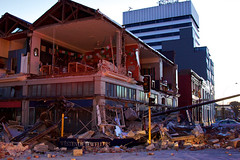
Global biodiversity is threatened by human actions, including in urban areas. Urbanisation has removed and fragmented indigenous habitats. As one of the 25 biodiversity ’hot spots’, New Zealand is facing the problems of habitat loss and indigenous species extinction. In New Zealand cities, as a result of the land clearance and imported urban planning precepts, many urban areas have little or no original native forest remaining. Urbanisation has also been associated with the introduction of multitudes of species from around the world. Two large earthquakes shook Christchurch in 2010 and 2011 and caused a lot of damage. Parts of the city suffered from soil liquefaction after the earthquakes. In the most damaged parts of Christchurch, particularly in the east, whole neighbourhoods were abandoned and later demolished except for larger trees. Christchurch offers an excellent opportunity to study the biodiversity responses to an urban area with less intensive management, and to learn more about the conditions in urban environments that are most conducive to indigenous plant biodiversity. This study focuses on natural woody plant regeneration of forested sites in Christchurch city, many of which were also surveyed prior to the earthquakes. By repeating the pre-earthquake surveys, I am able to describe the natural regeneration occurring in Christchurch forested areas. By combining this with the regeneration that has occurred in the Residential Red Zone, successional trajectories can be described under a range of management scenarios. Using a comprehensive tree map of the Residential Red Zone, I was also able to document minimum dispersal distances of a range of indigenous trees in Christchurch. This is important for planning reserve connectivity. Moreover, I expand and improve on a previous analysis of the habitat connectivity of Christchurch (made before the earthquakes) to incorporate the Residential Red Zone, to assess the importance for habitat connectivity of restoring the indigenous forest in this area. In combination, these data sets are used to provide patch scenarios and some management options for biodiversity restoration in the Ōtākaro-Avon Red Zone post-earthquake.
Helping, caring and learning: strengths in new entrants settling into and …
Research papers, University of Canterbury Library
Christchurch has experienced a series of over 13,500 earthquakes between September 2010 and January 2012. Some children who have been exposed to earthquakes may experience post-traumatic stress disorder symptoms (PTSD) including difficulty concentrating, feeling anxious, restlessness and confusion. Other children may be resilient to the effects of disaster. Western models of resilience relate to a child’s social support and their capacity to cope. The Māori model of wellbeing relates to whanau (family), wairua (spiritual connections), tinana (the physical body) and hinengaro (the mind and emotions). Children’s concepts of helping, caring and learning may provide insight into resilience without introducing the topic of earthquakes into the conversation, which in itself may provoke an episode of stress. Many researchers have studied the effects of earthquakes on children. However, few studies have examined positive outcomes and resilience or listened to the children’s voices. The objective of this study was to listen to the voices of children who experienced the Canterbury earthquake period in order to gain a deeper understanding of the ideas associated resilience. Individual interviews were conducted with 17 five-year-old participants during their first term of primary school. After the interviews, the teacher shared demographic information and reports on the children’s stress and coping. Six children were identified as New Zealand European and eleven children identified as New Zealand Māori. Children had different views of helping, caring and learning. Themes of resilience from Western and Kaupapa Māori models were identified in transcripts of the children's voices and drawings. Māori children voiced more themes of resilience associated with the Western model, and in the Tapa Whā model, Māori children's transcripts were more likely to be inclusive of all four components of well-being. How five-year-old children, having experienced an earthquake disaster during their preschool years, talk or draw pictures about helping, caring and learning can provide insight into resilience, especially in situations where it is not advisable to re-traumatise children by discussing the disaster event. Future research should interview parents/caregivers and whānau to gain further insights. Considering information from both a Western and a Tapa Whā perspective can also provide new insights into resilience in young children. A limitation of this study is that qualitative studies are not always free from a researcher’s interpretation and are, therefore, subjective.
Social entrepreneurship as a response to disaster: An examination of cases…
Research papers, University of Canterbury Library
This thesis explores how social entrepreneurship develops following a crisis. A review of literature finds that despite more than 15 years of academic attention, a common definition of social entrepreneurship remains elusive, with the field lacking the unified framework to set it apart as a specialised field of study. There are a variety of different conceptualisations of how social entrepreneurship works, and what it aims to achieve. The New Zealand context for social entrepreneurship is explored, finding that it receives little attention from the government and education sectors, despite its enormous potential. A lack of readily available information on social entrepreneurship leads most studies to investigate it as a phenomenon, and given the unique context of this research, it follows suit. Following from several authors’ recommendations that social entrepreneurship be subjected to further exploration, this is an exploratory, inductive study. A multiple case study is used to explore how social entrepreneurship develops following a natural disaster, using the example of the February 2011 earthquake in Christchurch, New Zealand. With little existing theory in this research area, this method is used to provide interesting examples of how the natural disaster, recognised as a crisis, can lead to business formation. Findings revealed the crisis initially triggered an altruistic response from social entrepreneurs, leading them to develop newly highlighted opportunities that were related to fields in which they had existing skills and expertise. In the process of developing these opportunities, initial altruistic motivations faded, with a new focus on the pursuit of a social mission and aims for survival and growth. The social missions addressed broad issues, and while they did address the crisis to differing extents, they were not confined to addressing its consequences. A framework is presented to explain how social entrepreneurship functions, once triggered in response to crisis. This framework supports existing literature that depicts social entrepreneurship as a continuous process, and illustrates the effects of a crisis as the catalyst for social business formation. In the aftermath of a crisis, when resources are likely to be scarce, social entrepreneurs play a significant role in the recovery process and their contributions should be highly valued both by government and relevant disaster response bodies. Policies that support social entrepreneurs and their ventures should be considered in the same way as commercial ventures.
Ambient noise cross-correlation observations of fundamental and higher-mod…
Research papers, Victoria University of Wellington
Measurement of basement seismic resonance frequencies can elucidate shallow velocity structure, an important factor in earthquake hazard estimation. Ambient noise cross correlation, which is well-suited to studying shallow earth structure, is commonly used to analyze fundamental-mode Rayleigh waves and, increasingly, Love waves. Here we show via multicomponent ambient noise cross correlation that the basement resonance frequency in the Canterbury region of New Zealand can be straightforwardly determined based on the horizontal to vertical amplitude ratio (H/V ratio) of the first higher-mode Rayleigh waves. At periods of 1-3 s, the first higher-mode is evident on the radial-radial cross-correlation functions but almost absent in the vertical-vertical cross-correlation functions, implying longitudinal motion and a high H/V ratio. A one-dimensional regional velocity model incorporating a ~ 1.5 km-thick sedimentary layer fits both the observed H/V ratio and Rayleigh wave group velocity. Similar analysis may enable resonance characteristics of other sedimentary basins to be determined. © 2013. American Geophysical Union. All Rights Reserved.
Room to Breathe: Designing a framework for medium density housing in Ōtaut…
Research papers, Victoria University of Wellington
<b>Ōtautahi-Christchurch faces the future in an enviable position. Compared to other New Zealand cities Christchurch has lower housing costs, less congestion, and a brand-new central city emerging from the rubble of the 2011 earthquakes. ‘Room to Breathe: designing a framework for medium density housing (MDH) in Ōtautahi-Christchurch’ seeks to answer the timely question how can medium density housing assist Ōtautahi-Christchurch to respond to growth in a way that supports a well-functioning urban environment? Using research by design, the argument is made that MDH can be used to support a safe, accessible, and connected urban environment that fosters community, while retaining a level of privacy. This is achieved through designing a neighbourhood concept addressing 3 morphological scales- macro- the city; meso- the neighbourhood; and micro- the home and street. The scales are used to inform a design framework for MDH specific to Ōtautahi-Christchurch, presenting a typological concept that takes full advantage of the benefits higher density living has to offer.</b> Room to Breathe proposes repurposing underutilised areas surrounding existing mass transit infrastructure to provide a concentrated populous who do not solely rely on private vehicles for transport. By considering all morphological scales Room to Breathe provides one suggestion on how MDH could become accepted as part of a well-functioning urban environment.
Damage States and Cyclic Behaviour of Drywalls Infilled Within RC Frames
Research papers, University of Canterbury Library
Drywalls are the typical infill or partitions used in new structures. They are usually located within structural frames and/or between upper and lower floor slabs in buildings. Due to the materials used in their construction, unlike masonry blocks, they can be considered as light non-structural infill/partition walls. These types of walls are especially popular in New Zealand and the USA. In spite of their popularity, little is known about their in-plane cyclic behaviour when infilled within a structural frame. The cause of this lack of knowledge can be attributed to the typical assumption that they are weak non-structural elements and are not expected to interact with the surrounding structural system significantly. However, recent earthquakes have repeatedly shown that drywalls interact with the structure and suffer severe damage at very low drift levels. In this paper, experimental test results of two typical drywall types (steel and timber framed) are reported in order to gather further information on; i) their reverse cyclic behaviour, ii) inter-storey drift levels at which they suffer different levels of damage, iii) the level of interaction with the surrounding structural frame system. The drywall specimens were tested using quasi-static reverse cyclic testing protocols within a full scale precast RC frame at the Structures Laboratory of the University of Canterbury.
Mapping shallow groundwater salinity in a coastal urban setting to assess …
Research papers, University of Canterbury Library
Study region: Christchurch, New Zealand. Study focus: Low-lying coastal cities worldwide are vulnerable to shallow groundwater salinization caused by saltwater intrusion and anthropogenic activities. Shallow groundwater salinization can have cascading negative impacts on municipal assets, but this is rarely considered compared to impacts of salinization on water supply. Here, shallow groundwater salinity was sampled at high spatial resolution (1.3 piezometer/km2 ), then mapped and spatially interpolated. This was possible due to a uniquely extensive set of shallow piezometers installed in response to the 2010–11 Canterbury Earthquake Sequence to assess liquefaction risk. The municipal assets located within the brackish groundwater areas were highlighted. New hydrological insights for the region: Brackish groundwater areas were centred on a spit of coastal sand dunes and inside the meander of a tidal river with poorly drained soils. The municipal assets located within these areas include: (i) wastewater and stormwater pipes constructed from steel-reinforced concrete, which, if damaged, are vulnerable to premature failure when exposed to chloride underwater, and (ii) 41 parks and reserves totalling 236 ha, within which salt-intolerant groundwater-dependent species are at risk. This research highlights the importance of determining areas of saline shallow groundwater in low-lying coastal urban settings and the co-located municipal assets to allow the prioritisation of sites for future monitoring and management.
Evaluation of liquefaction susceptibility of soils using Screw Driving Sou…
Research papers, The University of Auckland Library
During the recent devastating earthquakes in Christchurch, many residential houses were damaged due to widespread liquefaction of the ground. In-situ testing is widely used as a convenient method for evaluating liquefaction potential of soils. Cone penetration test (CPT) and standard penetration test (SPT) are the two popular in situ tests which are widely used in New Zealand for site characterization. The Screw Driving Sounding (SDS) method is a relatively new operating system developed in Japan consisting of a machine that drills a rod into the ground by applying torque at seven steps of axial loading. This machine can continuously measure the required torque, load, speed of penetration and rod friction during the test, and therefore can give a clear overview of the soil profile along the depth of penetration. In this paper, based on a number of SDS tests conducted in Christchurch, a correlation was developed between tip resistance of CPT test and SDS parameters for layers consisting of different fines contents. Moreover, using the obtained correlation, a chart was proposed which relates the cyclic resistance ratio to the appropriate SDS parameter. Using the proposed chart, liquefaction potential of soil can be estimated directly using SDS data. As SDS method is simpler, faster and more economical test than CPT and SPT, it can be a reliable alternative in-situ test for soil characterization, especially in residential house constructions.
Mapping shallow groundwater salinity in a coastal urban setting to assess …
Research papers, Lincoln University
Study region: Christchurch, New Zealand. Study focus: Low-lying coastal cities worldwide are vulnerable to shallow groundwater salinization caused by saltwater intrusion and anthropogenic activities. Shallow groundwater salinization can have cascading negative impacts on municipal assets, but this is rarely considered compared to impacts of salinization on water supply. Here, shallow groundwater salinity was sampled at high spatial resolution (1.3 piezometer/km²), then mapped and spatially interpolated. This was possible due to a uniquely extensive set of shallow piezometers installed in response to the 2010–11 Canterbury Earthquake Sequence to assess liquefaction risk. The municipal assets located within the brackish groundwater areas were highlighted. New hydrological insights for the region: Brackish groundwater areas were centred on a spit of coastal sand dunes and inside the meander of a tidal river with poorly drained soils. The municipal assets located within these areas include: (i) wastewater and stormwater pipes constructed from steel-reinforced concrete, which, if damaged, are vulnerable to premature failure when exposed to chloride underwater, and (ii) 41 parks and reserves totalling 236 ha, within which salt-intolerant groundwater-dependent species are at risk. This research highlights the importance of determining areas of saline shallow groundwater in low-lying coastal urban settings and the co-located municipal assets to allow the prioritisation of sites for future monitoring and management.
Scott, Thomas, 1947-:'Relax, it's not an aftershock. It's the Canterbury E…
Images, Alexander Turnbull Library
Refers to the government's earthquake response legislation and the Rugby World Cup 2011 (Empowering) Bill. 26 experts in constitutional law from all six of the country's law faculties have penned a letter condemning the Government's earthquake response legislation. No sooner was their work in the public eye than the similarly flawed Rugby World Cup 2011 (Empowering) Bill was reported back from a select committee, with a recommendation that it pass. It also goes far beyond what is required to get things done. In bypassing the normal consent process, the bill says the authority does not have to hold hearings on applications and that its decisions can be challenged in the High Court only on points of law. Effectively, the legislation asks New Zealanders to accept that the Rugby World Cup Minister knows best. It is he who knows how the event must be run. Precisely the same attitude pervades the Canterbury Earthquake Response and Recovery Act. This hands individual Government ministers the power to change almost every law, thereby handing Parliament's normal law-making role to the Executive. Their decisions cannot be challenged in any court'. (NZ Herald editorial - 1 October 2010) Quantity: 1 digital cartoon(s).
"Good grief! Earthquake?" "City Council" 24 September 2010
Images, Alexander Turnbull Library
Two people stare at a demolition scene. The man thinks there must have been an earthquake but the woman advises him that it was the city council. Refers to plans to demolish three buildings in Wellington's Willis Street without public consultation. The buildings due for demolition are owned by Singaporean Grand Complex Properties, which plans eventually to build a multimillion-dollar high-rise on the site, reports stuff.co.nz. The Canterbury earthquake happened 4th September and as a result there has been a lot of discussion about the need to preserve historic buildings if at all possible. Quantity: 1 digital cartoon(s).
Scott, Thomas, 1947-:'Whoa! Is this another quake?' 21 September 2010
Images, Alexander Turnbull Library
A house rocks in the night but the occupants are reassured that it is not 'another quake', only an aftershock, which although it causes the walls to crumble is nothing to worry about. Refers to the Canterbury earthquake of 4th September and the dozens of aftershocks that cause continuing tension and anxiety. Quantity: 1 digital cartoon(s).
Scott, Thomas, 1947- : "In order to get Christchurch back on its feet agai…
Images, Alexander Turnbull Library
Minister for Christchurch Recovery, Gerry Brownlee drives a huge tractor among debris that spells out 'Due Process' and says 'In order to get Christchurch back on its feet again we have to bring parliament to its knees. Context - The minister says he is happy with the speed of the work being done, as he wants tomake sure those involved in the rebuild portion of the recovery effort are well prepared. The bill establishes the Canterbury Earthquake Recovery Authority (Cera) and empowers it to lead reconstruction efforts in Christchurch. It gives Cera specific powers to get information from any source, to requisition and build on land and to carry out demolitions. It can also take over local authorities if they are not working effectively on recovery work. Quantity: 1 digital cartoon(s).
Scott, Thomas, 1947- : "Bob darling, the chances of a news crew bursting i…
Images, Alexander Turnbull Library
The cartoon shows Christchurch mayor Bob Parker and his wife in bed. Bob Parker's wife says 'Bob darling, the chances of a news crew bursting in here at this time of night are virtually nil, so please take that bloody jacket off...' Context - Bob Parker, it is true, seems to be wearing the same trendy orange and black 'site manager's jacket for the very many photo opportunities afforded post earthquake of 22 February 2011. Quantity: 1 digital cartoon(s).
Darroch, Bob, 1940- :'Christchurch people will really appreciate your help…
Images, Alexander Turnbull Library
A woman says to a builder 'Christchurch people will really appreciate your help to rebuild - What you construct looks like it's already been hit by an earthquake'. They are standing in front of a very shoddily-built cottage and the garden is festooned with litter. Context - After the Christchurch earthquakes there is a huge emphasis on fast rebuilding with the potential for below standard results.. Quantity: 1 digital cartoon(s).
Scott, Thomas, 1947- :'A bit more warning would have been nice Gerry..' 20…
Images, Alexander Turnbull Library
Warwick Isaacs is director of planning and transition for Civil Defence and as such has issued demolition orders for 128 buildings, 37 in the city. Gerry Brownlee has chosen the Government's 'demolition man' Warwick Isaacs to head the rebuild of central Christchurch. The buildings were damaged in the earthquakes of 2010 and 2011. Quantity: 1 digital cartoon(s).
Scott, Thomas, 1947- :[Earthquake anniversary 22 February 2011] 23 Februar…
Images, Alexander Turnbull Library
Dove carries worm to chicks in a sunlit nest; the background is broken columns and rubble. Context - the 22nd February 2012 was the first anniversary of the earthquake of 22nd February 2011 in which 185 people died. Title created by librarian Quantity: 1 digital cartoon(s).
NOW.... "We built here because we love the character of the bays". SOON...…
Images, Alexander Turnbull Library
In the first of two frames which represents 'now' is a row of houses in the bay; two old-style character villas flank a modern house built to look like a boat and someone inside the modern house says proudly that they 'built here because of the character of the bays'. In the second frame which represents 'soon' all of the houses have taken on the character of the modern house and someone from the original modern house can't put their finger on why they feel that 'It's not the same somehow'. Quantity: 1 digital cartoon(s).
CHRISTCHURCH. 7 September 2010
Images, Alexander Turnbull Library
The cartoon shows the letters of the name 'Christchurch' as blocks of stone that have collapsed into a pile of rubble; on top is a single rose. Refers to the Christchurch earthquake of Saturday 4th September 2010. Quantity: 1 digital cartoon(s).
Retrofitting Memory: Retrofitting a Non-Physical Architecture
Research papers, Victoria University of Wellington
This project looks at how destroyed architecture, although physically lost, fundamentally continues to exist within human memories as a non-physical entity. The site chosen is Avonside Girls’ High School in Christchurch, New Zealand, a school heavily damaged during the February 22nd earthquake in 2011. The project focuses on the Main Block, a 1930s masonry building which had always been a symbol for the school and its alumni. The key theories relevant to this are studies on non-material architecture and memory as these subjects investigate the relationship between conceptual idea and the triggering of it. This research aims to study how to fortify a thought-based architecture against neglect, similar to the retrofitting of physical structures. In doing so, the importance of the emotive realm of architecture and the idea behind a building (as opposed to the built component itself) is further validated, promoting more broadminded stances regarding the significance of the idea over the object. A new method for disaster recovery and addressing trauma from lost architecture is also acquired. Factors regarding advanced structural systems and programmes are not covered within the scope of this research because the project instead explores issues regarding the boundaries between the immaterial and material. The project methodology involves communicating a narrative derived from the memories alumni and staff members have of the old school block. The approach for portraying the narrative is based on a list of strategies obtained from case studies. The final product of the research is a new design for the high school, conveyed through a set of atmospheric drawings that cross-examines the boundaries between the physical and non-physical realms by representing the version of the school that exists solely within memories.
Disaster waste management and the Christchurch experience
Research papers, University of Canterbury Library
Disasters can create the equivalent of 20 years of waste in only a few days. Disaster waste can have direct impacts on public health and safety, and on the environment. The management of such waste has a great direct cost to society in terms of labor, equipment, processing, transport and disposal. Disaster waste management also has indirect costs, in the sense that slow management can slow down a recovery, greatly affecting the ability of commerce and industry to re-start. In addition, a disaster can lead to the disruption of normal solid waste management systems, or result in inappropriate management that leads to expensive environmental remediation. Finally, there are social impacts implicit in disaster waste management decisions because of psychological impact we expect when waste is not cleared quickly or is cleared too quickly. The paper gives an overview of the challenge of disaster waste management, examining issues of waste quantity and composition; waste treatment; environmental, economic, and social impacts; health and safety matters; and planning. Christchurch, New Zealand, and the broader region of Canterbury were impacted during this research by a series of shallow earthquakes. This has led to the largest natural disaster emergency in New Zealand’s history, and the management of approximately 8 million tons of building and infrastructure debris has become a major issue. The paper provides an overview of the status of disaster waste management in Christchurch as a case study. A key conclusion is the vital role of planning in effective disaster waste management. In spite of the frequency of disasters, in most countries the ratio of time spent on planning for disaster waste management to the time spent on normal waste management is extremely low. Disaster waste management also requires improved education or training of those involved in response efforts. All solid waste professionals have a role to play to respond to the challenges of disaster waste management.
The importance of the local school environment in encouraging active schoo…
Research papers, University of Canterbury Library
School travel is a major aspect of a young person’s everyday activity. The relationship between the built environment that youth experience on their way to and from school, influences a number of factors including their development, health and wellbeing. This is especially important in low income areas where the built environment is often poorer, but the need for it to be high quality and accessible is greater. This study focusses on the community of Aranui, a relatively low income suburb in Christchurch, New Zealand. It pays particular attention to Haeata Community Campus, a state school of just under 800 pupils from year one through to year thirteen (ages 5-18). The campus opened in 2017 following the closure of four local schools (three primary and one secondary), as part of the New Zealand Government’s Education Renewal scheme following the Christchurch earthquakes of 2010/11. Dedicated effort toward understanding the local built environment, and subsequent travel patterns has been argued to be insufficiently considered. The key focus of this research was to understand the importance of the local environment in encouraging active school travel. The present study combines geospatial analysis, quantitative survey software Maptionnaire, and statistical models to explore the features of the local environment that influence school travel behaviour. Key findings suggest that distance to school and parental control are the most significant predictors of active transport in the study sample. Almost 75% of students live within two kilometres of the school, yet less than 40% utilise active transport. Parental control may be the key contributing factor to the disproportionate private vehicle use. However, active school travel is acknowledged as a complex process that is the product of many individual, household, and local environment factors. To see increased active transport uptake, the local environment needs to be of greater quality. Meaning that the built environment should be improved to be youth friendly, with greater walkability and safe, accessible cycling infrastructure.
APEC project on SME Resilience, Resilient Organisations monthly reports Re…
Research papers, University of Canterbury Library
On 4 September 2010 the Magnitude 7.1 'Darfield' Earthquake marked the beginning of the Canterbury earthquake sequence. The Darfield earthquake produced strong ground shaking throughout the centralCanterbury Plains, affecting rural areas, small towns and the city of Christchurch. The event produced a 29km long surface rupture through intensive farmland, causing localised flooding and liquefaction. The central Canterbury plains were subjected to a sustained period of thousands of aftershocks in the months after the Darfield earthquake. The primary sector is a major component of the in New Zealand economy. Business units are predominantly small family-run farm organisations, though there are increasing levels of corporate farming. The agribusiness sector contributes 20 per cent of real GDP and 47 per cent of total exports for New Zealand. Of the approximately 2,000 farms that are located in the Canterbury Plains, the most common farming sectors in the region are Mixed farming (mostly comprised of sheep and/or beef farming), Dairy farming, and Arable farming (cropping). Many farms on the Canterbury Plains require some form of irrigation and are increasingly capital intensive, reliant on built infrastructure, technology and critical services. Farms are of great significance to their local rural economies, with many rural non-farming organisations dependent on the health of local farming organisations. Despite the economic significance of the sector, there have been few, if any studies analysing how modern intensive farms are affected by earthquakes. The aim of this report is to (1) summarise the impacts the Darfield earthquake had on farming organisations and outline in general terms how farms are vulnerable to the effects of an earthquake; (2) identify what factors helped mitigate earthquake-related impacts. Data for this paper was collected through two surveys of farming and rural non-farming organisations following the earthquake and contextual interviews with affected organisations. In total, 78 organisations participated in the study (Figure 1). Farming organisations represented 72% (N=56) of the sample.
Analysing cascading hazard impacts and recovery at farm level : Hurunui Di…
Research papers, University of Canterbury Library
Farming and urban regions are impacted by earthquake disasters in different ways, and feature a range of often different recovery requirements. In New Zealand, and elsewhere, most earthquake impact and recovery research is urban focused. This creates a research deficit that can lead to the application of well-researched urban recovery strategies in rural areas to suboptimal effect. To begin to reduce this deficit, in-depth case studies of the earthquake impacts and recovery of three New Zealand farms severely impacted by the 14th November 2016, M7.8 Hurunui-Kaikōura earthquake were conducted. The initial earthquake, its aftershocks and coseismic hazards (e.g., landslides, liquefaction, surface rupture) affected much of North Canterbury, Marlborough and the Wellington area. The three case study farms were chosen to broadly represent the main types of farming and topography in the Hurunui District in North Canterbury. The farms were directly and indirectly impacted by earthquakes and related hazards. On-farm infrastructure (e.g., woolsheds, homesteads) and essential services (e.g., water, power), frequently sourced from distributed networks, were severely impacted. The earthquake occurred after two years of regional drought had already stressed farm systems and farmers to restructuring or breaking point. Cascading interlinked hazards stemming from the earthquakes and coseismic hazards continued to disrupt earthquake recovery over a year after the initial earthquake. Semi-structured interviews with the farmers were conducted nine and fourteen months after the initial earthquake to capture the timeline of on-going impacts and recovery. Analysis of both geological hazard data and interview data resulted in the identification of key factors influencing farm level earthquake impact and recovery. These include pre-existing conditions (e.g., drought); farm-specific variations in recovery timelines; and resilience strategies for farm recovery resources. The earthquake recovery process presented all three farms with opportunities to change their business plans and adapt to mitigate on-going and future risk.
Balancing recovery governance with disasters in close proximity : the Kaik…
Research papers, University of Canterbury Library
On November 14 2016 a magnitude 7.8 earthquake struck the south island of New Zealand. The earthquake lasted for just two minutes with severe seismic shaking and damage in the Hurunui and Kaikōura districts. Although these are predominantly rural areas, with scattered small towns and mountainous topography, they also contain road and rail routes that are essential parts of the national transport infrastructure. This earthquake and the subsequent recovery are of particular significance as they represent a disaster following in close proximity to another similar disaster, with the Canterbury earthquakes occurring in a neighboring district five years earlier. The research used an inductive qualitative case study to explore the nature of the Kaikōura recovery. That recovery process involved a complex interplay between the three parties; (a) the existing local government in the district, (b) central government agencies funding the recovery of the local residents and the national transport infrastructure, and (c) recovery leaders arriving with recent expertise from the earlier Canterbury disaster. It was evident that three groups: locals, government, and experts represented a multi-party governance debate in which the control of the Kaikōura earthquake recovery was shared amongst them. Each party had their own expertise, adgenda and networks that they brought to the Kaikōura recovery, but this created tensions between external expertise and local, community leadership. Recent earthquake research suggests that New Zealand is currently in the midst of an earthquake cluster, with further seismic disasters likely to occur in relatively close succession. This is likely to be compounded by the increasing frequency of other natural disasters with the effects of climate change. The present study investigates a phenomenon that may become increasingly common, with the transfer of disaster expertise from one event to another, and the interface between those experts with local and national government in directing recoveries. The findings of this study have implications for practitioners and policy makers in NZ and other countries where disasters are experienced in close spatial and temporal proximity.
"Canterbury?" "No - The ACT Party" 17 September 2010
Images, Alexander Turnbull Library
A man reads a newspaper with a headline 'Aftershocks'. His wife thinks it refers to the Canterbury earthquake of 4th September but it actually refers to the implosion of the ACT Party. Quantity: 1 digital cartoon(s).
Bringing the house down
Images, eqnz.chch.2010
www.youtube.com/watch?v=SPXqb7k4azU Details inside a half demolished theatre in central Christchurch. November, 2012. Christchurch, NZ. (c)Mike Brebner. All rights reserved.
Print III
Images, eqnz.chch.2010
The obligatory earthquake damage shot. Taken on Ilford Pan F+ with a Yashica-Mat 124G, developed in ID-11 for 8.5 minutes, printed on Ilford Multigrade IV RC, print developed in Ilford Universal PQ.
Music Building
Images, eqnz.chch.2010
None
Empowered Christchurch Social Media Campaigns: Future Insurability
Images, UC QuakeStudies
A poster created by Empowered Christchurch to advertise their submission to the CERA Draft Transition Recovery Plan on social media.The poster reads, "Submission, CERA Draft Transition Recovery Plan. Future Insurability. In an article in the New Zealand Herald of 5 November 2014, the CEO of IAG refers to cooperation with the NZ Government on a strategic intent in 2011 to avoid depopulation of Christchurch. Now that the ICNZ has signalled its intention to withdraw from high-risk areas and the CCC also plans to redefine the boundaries of the city so as to exclude properties below the Mean High Water Springs. We ask whether a 'recovery' involves abandoning people once the insurance and bank sectors have managed a retreat? We need a city that is driven by the people that live in it, and enabled by a bureaucracy that accepts and mitigates risks, rather than transferring them to the most vulnerable of its residents".