

Search
found 100457 results
Images for NEW-ZEALAND; more images...
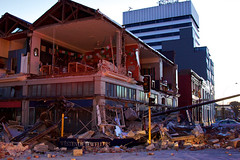


20100906-113917.jpg
Images, eqnz.chch.2010
None
20100906-114114.jpg
Images, eqnz.chch.2010
None
20100906-114504.jpg
Images, eqnz.chch.2010
None
20100906-114447.jpg
Images, eqnz.chch.2010
None
20100906-114435.jpg
Images, eqnz.chch.2010
None
Bic Runga
Images, eqnz.chch.2010
Band Together - Concert for Canterbury www.bandtogetherforcanterbury.co.nz 23rd October 2010 Free concrete in Hagley Park following the 4th September 2010 earthquake
20100906-113856.jpg
Images, eqnz.chch.2010
None
20100906-114437.jpg
Images, eqnz.chch.2010
None
20100906-114120.jpg
Images, eqnz.chch.2010
None
Cockatiel down!
Images, eqnz.chch.2010
Bruce and his cage were sitting on top of the small wooden table on the right before the earthquake. He was understandably alarmed.
Smiley Balloon
Images, eqnz.chch.2010
Band Together - Concert for Canterbury www.bandtogetherforcanterbury.co.nz 23rd October 2010 Free concrete in Hagley Park following the 4th September 2010 earthquake
The once and future cathedral
Research papers, University of Canterbury Library
This is an ethnographic case study, tracking the course of arguments about the future of a city’s central iconic building, damaged following a major earthquake sequence. The thesis plots this as a social drama and examines the central discourses of the controversy. The focus of the drama is the Anglican neo-Gothic Christ Church Cathedral, which stands in the central square of Christchurch, New Zealand. A series of major earthquakes in 2010/2011 devastated much of the inner city, destroying many heritage-listed buildings. The Cathedral was severely damaged and was declared by Government officials in 2011 to be a dangerous building, which needed to be demolished. The owners are the Church Property Trustees, chaired by Bishop Victoria Matthews, a Canadian appointed in 2008. In March 2012 Matthews announced that the Cathedral, because of safety and economic factors, would be deconstructed. Important artefacts were to be salvaged and a new Cathedral built, incorporating the old and new. This decision provoked a major controversy, led by those who claimed that the building could and should be restored. Discourses of history and heritage, memory, place and identity, ownership, economics and power are all identified, along with the various actors, because of their significance. However, the thesis is primarily concerned with the differing meanings given to the Cathedral. The major argument centres on the symbolic interaction between material objects and human subjects and the various ways these are interpreted. At the end of the research period, December 2015, the Christ Church Cathedral stands as a deteriorating wreck, inhabited by pigeons and rats and shielded by protective, colourfully decorated wooden fences. The decision about its future remains unresolved at the time of writing.
"Recovery of Lifelines" following the 22nd February 2011 Christchurch Eart…
Research papers, University of Canterbury Library
The devastating magnitude M6.3 earthquake, that struck the city of Christchurch at 12:51pm on Tuesday 22 February 2011, caused widespread damage to the lifeline systems. Following the event, the Natural Hazard Research Platform (NHRP) of New Zealand funded a short-term project “Recovery of Lifelines” aiming to: 1) coordinate the provision of information to meet lifeline short-term needs; and to 2) facilitate the accessibility to lifelines of best practice engineering details, along with hazards and vulnerability information already available from the local and international scientific community. This paper aims to briefly summarise the management of the recovery process for the most affected lifelines systems, including the electric system, the road, gas, and the water and wastewater networks. Further than this, the paper intends to discuss successes and issues encountered by the “Recovery of Lifelines” NHRP project in supporting lifelines utilities.
Research Programme on Seismic Performance of Reinforced Concrete Walls: Ke…
Research papers, University of Canterbury Library
A wide range of reinforced concrete (RC) wall performance was observed following the 2010/2011 Canterbury earthquakes, with most walls performing as expected, but some exhibiting undesirable and unexpected damage and failure characteristics. A comprehensive research programme, funded by the Building Performance Branch of the New Zealand Ministry of Business, Innovation and Employment, and involving both numerical and experimental studies, was developed to investigate the unexpected damage observed in the earthquakes and provide recommendations for the design and assessment procedures for RC walls. In particular, the studies focused on the performance of lightly reinforced walls; precast walls and connections; ductile walls; walls subjected to bi-directional loading; and walls prone to out-of-plane instability. This paper summarises each research programme and provides practical recommendations for the design and assessment of RC walls based on key findings, including recommended changes to NZS 3101 and the NZ Seismic Assessment Guidelines.
Seismic sustainability assessment of structural systems: Frame or wall str…
Research papers, University of Canterbury Library
A preliminary case study assessing the seismic sustainability of two reinforced concrete structures, a frame structure and a wall structure, was conducted to determine which structural system is more seismically sustainable. The two structures were designed to the same standards and were assumed to be located in Christchurch, New Zealand. A component-based probabilistic seismic loss assessment, considering direct losses only, was conducted for two ground motion records, regarded to approximately represent a 1 in 500 year earthquake event and a 1 in 2500 year earthquake event, respectively. It is shown that the wall structure results in lower direct losses than the frame structure in the less severe ground motion scenario. However, in the more severe ground motion scenario, the frame structure results in lower direct losses. Hence, this study demonstrates that which structural system has the lower direct losses depends on the ground motion intensity level.
Integrated Data and Recovery: The UC CEISMIC Federated Archive
Research papers, University of Canterbury Library
The UC CEISMIC Canterbury Earthquakes Digital Archive was built following the devastating earthquakes that hit the Canterbury region in the South Island of New Zealand from 2010 – 2012. 185 people were killed in the 6.3 magnitude earthquake of February 22nd 2011, thousands of homes and businesses were destroyed, and the local community endured over 10,000 aftershocks. The program aims to document and protect the social, cultural, and intellectual legacy of the Canterbury community for the purposes of memorialization and enabling research. The nationally federated archive currently stores 75,000 items, ranging from audio and video interviews to images and official reports. Tens of thousands more items await ingestion. Significant lessons have been learned about data integration in post-disaster contexts, including but not limited to technical architecture, governance, ingestion process, and human ethics. The archive represents a model for future resilience-oriented data integration and preservation products.
Belonging and Disaster Recovery: Refugee-Background Communities and the Ca…
Research papers, The University of Auckland Library
The role of belonging in post-disaster environments remains an under-theorised concept, particularly regarding refugee populations. This paper presents a qualitative study with 101 refugee-background participants from varying communities living in Christchurch, New Zealand, about their perspectives and responses to the Canterbury earthquakes of 2010–11. Participants spoke of how a sense of belonging as individuals and as a wider community was important in the recovery effort, and highlighted the multiple ways in which they understood this concept. Their comments demonstrate how belonging can have contextual, chronological and gendered dimensions that can help inform effective and resonant disaster responses with culturally and linguistically diverse populations. This analysis also illustrates how the participants' perspectives of belonging shifted over time, and discusses the corresponding role of social work in supporting post-disaster recovery through the concepts of civic, ethno and ethnic-based belonging. AM - Accepted Manuscript
Behaviour of tilt-up precast concrete buildings during the 2010/2011 Chris…
Research papers, The University of Auckland Library
The Christchurch region of New Zealand experienced a series of major earthquakes and aftershocks between September 2010 and June 2011 which caused severe damage to the city’s infrastructure. The performance of tilt-up precast concrete buildings was investigated and initial observations are presented here. In general, tilt-up buildings performed well during all three major earthquakes, with mostly only minor, repairable damage occurring. For the in-plane loading direction, both loadbearing and cladding panels behaved exceptionally well, with no significant damage or failure observed in panels and their connections. A limited number of connection failures occurred due to large out-of-plane panel inertia forces. In several buildings, the connections between the panel and the internal structural frame appeared to be the weakest link, lacking in both strength and ductility. This weakness in the out-of-plane load path should be prevented in future designs.
Observed performance of residential masonry veneer construction in the 201…
Research papers, The University of Auckland Library
Following the 2010/2011 Canterbury, New Zealand earthquakes, a detailed door-to-door survey was conducted in the Christchurch region to establish the earthquake performance of lightweight timber-framed residential dwellings with a masonry veneer external cladding system. The post-earthquake survey involved documenting the condition of dwellings in areas that had experienced different levels of earthquake shaking, allowing comparison between the performance of different veneer systems and different shaking intensities. In total, just fewer than 1,100 residential dwellings were inspected throughout the wider Christchurch area. The survey included parameters such as level of veneer damage, type of veneer damage, observed crack widths, and level of repair required. It is concluded that based on observed earthquake performance at the shaking intensities matching or exceeding ultimate limit state loading, the post-1996 veneer fixing details performed satisfactorily and continued use of the detail is recommended without further modification. AM - Accepted Manuscript
FRONTLINE: The nexus of political documentary and alternative journalism:
Research papers, The University of Auckland Library
This article is a critical commentary of how political documentary embodies the traits and functions of alternative journalism. I explore this notion through Obrero (‘worker’) my independent documentary project about the labour migration of Filipino workers to Christchurch, Aotearoa New Zealand, after the earthquake in 2011. This article maps out the points at where the theories and practices of alternative media and documentary intersect. Analysing political documentary as a format of alternative journalism has links to the long tradition of film and video production as a tool for social critique. As a form of practice-based research, Obrero falls under the rubric of alternative journalism—able to represent the politically marginal sectors of the polity and report on issues underreported in the mainstream press. This article concludes that a distribution plan that is responsive to fragmenting audiences works best when alternative journalism no longer targets a niche but transborder audiences.
Resettled Refugee Communities’ Experiences of the Canterbury Earthquakes a…
Research papers, The University of Auckland Library
This paper presents a qualitative study with multiple refugee background communities living in Christchurch, New Zealand about their perspectives and responses to the Canterbury earthquakes of 2010-2011 (32 semi-structured interviews and 11 focus group discussions comprising 112 participants). Whilst the Canterbury earthquakes created significant challenges for the entire region, several refugee background communities found multiple ways to effectively respond to such adversity. Central to this response were their experiences of belonging which were comprised of both ‘civic’ and ‘ethno’ conceptualisations. This discussion includes an analysis on the intersectionality of identity to highlight the gendered, contextual and chronological influences that impact people’s perspectives of and responses to a disaster. As the study was conducted over 18 months, the paper discusses how social capital resources and experiences of belonging can help inform urban disaster risk reduction (DRR) with refugee groups. http://3icudr.org/program
Gaining ‘authority to operate’: Student‐led emergent volunteers and establ…
Research papers, Lincoln University
There is growing expectation that local volunteers will play a more integrated role in disaster response, yet emergent groups are often ‘outsiders’ to crisis management, prompting questions of the conditions and processes by which these groups can forge relationships with established response agencies, and the tensions which can arise those interactions. This article analyses how student-led volunteers, as an emergent group, nevertheless gained “authority to operate” in the aftermath of the 2010-2011 earthquakes in Canterbury, New Zealand. Our study demonstrates how established response agencies and emergent groups can form hugely impactful and mutually supportive relationships. However, our analysis also points to two interrelated tensions that can arise, regarding the terms by which emergent groups are recognised, and the ‘distance’ considered necessary between emergent groups and established response agencies. The discussion considers implications for inclusiveness, risk and responsibility if emergent volunteers are to be further integrated into disaster response.
An inventory of community-led and non-governmental organisations and initi…
Research papers, Lincoln University
The impact of the Canterbury earthquake sequence of 2010-12 and its aftermath has been enormous. This inventory lists some of the thousands of community-led groups and initiatives across the region that have developed or evolved as a result of the quake. This inventory is the third such inventory to have been produced. The Christchurch Earthquake Activity Inventory was released by Landcare Research in May 2011, three months after the devastating 22 February 2011 earthquake. The second inventory, entitled An Inventory of Community-led Recovery Initiatives in Canterbury, was collated by Bailey Peryman and Dr Suzanne Vallance (Lincoln University) approximately one year after the February earthquake. The research for this third inventory was undertaken over a four month period from June to September 2013, and was conducted primarily through online searches.This research was undertaken with funding support from the Natural Hazards Platform and GNS, New Zealand.
Indigenous resilience through urban disaster: the Maori response to the 20…
Research papers, Lincoln University
The scale of damage from a series of earthquakes across Christchurch Otautahi in 2010 and 2011 challenged all networks in the city at a time when many individuals and communities were under severe economic pressure. Historically, Maori have drawn on traditional institutions such as whanau, marae, hapu and iwi in their endurance of past crises. This paper presents research in progress to describe how these Maori-centric networks supported both Maori and non-Maori through massive urban dislocation. Resilience to any disaster can be explained by configurations of economic, social and cultural factors. Knowing what has contributed to Maori resilience is fundamental to the strategic enhancement of future urban communities - Maori and non-Maori.
Tremain, Garrick 1941- :"You have reached the quake helpline..." 19 June 2…
Images, Alexander Turnbull Library
A man wearing shorts and gumboots stands surrounded by liquefaction beside his collapsing house. He tries to phone the 'Quake helpline' for assistance and gets the response 'You have reached the quake helpline... If you're up to your knees in liquefaction... Press 1. If your house is down around your ears... Press 2. If you're looking for assistance or answers press on'. Context - The increasing frustration and misery of many Christchurch residents who are experiencing huge difficulty getting assistance after months of delays and continuing aftershocks following the Christchurch earthquakes of 4th September, 22 February and the two most recent ones on 13 June. Quantity: 1 digital cartoon(s).
WEMO ERT Set 1 - March 2011 - Photograph 24
Images, UC QuakeStudies
A photograph looking south down Manchester towards the intersection of Lichfield Street. In the distance members of the Wellington Emergency Management Office Emergency Response Team are standing next to a police car on Lichfield Street. Behind this there is a group of earthquake-damaged buildings which have spilled rubble onto Manchester Street. An excavator is parked on top of this rubble.
WEMO ERT Set 1 - March 2011 - Photograph 40
Images, UC QuakeStudies
A photograph of a member of the Wellington Emergency Management Office Emergency Response Team speaking to a police officer on the intersection of Manchester and St Asaph Streets. In the background is a police car.
Vegetation change and native forest restoration in urban environments: Man…
Research papers, Lincoln University
Global biodiversity is threatened by human actions, including in urban areas. Urbanisation has removed and fragmented indigenous habitats. As one of the 25 biodiversity ’hot spots’, New Zealand is facing the problems of habitat loss and indigenous species extinction. In New Zealand cities, as a result of the land clearance and imported urban planning precepts, many urban areas have little or no original native forest remaining. Urbanisation has also been associated with the introduction of multitudes of species from around the world. Two large earthquakes shook Christchurch in 2010 and 2011 and caused a lot of damage. Parts of the city suffered from soil liquefaction after the earthquakes. In the most damaged parts of Christchurch, particularly in the east, whole neighbourhoods were abandoned and later demolished except for larger trees. Christchurch offers an excellent opportunity to study the biodiversity responses to an urban area with less intensive management, and to learn more about the conditions in urban environments that are most conducive to indigenous plant biodiversity. This study focuses on natural woody plant regeneration of forested sites in Christchurch city, many of which were also surveyed prior to the earthquakes. By repeating the pre-earthquake surveys, I am able to describe the natural regeneration occurring in Christchurch forested areas. By combining this with the regeneration that has occurred in the Residential Red Zone, successional trajectories can be described under a range of management scenarios. Using a comprehensive tree map of the Residential Red Zone, I was also able to document minimum dispersal distances of a range of indigenous trees in Christchurch. This is important for planning reserve connectivity. Moreover, I expand and improve on a previous analysis of the habitat connectivity of Christchurch (made before the earthquakes) to incorporate the Residential Red Zone, to assess the importance for habitat connectivity of restoring the indigenous forest in this area. In combination, these data sets are used to provide patch scenarios and some management options for biodiversity restoration in the Ōtākaro-Avon Red Zone post-earthquake.
The Cathedral of the Blessed Sacrament
Images, eqnz.chch.2010
Note the innovative use of hay bales on the left side of the image.
Piano Time
Images, eqnz.chch.2010
None