
Search
found 2110 results
Images for CANTERBURY EARTHQUAKE; more images...


UC Civil and Natural Resources Engineering Photograph 017
Images, UC QuakeStudies
A photograph of cracks across a road in Canterbury caused by the 4 September 2010 earthquake.
New Zealand Defence Force photograph 302
Images, UC QuakeStudies
Vehicles on the HMNZS Canterbury. These will help with the earthquake recovery in Lyttelton and Christchurch.
New Zealand Defence Force photograph 301
Images, UC QuakeStudies
Vehicles on the HMNZS Canterbury. These will help with the earthquake recovery in Lyttelton and Christchurch.
New Zealand Defence Force photograph 108
Images, UC QuakeStudies
A member of the Royal New Zealand Navy in a crack caused by the Canterbury Earthquake.
New Zealand Defence Force photograph 299
Images, UC QuakeStudies
Vehicles on the HMNZS Canterbury. These will help with the earthquake recovery in Lyttelton and Christchurch.
Jane Sutherland-Norton's Story
Articles, UC QuakeStudies
Summary of oral history interview with Jane Sutherland-Norton about her experiences of the Canterbury earthquakes.
New Zealand Defence Force photograph 300
Images, UC QuakeStudies
Vehicles on the HMNZS Canterbury. These will help with the earthquake recovery in Lyttelton and Christchurch.
Dame Grace Hollander's Story
Articles, UC QuakeStudies
Summary of oral history interview with Dame Grace Hollander about her experiences of the Canterbury earthquakes.
Di Madgin's Red Zone photograph 6
Images, UC QuakeStudies
A scanned copy of a photograph of the garden of Di Madgin's former home in the Red Zone, taken before the earthquakes.
Di Madgin's Red Zone photograph 4
Images, UC QuakeStudies
A scanned copy of a photograph of the garden of Di Madgin's former home in the Red Zone, taken before the earthquakes.
The seismic performance of unreinforced stone masonry buildings during the…
Research papers, The University of Auckland Library
The sequence of earthquakes that has affected Christchurch and Canterbury since September 2010 has caused damage to a great number of buildings of all construction types. Following post-event damage surveys performed between April 2011 and June 2011, the damage suffered by unreinforced stone masonry buildings is reported and different types of observed failures are described. A detailed technical description of the most prevalently observed failure mechanisms is provided, with reference to recognised failure modes for unreinforced masonry structures. The observed performance of existing seismic retrofit interventions is also provided, as an understanding of the seismic response of these interventions is of fundamental importance for assessing the vulnerability of similar strengthening techniques when applied to unreinforced stone masonry structures.
CanCERN Newsletter 128, 6 June 2014
Articles, UC QuakeStudies
A copy of the CanCERN online newsletter published on 6 June 2014
Original central library pre demolition 002
Images, eqnz.chch.2010
Canterbury Public Library viewed from near the Bridge of Rememberance,
Decision-Making for Resilient Solutions Associated with Heritage, Earthqua…
Research papers, University of Canterbury Library
he 2016 Building (Earthquake Prone Building) Amendment Act aims to improve the system for managing earthquake-prone buildings. The proposed changes to the Act were precipitated by the Canterbury earthquakes, and the need to improve the seismic safety of New Zealand’s building stock. However, the Act has significant ramifications for territorial authorities, organisations and individuals in small New Zealand towns, since assessing and repairing heritage buildings poses a major cost to districts with low populations and poor rental returns on commercial buildings.
HMNZS Canterbury re-supplies for the Christchurch earthquake relief effort
Videos, UC QuakeStudies
A video about the HMNZS Canterbury which travelled to Wellington after the 22 February 2011 earthquake to refuel and gather supplies. The crew worked overnight to ensure that they could return to the people of Lyttelton as quickly as possible.
20100906-114114.jpg
Images, eqnz.chch.2010
None
Kirkwood Village University of Canterbury Photograph 3
Images, UC QuakeStudies
A photograph of Kirkwood Village, a cluster of temporary classrooms and offices constructed at the University of Canterbury campus following the 22 February 2011 earthquake.
Kirkwood Village University of Canterbury Photograph 5
Images, UC QuakeStudies
A photograph of Kirkwood Village, a cluster of temporary classrooms and offices constructed at the University of Canterbury campus following the 22 February 2011 earthquake.
Kirkwood Village University of Canterbury Photograph 2
Images, UC QuakeStudies
A photograph of Kirkwood Village, a cluster of temporary classrooms and offices constructed at the University of Canterbury campus following the 22 February 2011 earthquake.
Kirkwood Village University of Canterbury Photograph 1
Images, UC QuakeStudies
A photograph of Kirkwood Village, a cluster of temporary classrooms and offices constructed at the University of Canterbury campus following the 22 February 2011 earthquake.
Umut Akguzel Photograph 031
Images, UC QuakeStudies
A photograph of a crack that runs between two windows of the earthquake-damaged Wheki Building at the University of Canterbury.
Umut Akguzel Photograph 030
Images, UC QuakeStudies
A photograph of a crack that runs between two windows of the earthquake-damaged Wheki Building at the University of Canterbury.
GEER Association Aerial Photograph 186
Images, UC QuakeStudies
An aerial photograph of the University of Canterbury following the 4 September earthquake, taken from a helicopter.
GEER Association Aerial Photograph 184
Images, UC QuakeStudies
An aerial photograph of the University of Canterbury following the 4 September earthquake, taken from a helicopter.
GEER Association Aerial Photograph 182
Images, UC QuakeStudies
An aerial photograph of the University of Canterbury following the 4 September earthquake, taken from a helicopter.
GEER Association Aerial Photograph 183
Images, UC QuakeStudies
An aerial photograph of the University of Canterbury following the 4 September earthquake, taken from a helicopter.
Photograph by Neil Macbeth 640
Images, UC QuakeStudies
A tent in the Botanic Gardens which is being used as a memorial for the Canterbury earthquakes.
BeckerFraserPhotos July 2011 photograph 661
Images, UC QuakeStudies
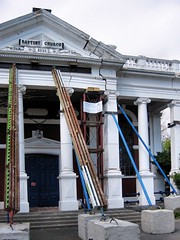
A photograph of an earthquake-damaged building on the corner of Canterbury and London Streets in Lyttelton.
GEER Association Aerial Photograph 185
Images, UC QuakeStudies
An aerial photograph of the University of Canterbury following the 4 September earthquake, taken from a helicopter.
Mayoress Jo Nicholls-Parker's Story
Articles, UC QuakeStudies
Summary of oral history interview with Mayoress Jo Nicholls Parker about her experiences of the Canterbury earthquakes.