

Search
found 7152 results
Images for CANTERBURY; more images...

Following On. Midwinter in Christchurch
Audio, Radio New Zealand
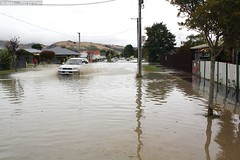
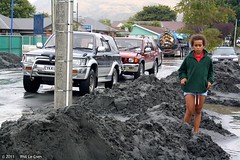
The Alps and ranges around New Zealand are now laden with snow yet while most of us are hunkering down and keeping warm, some in Canterbury are still having to get on within a broken city following this year's earlier devastating earthquakes. Bryan began by speaking to Major Mike Allwright of the Salvation Army and followed up with Lyttleton musician Lindon Puffin. Bryan also spoke to Christine Parker from the Eastern suburb of Aranui and Regina Nyadani who lives in central Christchurch with her family.
Earthquake hazard assessment for Waimate, Mackenzie and part Waitaki distr…
Articles, UC QuakeStudies
This report describes the earthquake hazard in Waimate and Mackenzie districts and the part of Waitaki district within Canterbury, and gives details of historic earthquakes. It includes district-scale (1:500,000) active fault, ground shaking zone, liquefaction and landslide susceptibility maps. The report describes earthquake scenarios for a magnitude 7.2-7.4 Ostler Fault earthquake near Twizel, a magnitude 8 Alpine Fault earthquake, and a magnitude 6.9 Hunters Hills Fault Zone earthquake near Waimate. See Object Overview for background and usage information.
Shock at new quake-prone building in Christchurch
Audio, Radio New Zealand
A woman badly injured in the Christchurch earthquake is astonished a new building in the city has been found to have serious seismic flaws. The empty new office building at 230 High Street has multiple problems in its earthquake design that the city council was warned about almost two years ago. Construction of the seven-storey building continued even after those warnings in December 2017. Susie Ferguson speaks to University of Canterbury lecturer Ann Brower, who was crushed after falling masonry fell on her bus during the February twenty-second 2011 earthquake.
EQC needs to 'empower staff' to take action - Dean Lester
Audio, Radio New Zealand
A Christchurch earthquake insurance specialist says a critical report of the Earthquake Commission is a good start but doesn't go far enough. The report by an independent ministerial advisor says EQC staff have no confidence in their own data, and that the organisation needs to dramatically improve the way it communicates with claimants. The advisor, Christine Stevenson, said EQC was unable even to tell her how many claims it's still dealing with from the Canterbury earthquakes. Dean Lester is a Christchurch insurance advocate and claims preparer. He talks to Susie Ferguson.
New QE2 set to make a splash in Christchurch
Audio, Radio New Zealand
Hundreds of children and 12 schools have pre-registered for swimming lessons at Christchurch's new Taiora QE2 sports centre, which opens today. The Canterbury earthquakes damaged the complex beyond repair, and almost six years after it was demolished, a new QE2 has risen from rubble - admittedly smaller and without the athletics track the old one was so well known for. Schools in particular are welcoming today's opening, after having to spend big bucks on transport to get their students to pools for lessons since the quakes. Logan Church reports.
They bought a zoo
Audio, Radio New Zealand
Mike Rutledge and zoologist Meg Selby are new owners of Nelson's Natureland Zoo and a mob of meerkats, an African porcupine, and a menagerie of native birds and farm animals. The Orana Wildlife Trust took over the care of the Tahunanui zoo in 2008, but the financial strain caused by the Canterbury earthquakes has been too much. The zoo has been around since 1966. The Nelson City Council, which owns the land, called for expressions of interest last year when Orana decided to pull out and Meg and Mike got the nod. They will be taking over in November.
Manu Korihi News for 3 August 2011
Audio, Radio New Zealand
Rural Maori children in the Gisborne region will be visited at school by Health Officials in an effort to reduce the incidence of rheumatic fever; A designers' group says the Canterbury earthquake has created an opportunity for the local iwi to put its architectural stamp on the new Christchurch; Workers who carved the pou on Northland's popular new cycle trail will meet the Prime Minister later this month; Kaitaia people will be among the first in the country to see a long-awaited film about the much-loved comedian - Billy T James.
The Week in Review - week ending 17 September 2010
Audio, Radio New Zealand
A review of the week's news including the latest on the Canterbury earthquake as aftershocks continue to hit the region, ACT MP David Garrett quits the party amid shocking revelations, a report into the Air New Zealand crash off the French coast in 2008 blames poor maintenance and pilot error, first steps are taken to repeal the Foreshore and Seabed Act, the New Zealand Airforce evacuates an ill man from Antarctica, New Zealand's athletes could pull out of the Commonwealth Games and immigrant birds that mimic the native species.
Top Stories for 30 September 2010
Audio, Radio New Zealand
Chaos predicted with switch in give way rules, The first GST increase in 21 years comes into force at midnight tonight, Villages around Samoa, American Samoa and Tonga are today remembering the day one year ago when lives, homes and businesses were destroyed by a deadly tsunami , One of Auckland most distinctive local bodies has made an emotional exit one month before the creation of the new super city, The Law Society has added its voice to condemnation the government is giving itself far too much power by passing the emergency Canterbury earthquake legislation.
Change could be on the way for EQC after inquiry
Audio, Radio New Zealand
A scathing inquiry into the Earthquake Commission's handling of the 2010 and 2011 Canterbury earthquakes could mean huge change for how it handles claims. The Government says it's committed to implementing all of the recommendations from the inquiry, including improving its communication, planning and preparedness and dispute resolution. John Goddard, an insurance and employment law barrister who dealt with more than 4000 claims at the time, says repairs were handled poorly and the new recommendations won't cover all the bases. John Goddard and Melanie Bourke of EQC Fix speak to Corin Dann.
Rallying round: the health system's quake response
Audio, Radio New Zealand
When the 2011 Canterbury earthquakes struck, the region was hit with disaster on an unprecedented scale and the health system was challenged like never before. The injured needed immediate treatment, buildings and equipment were badly damaged, and yet those working in health system rallied to keep it going. Emergency Medicine specialist Dr Mike Ardagh and independent science writer Dr Joanne Deely have written a book, Rising from the Rubble, which tells the stories of those who were part of the health system response, and a record of the long-term issues that have been caused by it.
Top Stories for Thursday 14 December 2017
Audio, Radio New Zealand
Nearly two-thirds of MPs have voted in support of a bill that would legalise euthanasia. The Government says it will consider moves to rein in rapidly rising salaries for top public servants. It's been far from smooth sailing for the new government in its first eight weeks in office, but it appears to be largely on track to deliver its hundred day plan. More than a year after North Canterbury's 7.8 magnitude earthquake forced its closure, State Highway 1 north of Kaikoura will re-open to the public on Friday.
The Panel with Jeremy Elwood and Scott Yorke (Part 2)
Audio, Radio New Zealand
Topics - it's been described as the 'Downton Effect' - a revival of more formal dinner parties as the British try to bring back fine dining. Today we learned that insurance companies have completed just 15 per cent of rebuilds and 10 per cent of over-cap repairs more than three years after the Canterbury earthquakes. A series of rallies are being held in five Australian cities today by New Zealanders protesting against legislation which denies them rights to welfare. Commuters are cautiously optimistic about a radical revamp proposed for Wellington's rush-hour rail service.
Ann Brower: critical conscience
Audio, Radio New Zealand
On 31 May, Dr Ann Brower will deliver a lecture at the University of Canterbury, titled: A Little Guy's Guide to Making a Difference after receiving the Critic and Conscience of Society Award earlier this month. Dr Brower is probably best known for her advocacy for more stringent regulation of earthquake-prone buildings, a campaign informed by her experience of being on a bus crushed by falling masonry in Christchurch's 2011 earthquake. Twelve passengers died on or beside the bus. She's also been prominent in highlighting high country land being transferred from Crown to private ownership.
NZ's newest buildings withstand quakes more intense than Kaikōura
Audio, Radio New Zealand
Tests have revealed that New Zealand's latest building designs will stand up to earthquakes of a greater intensity than the ones that occurred in Christchurch and Kaikōura. Researchers from the University of Auckland and Canterbury, in collaboration with QuakeCoRE and Tongji University in China, built a two-storey concrete building and put it on one of the largest shake tables in the world. All of the building's details were based on existing buildings in Wellington and Christchurch. The project leader is the University of Auckland's Dr Rick Henry. He talks to Guyon Espiner.
Christchurch, NZ - Post Feb Earthquake, 2011
Images, eqnz.chch.2010
Damage to the Hotel Grand Chancellor can be seen in the middle. At the bottom left is the lift shaft (now fully demolished) of the CTV building which claimed over 100 lives when it collapsed in the earthquake. Taken during a scenic flight over Christchurch, New Zealand, 3 months after the deadly earthquake of 22 February, 2011. Much of the inn...
Doyle, Martin, 1956-: Could the wrecking ball be used on structures OUTSID…
Images, Alexander Turnbull Library
Text reads 'Could the wrecking ball be used on structures outside Christchurch?' The cartoon shows Minister for the Reconstruction of Christchurch Gerry Brownlee as the wrecking ball on a crane; he says 'let the fun begin'. To one side is a large house crowded with people which represents 'the welfare state' and is surrounded by a barrier on which are printed the words 'Fiscal emergency'. Context - Gerry Brownlee is seen by many as rather too quick to demolish heritage buildings in his rush to rebuild Christchurch. The wrecking ball idea also suggests that the National government is likely to wreck the welfare state in its efforts to sort out economic problems. Quantity: 1 digital cartoon(s).
Evans, Malcolm Paul, 1945- :'Kwark'. 8 May 2012
Images, Alexander Turnbull Library
Shows Property Investor Bob Jones with a shotgun on top of Christchurch cathedral on an island surrounded by ducks. The lake is labelled 'Lake Bob Parker'. Context: Bob Jones suggested the Christchurch CBD be replaced with a lake (The Listener 12-18 May 2012). Colour and black and white versions available Quantity: 2 digital cartoon(s).
Question Time for 16 November 2016
Audio, Radio New Zealand
NUK KORAKO to the Minister of Finance: How does New Zealand’s growing economy and the Government’s commitment to responsible fiscal management mean New Zealand is well-placed to respond to the Kaikōura earthquake? ANDREW LITTLE to the Prime Minister: Has he spoken to relevant Ministers about the lessons learned from the Canterbury earthquakes to ensure people affected by the recent earthquakes have an easier and faster recovery? STUART SMITH to the Minister of Civil Defence: What update can he provide about the Government’s response to the Kaikōura earthquake? RON MARK to the Prime Minister: Can he update the House on the situation in quake-affected areas in the South Island? JAMES SHAW to the Prime Minister: Is he committed to all his Government’s policies? Hon ANNETTE KING to the Minister of Health: Does he stand by his statement that following the Valentine’s Day earthquake this year in Canterbury, “it was timely to review whether any additional mental health and wellbeing support was needed”; if so, will he consider reviewing whether any additional support is needed for Canterbury and Nelson-Marlborough district health boards as a result of the recent earthquakes? JACQUI DEAN to the Minister of Transport: What updates has he received on damage to transport infrastructure following the Kaikōura earthquake? JAN LOGIE to the Minister for Workplace Relations and Safety: What is his response to yesterday’s call from members of the Joint Working Group on Pay Equity Principles for the Government to “immediately right this historic wrong and implement the JWG principles”? JACINDA ARDERN to the Minister for Economic Development: When is he likely to announce a recovery or support package for small businesses in earthquake-affected areas? KANWALJIT SINGH BAKSHI to the Minister of Police: What are New Zealand Police doing to support the Kaikōura community? CHRIS HIPKINS to the Minister of Education: When did she first discuss the potential impact of Monday’s 7.5 earthquake on NCEA and Scholarship exams with the New Zealand Qualifications Authority? IAN McKELVIE to the Minister for Primary Industries: What recent reports has he received on the impact of the recent earthquakes on the primary sector?
Base isolation of New Zealand light-frame wood buildings.
Research papers, University of Canterbury Library
Base isolation is an incredibly effective technology used in seismic regions throughout the world to limit structural damage and maintain building function, even after severe earthquakes. However, it has so far been underutilised in light-frame wood construction due to perceived cost issues and technical problems, such as a susceptibility to movement under strong wind loads. Light-frame wood buildings make up the majority of residential construction in New Zealand and sustained significant damage during the 2010-2011 Canterbury earthquake sequence, yet the design philosophy has remained largely unchanged for years due to proven life-safety performance. Recently however, with the advent of performance based earthquake engineering, there has been a renewed focus on performance factors such as monetary loss that has driven a want for higher performing residential buildings. This research develops a low-cost approach for the base isolation of light-frame wood buildings using a flat-sliding friction base isolation system, which addresses the perceived cost and technical issues, and verifies the seismic performance through physical testing on the shake table at the University of Canterbury. Results demonstrate excellent seismic performance with no structural damage reported despite a large number of high-intensity earthquake simulations. Numerical models are subsequently developed and calibrated to New Zealand light-frame wood building construction approaches using state-of-the-art wood modelling software, Timber3D. The model is used to accurately predict both superstructure drift and acceleration demand parameters of fixed-base testing undertaken after the base isolation testing programme is completed. The model development allows detailed cost analyses to be undertaken within the performance based earthquake engineering framework that highlights the monetary benefits of using base isolation. Cost assessments indicate the base isolation system is only 6.4% more compared to the traditional fixed-base system. Finally, a design procedure is recommended for base isolated light-frame wood buildings that is founded on the displacement based design (DBD) approach used in the United States and New Zealand. Nonlinear analyses are used to verify the DBD method which indicate its suitability.
Hubbard, James, 1949- : "And to show we're not neglecting priorities in th…
Images, Alexander Turnbull Library
Surrounded by mud and puddles in Christchurch Prime Minister John Key puts his arm round co-leader of the Maori Party Pita Sharples and smiles happily; behind them is a brand new plastic portaloo. On the ground lies a newspaper with a headline that reads 'Govt. to fund $2m giant RWC plastic waka'. Pita Sharples says 'and to show we're not neglecting our priorities in these austere times, Christchurch will get a new plastic portaloo!' Context - The government has hit back at criticism over a $2 million venue centre in the shape of a waka for the Rugby World Cup (RWC), defending the cost as necessary to host a world-class event. Co-leader of the Maori Party Pita Sharples says the waka will promote Maori culture during the Rugby World Cup and at other events (like the America's Cup). Labour Party MP Shane Jones asks "How can Dr Sharples and Prime Minister John Key actually believe that this expensive indulgence is a positive advertisement for Maori? The truth is they don't but they're both working together in a desperate effort to keep the Maori Party afloat. Quantity: 1 digital cartoon(s).
Hubbard, James, 1949- : "Severe aftershocks continue.." 28 March 2011
Images, Alexander Turnbull Library
In four frames a man watches the news on TV. He hears that 'Severe aftershocks continue as the demolition crew move into the red zone.. amidst the badly damaged infrastructure..' His wife offers him a cup of tea and assumes the report is about Christchurch but it is not, it is about 'Phil Goff & Labour' Context - Christchurch continues to have aftershocks following the February 22 earthquake and the Labour Party is suffering one bodyblow after another - the last being the Darren Hughes affair. This is disastrous for Labour because the 2011 election is in November. Quantity: 1 digital cartoon(s).
Evans, Malcolm Paul, 1945- :'And not only is my plan for the city's rebuil…
Images, Alexander Turnbull Library
Shows Minister for Christchurch Earthquake Recovery Gerry Brownlee delighted with his plan to rebuild Christchurch and to have it paid for buy the PM's casino. Context: Refers to the Christchurch Central Development Unit that Minister for Christchurch Earthquake Recovery Gerry Brownlee has put in place. Refers also to the very controversial deal that Prime Minister John Key has made with Auckland's SkyCity to the effect that SkyCity will pay the full construction cost of a new convention centre - estimated at $350 million, in return for being allowed to add more gaming tables and machines, and extending its licence beyond 2021. Colour and black and white versions of this cartoon are available Quantity: 2 digital cartoon(s).
Relative efficacy of CPT- versus Vs-based simplified liquefaction evaluati…
Research papers, University of Canterbury Library
The focus of the study presented herein is an assessment of the relative efficacy of recent Cone Penetration Test (CPT) and small strain shear wave velocity (Vs) based variants of the simplified procedure. Towards this end Receiver Operating Characteristic (ROC) analyses were performed on the CPT- and Vs-based procedures using the field case history databases from which the respective procedures were developed. The ROC analyses show that Factors of Safety (FS) against liquefaction computed using the most recent Vs-based simplified procedure is better able to separate the “liquefaction” from the “no liquefaction” case histories in the Vs liquefaction database than the CPT-based procedure is able to separate the “liquefaction” from the “no liquefaction” case histories in the CPT liquefaction database. However, this finding somewhat contradicts the assessed predictive capabilities of the CPT- and Vs-based procedures as quantified using select, high quality liquefaction case histories from the 20102011 Canterbury, New Zealand, Earthquake Sequence (CES), wherein the CPT-based procedure was found to yield more accurate predictions. The dichotomy of these findings may result from the fact that different liquefaction field case history databases were used in the respective ROC analyses for Vs and CPT, while the same case histories were used to evaluate both the CPT- and Vs-based procedures.
Post Seismic Capacity of Damaged and Repaired Reinforced Concrete Plastic …
Research papers, University of Canterbury Library
This paper presents preliminary results of an experimental campaign on three beam-column joint subassemblies extracted from a 22-storey reinforced concrete frame building constructed in late 1980s at the Christchurch’s Central Business District (CBD) area, damaged and demolished after the 2010-2011 Canterbury earthquakes sequence (CES). The building was designed following capacity design principles. Column sway (i.e., soft storey) mechanisms were avoided, and the beams were provided with plastic hinge relocation details at both beam-ends, aiming at developing plastic hinges away from the column faces. The specimens were tested under quasi-static cyclic displacement controlled lateral loading. One of the specimens, showing no visible residual cracks was cyclically tested in its as-is condition. The other two specimens which showed residual cracks varying between hairline and 1.0mm in width, were subjected to cyclic loading to simulate cracking patterns consistent with what can be considered moderate damage. The cracked specimens were then repaired with an epoxy injection technique and subsequently retested until reaching failure. The epoxy injection techniques demonstrated to be quite efficient in partly, although not fully, restoring the energy dissipation capacities of the damaged specimens at all beam rotation levels. The stiffness was partly restored within the elastic range and almost fully restored after the onset of nonlinear behaviour.
Authentic collaboration with local communities in post-disaster reconnaiss…
Research papers, University of Canterbury Library
Geological research in the immediate aftermath of the 2016 Kaikōura Earthquake, New Zealand, was necessary due to the importance and perishability of field data. It also reflects a real desire on the part of researchers to contribute not only to immediate scientific understanding but also to the societal recovery effort by enhancing knowledge of the event for the benefit of affected communities, civil defence organizations and regional and national decision makers. This commitment to outreach and engagement is consistent with the recent IAPG statement of Geoethics. More immediately, it was informed by experience of the 2010-2011 Canterbury Earthquake sequence. After that earlier disaster, intense interactions between researchers and various response agencies as well as local communities informed the development and dissemination of a set of ethical guidelines for researchers immediately following the Mw7.8 14 November 2016 Kaikōura Earthquake. In this presentation, I argue that ethical engagement of this kind is the key to gathering high quality research data immediately after the event. Creating trusting and mutually respectful, mutually beneficial relationships is also vital to ongoing engagement to facilitate further “in depth” research in collaboration with communities.
Development of seismic loss prediction model for residential buildings - C…
Research papers, University of Canterbury Library
The Canterbury Earthquake Sequence (CES), induced extensive damage in residential buildings and led to over NZ$40 billion in total economic losses. Due to the unique insurance setting in New Zealand, up to 80% of the financial losses were insured. Over the CES, the Earthquake Commission (EQC) received more than 412,000 insurance claims for residential buildings. The 4 September 2010 earthquake is the event for which most of the claims have been lodged with more than 138,000 residential claims for this event only. This research project uses EQC claim database to develop a seismic loss prediction model for residential buildings in Christchurch. It uses machine learning to create a procedure capable of highlighting critical features that affected the most buildings loss. A future study of those features enables the generation of insights that can be used by various stakeholders, for example, to better understand the influence of a structural system on the building loss or to select appropriate risk mitigation measures. Previous to the training of the machine learning model, the claim dataset was supplemented with additional data sourced from private and open access databases giving complementary information related to the building characteristics, seismic demand, liquefaction occurrence and soil conditions. This poster presents results of a machine learning model trained on a merged dataset using residential claims from the 4 September 2010.
More than monitoring: Developing impact measures for transformative social…
Research papers, University of Canterbury Library
Meeting the Sustainable Development Goals by 2030 involves transformational change in the business of business, and social enterprises can lead the way in such change. We studied Cultivate, one such social enterprise in Christchurch, New Zealand, a city still recovering from the 2010/11 Canterbury earthquakes. Cultivate works with vulnerable youth to transform donated compost into garden vegetables for local restaurants and businesses. Cultivate’s objectives align with SDG concerns with poverty and hunger (1 & 2), social protection (3 & 4), and sustainable human settlements (6 & 11). Like many grant-supported organisations, Cultivate is required to track and measure its progress. Given the organisation’s holistic objectives, however, adequately accounting for its impact reporting is not straightforward. Our action research project engaged Cultivate staff and youth-workers to generate meaningful ways of measuring impact. Elaborating the Community Economy Return on Investment tool (CEROI), we explore how participatory audit processes can capture impacts on individuals, organisations, and the wider community in ways that extend capacities to act collectively. We conclude that Cultivate and social enterprises like it offer insights regarding how to align values and practices, commercial activity and wellbeing in ways that accrue to individuals, organisations and the broader civic-community.
Structural damage evaluation of multi-story timber-steel hybrid structures…
Research papers, University of Canterbury Library
Timber-based hybrid structures provide a prospective solution for utilizing environmentally friendly timber material in the construction of mid-rise or high-rise structures. This study mainly focuses on structural damage evaluation for a type of timber-steel hybrid structures, which incorporate prefabricated light wood frame shear walls into steel moment-resisting frames (SMRFs). The structural damage of such a hybrid structure was evaluated through shake table tests on a four-story large-scale timber-steel hybrid structure. Four ground motion records (i.e., Wenchuan earthquake, Canterbury earthquake, El-Centro earthquake, and Kobe earthquake) were chosen for the tests, with the consideration of three different probability levels (i.e., minor, moderate and major earthquakes) for each record. During the shake table tests, the hybrid structure performed quite well with visual damage only to wood shear walls. No visual damage in SMRF and the frame-to-wall connections was observed. The correlation of visual damage to seismic intensity, modal-based damage index and inter-story drift was discussed. The reported work provided a basis of knowledge for performance-based seismic design (PBSD) for such timber-based hybrid structures.
Deferential Tailoring: a grounded theory of how women respond and adapt to…
Research papers, University of Canterbury Library
In this article we utilize grounded theory to explore women’s experiences in the unique construction industry context that followed the 2010 Canterbury (New Zealand) earthquakes. Data were obtained from 36 semi-structured interviews conducted with women working in a variety of occupations in the construction industry. We identify three inter-related categories: capitalizing on opportunity, demonstrating capability and surface tolerance, which together represent a response process that we label ‘deferential tailoring’. The deferential tailoring process explains how women intentionally shape their response to industry conditions through self-regulating behaviors that enables them to successfully seize opportunities and manage gender-related challenges in the working environment. Our findings challenge existing research which suggests that women adopt submissive coping strategies to conform to androcentric norms in the construction industry. Instead, we argue that the process of deferential tailoring can empower women to build positive workplace relationships, enhance career development, and help shift perceptions of the value of their work in the industry.