

Search
found 7152 results
Images for CANTERBURY; more images...
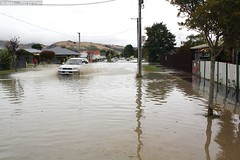
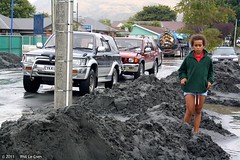

Christchurch Press 23 March 2011: Section A, Page 21
Articles, UC QuakeStudies
Page 21 of Section A of the Christchurch Press, published on Wednesday 23 March 2011.
Christchurch Press 6 June 2011: Section A, Page 2
Articles, UC QuakeStudies
Page 2 of Section A of the Christchurch Press, published on Monday 6 June 2011.
Christchurch Press 19 September 2011: Section A, Page 3
Articles, UC QuakeStudies
Page 3 of Section A of the Christchurch Press, published on Monday 19 September 2011.
Christchurch Press 30 May 2011: Section A, Page 5
Articles, UC QuakeStudies
Page 5 of Section A of the Christchurch Press, published on Monday 30 May 2011.
Christchurch Press 15 September 2012: Section A, Page 1
Articles, UC QuakeStudies
Page 1 of Section A of the Christchurch Press, published on Saturday 15 September 2012.
Christchurch Press 15 September 2012: Section C, Page 2
Articles, UC QuakeStudies
Page 2 of Section C of the Christchurch Press, published on Saturday 15 September 2012.
Footbridge @ Kaiapoi
Images, eqnz.chch.2010
Damage from the Christchurch 7.1 earthquake on 4th Sept 2010
Blessed Rainbow
Images, eqnz.chch.2010
Catholic Basilica, Christchurch - at the right place, at the right time...
Recent efforts in empirical ground motion modelling in New Zealand
Research papers, University of Canterbury Library
This presentation discusses recent empirical ground motion modelling efforts in New Zealand. Firstly, the active shallow crustal and subduction interface and slab ground motion prediction equations (GMPEs) which are employed in the 2010 update of the national seismic hazard model (NSHM) are discussed. Other NZ-specific GMPEs developed, but not incorporated in the 2010 update are then discussed, in particular, the active shallow crustal model of Bradley (2010). A brief comparison of the NZ-specific GMPEs with the near-source ground motions recorded in the Canterbury earthquakes is then presented, given that these recordings collectively provide a significant increase in observed strong motions in the NZ catalogue. The ground motion prediction expert elicitation process that was undertaken following the Canterbury earthquakes for active shallow crustal earthquakes is then discussed. Finally, ongoing GMPE-related activities are discussed including: ground motion and metadata database refinement, improved site characterization of strong motion station, and predictions for subduction zone earthquakes.
News- The Lyttelton Port Co. has halted merger talks with Otago since the …
Images, Alexander Turnbull Library
An official at the 'Otago Port Co.' stares in bewilderment at the feet of his colleague at the Lyttelton Port Company who says 'Ah, that might do it for now' as he hangs upside down by his feet from his upturned desk in the aftermath of the 4th September Canterbury earthquake. Text above reads 'News, the Lyttelton Port Co. has halted merger talks with Otago since the 'quake, saying "the landscape has changed". Refers to the news that Lyttelton Port, the South Island's biggest port, abandoned two-years of merger talks with rival Port Otago because it is preoccupied with rebuilding after the Canterbury earthquake. Quantity: 1 digital cartoon(s).
Organisational resilience following the Darfield earthquake of 2010
Research papers, University of Canterbury Library
This paper presents the preliminary findings of a study on the resilience and recovery of organisations following the Darfield earthquake in New Zealand on 4 September 2010. Sampling included organisations proximal and distal to the fault trace, organisations located within central business districts, and organisations from seven diverse industry sectors. The research captured information on the challenges to, the impacts on, and the reflections of the organisations in the first months of recovery. Organisations in central business districts and in the hospitality sector were most likely to close while organisations that had perishable stock and livestock were more heavily reliant on critical services. Staff well-being, cash flow, and customer loss were major concerns for organisations across all sectors. For all organisations, the most helpful factors in mitigating the effects of the earthquake to be their relationship with staff, the design and type of buildings, and critical service continuity or swift reinstatement of services.
Brockie, Robert Ellison, 1932-:'Where was that Kiwi moonman when we wanted…
Images, Alexander Turnbull Library
The cartoon shows members of the 'Japan Seismic Institute studying an earthquake graph; one of them says 'Where was that Kiwi moonman when we wanted him?' Depicted also is thew 'moonman' Ken Ring as a wizard studying an astrological chart. Behind them all Japan is depicted as a devastated wasteland. Context - the Japanese earthquake and tsunami of 4th March 2011 and the present threat of a nuclear catastrophe. Also the so-called Moon Man, astrologer Ken Ring, who predicted that Christchurch would be hit by a huge earthquake today (20 March 2011). His claims have terrified Cantabrians and led to people fleeing Christchurch. Quantity: 1 digital cartoon(s).
Winter, Mark, 1958-:[Pulling the pin] 14 March 2011
Images, Alexander Turnbull Library
The globe is depicted as a hand grenade; the skeletal remains of a hand reach out to 'pull the pin'. Context - the fragility of the world from a New Zealand point of view seen in the light of the Christchurch earthquakes of 4 September 2010 and 22 February 2011 and the Japanese earthquake and tsunami of 22 February 2011 and the present threat of a nuclear catastrophe caused by damaged nuclear power plants. Quantity: 1 digital cartoon(s).
Lessons Learned from the Canterbury, New Zealand Earthquakes 2010-2011: a …
Videos, UC QuakeStudies
A video of a conversation between John Hamilton, National Controller of the Civil Defence Emergency Response, and Dr Sonia Giovinazzi, Research Fellow at the Department of Civil and Natural Resource Engineering at the University of Canterbury. Hamilton and Giovinazzi discuss the Civil Defence's response to the 22 February 2011 earthquake and the lessons that they learned.The video includes footage from the Ministry of Civil Defence (licenced under Creative Commons Attribute 3.0 New Zealand).
Winter, Mark 1958- :Christchurch rebuild hopscotch. 19 April 2012
Images, Alexander Turnbull Library
Cartoon shows a game of hopscotch that illustrates the changing face of the entity with responsibility for the Christchurch rebuild after the earthquakes. Three versions of this cartoon are available Quantity: 3 digital cartoon(s).
Brockie, Robert Ellison, 1932- :"But off the record to look for a quiet sp…
Images, Alexander Turnbull Library
Text reads 'Dalai Lama visits Christchurch ostensibly to sympathise with quake-hit residents'. The cartoon shows the Dalai Lama bestowing blessings on a large crowd. In an insert he is seen sitting cross-legged on top of Mount Cook saying 'But off the record I came to look for a quiet spot to retire to!' Context - The Dalai Lama visited the quake-hit city for two days in early June. He also sent a letter of condolence to Prime Minister John Key after the February 22 earthquake. Quantity: 1 digital cartoon(s).
Scott, Thomas, 1947- :'A bit more warning would have been nice Gerry..' 20…
Images, Alexander Turnbull Library
Warwick Isaacs is director of planning and transition for Civil Defence and as such has issued demolition orders for 128 buildings, 37 in the city. Gerry Brownlee has chosen the Government's 'demolition man' Warwick Isaacs to head the rebuild of central Christchurch. The buildings were damaged in the earthquakes of 2010 and 2011. Quantity: 1 digital cartoon(s).
Greendale Fault: investigation of surface rupture characteristics for faul…
Articles, UC QuakeStudies
The previously unknown Greendale Fault ruptured to the ground surface, causing up to 5 metres horizontal and 1 metre vertical permanent offset of the ground, during the September 2010 Darfield (Canterbury) earthquake. Environment Canterbury commissioned GNS Science, with help from the University of Canterbury, to define a fault avoidance zone and to estimate the fault recurrence interval. There is little evidence for past movement on the fault in the past 16,000 years. However, because of the uncertainties involved, a conservative approach was taken and the fault has been categorised as a Recurrence Interval Class IV fault (a recurrence interval of between 5,000 and 10,000 years). A PhD study by a University of Canterbury student will work towards refining the Recurrence Interval Class over the next three years. Taking a risk-based approach, the Ministry for the Environment Active Fault Guidelines recommend that normal residential development be allowed within the fault avoidance zone for faults of this Recurrence Interval Class, but recommends restrictions for larger community buildings or facilities with post-disaster functions. The report is assisting Selwyn District Council in granting consents for rebuilding houses on or near the Greendale Fault that were damaged by permanent distortion of the ground due to the fault rupture in the September 2010 earthquake. The report provides specific recommendations for building on or close to the Greendale Fault, which are being implemented by Selwyn District Council. See Object Overview for background and usage information.
Follow the Red Brick Path
Articles, Christchurch uncovered
Recently we’ve been working in Lyttelton at the intersection of Canterbury and Winchester Streets for the installation of a replacement stormwater. While Lyttelton isn’t exactly over the rainbow, for archaeologists it is a pretty fantastic place to discover heritage and … Continue reading →
CTV collapse: Will there be corporate manslaughter charge?
Audio, Radio New Zealand
Justice Minister Andrew Little said on Thursday that "everybody involved in this has walked away scot-free. And that's not right." Nigel Hampton QC, who was counsel for the families at the Royal Commission in to the Canterbury earthquakes, joins us to discuss the outcome.
Hardest winter for Christchurch hospitality since quakes
Audio, Radio New Zealand
Christchurch moteliers say this has been the hardest winter since the Canterbury earthquakes - and they are blaming both AirBnB and a lack of events. RNZ Christchurch reporter Logan Church spoke with Comfort Inn motel owner, Bob Cringle, about the state of the sector.
Protestors greet Brownlee at recovery strategy launch
Audio, Radio New Zealand
The Earthquake Recovery Minister's released what he says is a how-to strategy for the rebuild following the Canterbury earthquakes. Gerry Brownlee says the strategy for improving investment, innovation and job creation will extend beyond economic recovery and into education, culture and social recovery.
How tough should earthquake strengthening requirements be?
Audio, Radio New Zealand
With Adrian Regnault, the General Manager of Building Systems Performance at the Ministry of Business, Innovation and Employment; Stefano Pampanin, an Associate Professor in Structural Engineering at Canterbury University and the President of the NZ Society for Earthquake Engineering and John Finnegan - structural engineer, Aurecon.
Top Stories for Monday 28 March 2011
Audio, Radio New Zealand
Labour MPs say it's important party sticks to strategy, Man shot dead by police near Napier, Thousands attend Westminister Christchurch memorial, Twickenham packed for Crusaders vs Sharks match, Doubt in Christchurch new earthquake agency worthwhile, and Canterbury aged care firms want certainty; families want beds.
Checkpoint Top Stories for Wednesday 31 August 2011
Audio, Radio New Zealand
More than 800 medals are stolen from the War Memorial Museum in Waiouru. Shares in State Owned Enterprises will be capped at 10 percent and gaps in the government's insurance cover will leave many schools damaged by the earthquakes in Canterbury out of pocket.
He Rourou for 8 October 2010
Audio, Radio New Zealand
The earthquake may have rattled the Canterbury province but it certainly didn't affect the local representative at the national secondary school Maori speech competitions. In He Rourou, we hear the impromptu speech by Satrianni Reihana, she chose to talk about extolling one's own virtue.
River could burst banks in shaken Christchurch
Audio, Radio New Zealand
The state of emergency in Christchurch has just been extended until midday on Wednesday. In latest developments Canterbury Civil Defence is now warning people to prepare for potential flooding, only two days after the major earthquake that caused widespread damage to much of the region.
Experts say larger earthquake could hit South Island
Audio, Radio New Zealand
Geologists say the South Island is likely to be hit with another, even larger, earthquake sometime in the next 50 years. Teams of earthquake experts are in Canterbury studying the previously undetected fault responsible for Saturday's 7.1 magnitude earthquake and dozens of aftershocks.
The Panel with Amanda Miller and Irene Gardiner (Part 1)
Audio, Radio New Zealand
Topics - New Zealand could begin full-scale military exercises with the United States within a year. A reported doubling of the number of supernatural events in Canterbury has been attributed to the 'sheer strength and power' of the September 4 earthquake, by a paranormal investigator.
Anecdotes from the appraisalists
Articles, Christchurch uncovered
Call us appraisalists, historical researchers, or even cyber archaeologists. Most of our day consists of using a wide variety of historical material to pull together the histories of sites around Canterbury (and to make sure those archaeologists in the field … Continue reading →