

Search
found 7152 results
Images for CANTERBURY; more images...
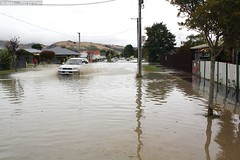
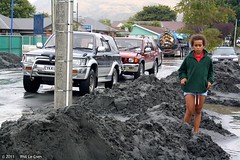

Christchurch Press Image: Carys Monteath 2010:12:09 12:03:37
Images, UC QuakeStudies
Photograph captioned by Fairfax, "The author Diana Noonan and illustrator Gavin Bishop of the children's book Quaky Cat read to a year 3 class at Avondale Primary School. The two collaborated on the book which is about the Canterbury earthquake".
The Space Between Words - Introduction Panel 2
Articles, UC QuakeStudies
A pdf copy of the second introductory panel of Guy Frederick's 'The Space Between Words' exhibition. The panel includes a collection of Guy Frederick's memories of the 2010 and 2011 Canterbury earthquakes, as well as discussion on how people experience change.
The Space Between Words - Introduction Panel 1
Articles, UC QuakeStudies
A pdf copy of the first introductory panel of Guy Frederick's 'The Space Between Words' exhibition. The panel includes a collection of Guy Frederick's memories of the 2010 and 2011 Canterbury earthquakes, as well as discussion on how people experience change.
Christchurch Press Image: Iain McGregor 2010:10:03 03:46:00
Images, UC QuakeStudies
Photograph captioned by Fairfax, "2010 Canterbury Earthquake. Spencerville Civil Defence organised a community get together, to boost community spirits. Rylee Hunt (8) gets a spray from Shae Coghlan (5) with the help of Matt Lewis from Brooklands Volunteer fire brigade".
Christchurch Press Image: Carys Monteath 2010:12:09 11:52:06
Images, UC QuakeStudies
Photograph captioned by Fairfax, "The author Diana Noonan and illustrator Gavin Bishop of the children's book Quaky Cat read to a year 3 class at Avondale Primary School. The two collaborated on the book which is about the Canterbury earthquake".
Christchurch Press Image: Carys Monteath 2010:09:13 09:38:53
Images, UC QuakeStudies
Photograph captioned by Fairfax, "New Zealand's Governor-General Anand Satyanand and his wife Susan Satyanand visited sites around earthquake stricken Canterbury today. Satyanand at the epicentre near Darfield where the new fault line can be clearly seen across a rural paddock".
Christchurch Press Image: Carys Monteath 2010:12:09 11:52:58
Images, UC QuakeStudies
Photograph captioned by Fairfax, "The author Diana Noonan and illustrator Gavin Bishop of the children's book Quaky Cat read to a year 3 class at Avondale Primary School. The two collaborated on the book which is about the Canterbury earthquake".
Christchurch Press Image: Carys Monteath 2010:09:13 09:39:56
Images, UC QuakeStudies
Photograph captioned by Fairfax, "New Zealand's Governor-General Anand Satyanand and his wife Susan Satyanand visited sites around earthquake stricken Canterbury today. Satyanand at the epicentre near Darfield where the new fault line can be clearly seen across a rural paddock".
Christchurch Press Image: Carys Monteath 2010:09:13 09:37:35
Images, UC QuakeStudies
Photograph captioned by Fairfax, "New Zealand's Governor-General Anand Satyanand and his wife Susan Satyanand visited sites around earthquake stricken Canterbury today. Satyanand at the epicentre near Darfield where the new fault line can be clearly seen across a rural paddock".
Considerations on the seismic performance of pre-1970s RC buildings in the…
Research papers, University of Canterbury Library
The 4th of September 2010 Mw 7.1 Darfield (Canterbury) earthquake had generated significant ground shaking within the Christchurch Central Business District (CBD). Despite the apparently significant shaking, the observed structural damage for pre-1970s reinforced concrete (RC) buildings was indeed limited and lower than what was expected for such typology of buildings. This paper explores analytically and qualitatively the different aspects of the "apparent‟ good seismic performance of the pre-1970s RC buildings in the Christchurch CBD, following the earthquake reconnaissance survey by the authors. Damage and building parameters survey result, based on a previously established inventory of building stock of these non-ductile RC buildings, is briefly reported. From an inventory of 75 buildings, one building was selected as a numerical case-study to correlate the observed damage with the non-linear analyses. The result shows that the pre-1970s RC frame buildings performed as expected given the intensity of the ground motion shaking during the Canterbury earthquake. Given the brittle nature of this type of structure, it was demonstrated that more significant structural damage and higher probability of collapse could occur when the buildings were subjected to alternative input signals with different frequency content and duration characteristics and still compatible to the seismicity hazard for Christchurch CBD.
Nisbet, Alastair, 1958- :'Poor Aaron ... I told him not to bang those chai…
Images, Alexander Turnbull Library
Christchurch City Councillor Aaron Keown has brought a building down on top of himself by hammering it with a mallet in his attempt to chain himself to it. Context: Refers to the start of the demolition of the Christchurch Cathedral in the wake of the earthquakes of 2010 and 2011. Aaron Keown has said he will chain himself to the cathedral to stop it being demolished. Quantity: 1 digital cartoon(s).
Samo Lyttelton cafe Photograph 2
Images, UC QuakeStudies
A photograph of the seating area at the Samo Lyttelton cafe. In the background is a view of Lyttelton Harbour.
Evaluation of Liquefaction Potential Index (LPI) for Assessing Liquefactio…
Research papers, University of Canterbury Library
None
Visualisation of the 2010 Christchurch Boxing Day aftershock
Research papers, University of Canterbury Library
None
Lyttelton Pentanque Club Photograph 4
Images, UC QuakeStudies
A photograph of a musician performing at the Lyttelton Petanque Club.
Foamapalooza Photograph 5
Images, UC QuakeStudies
A photograph of volunteers preparing the site for Foamapalooza.
Christchurch Press Infographic: 15 December 2012 (3)
Images, UC QuakeStudies
A banner listing the 18 people who died in the PGC building collapse.
Christchurch Press 5 May 2012: Section A, Page 7
Articles, UC QuakeStudies
Page 7 of Section A of the Christchurch Press, published on Saturday 5 May 2012.
Christchurch Press 14 June 2012: Section A, Page 2
Articles, UC QuakeStudies
Page 2 of Section A of the Christchurch Press, published on Thursday 14 June 2012.
Christchurch Press 25 June 2012: Section A, Page 3
Articles, UC QuakeStudies
Page 3 of Section A of the Christchurch Press, published on Monday 25 June 2012.
Christchurch Press 2 March 2011: Section B, Page 9
Articles, UC QuakeStudies
Page 9 of Section B of the Christchurch Press, published on Wednesday 2 March 2011.
Christchurch Press 26 February 2011: Section B, Page 7
Articles, UC QuakeStudies
Page 7 of Section B of the Christchurch Press, published on Saturday 26 February 2011.
Christchurch Press 25 January 2014: Section C, Page 3
Articles, UC QuakeStudies
Page 3 of Section C of the Christchurch Press, published on Saturday 25 January 2014.
Christchurch Press 21 February 2012: Section A, Page 5
Articles, UC QuakeStudies
Page 5 of Section A of the Christchurch Press, published on Tuesday 21 February 2012.
Reflection
Images, eqnz.chch.2010
Reflection of the Christchurch Cathedral before Feb 22rd Earthquake
Find the Car in this Photo.
Images, eqnz.chch.2010
This apartment building was across the street from our old flat. Now it's an empty lot.
Question Time for 14 September 2010
Audio, Radio New Zealand
Questions to Ministers 1. AARON GILMORE to the Minister of Finance: What steps are the Government and the Earthquake Commission taking to streamline the Canterbury earthquake claims process? 2. Hon PHIL GOFF to the Prime Minister: Does he stand by his statement that "the vast majority" of people will be "better off" as a result of his tax switch on 1 October 2010? 3. KEVIN HAGUE to the Minister of Conservation: Does she agree with Forest and Bird that "many endangered species will meet a watery death, or be rudely shunted from their homes", if the Mōkihinui dam is given the green light? 4. Hon ANNETTE KING to the Minister for ACC: Is he satisfied with the performance of ACC? 5. NICKY WAGNER to the Minister for Economic Development: What steps will the Government take to aid the recovery of the Canterbury region from the recent major earthquake? 6. Hon DAVID CUNLIFFE to the Minister of Finance: What advice, if any, did Treasury receive from KordaMentha in relation to South Canterbury Finance's financial condition prior to approving the extension of the Crown Retail Deposit Guarantee Scheme, and did this advice question whether such an extension was appropriate? 7. COLIN KING to the Minister of Transport: What is the Government doing to address challenges in delivering supplies into the area affected by the Canterbury earthquake? 8. Hon RUTH DYSON to the Minister of Health: When will all the District Health Board Annual Plans for 2010/11 be publicly available? 9. JO GOODHEW to the Minister of Education: How were Canterbury schools affected by last Saturday's earthquake, and what is the current situation for schools in the region? 10. Hon DAVID PARKER to the Attorney-General: Is his objective under the new foreshore and seabed bill to settle the protracted controversy around foreshore and seabed? 11. AMY ADAMS to the Minister of Agriculture: What is the Government doing to support the rural Canterbury community through the earthquake recovery? 12. DARIEN FENTON to the Minister of Labour: Does she stand by all of the statements made on her behalf in response to question for oral answer No. 11 on 9 September 2010? Questions to Members 1. DARIEN FENTON to the Chairperson of the Transport and Industrial Relations Committee: How many submissions were received on the Employment Relations Amendment Bill (No. 2) as at 5pm Monday, 13 September 2010?
The Demise of the URM Building Stock in Christchurch during the 2010–2011 …
Research papers, The University of Auckland Library
The progressive damage and subsequent demolition of unreinforced masonry (URM) buildings arising from the Canterbury earthquake sequence is reported. A dataset was compiled of all URM buildings located within the Christchurch CBD, including information on location, building characteristics, and damage levels after each major earthquake in this sequence. A general description of the overall damage and the hazard to both building occupants and to nearby pedestrians due to debris falling from URM buildings is presented with several case study buildings used to describe the accumulation of damage over the earthquake sequence. The benefit of seismic improvement techniques that had been installed to URM buildings is shown by the reduced damage ratios reported for increased levels of retrofit. Demolition statistics for URM buildings in the Christchurch CBD are also reported and discussed. VoR - Version of Record
Experimental test program and modelling to address the performance of RC w…
Research papers, The University of Auckland Library
The current seismic design practice for reinforced concrete (RC) walls has been drawn into question following the Canterbury earthquakes. An overview of current research being undertaken at the University of Auckland into the seismic behaviour of RC walls is presented. The main objectives of this research project are to understand the observed performance of several walls in Christchurch, quantify the seismic loads on RC walls, and developed improved design procedures for RC walls that will assist in revisions to NZS 3101. A database summarising of the performance of RC wall buildings in the Christchurch CBD was collated to identify damage modes and case-study buildings. A detailed investigation is underway to verify the seismic performance of lightly reinforced concrete walls and an experimental setup has been developed to subject RC wall specimen to loading that is representative of a multi-storey building. Numerical modelling is being used to understand the observed performance of several case-study RC walls buildings in Christchurch. Of particular interest is the influence that interactions between walls and other structural elements have on the seismic response of buildings and the loads generated on RC walls.
A synthesis of historical environmental changes to Brooklands Lagoon/Te Ri…
Research papers, Lincoln University
Brooklands Lagoon / Te Riu o Te Aika Kawa (‘Brooklands’) is an important wetland and estuarine ecosystem in Canterbury. It is a site of cultural significance to Ngāi Tūāhuriri, and is also valued by the wider community. Home to an array of life, it is connected to the Pūharakekenui/Styx and Waimakariri rivers, and is part of a wetland landscape complex that includes the Avon-Heathcote / Ihutai estuary to the south and the Ashley / Rakahuri estuary to the north. Notionally situated within the territorial boundary of Christchurch City Council and jurisdictionally encompassed by the regional council Environment Canterbury, it has been legally determined to be part of the coastal marine area. The complicated administrative arrangements for the lagoon mirror the biophysical and human challenges to this surprisingly young ecosystem since its formation in 1940. Here we present a synthesis of the historical events and environmental influences that have shaped Brooklands Lagoon. Before existing as an intertidal ecosystem, the Waimakariri river mouth was situated in what is now the southern end of the lagoon. A summary timeline of key events is set out in the table below. These included the diversion of the Waimakariri River mouth via the construction of Wrights Cut in the 1930s, which influenced the way that the lower reaches of the river interacted with the land and sea. A large flood in 1940 shifted the river mouth ~2 to 3 kilometres north, that created the landscape that we see today. However, this has not remained stable, as the earthquake sequence in 2010 and 2011 subsided the bed of the estuary. The changes are ongoing, as sea level rise and coastal inundation will place ongoing pressure on the aquatic ecosystem and surrounding land. How to provide accommodation space for Brooklands as an estuary will be a key planning and community challenge, as Environment Canterbury begins the engagement for the review of its Regional Coastal Plan. There is also a requirement to safeguard its ecological health under the 2020 National Policy Statement on Freshwater Management. This will necessitate an integrated mountains to sea (ki uta ki tai) management approach as the lagoon is affected by wider catchment activities. We hope that this report will contribute to, and inform these processes by providing a comprehensive historical synthesis, and by identifying considerations for the future collaborative management of Brooklands Lagoon, and protection of its values. In essence, we suggest that Te Riu o Te Aika Kawa deserves some sustained aroha.