
Search
found 5912 results
Images for christchurch; more images...


Transitional Cathedral Photograph 2013:10:25 13:00:14
Images, UC QuakeStudies
A photograph of people gathered in the Christchurch Transitional Cathedral, otherwise known as the Cardboard Cathedral. Johnny McFarlane of Beca is talking about project management of transitional architecture. The talk was part of a tour of the Cathedral, during FESTA 2013.
Transitional Cathedral Photograph 2013:10:25 13:02:52
Images, UC QuakeStudies
A photograph of people gathered in the Christchurch Transitional Cathedral, otherwise known as the Cardboard Cathedral. Johnny McFarlane of Beca is talking about project management of transitional architecture. The talk was part of a tour of the Cathedral, during FESTA 2013.
Transitional Cathedral Photograph 2013:10:25 13:14:17
Images, UC QuakeStudies
A photograph of people gathered in the Christchurch Transitional Cathedral, otherwise known as the Cardboard Cathedral. Johnny McFarlane of Beca is talking about project management of transitional architecture. The talk was part of a tour of the Cathedral, during FESTA 2013.
Transitional Cathedral Photograph 2013:10:25 13:02:16
Images, UC QuakeStudies
A photograph of people gathered in the Christchurch Transitional Cathedral, otherwise known as the Cardboard Cathedral. Johnny McFarlane of Beca is talking about project management of transitional architecture. The talk was part of a tour of the Cathedral, during FESTA 2013.
Transitional Cathedral Photograph 2013:10:25 13:34:09
Images, UC QuakeStudies
A photograph of Jonny McFarlane of Beca in the Christchurch Transitional Cathedral, otherwise known as the Cardboard Cathedral. A tour of the Cathedral was part of FESTA 2013. The tour included a talk by McFarlane about project management of transitional architecture.
Transitional Cathedral Photograph 2013:10:25 13:36:22
Images, UC QuakeStudies
A photograph of people gathered outside the Christchurch Transitional Cathedral, otherwise known as the Cardboard Cathedral. Johnny McFarlane of Beca is talking about project management of transitional architecture. The talk was part of a tour of the Cathedral, during FESTA 2013.
Transitional Cathedral Photograph 2013:10:25 13:04:14
Images, UC QuakeStudies
A photograph of the inside of the Christchurch Transitional Cathedral, otherwise known as the Cardboard Cathedral. A tour of the Cathedral was part of FESTA 2013. The tour included a talk by Johnny McFarlane of Beca about project management of transitional architecture.
Transitional Cathedral Photograph 2013:10:25 13:37:49
Images, UC QuakeStudies
A photograph of people gathered outside the Christchurch Transitional Cathedral, otherwise known as the Cardboard Cathedral. Johnny McFarlane of Beca is talking about project management of transitional architecture. The talk was part of a tour of the Cathedral, during FESTA 2013.
WEMO ERT Set 1 - March 2011 - Photograph 16
Images, UC QuakeStudies
A photograph of members of the New Zealand Police using a rescue dog to inspect an earthquake-damaged house in Christchurch. The front and side of the house has collapsed, the bricks and other rubble spilling onto the garden, exposing the rooms inside.
Transitional Cathedral Photograph 2013:10:25 12:49:57
Images, UC QuakeStudies
A photograph of people gathered in the Christchurch Transitional Cathedral, otherwise known as the Cardboard Cathedral. A tour of the Cathedral was part of FESTA 2013. The tour included a talk by Johnny McFarlane of Beca about project management of transitional architecture.
WEMO ERT Set 3 - February 2011 - Photograph 169
Images, UC QuakeStudies
A photograph of a member of the Wellington Emergency Management Office Emergency Response Team standing in a car park in the Christchurch central city. In the background is the Hotel Grand Chancellor. The hotel has a noticeable slump on the left side.
Transitional Cathedral Photograph 2013:10:25 13:13:37
Images, UC QuakeStudies
A photograph of people gathered in the Christchurch Transitional Cathedral, otherwise known as the Cardboard Cathedral. Johnny McFarlane of Beca is talking about project management of transitional architecture. The talk was part of a tour of the Cathedral, during FESTA 2013.
Transitional Cathedral Photograph 2013:10:25 12:53:09
Images, UC QuakeStudies
A photograph of people gathered in the Christchurch Transitional Cathedral, otherwise known as the Cardboard Cathedral. Johnny McFarlane of Beca is talking about project management of transitional architecture. The talk was part of a tour of the Cathedral, during FESTA 2013.
WEMO ERT Set 1 - March 2011 - Photograph 18
Images, UC QuakeStudies
A photograph of members of the Wellington Emergency Management Office Emergency Response Team examining the path between two houses in Christchurch. The path is covered in rubble from the collapsed house to the right. A dog is standing on top of the fence.
Transitional Cathedral Photograph 2013:10:25 12:58:18
Images, UC QuakeStudies
A photograph of people gathered in the Christchurch Transitional Cathedral, otherwise known as the Cardboard Cathedral. Johnny McFarlane of Beca is talking about project management of transitional architecture. The talk was part of a tour of the Cathedral, during FESTA 2013.
Transitional Cathedral Photograph 2013:10:25 12:50:31
Images, UC QuakeStudies
A photograph of people gathered in the Christchurch Transitional Cathedral, otherwise known as the Cardboard Cathedral. A tour of the Cathedral was part of FESTA 2013. The tour included a talk by Johnny McFarlane of Beca about project management of transitional architecture.
Transitional Cathedral Photograph 2013:10:25 13:02:07
Images, UC QuakeStudies
A photograph of people gathered in the Christchurch Transitional Cathedral, otherwise known as the Cardboard Cathedral. A tour of the Cathedral was part of FESTA 2013. The tour included a talk by Johnny McFarlane of Beca about project management of transitional architecture.
The consumption of chaos: From the charm of chaos to the tedium of order …
Research papers, Lincoln University
Prior to the devastating 2010 and 2011 earthquakes, parts of the CBD of Christchurch, New Zealand were undergoing revitalisation incorporating aspects of adaptive reuse and gentrification. Such areas were often characterised by a variety of bars, restaurants, and retail outlets of an “alternative” or “bohemian” style. These early 20th century buildings also exhibited relatively low rents and a somewhat chaotic and loosely planned property development approach by small scale developers. Almost all of these buildings were demolished following the earthquakes and a cordon placed around the CBD for several years. A paper presented at the ERES conference in 2013 presented preliminary results, from observation of post-earthquake public meetings and interviews with displaced CBD retailers. This paper highlighted a strongly held fear that the rebuild of the central city, then about to begin, would result in a very different style and cost structure from that which previously existed. As a result, permanent exclusion from the CBD of the types of businesses that previously characterised the successfully revitalised areas would occur. Five years further on, new CBD retail and office buildings have been constructed, but large areas of land between them remain vacant and the new buildings completed are often having difficulty attracting tenants. This paper reports on the further development of this long-term Christchurch case study and examines if the earlier predictions of the displaced retailers are coming true, in that a new CBD that largely mimics a suburban mall in style and tenancy mix, inherently loses some of its competitive advantage?
QuakeStory Photo 677
Images, UC QuakeStudies
A photograph submitted by Ginny Larsen to the QuakeStories website. The description reads, "I work for Neighbourhood Trust in Mairehau/Shirley. In April 2011 a group of people from Liberty Church came down to Christchurch to gift 100s of Easter boxes to residents – lots of treats to bring a smile.".
QuakeStory Photo 401
Images, UC QuakeStudies
A photograph submitted by Sarndra to the QuakeStories website. The description reads, "Cracks clearly seen in the old nurses home [since demolished], next to Christchurch Women’s hospital. Photograph taken 24 February 2011 on way to birthing unit for the imminent arrival of my first grandchild Joseph, born 25th February.".
Paul and Sam Corliss's Street Art Photograph (2014:03:30 17:11:37)
Images, UC QuakeStudies
A photograph of street art on the wall of the Calendar Girls building on Hereford Street. The artwork is by Australian artist Seb Humphreys, who works under the name 'Order 55'.
Jim Baltaxe WEMO Photograph 087
Images, UC QuakeStudies
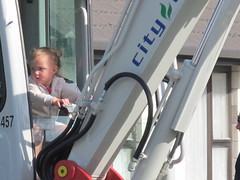
A photograph of road works on a bridge in Christchurch. An excavator has been parked on the left side of the bridge. Road cones have been placed around it. A sign at the entrance to the bridge reads, "No entry to vehicles over 3500kg".
WEMO ERT Set 3 - February 2011 - Photograph 025
Images, UC QuakeStudies
A photograph of members of the Wellington Emergency Management Office Emergency Response Team talking to a member of the New South Wales USAR team in Latimer Square.
WEMO ERT Set 1 - February 2011 - Photograph 07
Images, UC QuakeStudies
A photograph of the USAID headquarters in Latimer Square. A sign above the entrance to the camp reads, "Must wash hands". Whiteboards placed around the entrance read, "Please wash hands before taking food".
WEMO ERT Set 1 - February 2011 - Photograph 31
Images, UC QuakeStudies
A photograph of a Singapore Rescue Team tent set up in Latimer Square after the 22 February 2011 earthquake. In the foreground there is a group of tents, cordoned off with tape and plastic mesh.
WEMO ERT Set 3 - February 2011 - Photograph 080
Images, UC QuakeStudies
A photograph of members of the Wellington Emergency Management Office Emergency Response Team examining the Southern Finance Ltd building. Silt from liquefaction covers part of the footpath and road.
WEMO ERT Set 3 - February 2011 - Photograph 092
Images, UC QuakeStudies
A photograph of the southern end of the Provincial Chambers Building taken through a car window. The roof and the wall of the building have collapsed on the right.
MEDIANZ Vol 14, No 1: Heroic Radio
Articles, UC QuakeStudies
An article from the Media Studies Journal of Aotearoa New Zealand Volume 14, Number 1. The article is titled, "Heroic Radio: a study of radio responses in the immediate aftermath of the September 2010 Earthquake in Christchurch, New Zealand". It was written by Ruth Zanker.
WEMO ERT Set 3 - February 2011 - Photograph 053
Images, UC QuakeStudies
A photograph of tents pitched at the On-Site Operations Coordination Centre (OSOCC) in Latimer Square. The OSOCC was set up by the United Nations Emergency Relief Coordinator.
BeckerFraserPhotos October 2010 photograph 034
Images, UC QuakeStudies
A toppled chimney on a house in Christchurch. The chimney has toppled onto the house but luckily not broken through the roof. It is now broken and lying on the corrugated iron. Below, plastic sheeting has been placed along the side of the roof to replace the missing gutter.