

Search
found 7152 results
Images for CANTERBURY; more images...
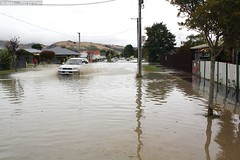
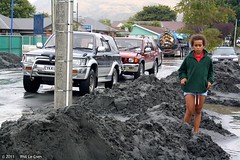

Christchurch - Earthquake Rebuild - Temporary CBD
Images, eqnz.chch.2010
Christchurch - Earthquake Rebuild - Temporary CBD Christchurch City CBD Cashel Street Christchurch Canterbury New Zealand © 2011 Phil Le Cren Photo Taken With: Canon EOS 1000D + Canon EF/EF-S lenses + 10.1 effective megapixels + 2.5-inch TFT color LCD monitor + Eye-level pentamirror SLR + Live View shooting. + EOS Built-in Sensor...
Christchurch - Earthquake Rebuild - Temporary CBD
Images, eqnz.chch.2010
Christchurch - Earthquake Rebuild - Temporary CBD Christchurch City CBD Cashel Street Christchurch Canterbury New Zealand © 2011 Phil Le Cren Photo Taken With: Canon EOS 1000D + Canon EF/EF-S lenses + 10.1 effective megapixels + 2.5-inch TFT color LCD monitor + Eye-level pentamirror SLR + Live View shooting. + EOS Built-in Sensor...
Christchurch - Earthquake Rebuild - Temporary CBD
Images, eqnz.chch.2010
Christchurch - Earthquake Rebuild - Temporary CBD Christchurch City CBD Cashel Street Christchurch Canterbury New Zealand © 2011 Phil Le Cren Photo Taken With: Canon EOS 1000D + Canon EF/EF-S lenses + 10.1 effective megapixels + 2.5-inch TFT color LCD monitor + Eye-level pentamirror SLR + Live View shooting. + EOS Built-in Sensor...
Christchurch - Earthquake Rebuild - Temporary CBD
Images, eqnz.chch.2010
Christchurch - Earthquake Rebuild - Temporary CBD Christchurch City CBD Cashel Street Christchurch Canterbury New Zealand © 2011 Phil Le Cren Photo Taken With: Canon EOS 1000D + Canon EF/EF-S lenses + 10.1 effective megapixels + 2.5-inch TFT color LCD monitor + Eye-level pentamirror SLR + Live View shooting. + EOS Built-in Sensor...
Christchurch - Earthquake Rebuild - Temporary CBD
Images, eqnz.chch.2010
Christchurch - Earthquake Rebuild - Temporary CBD Christchurch City CBD Cashel Street Christchurch Canterbury New Zealand © 2011 Phil Le Cren Photo Taken With: Canon EOS 1000D + Canon EF/EF-S lenses + 10.1 effective megapixels + 2.5-inch TFT color LCD monitor + Eye-level pentamirror SLR + Live View shooting. + EOS Built-in Sensor...
Christchurch - Earthquake Rebuild - Temporary CBD
Images, eqnz.chch.2010
Christchurch - Earthquake Rebuild - Temporary CBD Christchurch City CBD Cashel Street Christchurch Canterbury New Zealand © 2011 Phil Le Cren Photo Taken With: Canon EOS 1000D + Canon EF/EF-S lenses + 10.1 effective megapixels + 2.5-inch TFT color LCD monitor + Eye-level pentamirror SLR + Live View shooting. + EOS Built-in Sensor...
Christchurch - Earthquake Rebuild - Temporary CBD
Images, eqnz.chch.2010
Christchurch - Earthquake Rebuild - Temporary CBD Christchurch City CBD Cashel Street Christchurch Canterbury New Zealand © 2011 Phil Le Cren Photo Taken With: Canon EOS 1000D + Canon EF/EF-S lenses + 10.1 effective megapixels + 2.5-inch TFT color LCD monitor + Eye-level pentamirror SLR + Live View shooting. + EOS Built-in Sensor...
Residential building repair cost and claim settlement time from the Canter…
Research papers, University of Canterbury Library
This study analyses the Earthquake Commission’s (EQC) insurance claims database to investigate the influence of seismic intensity and property damage resulting from the Canterbury Earthquake Sequence (CES) on the repair costs and claim settlement duration for residential buildings. Firstly, the ratio of building repair cost to its replacement cost was expressed as a Building Loss Ratio (BLR), which was further extended to Regional Loss Ratio (RLR) for greater Christchurch by multiplying the average of all building loss ratios with the proportion of building stock that lodged an insurance claim. Secondly, the total time required to settle the claim and the time taken to complete each phase of the claim settlement process were obtained. Based on the database, the regional loss ratio for greater Christchurch for three events producing shakings of intensities 6, 7, and 8 on the modified Mercalli intensity scale were 0.013, 0.066, and 0.171, respectively. Furthermore, small (less than NZD15,000), medium (between NZD15,000 and NZD100,000), and large (more than NZD100,000) claims took 0.35-0.55, 1.95-2.45, and 3.35-3.85 years to settle regardless of the building’s construction period and earthquake intensities. The number of claims was also disaggregated by various building characteristics to evaluate their relative contribution to the damage and repair costs.
Damage Assessment of Unreinforced Stone Masonry Buildings After the 2010-2…
Research papers, The University of Auckland Library
The sequence of earthquakes that has affected Christchurch and Canterbury since September 2010 has caused damage to a great number of buildings of all construction types. Following post-event damage surveys performed between April 2011 and June 2011, an inventory of the stone masonry buildings in Christchurch and surrounding areas was carried out in order to assemble a database containing the characteristic features of the building stock, as a basis for studying the vulnerability factors that might have influenced the seismic performance of the stone masonry building stock during the Canterbury earthquake sequence. The damage suffered by unreinforced stone masonry buildings is reported and different types of observed failures are described using a specific survey procedure currently in use in Italy. The observed performance of seismic retrofit interventions applied to stone masonry buildings is also described, as an understanding of the seismic response of these interventions is of fundamental importance for assessing the utility of such strengthening techniques when applied to unreinforced stone masonry structures. AM - Accepted Manuscript
CPT-based analysis of liquefaction and re-liquefaction following the Cante…
Research papers, The University of Auckland Library
The Canterbury region experienced widespread damage due to liquefaction induced by seismic shaking during the 4 September 2010 earthquake and the large aftershocks that followed, notably those that occurred on 22 February, 13 June and 23 December 2011. Following the 2010 earthquake, the Earthquake Commission directed a thorough investigation of the ground profile in Christchurch, and to date, more than 7500 cone penetration tests (CPT) have been performed in the region. This paper presents the results of analyses which use a subset of the geotechnical database to evaluate the liquefaction process as well as the re-liquefaction that occurred following some of the major events in Christchurch. First, the applicability of existing CPT-based methods for evaluating liquefaction potential of Christchurch soils was investigated using three methods currently available. Next, the results of liquefaction potential evaluation were compared with the severity of observed damage, categorised in terms of the land damage grade developed from Tonkin & Taylor property inspections as well as from observed severity of liquefaction from aerial photography. For this purpose, the Liquefaction Potential Index (LPI) was used to represent the damage potential at each site. In addition, a comparison of the CPT-based strength profiles obtained before each of the major aftershocks was performed. The results suggest that the analysis of spatial and temporal variations of strength profiles gives a clear indication of the resulting liquefaction and re-liquefaction observed in Christchurch. The comparison of a limited number of CPT strength profiles before and after the earthquakes seems to indicate that no noticeable strengthening has occurred in Christchurch, making the area vulnerable to liquefaction induced land damage in future large-scale earthquakes.
Capacity and capability development of Canterbury subcontracting businesse…
Research papers, The University of Auckland Library
This report provides an understanding of the nature of Canterbury subcontracting businesses operating in the space of earthquake reconstruction in Christchurch. It offers an in-depth look at the factors that influence the development of their capacity and capability to withstand the impact of volatile economic cycles, including the 2008 global financial crisis and the subsequent 2010/11 Canterbury earthquakes. There have been significant changes to the business models of the 13 subcontracting businesses studied since the earthquakes. These changes can be seen in the ways the case study subcontractors have adapted to cope with the changing demands that the rebuild posed. Apart from the magnitude of reconstruction works and new developments that directly affect the capacity of subcontracting businesses in Canterbury, case studies found that subcontractors’ capacity and capability to meet the demand varies and is influenced by the: subcontractors’ own unique characteristics, which are often shaped by changing circumstances in a dynamic and uncertain recovery process; and internal factors in relation to the company’s goal and employees’ needs
Convict transportation, whaling adventures, drunken sprees: a life lived a…
Articles, Lost Christchurch
A colourful account of Maori and early European life before the arrival of the first four ships. Jimmy Robinson, who lived as a ‘Pakeha Maori’ at Akaroa and helped raise the British fla…
Resettled Refugee Communities’ Experiences of the Canterbury Earthquakes a…
Research papers, The University of Auckland Library
This paper presents a qualitative study with multiple refugee background communities living in Christchurch, New Zealand about their perspectives and responses to the Canterbury earthquakes of 2010-2011 (32 semi-structured interviews and 11 focus group discussions comprising 112 participants). Whilst the Canterbury earthquakes created significant challenges for the entire region, several refugee background communities found multiple ways to effectively respond to such adversity. Central to this response were their experiences of belonging which were comprised of both ‘civic’ and ‘ethno’ conceptualisations. This discussion includes an analysis on the intersectionality of identity to highlight the gendered, contextual and chronological influences that impact people’s perspectives of and responses to a disaster. As the study was conducted over 18 months, the paper discusses how social capital resources and experiences of belonging can help inform urban disaster risk reduction (DRR) with refugee groups. http://3icudr.org/program
Disaster by design: the role of Landscape Architects in the Canterbury ear…
Research papers, Lincoln University
Earthquakes and other major disasters present communities and their authorities with an extraordinary challenge. While a lot can be done to prepare a city’s response in the event of a disaster, few cities are truly prepared for the initial impact, devastation, grief, and the seemingly formidable challenge of recovery. Many people find themselves overwhelmed with facing critical problems; ones which they have often never had experience with before. While the simple part is agreeing on a desired outcome for recovery, it appears the argument that exists between stakeholders is the conflicting ideas of How To effectively achieve the main objective. What I have identified as an important step toward collaborating on the How To of recovery is to identify the ways in which each discipline can most effectively contribute to the recovery. Landscape architecture is just one of the many disciplines (that should be) invovled in the How To of earthquake recovery. Canterbury has an incredible opportunity to set the benchmark for good practice in earthquake recovery. To make the most of this opportuntiy, it is critical that landscape architects are more effectively engaged in roles of recovery across a much broader spectrum of recovery activities. The overarching purpose of this research is to explore and provide insight to the current and potential of landscape architects in the earthquake recovery period in Canterbury, using international good practice as a benchmark. The research is aimed at stimulating and guiding landscape architects dealing with the earthquake recovery in Canterbury, while informing stakeholders: emergency managers, authorities, other disciplines and the wider community of themost effective role(s) for landscape architects in the recovery period.
Christchurch Press 21 December 2012: Section A, Page 15
Articles, UC QuakeStudies
Page 15 of Section A of the Christchurch Press, published on Friday 21 December 2012.
Christchurch Press 10 September 2010: Section A, Page 9
Articles, UC QuakeStudies
Page 9 of Section A of the Christchurch Press, published on Friday 10 September 2010.
Experimental evaluation of local bond behaviour of deformed reinforcing ba…
Research papers, University of Canterbury Library
This thesis addresses the topic of local bond behaviour in RC structures. The mechanism of bond refers to the composite action between deformed steel reinforcing bars and the surrounding concrete. Bond behaviour is an open research topic with a wide scope, particularly because bond it is such a fundamental concept to structural engineers. However, despite many bond-related research findings having wide applications, the primary contribution of this research is an experimental evaluation of the prominent features of local bond behaviour and the associated implications for the seismic performance of RC structures. The findings presented in this thesis attempt to address some structural engineering recommendations made by the Canterbury Earthquakes Royal Commission following the 2010-2011 Canterbury (New Zealand) earthquake sequence. A chapter of this thesis discusses the structural behaviour of flexure-dominated RC wall structures with an insufficient quantity of longitudinal reinforcement, among other in situ conditions, that causes material damage to predominantly occur at a single crack plane. In this particular case, the extent of concrete damage and bond deterioration adjacent to the crack plane will influence the ductility capacity that is effectively provided by the reinforcing steel. As a consequence of these in situ conditions, some lightly reinforced wall buildings in Christchurch lost their structural integrity due to brittle fracture of the longitudinal reinforcement. With these concerning post-earthquake observations in mind, there is the underlying intention that this thesis presents experimental evidence of bond behaviour that allows structural engineers to re-assess their confidence levels for the ability of lightly reinforced concrete structures to achieve the life-safety seismic performance objective the ultimate limit state. Three chapters of this thesis are devoted to the experimental work that was conducted as the main contribution of this research. Critical details of the experimental design, bond testing method and test programme are reported. The bond stress-slip relationship was studied through 75 bond pull-out tests. In order to measure the maximum local bond strength, all bond tests were carried out on deformed reinforcing bars that did not yield as the embedded bond length was relatively short. Bond test results have been presented in two separate chapters in which 48 monotonic bond tests and 27 cyclic bond tests are presented. Permutations of the experiments include the loading rate, cyclic loading history, concrete strength (25 to 70 MPa), concrete age, cover thickness, bar diameter (16 and 20 mm), embedded length, and position of the embedded bond region within the specimen (close or far away to the free surface). The parametric study showed that the concrete strength significantly influences the maximum bond strength and that it is reasonable to normalise the bond stress by the square-root of the concrete compressive strength, √(f'c). The generalised monotonic bond behaviour is described within. An important outcome of the research is that the measured bond strength and stiffness was higher than stated by the bond stress-slip relationship in the fib Model Code 2010. To account for these observed differences, an alternative model is proposed for the local monotonic bond stress-slip relationship. Cyclic bond tests showed a significant proportion of the total bond degradation occurs after the loading cycle in the peak bond strength range, which is when bond slip has exceeded 0.5 mm. Subsequent loading to constant slip values showed a linear relationship between the amount of bond strength degradation and the log of the number of cycles that were applied. To a greater extent, the cyclic bond deterioration depends on the bond slip range, regardless of whether the applied load cycling is half- or fully-reversed. The observed bond deterioration and hysteretic energy dissipated during cyclic loading was found to agree reasonably well between these cyclic tests with different loading protocols. The cyclic bond deterioration was also found to be reasonably consistent exponential damage models found in the literature. This research concluded that the deformed reinforcing bars used in NZ construction, embedded in moderate to high strength concrete, are able to develop high local bond stresses that are mobilised by a small amount of local bond slip. Although the relative rib geometry was not varied within this experimental programme, a general conclusion of this thesis is that deformed bars currently available in NZ have a relative rib bearing area that is comparatively higher than the test bars used in previous international research. From the parametric study it was found that the maximum monotonic bond strength is significant enhanced by dynamic loading rates. Experimental evidence of high bond strength and initial bond stiffness generally suggests that only a small amount of local bond slip that can occur when the deformed test bar was subjected to large tension forces. Minimal bond slip and bond damage limits the effective yielding length that is available for the reinforcing steel to distribute inelastic material strains. Consequently, the potential for brittle fracture of the reinforcement may be a more problematic and widespread issue than is apparent to structural engineers. This research has provided information that improve the reliability of engineering predictions (with respect to ductility capacity) of maximum crack widths and the extent of bond deterioration that might occur in RC structures during seismic actions.
Walker, Malcolm, 1950- :Shhh! Urban planner at work... 8 July 2011
Images, Alexander Turnbull Library
The 11 frame cartoon strip tells a story about planning for a new Christchurch city post-earthquake. After filling the plan with every possible thing he can think of the planner puts the artist in an empty corner and the whole thing is delivered into a black hole that represents 'The real world'. Quantity: 1 digital cartoon(s).
Transect Survey as a Post-Disaster Global Rapid Damage Assessment Tool
Research papers, The University of Auckland Library
Following a damaging earthquake, the immediate emergency response is focused on individual collapsed buildings or other "hotspots" rather than the overall state of damage. This lack of attention to the global damage condition of the affected region can lead to the reporting of misinformation and generate confusion, causing difficulties when attempting to determine the level of postdisaster resources required. A pre-planned building damage survey based on the transect method is recommended as a simple tool to generate an estimate of the overall level of building damage in a city or region. A methodology for such a transect survey is suggested, and an example of a similar survey conducted in Christchurch, New Zealand, following the 22 February 2011 earthquake is presented. The transect was found to give suitably accurate estimates of building damage at a time when information was keenly sought by government authorities and the general public. VoR - Version of Record
Rock 'n roll... 19 October 2010
Images, Alexander Turnbull Library
The cartoon shows the name 'Christchurch' shaking so that bits fly off it; the letters 'H', 'I', and 'T' spelling 'hit' are the only ones not shaking. A second version has the words 'Rock'n Roll' as a title. Refers to the earthquake of 4th September 2010 and its hundreds of aftershocks which continue on now into November. Two versions of this cartoon are available Quantity: 1 digital cartoon(s).
Winter, Mark 1958- :Did you feel that? 20 January 2012
Images, Alexander Turnbull Library
Someone is writing and suddenly the pen runs across the paper. He asks 'Did you feel that?' Refers to continuing aftershocks in Christchurch. Quantity: 1 digital cartoon(s).
Nisbet, Alistair, 1958- :'And Chch East wins the silt castle event!'. 11 J…
Images, Alexander Turnbull Library
A silt castle has been built by Christchurch East that wins the competition. Context: The eastern suburbs have had a lot of problems with liquefaction following earthquakes and aftershocks. Quantity: 1 digital cartoon(s).
Hubbard, James, 1949- :Wishing you support, hope, love and happier times a…
Images, Alexander Turnbull Library
Shows a Christmas card from the cartoonist to the 'sick, bereaved, and the people of Christchurch, Pike River & Nelson'. Refers to the Canterbury earthquakes that have caused death, misery and uncertainty for many in the region, the Pike River mining tragedy and floods in the Nelson region. Quantity: 1 digital cartoon(s).
Scott, Thomas, 1947- :Liquifaction... Stupifaction... 27 December 2011
Images, Alexander Turnbull Library
The cartoon shows two images of cars nose-down in ditches, the first is caused by 'liquifaction' and the second by 'stupifaction'. Context: there was another large aftershock on Boxing Day in Christchurch which resulted in quite a lot of liquefaction. There is always concern over the Christmas holidays about drinking while driving. Other Titles - Liquefaction Quantity: 1 digital cartoon(s).
Observed performance of residential masonry veneer construction in the 201…
Research papers, The University of Auckland Library
Following the 2010/2011 Canterbury earthquakes a detailed campaign of door to door assessments was conducted in a variety of areas of Christchurch to establish the earthquake performance of residential dwellings having masonry veneer as an external cladding attached to a lightweight timber framing system. Specifically, care was taken to include regions of Christchurch which experienced different levels of earthquake shaking in order to allow comparison between the performance of different systems and different shaking intensities. At the time of the inspections the buildings in the Christchurch region had been repeatedly subjected to large earthquakes, presenting an opportunity for insight into the seismic performance of masonry veneer cladding. In total just under 1100 residential dwellings were inspected throughout the wider Christchurch area, of which 24% were constructed using the older nail-on veneer tie system (prior to 1996) and 76% were constructed using screw fixed ties to comply with the new 1996 standards revision (post-1996), with 30% of all inspected houses being of two storey construction. Of the inspected dwellings 27% had some evidence of liquefaction, ground settlement or lateral spreading. Data such as damage level, damage type, crack widths, level of repair required and other parameters were collected during the survey. A description of the data collection processes and a snapshot of the analysis results are presented within. http://15ibmac.com/home/
From the city that rocks, observations from post-earthquake Christchurch N…
Research papers, Lincoln University
At 4.35 a.m. on the 4th of September 2010 Christchurch residents were shaken awake by a magnitude 7.1 earthquake, the largest earthquake to hit urban New Zealand for nearly 80 years. It was a large earthquake. On average the world only has 17 earthquakes a year larger than magnitude seven. Haiti’s earthquake in January 2010 was magnitude 7.1 and Chile’s earthquake in February was magnitude 8.8. Although it was a big quake, Christchurch was lucky. In Haiti’s earthquake over 230,000 people were killed and in Chile 40,000 homes were destroyed. Happily this was not the situation in Christchurch, however the earthquake has caused considerable damage. The challenge for the Landscape Architecture community is to contribute to the city’s reconstruction in ways that will not only fix the problems of housing, and the city’s urban, suburban and neighbourhood fabric but that will do so in ways that will help solve the landscape problems that dogged the city before the earthquake struck.
Indigenous resilience through urban disaster: the Maori response to the 20…
Research papers, Lincoln University
The scale of damage from a series of earthquakes across Christchurch Otautahi in 2010 and 2011 challenged all networks in the city at a time when many individuals and communities were under severe economic pressure. Historically, Maori have drawn on traditional institutions such as whanau, marae, hapu and iwi in their endurance of past crises. This paper presents research in progress to describe how these Maori-centric networks supported both Maori and non-Maori through massive urban dislocation. Resilience to any disaster can be explained by configurations of economic, social and cultural factors. Knowing what has contributed to Maori resilience is fundamental to the strategic enhancement of future urban communities - Maori and non-Maori.
Ak Port says strikes, quakes show NZ needs resilient ports
Audio, Radio New Zealand
Ports of Auckland says incidents such as the strikes which crippled its operations and the Canterbury earthquakes which disrupted the Port of Lyttelton's operations shows New Zealand needs a resilient port sector.
Christchurch Press Image: John Kirk-Anderson 2010:12:11 10:47:39
Images, UC QuakeStudies
Photograph captioned by Fairfax, "Nader Guirguis assists Michael Awadalla with his traditional Arabic headdress at an event in Victoria Square to raise funds for the Coptic Church, damaged in the Canterbury earthquake".
The Timaru Herald Image: John Kirk-Anderson 2010:12:11 10:48:29
Images, UC QuakeStudies
Photograph captioned by Fairfax, "Nader Guirguis assists Michael Awadalla with his traditional Arabic headdress at an event in Victoria Square to raise funds for the Coptic Church, damaged in the Canterbury earthquake".