

Search
found 6378 results
Images for February 2011; more images...
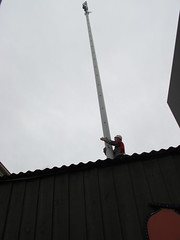


20120718_1497_G12-25 New Brighton icon is demolished
Images, eqnz.chch.2010
The old New Brighton Power Boat Club building was badly damaged in the February 2011 earthquake, and is only now (July 2012) being demolished. The building is just down the road from where I grew up and is a New Brighton iconic building.
20120718_1499_G12-9 New Brighton icon is demolished
Images, eqnz.chch.2010
The old New Brighton Power Boat Club building was badly damaged in the February 2011 earthquake, and is only now (July 2012) being demolished. The building is just down the road from where I grew up and is a New Brighton iconic building.
Rose Historic Chapel 2007 (see text + link below)
Images, eqnz.chch.2010
Sadly the Chapel has been badly damaged in the magnitude 6.3 earthquake that hit Christchurch 22 February 2011 - see photo at www.flickr.com/photos/geofftrotter/5570195671/in/photostr... The Rose Historic Chapel formerly St Mary’s Convent Chapel is the sole su...
NicksPlace Photograph 224
Images, UC QuakeStudies
Building rubble behind cordon fencing at the corner of Salisbury and Montreal Streets. In the background is the Victoria Clock Tower, with the clock stopped at 12:51, the time of the 22 February earthquake.
Man was killed by a falling concrete wall
Audio, Radio New Zealand
The Royal Commission investigating the Canterbury earthquakes has heard that the premises where a man was killed by a falling concrete wall was not inspected by structural engineers between the September and February quakes.
Nisbet, Alistair, 1958- :"Dang! I'm busting again!" 16 June 2011
Images, Alexander Turnbull Library
A man, half shown, sits on a loo and says 'Dang! I'm busting again! as he reaches for the toilet paper which has a different 'quake claim' printed on each section. Context - Magnitude 6.0 and 5.5 earthquakes rocked Christchurch again at 1pm and 2.20pm on 13th June 2011. These quakes follow the first earthquake on September 4th 2010 and the second on February 22nd 2011. (www.stuff.co.nz, 13 June 2011) Each time there is a significant quake more damage is done and so people have to make further insurance claims. Quantity: 1 digital cartoon(s).
Elizabeth Ackermann Photograph 185
Images, UC QuakeStudies
A photograph of a dusty monitor in an earthquake-damaged building on Poplar Street taken during the Residential Access Project. The Residential Access Project gave residents temporary access within the red-zone cordon in order to retrieve items from their homes after the 22 February 2011 earthquake. Dislodged bricks can also be seen around the monitor.
Elizabeth Ackermann Photograph 245
Images, UC QuakeStudies
A photograph of a Christchurch City Council completed authorization form. This form was part of the Residential Access Project which gave residents temporary access within the red-zone cordon in order to retrieve items from their homes after the 22 February 2011 earthquake. Personal information has been removed from this photograph in order to protect the individual's privacy.
Photograph by Neil Macbeth 531
Images, UC QuakeStudies
Former Chancellor Rex Williams speaking with Sam Johnson, leader of the Student Volunteer Army outside the UCSA's "Big Top" tent. The tent was erected in the UCSA car park to provide support for students in the aftermath of the 22 February 2011 earthquake. Behind them, the University's Vice Chancellor Rodd Carr is talking to a woman.
Financial Support Following Natural Disasters: The Role of Government Subs…
Articles, UC QuakeStudies
A paper submitted by Chris Joseph in partial fulfilment of the degree of Bachelor of Commerce with Honours, focussing on the role of the earthquake support subsidy paid to employers to 'keep businesses together' following the 22 February 2011 earthquake. The paper was supervised by Dr David Stiles, University of Canterbury Department of Management, Marketing and Entrepreneurship.
Elizabeth Ackermann Photograph 179
Images, UC QuakeStudies
A photograph of two workers standing in the site of a demolished building on Tuam Street which is being used as a car park. The photograph was taken during the Residential Access Project which gave residents temporary access within the red-zone cordon in order to retrieve items from their homes after the 22 February 2011 earthquake.
Steel Structures Damage from the Christchurch Earthquake Series of 2010 an…
Research papers, The University of Auckland Library
This paper presents preliminary field observations on the performance of selected steel structures in Christchurch during the earthquake series of 2010 to 2011. This comprises 6 damaging earthquakes, on 4 September and 26 December 2010, February 22, June 6 and two on June 13, 2011. Most notable of these was the 4 September event, at Ms7.1 and MM7 (MM as observed in the Christchurch CBD) and most intense was the 22 February event at Ms6.3 and MM9-10 within the CBD. Focus is on performance of concentrically braced frames, eccentrically braced frames, moment resisting frames and industrial storage racks. With a few notable exceptions, steel structures performed well during this earthquake series, to the extent that inelastic deformations were less than what would have been expected given the severity of the recorded strong motions. Some hypotheses are formulated to explain this satisfactory performance. http://db.nzsee.org.nz/SpecialIssue/44%284%290297.pdf
WEMO ERT Team Set 1 - April 2011 - Photograph 7
Images, UC QuakeStudies
A photograph of a map used by emergency management personnel to inspect buildings after the 22 February 2011 earthquake. The map is of the block bordered by Barbadoes Street, Worcester Street, Gloucester Street, and Fitzgerald Avenue. Many of the buildings have been highlighted in blue, with some smaller buildings highlighted in orange. Two blocks of buildings have been outlined in dark-blue felt-tip pen. Numbers and messages have been written on the map with biro.
When Angels Fall
Images, eqnz.chch.2010
The Cathedral of the Blessed Sacrament, Christcurch, after the 6.3 magnitude quake on 22 February 2011. When The Angels Fall Take your father's cross Gently from the wall A shadow still remaining See the churches fall In mighty arcs of sound And all that they're containing Yet all the rugged souls Looking for their lost homes Shuffle to...
TJs Kazbah, 1 Bowhill Road, New Brighton Before the Christchurch Earthquake
Images, UC QuakeStudies
A photograph of TJ's Kasbah in North New Brighton, taken before the February 2011 earthquake. The photographer comments, "Here is what 1 Bowhill Road looked like before the Christchurch earthquake. It was called the Ozone store, which originally was incorporated in the blue Ozone building on the other side of the road".
Systematic vertical ground motion observations in the Canterbury earthquak…
Research papers, University of Canterbury Library
The 2010-2011 Canterbury earthquake sequence was extremely damaging to structures in Christchurch and continues to have a large economic and social impact on the city and surrounding regions. In addition to strong ground shaking (Bradley and Cubrinovski 2011 SRL; Bradley 2012 SDEE), extensive liquefaction was observed, particularly in the 4 September 2010 Darfield earthquake and the 22 February 2011 Christchurch earthquake (Cubrinovski et al. 2010 BNZSEE; 2011 SRL). Large observed vertical ground motion amplitudes were recorded in the events in this sequence, with vertical peak ground accelerations of over 2.2g being observed at the Heathcote Valley Primary School during the Christchurch earthquake, and numerous other vertical motions exceeding 1.0g (Bradley and Cubrinovski 2011 SRL; Bradley 2012 SDEE; Fry et al 2011 SRL). Vertical peak ground accelerations of over 1.2g were observed in the Darfield earthquake.
Photograph by Neil Macbeth 514
Images, UC QuakeStudies
A local musician entertaining University of Canterbury students inside the UCSA's "Big Top" tent. The tent was erected in the UCSA car park to provide support for students in the aftermath of the 22 February 2011 earthquake. The students have spent the day clearing liquefaction from Christchurch properties as part of the Student Volunteer Army.
Photograph by Neil Macbeth 511
Images, UC QuakeStudies
A local musician entertaining University of Canterbury students inside the UCSA's "Big Top" tent. The tent was erected in the UCSA car park to provide support for students in the aftermath of the 22 February 2011 earthquake. The students have spent the day clearing liquefaction from Christchurch properties as part of the Student Volunteer Army.
Observatory Tower Photograph 09
Images, UC QuakeStudies
A photograph of staff from the Department of Physics and Astronomy from the University of Canterbury recovering parts of the Townsend Telescope from the rubble of the Observatory tower. The telescope was housed in the tower at the Christchurch Arts Centre. It was severely damaged when the tower collapsed during the 22 February 2011 earthquake.
Observatory Tower Photograph 10
Images, UC QuakeStudies
A photograph of staff from the Department of Physics and Astronomy from the University of Canterbury recovering parts of the Townsend Telescope from the rubble of the Observatory tower. The telescope was housed in the tower at the Christchurch Arts Centre. It was severely damaged when the tower collapsed during the 22 February 2011 earthquake.
Rebekah Rogers WEMO Photograph 105
Images, UC QuakeStudies
A photograph of a portable shower unit set up in Hagley Park for the emergency management personnel who travelled to Christchurch after the 22 February 2011 earthquake. A clothes line has been set up by tying ropes to the shower unit and a digger. To the right, a number of portaloos can also be seen.
Photograph by Neil Macbeth 510
Images, UC QuakeStudies
A local musician entertaining University of Canterbury students inside the UCSA's "Big Top" tent. The tent was erected in the UCSA car park to provide support for students in the aftermath of the 22 February 2011 earthquake. The students have spent the day clearing liquefaction from Christchurch properties as part of the Student Volunteer Army.
Photograph by Neil Macbeth 508
Images, UC QuakeStudies
UCSA President Kohan McNab addressing students inside the UCSA's "Big Top" tent. The tent was erected in the UCSA car park to provide support for students in the aftermath of the 22 February 2011 earthquake. The students have spent the day clearing liquefaction from Christchurch properties as part of the Student Volunteer Army.
Photograph by Neil Macbeth 509
Images, UC QuakeStudies
UCSA President Kohan McNab introducing a musician inside the UCSA's "Big Top" tent. The tent was erected in the UCSA car park to provide support for students in the aftermath of the 22 February 2011 earthquake. The students have spent the day clearing liquefaction from Christchurch properties as part of the Student Volunteer Army.
Fletcher, David 1952- :[Money raising policies after the Christchurch eart…
Images, Alexander Turnbull Library
'The Politician' cartoon strip. The minister is keen to push through 'unpopular money raising policies' like the 'tax on people's taxes for example'. Context - the Christchurch earthquake of 22 February 2011 has created more strain on an already straining economy and there has been discussion about various possibilities for sticking with the Government's short and long-term targets for debt reduction in spite of the enormous recovery cost for Christchurch. Quantity: 1 digital cartoon(s).
US Embassy Photograph 46
Images, UC QuakeStudies
Prime Minister John Key preparing for a photograph with Al Dwyer, the leader of the USAID Disaster Assistance Response Team (DART), and members of DART, outside the US headquarters in Latimer Square. Latimer Square was set up as a temporary headquarters for emergency managements personnel after the 22 February 2011 earthquake.
US NZ Relationship Enters a New Generation
Articles, UC QuakeStudies
A press release from the United States Embassy New Zealand about the US-NZ Partnership Forum which was interrupted by the 22 February 2011 earthquake in Christchurch. Two months later, delegates from both New Zealand and the United States met in a video conference session designed to conclude the forum.
Press Release from the US House of Representatives Congressional Delegation
Articles, UC QuakeStudies
A press release from the US House of Representatives Congressional Delegation containing a message from Donald Manzullo, the Chairman of the Subcommittee on Asia and the Pacific, about the 22 February 2011 earthquake in Christchurch. Mr Manzullo was attending the US-NZ Partnership Forum in Christchurch house before the earthquake hit.
Memorial Guitar: Kia Kaha
Images, Canterbury Museum
One white over-painted hand-made electric guitar made primarily from ash and maple timbers, also incorporating wood from a variety of historic buildings in Canterbury damaged or destroyed in the 2010 - 2011 earthquakes including the Arts Centre, Kutwell’s Warehouse, Lyttleton main street pub, Timeball Station, Carlton Hotel, Merivale shops, bui...
US Embassy Photograph 28
Images, UC QuakeStudies
Prime Minister John Key shaking the hand of the Al Dwyer, the leader of the USAID Disaster Assistance Response Team (DART) outside the US headquarters in Latimer Square. John Key is visiting to thank DART for their efforts in the aftermath of the 22 February 2011 earthquake.