
Search
found 13158 results
Images for earthquakes; more images...
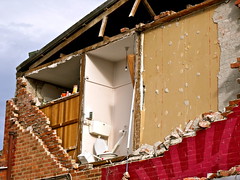
Christchurch Press Image: Richard Cosgrove 2010:09:18 11:35:54
Images, UC QuakeStudies
Photograph captioned by Fairfax, "Earthquake damage following the 7.1 earthquake".
Christchurch Press Image: Richard Cosgrove 2010:09:17 17:15:43
Images, UC QuakeStudies
Photograph captioned by Fairfax, "Earthquake damage following the 7.1 earthquake".
Morning report earthquake special / with Mary Wilson and Kim Hill.
Other, National Library of New Zealand
Interviews with various people including radio reporters, the Christchurch mayor, police, and civil defence, on Saturday 4 Sept. 2010 after the Canterbury earthquake. Use Internet Explorer to listen to the archived MP3s. The streaming video (Ogg Vorbis) has not been archived.
Canterbury Earthquake - Conor English
Audio, Radio New Zealand
Federated Farmers have offered help for the earthquake.
9pm Earthquake summary
Audio, Radio New Zealand
Hewitt Humphrey summarises news of the Canterbury Earthquake.
In Worcester St
Images, eqnz.chch.2010
Looking towards Square
Near Latimer Sq.
Images, eqnz.chch.2010
In Worcester St
New Zealand Police = Nga Pirihimana o Aotearoa.
Other, National Library of New Zealand
Includes safety tips and information on contacting the Police. Earthquake related information can be found in the archived instances from September 2010-
Reimagine Christchurch.
Other, National Library of New Zealand
A forum created by Jeremy McManus to discuss ideas for rebuilding Christchurch following the February 22, 2011 earthquake. Topics discussed include housing, transportation, and urban design.
Mt Pleasant news.
Other, National Library of New Zealand
Blog providing information for residents of the Christchurch suburb of Mt Pleasant following the earthquakes. Includes news, information on basic services, and contacts for help and advice.
Housing Emergency Lease Programme
Other, National Library of New Zealand
Government initiative providing temporary accommodation service to people displaced by the Christchurch earthquake. Contains information about the service, and registration forms for property owners and applicants.
CanCERN.
Other, National Library of New Zealand
website of the Residents Association and Community Group representatives from the earthquake-affected neighbourhoods of Canterbury. Includes sections on insurance, legal and financial information, and business support.
We Can Rebuild Hope
Other, National Library of New Zealand
an advocacy network that aims to highlight injustices and issues affecting residents following the Canterbury earthquakes, and challenge decisions, policies and practices that disadvantage recovery.
Hunting Kiwis : tracing Canterbury's history through headstones
Other, National Library of New Zealand
Blog of New Zealander Helen Leggatt who is researching church headstones in Canterbury. In 2012 she photographed headstones damaged during the Canterbury earthquake.
Nicky Wagner MP for Christchurch Central.
Other, National Library of New Zealand
Site of the National Party MP for Christchurch Central. Communicates her political activities and parliamentary speeches. Includes updates about Christchurch earthquake recovery and rebuild.
Quake Outcasts New Zealand
Other, National Library of New Zealand
Site of a residents' group formed to advocate and protect the rights of red-zoned home owners in the aftermath of the Canterbury earthquakes.
Ruth Gardner's Blog 02/01/2012: A Shortcut to Happiness
Articles, UC QuakeStudies
An entry from Ruth Gardner's blog for 2 January 2012 entitled, "'A Shortcut to Happiness'".
Ruth Gardner's Blog 05/10/2011: Drilling Down
Articles, UC QuakeStudies
An entry from Ruth Gardner's blog for 5 October 2011 entitled, "Drilling Down".
Diabetes Centre Earthquake Story 4
Articles, UC QuakeStudies
A story written by Lynne Taylor, Christchurch Diabetes Centre Manager, about her experiences of the 22 February 2011 earthquake.
Northern Motorway after earthquake
Images, eqnz.chch.2010
Damage from the Christchurch 7.1 earthquake on 4th Sept 2010
The "Shake Up"
Images, eqnz.chch.2010
Christchurch city experienced a magnitude 7.1 earthquake on September 4, at 4:35 am. The epicentre was 40 km west of the city. It is the most damaging earthquake in New Zealand since the Hawke's Bay earthquake in 1931, but there was no loss of life. It was fortunate the earthquake occurred when the central city streets were deserted, as there ...
"Now that's earthquake strengthening!" 19 October 2010
Images, Alexander Turnbull Library
The cartoon shows a large church and two other buildings swaying around on spiral earthquake strengthening seismic restraints. As they sway they ring 'doing, doing!' Refers to the intention to strengthen buildings after the Christchurch earthquake of 4th September and its numerous after shocks. Quantity: 1 digital cartoon(s).
Christchurch Press Image: Richard Cosgrove 2010:09:07 14:14:05
Images, UC QuakeStudies
Photograph captioned by Fairfax, "Earthquake damage following the September 4th earthquake".
Evans, Malcolm Paul, 1945-:[Earthquake and Tsunami] 14 March 2011
Images, Alexander Turnbull Library
The cartoon shows the joined hands of two people. Context - Those who have suffered from the earthquakes of 4 September 2010 and 22 February 2011 in Christchurch and those who have suffered from the earthquake, tsunami and nuclear catastrophe in Japan that struck on 11 March 2011. Colour and black and white versions of this cartoon are available Quantity: 2 digital cartoon(s).
Nisbet, Alastair, 1958- :"So Roger...two years in the job...how does it fe…
Images, Alexander Turnbull Library
Roger Sutton, former chief executive of the the power lines company, Orion and since June 2011 Chief Executive Officer of the Canterbury Earhquake Recovery Authority, is shown in a straitjacket, raving. An unseen interviewer asks him how it feels after 'two years in the job'. Roger Sutton's work in leading the Earthquake Authority after the February earthquake was extremely stressful, considering the magnitude of the task. Quantity: 1 digital cartoon(s).
Nisbet, Alistair, 1958-: NZ city strengthening? 6 March 2011
Images, Alexander Turnbull Library
Text at the top of the cartoon reads 'NZ city strengthening?' A whole city enclosed in a glass dome and balanced on huge springs intended to make it earthquake resistant rocks as another aftershock hits. Context - Two earthquakes and hundreds of aftershocks have hit Christchurch, the first on 4 September 2010 and a second more devastating one on 22 February 2011. There has been great emphasis on making heritage buildings that are rebuilt and all new buildings earthquake resistant. The example in the cartoon is perhaps a Springs-with-damper base isolator. Quantity: 1 digital cartoon(s).
Nisbet, Alistair, 1958- :"Earthquake? No... this is an extreme adventure a…
Images, Alexander Turnbull Library
A tall building sways and groans, creaks and rumbles during an earthquake. Someone from inside at the top of the building says 'Earthquake? No... This is an extreme adventure activity that you'll be billed for later!' Context - The earthquakes in Christchurch and the Canterbury region. The three major ones were on 4th September 2010, 22 February 2011 and 13 June 2011 and there have been hundreds of aftershocks. Quantity: 1 digital cartoon(s).
Post-disaster geotechnical response for hilly terrain: a case study from t…
Research papers, University of Canterbury Library
Case study analysis of the 2010-2011 Canterbury Earthquake Sequence (CES), which particularly impacted Christchurch City, New Zealand, has highlighted the value of practical, standardised and coordinated post-earthquake geotechnical response guidelines for earthquake-induced landslides in urban areas. The 22nd February 2011 earthquake, the second largest magnitude event in the CES, initiated a series of rockfall, cliff collapse and loess failures around the Port Hills which severely impacted the south-eastern part of Christchurch. The extensive slope failure induced by the 22nd February 200 earthquake was unprecedented; and ground motions experienced significantly exceeded the probabilistic seismic hazard model for Canterbury. Earthquake-induced landslides initiated by the 22nd February 2011 earthquake posed risk to life safety, and caused widespread damage to dwellings and critical infrastructure. In the immediate aftermath of the 22nd February 2011 earthquake, the geotechnical community responded by deploying into the Port Hills to conduct assessment of slope failure hazards and life safety risk. Coordination within the voluntary geotechnical response group evolved rapidly within the first week post-earthquake. The lack of pre-event planning to guide coordinated geotechnical response hindered the execution of timely and transparent management of life safety risk from coseismic landslides in the initial week after the earthquake. Semi-structured interviews were conducted with municipal, management and operational organisations involved in the geotechnical response during the CES. Analysis of interview dialogue highlighted the temporal evolution of priorities and tasks during emergency response to coseismic slope failure, which was further developed into a phased conceptual model to inform future geotechnical response. Review of geotechnical responses to selected historical earthquakes (Northridge, 1994; Chi-Chi, 1999; Wenchuan, 2008) has enabled comparison between international practice and local response strategies, and has emphasised the value of pre-earthquake preparation, indicating the importance of integration of geotechnical response within national emergency management plans. Furthermore, analysis of the CES and international earthquakes has informed pragmatic recommendations for future response to coseismic slope failure. Recommendations for future response to earthquake-induced landslides presented in this thesis include: the integration of post-earthquake geotechnical response with national Civil Defence and Emergency Management; pre-earthquake development of an adaptive management structure and standard slope assessment format for geotechnical response; and emergency management training for geotechnical professionals. Post-earthquake response recommendations include the development of geographic sectors within the area impacted by coseismic slope failure, and the development of a GIS database for analysis and management of data collected during ground reconnaissance. Recommendations provided in this thesis aim to inform development of national guidelines for geotechnical response to earthquake-induced landslides in New Zealand, and prompt debate concerning international best practice.
Millenium Hotel
Images, eqnz.chch.2010
Now open - on The Square
Evans, Malcolm Paul, 1945-:[Canterbury earthquake]. 22 February 2011
Images, Alexander Turnbull Library
Someone wearing a Canterbury black and red rugby jersey holds onto two corners of a New Zealand flag which blows in the wind. There is no text in the cartoon. Context - On 22 February 2011 at 12:51 pm (NZDT), Christchurch experienced a major magnitude 6.3 earthquake, which resulted in severe damage and many casualties. A National State of Emergency has been declared. This followed on from an original magnitude 7.1 earthquake on 4 September 2010 which did far less damage and in which no-one died. Both colour and black and white versions of this cartoon are available Quantity: 2 digital cartoon(s).