

Search
found 100457 results
Images for NEW-ZEALAND; more images...
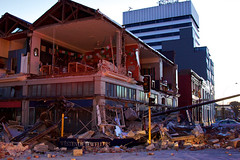


The continued response of the New Zealand Government to the Canterbury ear…
Research papers, University of Canterbury Library
The Canterbury earthquakes of 2010 and 2011 caused significant damage and disruption to the city of Christchurch, New Zealand. A Royal Commission was established to report on the causes of building failure as a result of the earthquakes as well as look at the legal and best-practice requirements for buildings in New Zealand Central Business Districts. The Royal Commission made 189 recommendations on a variety of matters including managing damaged buildings after an earthquake, the adequacy of building codes and standards, and the processes of seismic assessments of existing buildings to determine their earthquake vulnerability. In response the Ministry of Business, Innovation and Employment, the agency responsible for administering building regulation in New Zealand, established a work programme to assist with the Canterbury rebuild and to implement the lessons learned throughout New Zealand. The five primary work streams in the programme are: • Facilitating the Canterbury Rebuild • Structural Performance and Design Standards • Geotechnical and structural guidance • Existing Building Resilience • Post Disaster Building Management This paper provides more detail on each of the work streams. There has been significant collaboration between the New Zealand Government and the research community, technical societies, and engineering consultants, both within New Zealand and internationally, to deliver the programme and improve the resilience of the New Zealand built environment. This has presented major challenges for an extremely busy industry in the aftermath of the Canterbury earthquakes. The paper identifies the items of work that have been completed and the work that is still in progress at the time of writing.
Simulation and Validation of Topographic Effectds on Mt Pleasant, Christch…
Research papers, University of Canterbury Library
Damage distribution maps from strong earthquakes and recorded data from field experiments have repeatedly shown that the ground surface topography and subsurface stratigraphy play a decisive role in shaping the ground motion characteristics at a site. Published theoretical studies qualitatively agree with observations from past seismic events and experiments; quantitatively, however, they systematically underestimate the absolute level of topographic amplification up to an order of magnitude or more in some cases. We have hypothesized in previous work that this discrepancy stems from idealizations of the geometry, material properties, and incident motion characteristics that most theoretical studies make. In this study, we perform numerical simulations of seismic wave propagation in heterogeneous media with arbitrary ground surface geometry, and compare results with high quality field recordings from a site with strong surface topography. Our goal is to explore whether high-fidelity simulations and realistic numerical models can – contrary to theoretical models – capture quantitatively the frequency and amplitude characteristics of topographic effects. For validation, we use field data from a linear array of nine portable seismometers that we deployed on Mount Pleasant and Heathcote Valley, Christchurch, New Zealand, and we compute empirical standard spectral ratios (SSR) and single-station horizontal-to-vertical spectral ratios (HVSR). The instruments recorded ambient vibrations and remote earthquakes for a period of two months (March-April 2017). We next perform two-dimensional wave propagation simulations using the explicit finite difference code FLAC. We construct our numerical model using a high-resolution (8m) Digital Elevation Map (DEM) available for the site, an estimated subsurface stratigraphy consistent with the geomorphology of the site, and soil properties estimated from in-situ and non-destructive tests. We subject the model to in-plane and out-of-plane incident motions that span a broadband frequency range (0.1-20Hz). Numerical and empirical spectral ratios from our blind prediction are found in very good quantitative agreement for stations on the slope of Mount Pleasant and on the surface of Heathcote Valley, across a wide range of frequencies that reveal the role of topography, soil amplification and basin edge focusing on the distribution of ground surface motion.
Seismic velocity model development and ground motion simulation of New Zea…
Research papers, University of Canterbury Library
This dissertation addresses a diverse range of topics in the physics-based broadband ground motion simulation, with a focus on New Zealand applications. In particular the following topics are addressed: the methodology and computational implementation of a New Zealand Velocity Model for broadband ground motion simulation; generalised parametric functions and spatial correlations for seismic velocities in the Canterbury, New Zealand region from surface-wave-based site characterisation; and ground motion simulations of Hope Fault earthquakes. The paragraphs below outline each contribution in more detail. A necessary component in physics-based ground motion simulation is a 3D model which details the seismic velocities in the region of interest. Here a velocity model construction methodology, its computational implementation, and application in the construction of a New Zealand velocity model for use in physics-based broadband ground motion simulation are presented. The methodology utilises multiple datasets spanning different length scales, which is enabled via the use of modular sub-regions, geologic surfaces, and parametric representations of crustal velocity. A number of efficiency-related workflows to decrease the overall computational construction time are employed, while maintaining the flexibility and extensibility to incorporate additional datasets and re- fined velocity parameterizations as they become available. The model comprises explicit representations of the Canterbury, Wellington, Nelson-Tasman, Kaikoura, Marlborough, Waiau, Hanmer and Cheviot sedimentary basins embedded within a regional travel-time tomography-based velocity model for the shallow crust and provides the means to conduct ground motion simulations throughout New Zealand for the first time. Recently developed deep shear-wave velocity profiles in Canterbury enabled models that better characterise the velocity structure within geologic layers of the Canterbury sedimentary basin to be developed. Here the development of depth- and Vs30-dependent para-metric velocity and spatial correlation models to characterise shear-wave velocities within the geologic layers of the Canterbury sedimentary basin are presented. The models utilise data from 22 shear-wave velocity profiles of up to 2.5km depth (derived from surface wave analysis) juxtaposed with models which detail the three-dimensional structure of the geologic formations in the Canterbury sedimentary basin. Parametric velocity equations are presented for Fine Grained Sediments, Gravels, and Tertiary layer groupings. Spatial correlations were developed and applied to generate three-dimensional stochastic velocity perturbations. Collectively, these models enable seismic velocities to be realistically represented for applications such as 3D ground motion and site response simulations. Lastly the New Zealand velocity model is applied to simulate ground motions for a Mw7.51 rupture of the Hope Fault using a physics-based simulation methodology and a 3D crustal velocity model of New Zealand. The simulation methodology was validated for use in the region through comparison with observations for a suite of historic small magnitude earthquakes located proximal to the Hope Fault. Simulations are compared with conventionally utilised empirical ground motion models, with simulated peak ground velocities being notably higher in regions with modelled sedimentary basins. A sensitivity analysis was undertaken where the source characteristics of magnitude, stress parameter, hypocentre location and kinematic slip distribution were varied and an analysis of their effect on ground motion intensities is presented. It was found that the magnitude and stress parameter strongly influenced long and short period ground motion amplitudes, respectively. Ground motion intensities for the Hope Fault scenario are compared with the 2016 Kaikoura Mw7.8 earthquake, it was found that the Kaikoura earthquake produced stronger motions along the eastern South Island, while the Hope Fault scenario resulted in stronger motions immediately West of the near-fault region. The simulated ground motions for this scenario complement prior empirically-based estimates and are informative for mitigation and emergency planning purposes.
Design, construction and seismic performance of non-structural elements in…
Research papers, University of Canterbury Library
The performance of buildings in recent New Zealand earthquakes (Canterbury, Seddon and Kaikōura), delivered stark lessons on seismic resilience. Most of our buildings, with a few notable exceptions, performed as our Codes intended them to, that is, to safeguard people from injury. Many buildings only suffered minor structural damage but were unable to be reused and occupied for significant periods of time due to the damage and failure of non-structural elements. This resulted in substantial economic losses and major disruptions to our businesses and communities. Research has attributed the damage to poor overall design coordination, inadequate or lack of seismic restraints for non structural elements and insufficient clearances between building components to cater for the interaction of non structural elements under seismic actions. Investigations have found a clear connection between the poor performance of non-structural elements and the issues causing pain in the industry (procurement methods, risk aversion, the lack of clear understanding of design and inspection responsibility and the need for better alignment of the design codes to enable a consistent integrated design approach). The challenge to improve the seismic performance of non structural elements in New Zealand is a complex one that cuts across a diverse construction industry. Adopting the key steps as recommended in this paper is expected to have significant co-benefits to the New Zealand construction industry, with improvements in productivity alongside reductions in costs and waste, as the rework which plagues the industry decreases.
Road infrastructure exposure to fault displacement hazard : regional analy…
Research papers, University of Canterbury Library
Recent surface-rupturing earthquakes in New Zealand have highlighted significant exposure and vulnerability of the road network to fault displacement. Understanding fault displacement hazard and its impact on roads is crucial for mitigating risks and enhancing resilience. There is a need for regional-scale assessments of fault displacement to identify vulnerable areas within the road network for the purposes of planning and prioritising site-specific investigations. This thesis employs updated analysis of data from three historical surface-rupturing earthquakes (Edgecumbe 1987, Darfield 2010, and Kaikoūra 2016) to develop an empirical model that addresses the gap in regional fault displacement hazard analysis. The findings contribute to understanding of • How to use seismic hazard model inputs for regional fault displacement hazard analysis • How faulting type and sediment cover affects the magnitude and spatial distribution of fault displacement • How the distribution of displacement and regional fault displacement hazard is impacted by secondary faulting • The inherent uncertainties and limitations associated with employing an empirical approach at a regional scale • Which sections of New Zealand’s roading network are most susceptible to fault displacement hazard and warrant site-specific investigations • Which regions should prioritise updating emergency management plans to account for post-event disruptions to roading. I used displacement data from the aforementioned historical ruptures to generate displacement versus distance-to-fault curves for various displacement components, fault types, and geological characteristics. Using those relationships and established relationships for along-strike displacement, displacement contours were generated surrounding active faults within the NZ Community Fault Model. Next, I calculated a new measure of 1D strain along roads as well as relative hazard, which integrated 1D strain and normalised slip rate data. Summing these values at the regional level identified areas of heightened relative hazard across New Zealand, and permits an assessment of the susceptibility of road networks using geomorphon land classes as proxies for vulnerability. The results reveal that fault-parallel displacements tend to localise near the fault plane, while vertical and fault-perpendicular displacements sustain over extended distances. Notably, no significant disparities were observed in off-fault displacement between the hanging wall and footwall sides of the fault, or among different surface geology types, potentially attributed to dataset biases. The presence of secondary faulting in the dataset contributes to increased levels of tectonic displacement farther from the fault, highlighting its significance in hazard assessments. Furthermore, fault displacement contours delineate broader zones around dip-slip faults compared to strike-slip faults, with correlations identified between fault length and displacement width. Road ‘strain’ values are higher around dip-slip faults, with notable examples observed in the Westland and Buller Districts. As expected, relative hazard analysis revealed elevated values along faults with high slip rates, notably along the Alpine Fault. A regional-scale analysis of hazard and exposure reveals heightened relative hazard in specific regions, including Wellington, Southern Hawke’s Bay, Central Bay of Plenty, Central West Coast, inland Canterbury, and the Wairau Valley of Marlborough. Notably, the Central West Coast exhibits the highest summed relative hazard value, attributed to the fast-slipping Alpine Fault. The South Island generally experiences greater relative hazard due to larger and faster-slipping faults compared to the North Island, despite having fewer roads. Central regions of New Zealand face heightened risk compared to Southern or Northern regions. Critical road links intersecting high-slipping faults, such as State Highways 6, 73, 1, and 2, necessitate prioritisation for site-specific assessments, emergency management planning and targeted mitigation strategies. Roads intersecting with the Alpine Fault are prone to large parallel displacements, requiring post-quake repair efforts. Mitigation strategies include future road avoidance of nearby faults, modification of road fill and surface material, and acknowledgement of inherent risk, leading to prioritised repair efforts of critical roads post-quake. Implementing these strategies enhances emergency response efforts by improving accessibility to isolated regions following a major surface-rupturing event, facilitating faster supply delivery and evacuation assistance. This thesis contributes to the advancement of understanding fault displacement hazard by introducing a novel regional, empirical approach. The methods and findings highlight the importance of further developing such analyses and extending them to other critical infrastructure types exposed to fault displacement hazard in New Zealand. Enhancing our comprehension of the risks associated with fault displacement hazard offers valuable insights into various mitigation strategies for roading infrastructure and informs emergency response planning, thereby enhancing both national and global infrastructure resilience against geological hazards.
New Zealand contributions to the global earthquake model’s earthquake cons…
Research papers, The University of Auckland Library
The Global Earthquake Model’s (GEM) Earthquake Consequences Database (GEMECD) aims to develop, for the first time, a standardised framework for collecting and collating geocoded consequence data induced by primary and secondary seismic hazards to different types of buildings, critical facilities, infrastructure and population, and relate this data to estimated ground motion intensity via the USGS ShakeMap Atlas. New Zealand is a partner of the GEMECD consortium and to-date has contributed with 7 events to the database, of which 4 are localised in the South Pacific area (Newcastle 1989; Luzon 1990; South of Java 2006 and Samoa Islands 2009) and 3 are NZ-specific events (Edgecumbe 1987; Darfield 2010 and Christchurch 2011). This contribution to GEMECD represented a unique opportunity for collating, comparing and reviewing existing damage datasets and harmonising them into a common, openly accessible and standardised database, from where the seismic performance of New Zealand buildings can be comparatively assessed. This paper firstly provides an overview of the GEMECD database structure, including taxonomies and guidelines to collect and report on earthquake-induced consequence data. Secondly, the paper presents a summary of the studies implemented for the 7 events, with particular focus on the Darfield (2010) and Christchurch (2011) earthquakes. Finally, examples of specific outcomes and potentials for NZ from using and processing GEMECD are presented, including: 1) the rationale for adopting the GEM taxonomy in NZ and any need for introducing NZ-specific attributes; 2) a complete overview of the building typological distribution in the Christchurch CBD prior to the Canterbury earthquakes and 3) some initial correlations between the level and extent of earthquake-induced physical damage to buildings, building safety/accessibility issues and the induced human casualties.
Economics of disaster recovery and earthquake insurance: Five essays on Ne…
Research papers, Victoria University of Wellington
The Canterbury earthquake sequence (2010-2011) was the most devastating catastrophe in New Zealand‘s modern history. Fortunately, in 2011 New Zealand had a high insurance penetration ratio, with more than 95% of residences being insured for these earthquakes. This dissertation sheds light on the functions of disaster insurance schemes and their role in economic recovery post-earthquakes. The first chapter describes the demand and supply for earthquake insurance and provides insights about different public-private partnership earthquake insurance schemes around the world. In the second chapter, we concentrate on three public earthquake insurance schemes in California, Japan, and New Zealand. The chapter examines what would have been the outcome had the system of insurance in Christchurch been different in the aftermath of the Canterbury earthquake sequence (CES). We focus on the California Earthquake Authority insurance program, and the Japanese Earthquake Reinsurance scheme. Overall, the aggregate cost of the earthquake to the New Zealand public insurer (the Earthquake Commission) was USD 6.2 billion. If a similar-sized disaster event had occurred in Japan and California, homeowners would have received only around USD 1.6 billion and USD 0.7 billion from the Japanese and Californian schemes, respectively. We further describe the spatial and distributive aspects of these scenarios and discuss some of the policy questions that emerge from this comparison. The third chapter measures the longer-term effect of the CES on the local economy, using night-time light intensity measured from space, and focus on the role of insurance payments for damaged residential property during the local recovery process. Uniquely for this event, more than 95% of residential housing units were covered by insurance and almost all incurred some damage. However, insurance payments were staggered over 5 years, enabling us to identify their local impact. We find that night-time luminosity can capture the process of recovery; and that insurance payments contributed significantly to the process of local economic recovery after the earthquake. Yet, delayed payments were less affective in assisting recovery and cash settlement of claims were more effective than insurance-managed repairs. After the Christchurch earthquakes, the government declared about 8000 houses as Red Zoned, prohibiting further developments in these properties, and offering the owners to buy them out. The government provided two options for owners: the first was full payment for both land and dwelling at the 2007 property evaluation, the second was payment for land, and the rest to be paid by the owner‘s insurance. Most people chose the second option. Using data from LINZ combined with data from Stats NZ, the fourth chapter empirically investigates what led people to choose this second option, and how peer effect influenced the homeowners‘ choices. Due to climate change, public disclosure of coastal hazard information through maps and property reports have been used more frequently by local government. This is expected to raise awareness about disaster risks in local community and help potential property owners to make informed locational decision. However, media outlets and business sector argue that public hazard disclosure will cause a negative effect on property value. Despite this opposition, some district councils in New Zealand have attempted to implement improved disclosure. Kapiti Coast district in the Wellington region serves as a case study for this research. In the fifth chapter, we utilize the residential property sale data and coastal hazard maps from the local district council. This study employs a difference-in-difference hedonic property price approach to examine the effect of hazard disclosure on coastal property values. We also apply spatial hedonic regression methods, controlling for coastal amenities, as our robustness check. Our findings suggest that hazard designation has a statistically and economically insignificant impact on property values. Overall, the risk perception about coastal hazards should be more emphasized in communities.
Environmental Health Officers from the New Zealand Army testing water in C…
Videos, UC QuakeStudies
A video about the New Zealand Army testing the quality of water across Christchurch. After the 4 September 2010 earthquake, the NZ Army developed ties with the Canterbury District Health Board. This relationship continued after the 22 February 2011 earthquake with the NZ Army taking on the role of examining Christchurch's water quality.
Statement by FEMA Administrator Craig Fugate Regarding the Christchurch, N…
Articles, UC QuakeStudies
A press release from the United States of America Embassy New Zealand containing a statement by FEMA Administrator Craig Fugate regarding the 22 February 2011 earthquake in Christchurch.
Analysis of resource availability for post-earthquake reconstruction in Ch…
Research papers, The University of Auckland Library
This paper shows an understanding of the availability of resources in post-disaster reconstruction and recovery in Christchurch, New Zealand following its September 4, 2010 and February 22, 2011 earthquakes. Overseas experience in recovery demonstrates how delays and additional costs may incur if the availability of resources is not aligned with the reconstruction needs. In the case of reconstruction following Christchurch earthquakes, access to normal resource levels will be insufficient. An on-line questionnaire survey, combined with in-depth interviews was used to collect data from the construction professionals that had been participated in the post-earthquake reconstruction. The study identified the resources that are subject to short supply and resourcing challenges that are currently faced by the construction industry. There was a varied degree of impacts felt by the surveyed organisations from resource shortages. Resource pressures were primarily concentrated on human resources associated with structural, architectural and land issues. The challenges that may continue playing out in the longer-term reconstruction of Christchurch include limited capacity of the construction industry, competition for skills among residential, infrastructure and commercial sectors, and uncertainties with respect to decision making. Findings provide implications informing the ongoing recovery and rebuild in New Zealand. http://www.iiirr.ucalgary.ca/Conference-2012
Digital Photograph: Departure of Her Majesty's New Zealand Ship Canterbury…
Images, Canterbury Museum
One landscape colour digital photograph taken on 7 March 2011 showing Her Majesty's New Zealand Ship (HMNZS) Canterbury departing Lyttelton following the completion of her support role in Canterbury following the 22 February 2011 Earthquake. The photograph shows HMNZS Canterbury passing through the Moles out of the Inner Harbour and turning to ...
From the city that rocks, observations from post-earthquake Christchurch N…
Research papers, Lincoln University
At 4.35 a.m. on the 4th of September 2010 Christchurch residents were shaken awake by a magnitude 7.1 earthquake, the largest earthquake to hit urban New Zealand for nearly 80 years. It was a large earthquake. On average the world only has 17 earthquakes a year larger than magnitude seven. Haiti’s earthquake in January 2010 was magnitude 7.1 and Chile’s earthquake in February was magnitude 8.8. Although it was a big quake, Christchurch was lucky. In Haiti’s earthquake over 230,000 people were killed and in Chile 40,000 homes were destroyed. Happily this was not the situation in Christchurch, however the earthquake has caused considerable damage. The challenge for the Landscape Architecture community is to contribute to the city’s reconstruction in ways that will not only fix the problems of housing, and the city’s urban, suburban and neighbourhood fabric but that will do so in ways that will help solve the landscape problems that dogged the city before the earthquake struck.
Topophilia and topophobia in the post-earthquake landscape of Christchurch…
Research papers, Lincoln University
Earthquakes rupture not only the objective realm of the physical landscape, but also the subjective landscape of emotions. Using the concepts of topophilia and topophobia developed by Yi-Fu Tuan as theories of love and fear of place, this paper investigates the impact of Christchurch’s earthquakes of 2010 and 2011 on relationships with the city’s landscape. Published accounts of the earthquakes in newspapers from around New Zealand are examined for evidence of how people responded to the situation, in particular their shifting relationship with familiar landscapes. The reports illustrate how residents and visitors reacted to the actual and perceived changes to their surroundings, grappling with how a familiar place had become alien and often startling. The extreme nature of the event and the death toll of 185 heightened perceptions of the landscape, and even the most taken-for-granted elements of the landscape became amplified in significance. Enhanced understanding of the landscape of emotions is a vital component of wellbeing. Through recognising that the impact of disasters and perceived threats to familiar places has a profound emotional effect, the significance of sense of place to wellbeing can be appreciated.
Transformations for resilient rural futures: The case of Kaikōura, Aotearo…
Research papers, Lincoln University
On 14 November 2016, a magnitude (Mw) 7.8 earthquake struck the small coastal settlement of Kaikōura, Aotearoa-New Zealand. With an economy based on tourism, agriculture, and fishing, Kaikōura was immediately faced with significant logistical, economic, and social challenges caused by damage to critical infrastructure and lifelines, essential to its main industries. Massive landslips cut offroad and rail access, stranding hundreds of tourists, and halting the collection, processing and distribution of agricultural products. At the coast, the seabed rose two metres, limiting harbour-access to high tide, with implications for whale watching tours and commercial fisheries. Throughout the region there was significant damage to homes, businesses, and farmland, leaving owners and residents facing an uncertain future. This paper uses qualitative case study analysis to explore post-quake transformations in a rural context. The aim is to gain insight into the distinctive dynamics of disaster response mechanisms, focusing on two initiatives that have emerged in direct response to the disaster. The first examines the ways in which agriculture, food harvesting, production and distribution are being reimagined with the potential to enhance regional food security. The second examines the rescaling of power in decision-making processes following the disaster, specifically examining the ways in which rural actors are leveraging networks to meet their needs and the consequences of that repositioning on rural (and national) governance arrangements. In these and other ways, the local economy is being revitalised, and regional resilience enhanced through diversification, capitalising not on the disaster but the region's natural, social, and cultural capital. Drawing on insights and experience of local stakeholders, policy- and decision-makers, and community representatives we highlight the diverse ways in which these endeavours are an attempt to create something new, revealing also the barriers which needed to be overcome to reshape local livelihoods. Results reveal that the process of transformation as part of rural recovery must be grounded in the lived reality of local residents and their understanding of place, incorporating and building on regional social, environmental, and economic characteristics. In this, the need to respond rapidly to realise opportunities must be balanced with the community-centric approach, with greater recognition given to the contested nature of the decisions to be made. Insights from the case examples can inform preparedness and recovery planning elsewhere, and provide a rich, real-time example of the ways in which disasters can create opportunities for reimagining resilient futures.
“Would to God I had never heard the name of New Zealand”
Articles, Lost Christchurch
“To tell you is a great task, for I can assure you it is a most awful country,” wrote James Boot from Christchurch, New Zealand in letter to his parents in Nottingham, England in June, …
Mike Cameron WEMO Photograph 12
Images, UC QuakeStudies
A photograph looking south down Montreal Street from the Bealey Avenue. The road has been cordoned off with road cones and a member of the New Zealand Army in a high-visibility vest can be seen guarding it. In the background, a New Zealand Army vehicle can be seen with more soldiers. Some are on bikes to the right.
nz raw
Other, National Library of New Zealand
Blog by Mark Lincoln. Contains New Zealand news items and items of interest. One focus is the Christchurch earthquake and the rebuild.
12:51 : a year on.
Other, National Library of New Zealand
Commemorates 1 year after the Christchurch Earthquake. In the Press newspaper section of the Fairfax New Zealand Stuff.co.nz news site.
Embassy Science Fellowship Program Focuses on Earthquake Research
Articles, UC QuakeStudies
A blog post from US Ambassador to New Zealand and Samoa, David Huebner, titled, "Embassy Science Fellowship Program Focuses on Earthquake Research".
Ceres Environment Ready to Chip in for Christchurch
Articles, UC QuakeStudies
A blog post from US Ambassador to New Zealand and Samoa, David Huebner, titled, "Ceres Environment Ready to Chip in for Christchurch".
Canterbury Earthquake - Jessica Maddock
Audio, Radio New Zealand
Radio New Zealand reporter Jessica Maddock reports from the Christchurch City Art Gallery which has been converted into a Civil Defence centre.
Earthquake coverage - reporter Jessica Maddock
Audio, Radio New Zealand
Radio New Zealand's Jessica Maddock reports in from outside the remains of the Canterbury TV building where people are still trapped alive.
Canterbury residents plan for tsunami evacuation
Audio, Radio New Zealand
It's been more than two months since New Zealand braced for a tsunami following a massive earthquake off the coast of Chile.
Jazz Fest to kick off in Christchurch tonight
Audio, Radio New Zealand
After a year's earthquake-enforced absence, the New Zealand International Jazz and Blues Festival is back and opens in Christchurch this evening.
WEMO ERT Set 3 - February 2011 - Photograph 090
Images, UC QuakeStudies
A photograph of a member of the New Zealand Defence Force at the entrance to the emergency management headquarters in Latimer Square.
BeckerFraserPhotos February 2011 photograph 040
Images, UC QuakeStudies
Photograph captioned by BeckerFraserPhotos, "Bank of New Zealand building in Kaiapoi on the corner of Williams Street and Charles Street".
WEMO ERT Set 1 - February 2011 - Photograph 47
Images, UC QuakeStudies
A photograph of emergency management vehicles, including two New Zealand Fire Service trucks and a police patrol wagon, parked on Worcester Street.
Men up High
Images, eqnz.chch.2010
On a walk around the neighbourhood, December 3, 2013, Christchurch New Zealand. www.stuff.co.nz/the-press/christchurch-life/avenues/featu...
Christchurch Press 16 January 2013: Section A, Page 7
Articles, UC QuakeStudies
Page 7 of Section A of the Christchurch Press, published on Wednesday 16 January 2013.
Christchurch Press 18 January 2013: Go, Page 1
Articles, UC QuakeStudies
Page 1 of the Go section of the Christchurch Press, published on Friday 18 January 2013.