

Search
found 100457 results
Images for NEW-ZEALAND; more images...


Body, Guy Keverne, 1967-:The Week - US Republican Party, Dubrovnick and Ki…
Images, Alexander Turnbull Library
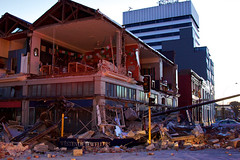
Four cameos on events of the week. The struggle for the US Republican Party to find a suitable presidential candidate. A Croatian tourism official has been sacked over comments about "drunk and crazy" New Zealand and Australian tourists. 'Mother Nature' is an 'unfit mother' in Christchurch because of the earthquakes. Quantity: 1 digital cartoon(s).
Body, Guy Keverne, 1967- :'How are you finding 2012 so far?'. 9 January 20…
Images, Alexander Turnbull Library
Two men chat on a beach about what the new year will bring. Out at sea is the container ship 'Rena' in two halves and the rain pours down. Context: 2011 was a year of disasters in New Zealand with new earthquakes in Christchurch and the 'Rena' running aground on the Astrolabe Reef off the Tauranga coast. Quantity: 1 digital cartoon(s).
Body, Guy Keverne, 1967- :1996. Documentary on dangerous sub-layer ignored…
Images, Alexander Turnbull Library
The cartoon suggests that the Kiwi character has too much of a 'She'll be right' attitude. Refers to a 1996 documentary called 'Earthquake!' which outlined the effects of a major earthquake on Christchurch's eastern suburbs and heritage buildings. The director Grant Dixon says lives could have been saved if officials had heeded the film's warnings. (Stuff: 11 March 2011) Quantity: 1 digital cartoon(s).
Christchurch Press Infographic: 19 October 2012 (1)
Images, UC QuakeStudies
A graphic giving findings of an independent review of the New Zealand Fire Service's response to the 22 February 2011 earthquake.
USAID Assistant Administrator Nancy Lindbord Visits Wellington
Articles, UC QuakeStudies
A blog post from US Ambassador to New Zealand and Samoa, David Huebner, titled, "USAID Assistant Administrator Nancy Lindbord Visits Wellington".
Photograph by Neil Macbeth 467
Images, UC QuakeStudies
A member of the New Zealand Army chatting to a woman with her dog at a cordon checkpoint on Armagh Street.
Immigrants sign up for citizenship in Christchurch
Audio, Radio New Zealand
Two shattering earthquakes and a few thousand aftershocks haven't put off a hundred immigrants becoming New Zealand citizens in Christchurch.
More budget cuts in store after Christchurch earthquake
Audio, Radio New Zealand
The Finance Minister, Bill English, says the Christchurch earthquake means the New Zealand economy is unlikely to grow this fiscal year.
Cost to build a home rises
Audio, Radio New Zealand
The cost of building a home in New Zealand's main cities has risen by 20 per cent since the Canterbury earthquakes.
UC Civil and Natural Resources Engineering Photograph 162
Images, UC QuakeStudies
A photograph of the former Bank of New Zealand Building on the corner of Williams Street and Charles Street in Kaiapoi.
Rebekah Rogers WEMO Photograph 028
Images, UC QuakeStudies
A photograph of members of the New Zealand Army tying planks of wood to the top of one of their trucks.
Sonja Farmer Photograph 26
Images, UC QuakeStudies
A photograph of members of the New Zealand Army outside the Armagh Street bridge over the Avon River to Hagley Park.
Sonja Farmer Photograph 25
Images, UC QuakeStudies
A photograph of members of the New Zealand Army outside the Armagh Street bridge over the Avon River to Hagley Park.
Photo by Jennifer Middendorf 221
Images, UC QuakeStudies
Scaffolding supporting the McKenzie and Willis building. A New Zealand flag still flies from the flagpole above the damaged building.
Rosalee Jenkin Photograph 13
Images, UC QuakeStudies
A photograph of the restored Bank of New Zealand building on the corner of Charles Street and Williams Street in Kaiapoi.
Rebekah Rogers WEMO Photograph 053
Images, UC QuakeStudies
A photograph of members of the New Zealand Army guarding a cordon near the intersection of Armagh Street and Rolleston Avenue.
Sonja Farmer Photograph 52
Images, UC QuakeStudies
A photograph of two members of the New Zealand Army securing a bundle of wood onto the roof of a truck.
Readout of the President's Call to Prime Minister Key of New Zealand
Articles, UC QuakeStudies
A press release from the Office of the Press Secretary in the US White House about President Obama's call to Prime Minister John Key to express his condolences over the 22 February 2011 earthquake in Christchurch and to offer American assistance.
Geotechnical aspects of the Mw6.2 2011 Christchurch New Zealand Earthquake
Research papers, University of Canterbury Library
The 22 February 2011, Mw6.2 Christchurch earthquake is the most costly earthquake to affect New Zealand, causing an estimated 181 fatalities and severely damaging thousands of residential and commercial buildings. This paper presents a summary of some of the observations made by the NSF-sponsored GEER Team regarding the geotechnical/geologic aspects of this earthquake. The Team focused on documenting the occurrence and severity of liquefaction and lateral spreading, performance of building and bridge foundations, buried pipelines and levees, and significant rockfalls and landslides. Liquefaction was pervasive and caused extensive damage to residential properties, water and wastewater networks, high-rise buildings, and bridges. Entire neighborhoods subsided, resulting in flooding that caused further damage. Additionally, liquefaction and lateral spreading resulted in damage to bridges and to stretches of levees along the Waimakariri and Kaiapoi Rivers. Rockfalls and landslides in the Port Hills damaged several homes and caused several fatalities.
Exploring the impact of the Christchurch, New Zealand, earthquake on lands…
Research papers, University of Canterbury Library
None
Development of an expanded earthquake and ground motion catalogue for New …
Research papers, University of Canterbury Library
In the last two decades, New Zealand (NZ) has experienced significant earthquakes, including the 2010 M 7.2 Darfield, 2011 M 6.2 Christchurch, and 2016 M 7.8 Kaikōura events. Amongst these large events, tens of thousands of smaller earthquakes have occurred. While previous event and ground-motion databases have analyzed these events, many events below M 4 have gone undetected. The goal of this study is to expand on previous databases, particularly for small magnitude (M<4) and low-amplitude ground motions. This new database enables a greater understanding of regional variations within NZ and contributes to the validity of internationally developed ground-motion models. The database includes event locations and magnitude estimates with uncertainty considerations, and tectonic type assessed in a hierarchical manner. Ground motions are extracted from the GeoNet FDSN server and assessed for quality using a neural network classification approach. A deep neural network approach is also utilized for picking P and S phases for determination of event hypocentres. Relative hypocentres are further improved by double-difference relocation and will contribute toward developing shallow (< 50 km) seismic tomography models. Analysis of the resulting database is compared with previous studies for discussion of implications toward national hazard prediction models.
Cross-sectoral suicide prevention implementation post-disasters in Canterb…
Research papers, University of Canterbury Library
From 2010, Canterbury, a province of Aotearoa New Zealand, experienced three major disaster events. This study considers the socio-ecological impacts on cross-sectoral suicide prevention agencies and their service users of the 2010 – 2016 Canterbury earthquake sequence, the 2019 Christchurch mosque attacks and the COVID-19 pandemic in Canterbury. This study found the prolonged stress caused by these events contributed to a rise in suicide risk factors including anxiety, fear, trauma, distress, alcohol misuse, relationship breakdown, childhood adversity, economic loss and deprivation. The prolonged negative comment by the media on wellbeing in Canterbury was also unhelpful and affected morale. The legacy of these impacts was a rise in referrals to mental health services that has not diminished. This adversity in the socio-ecological system also produced post-traumatic growth, allowing Cantabrians to acquire resilience and help-seeking abilities to support them psychologically through the COVID-19 pandemic. Supporting parental and teacher responses, intergenerational support and targeted public health campaigns, as well as Māori family-centred programmes, strengthened wellbeing. The rise in suicide risk led to the question of what services were required and being delivered in Canterbury and how to enable effective cross-sectoral suicide prevention in Canterbury, deemed essential in all international and national suicide prevention strategies. Components from both the World Health Organisation Suicide Prevention Framework (WHO, 2012; WHO 2021) and the Collective Impact model (Hanleybrown et al., 2012) were considered by participants. The effectiveness of dynamic leadership and the essential conditions of resourcing a supporting agency were found as were the importance of processes that supported equity, lived experience and the partnership of Māori and non-Māori stakeholders. Cross-sectoral suicide prevention was found to enhance the wellbeing of participants, hastening learning, supporting innovation and raising awareness across sectors which might lower stigma. Effective communication was essential in all areas of cross-sectoral suicide prevention and clear action plans enabled measurement of progress. Identified components were combined to create a Collective Impact Suicide Prevention framework that strengthens suicide prevention implementation and can be applied at a local, regional and national level. This study contributes to cross-sectoral suicide prevention planning by considering the socio- ecological, policy and practice mitigations required to lower suicide risk and to increase wellbeing and post-traumatic growth, post-disaster. This study also adds to the growing awareness of the contribution that social work can provide to suicide prevention and conceptualises an alternative governance framework and practice and policy suggestions to support effective cross-sectoral suicide prevention.
Representative ground motion ensembles for several major earthquake scenar…
Research papers, University of Canterbury Library
This paper develops representative ground motion ensembles for several major earthquake scenarios in New Zealand. Cases considered include representative ground motions for the occurrence of Alpine, Hope, and Porters Pass earthquakes in Christchurch, and the occurrence of Wellington, Wairarapa, and Ohariu, fault ruptures in Wellington. Challenges in the development of ground motion ensembles for subduction zone earthquakes are also highlighted. The ground motions are selected based on the generalized conditional intensity measure (GCIM) approach, ensuring that the ground motion ensembles represent both the mean, and distribution of ground motion intensity which such scenarios could impose. These scenario-based ground motion sets can be used to complement ground motions which are often selected in conjunction with probabilistic seismic hazard analysis, in order to understand the performance of structures for the question “what if this fault ruptures?”
Shallow shear wave velocity characterization of the urban Christchurch, Ne…
Research papers, University of Canterbury Library
This poster provides a summary of the development of a 3D shallow (z<40m) shear wave velocity (Vs) model for the urban Christchurch, New Zealand region. The model is based on a recently developed Christchurch-specific empirical correlation between Vs and cone penetration test (CPT) data (McGann et al. 2014a,b) and the large high-density database of CPT logs in the greater Christchurch urban area (> 15,000 logs as of 01/01/2014). In particular, the 3D model provides shear wave velocities for the surficial Springston Formation, Christchurch Formation, and Riccarton gravel layers which generally comprise the upper 40m in the Christchurch urban area. Point-estimates are provided on a 200m-by- 200m grid from which interpolation to other locations can be performed. This model has applications for future site characterization and numerical modeling efforts via maps of timeaveraged Vs over specific depths (e.g. Vs30, Vs10) and via the identification of typical Vs profiles for different regions and soil behaviour types within Christchurch. In addition, the Vs model can be used to constrain the near-surface velocities for the 3D seismic velocity model of the Canterbury basin (Lee et al. 2014) currently being developed for the purpose of broadband ground motion simulation.
A geology-based 3D seismic velocity model of Canterbury, New Zealand
Research papers, University of Canterbury Library
This paper presents a seismic velocity model of Canterbury, New Zealand based on 3D geologic surfaces and velocities from a range of data sources. The model provides the 3D crustal structure in the region at multiple length scales for seismic wave propagation simulations, such as broadband ground motion and shallow site response analyses related to understanding the ground motions and site responses during the 2010- 2011 Canterbury earthquakes. Pre-Quaternary geologic horizons are calculated based on the reinterpretation of a comprehensive network of seismic reflection surveys from seven different campaigns over the past 50 years, as well as point constraints across an array of petroleum industry drill holes. Particular attention is given to a detailed representation of Quaternary stratigraphy, representing shallow (z<250m) near-surface layers in the model. Seismic velocities are obtained from seismic reflection processing (for Vp) and also recently performed active and passive surface wave analyses (for Vs). Over 1,700 water wells in the region are used to constrain the complex inter-bedded Quaternary stratigraphy (gravels, sands, silts, organics etc.) near the coastline, including beneath urban Christchurch, which has resulted from fluvial deposition and marine regression and transgression. For the near-surface Springston and Christchurch Formations in the Christchurch urban area (z<50m), high-spatial resolution seismic velocities (including Vs30 ) were obtained from over 13,000 cone penetration tests combined with a recently developed CPT-Vs correlation.
High-resolution surficial soil velocity models in the Canterbury, New Zeal…
Research papers, University of Canterbury Library
This presentation summarizes the development of high-resolution surficial soil velocity models in the Canterbury, New Zealand basin. Shallow (<30m) shear wave velocities were primarily computed based on a combination of a large database of over 15,000 cone penetration test (CPT) logs in and around Christchurch, and a recently-developed Christchurch-specific empirical correlation between soil shear wave velocity and CPT. Large active-source testing at 22 locations and ambient-wavefield surface wave and H/V testing at over 80 locations were utilized in combination with 1700 water well logs to constrain the inter-bedded stratigraphy and velocity of Quaternary sediments up to depths of several hundred meters. Finally, seismic reflection profiles and the ambient-wavefield surface wave data provide constraint on velocities from several hundred meters to several kilometres. At all depths, the high resolution data illustrates the complexity of the soil conditions in the region, and the developed 3D models are presently being used in broadband ground motion simulations to further interpret the observed strong ground motions in the 2010-2011 Canterbury earthquake sequence.
The application of positive leadership in a New Zealand law enforcement or…
Research papers, University of Canterbury Library
This study explored the experiences of 10 leaders in their intentional six-month implementation, during the 2010-2011Christchurch earthquakes, of an adapted positive leadership model. The study concluded that the combination of strategies in the model provided psychological and participative safety for leaders to learn and to apply new ways of working. Contrary to other studies on natural disaster, workplace performance increased and absenteeism decreased. The research contributes new knowledge to the positive leadership literature and new understanding, from the perspective of leaders, of the challenges of leading in a workplace environment of ongoing natural disaster events.
From Cold War to Canterbury: The New Zealand Experience in Emergency Manag…
Research papers, University of Canterbury Library
In this dissertation it is argued that the Canterbury Earthquake Recovery Act 2011 and the Canterbury Earthquake Recovery Authority were both necessary and inevitable given the trends and traditions of civil defence emergency management (CDEM) in New Zealand. The trends and traditions of civil defence are such that principles come before practice, form before function, and change is primarily brought about through crisis and criticism. The guiding question of the research was why were a new governance system and law made after the Canterbury earthquakes in 2010 and 2011? Why did this outcome occur despite the establishment of a modern emergency management system in 2002 which included a recovery framework that had been praised by international scholars as leading edge and a model for other countries? The official reason was the unprecedented scale and demands of the recovery – but a disaster of such scale is the principle reason for having a national emergency management system. Another explanation is the lack of cooperation among local authorities – but that raises the question of whether the CDEM recovery framework would have been successful in another locality. Consequentially, the focus of this dissertation is on the CDEM recovery framework and how New Zealand came to find itself making disaster law during a disaster. Recommendations include a review of emergency powers for recovery, a review of the capabilities needed to fulfil the mandate of Recovery Managers, and the establishment of a National Recovery Office with a cadre of Recovery Managers that attend every recovery to observe, advise, or assume control as needed. CDEM Group Recovery Managers would be seconded to the National Recovery Office which would allow for experience in recovery management to be developed and institutionalised through regular practice.
Fostering Graduate Attributes Through Field Education in Post-Quake Canter…
Research papers, University of Canterbury Library
Following the 2010-2011 earthquakes in Canterbury, New Zealand, the University of Canterbury (UC) was faced with the need to respond to major challenges in its teaching and learning environment. With the recognition of education as a key component to the recovery of the Canterbury region, UC developed a plan for the transformation and renewal of the campus. Central to this renewal is human capital – graduates who are distinctly resilient and broadly skilled, owing in part to their living and rebuilding through a disaster. Six desired graduate attributes have been articulated through this process: knowledge and skills of a recognized subject, critical thinking skills, the ability to interpret information from a range of sources, the ability to self-direct learning, cultural competence, and the recognition of global connections through social, ethical, and environmental values. All of these attributes may readily be identified in undergraduate geoscience field education and graduate field-based studies, and this is particularly important to highlight in a climate where the logistical and financial requirements of fieldwork are becoming a barrier to its inclusion in undergraduate curricula. Fieldwork develops discipline-specific knowledge and skills and fosters independent and critical thought. It encourages students to recognize and elaborate upon relevant information, plan ways to solve complicated problems, execute and re-evaluate these plans. These decisions are largely made by the learners, who often direct their own field experience. The latter two key graduate attributes, cultural competence and global recognition of socio-environmental values, have been explicitly addressed in field education elsewhere and there is potential to do so within the New Zealand context. These concepts are inherent to the sense of place of geoscience undergraduates and are particularly important when the field experience is viewed through the lens of landscape heritage. This work highlights the need to understand how geoscience students interact with field places, with unique implications for their cultural and socio-environmental awareness as global citizens, as well as the influence that field pedagogy has on these factors.
Multi-Hazard Flooding Interactions in the Ōpāwaho Heathcote Catchment,Chri…
Research papers, University of Canterbury Library
This report provides an initial overview and gap analysis of the multi-hazards interactions that might affect fluvial and pluvial flooding (FPF) hazard in the Ōpāwaho Heathcote catchment. As per the terms of reference, this report focuses on a one-way analysis of the potential effects of multi-hazards on FPF hazard, as opposed to a more complex multi-way analysis of interactions between all hazards. We examined the relationship between FPF hazard and hazards associated with the phenomena of tsunamis; coastal erosion; coastal inundation; groundwater; earthquakes; and mass movements. Tsunamis: Modelling research indicates the worst-case tsunami scenarios potentially affecting the Ōpāwaho Heathcote catchment are far field. Under low probability, high impact tsunami scenarios waves could travel into Pegasus Bay and the Avon-Heathcote Estuary Ihutai, reaching the mouth and lower reaches of the Heathcote catchment and river, potentially inundating and eroding shorelines in sub-catchments 1 to 5, and temporarily blocking fluvial drainage more extensively. Any flooding infrastructure or management actions implemented in the area of tsunami inundation would ideally be resilient to tsunami-induced inundation and erosion. Model results currently available are a first estimate of potential tsunami inundation under contemporary sea and land level conditions. In terms of future large tsunami events, these models likely underestimate effects in riverside sub-catchments, as well as effects under future sea level, shoreline and other conditions. Also of significance when considering different FPF management structures, it is important to be mindful that certain types of flood structures can ‘trap’ inundating water coming from ocean directions, leading to longer flood durations and salinization issues. Coastal erosion: Model predictions indicate that sub-catchments 1 to 3 could potentially be affected by coastal erosion by the timescale of 2065, with sub-catchments 1-6 predicted to be potentially affected by coastal erosion by the time scale of 2115. In addition, the predicted open coast effects of this hazard should not be ignored since any significant changes in the New Brighton Spit open coast would affect erosion rates and exposure of the landward estuary margins, including the shorelines of the Ōpāwaho Heathcote catchment. Any FPF flooding infrastructure or management activities planned for the potentially affected sub-catchments needs to recognise the possibility of coastal erosion, and to have a planned response to the predicted potential shoreline translation. Coastal inundation: Model predictions indicate coastal inundation hazards could potentially affect sub-catchments 1 to 8 by 2065, with a greater area and depth of inundation possible for these same sub-catchments by 2115. Low-lying areas of the Ōpāwaho Heathcote catchment and river channel that discharge into the estuary are highly vulnerable to coastal inundation since elevated ocean and estuary water levels can block the drainage of inland systems, compounding FPF hazards. Coastal inundation can overwhelm stormwater and other drainage network components, and render river dredging options ineffective at best, flood enhancing at worst. A distinction can be made between coastal inundation and coastal erosion in terms of the potential impacts on affected land and assets, including flood infrastructure, and the implications for acceptance, adaptation, mitigation, and/or modification options. That is, responding to inundation could include structural and/or building elevation solutions, since unlike erosion, inundation does not necessarily mean the loss of land. Groundwater: Groundwater levels are of significant but variable concern when examining flooding hazards and management options in the Ōpāwaho Heathcote catchment due to variability in soils, topographies, elevations and proximities to riverine and estuarine surface waterbodies. Much of the Canterbury Plains part of the Ōpāwaho Heathcote catchment has a water table that is at a median depth of <1m from the surface (with actual depth below surface varying seasonally, inter-annually and during extreme meteorological events), though the water table depth rapidly shifts to >6m below the surface in the upper Plains part of the catchment (sub-catchments 13 to 15). Parts of Waltham/Linwood (sub-catchments 5 & 6) and Spreydon (sub-catchment 10) have extensive areas with a particularly high water table, as do sub-catchments 18, 19 and 20 south of the river. In all of the sub-catchments where groundwater depth below surface is shallow, it is necessary to be mindful of cascading effects on liquefaction hazard during earthquake events, including earthquake-induced drainage network and stormwater infrastructure damage. In turn, subsidence induced by liquefaction and other earthquake processes during the CES directly affected groundwater depth below surface across large parts of the central Ōpāwaho Heathcote catchment. The estuary margin of the catchment also faces increasing future challenges with sea level rise, which has the potential to elevate groundwater levels in these areas, compounding existing liquefaction and other earthquake associated multi-hazards. Any increases in subsurface runoff due to drainage system, development or climate changes are also of concern for the loess covered hill slopes due to the potential to enhance mass movement hazards. Earthquakes: Earthquake associated vertical ground displacement and liquefaction have historically affected, or are in future predicted to affect, all Ōpāwaho Heathcote sub-catchments. During the CES, these phenomena induced a significant cascades of changes in the city’s drainage systems, including: extensive vertical displacement and liquefaction induced damage to stormwater ‘greyware’, reducing functionality of the stormwater system; damage to the wastewater system which temporarily lowered groundwater levels and increased stormwater drainage via the wastewater network on the one hand, creating a pollution multi-hazard for FPF on the other hand; liquefaction and vertical displacement induced river channel changes affected drainage capacities; subsidence induced losses in soakage and infiltration capacities; changes occurred in topographic drainage conductivity; estuary subsidence (mainly around the Ōtākaro Avon rivermouth) increased both FPF and coastal inundation hazards; estuary bed uplift (severe around the Ōpāwaho Heathcote margins), reduced tidal prisms and increased bed friction, producing an overall reduction the waterbody’s capacity to efficiently flush catchment floodwaters to sea; and changes in estuarine and riverine ecosystems. All such possible effects need to be considered when evaluating present and future capacities of the Ōpāwaho Heathcote catchment FPF management systems. These phenomena are particularly of concern in the Ōpāwaho Heathcote catchment since stormwater networks must deal with constraints imposed by stream and river channels (past and present), estuarine shorelines and complex hill topography. Mass movements: Mass movements are primarily a risk in the Port Hills areas of the Ōpāwaho Heathcote catchment (sub-catchments 1, 2, 7, 9, 11, 16, 21), though there are one or two small but susceptible areas on the banks of the Ōpāwaho Heathcote River. Mass movements in the form of rockfalls and debris flows occurred on the Port Hills during the CES, resulting in building damage, fatalities and evacuations. Evidence has also been found of earthquake-triggered tunnel gully collapsesin all Port Hill Valleys. Follow-on effects of these mass movements are likely to occur in major future FPF and other hazard events. Of note, elevated groundwater levels, coastal inundation, earthquakes (including liquefaction and other effects), and mass movement exhibit the most extensive levels of multi-hazard interaction with FPF hazard. Further, all of the analysed multi-hazard interactions except earthquakes were found to consistently produce increases in the FPF hazard. The implications of these analyses are that multihazard interactions generally enhance the FPF hazard in the Ōpāwaho Heathcote catchment. Hence, management plans which exclude adjustments for multi-hazard interactions are likely to underestimate the FPF hazard in numerous different ways. In conclusion, although only a one-way analysis of the potential effects of selected multi-hazards on FPF hazard, this review highlights that the Ōpāwaho Heathcote catchment is an inherently multi- hazard prone environment. The implications of the interactions and process linkages revealed in this report are that several significant multi-hazard influences and process interactions must be taken into account in order to design a resilient FPF hazard management strategy.