

Search
found 7152 results
Images for CANTERBURY; more images...
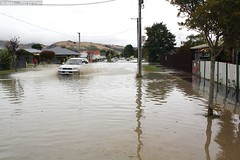
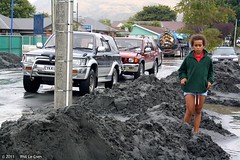

Photograph by Jocelyn Kinghorn 2143
Images, UC QuakeStudies
The damaged Canterbury Provincial Government Buildings where part of the top facade has been removed.
Jenny May's Story
Articles, UC QuakeStudies
Summary of oral history interview with Jenny May about her experiences of the Canterbury earthquakes.
Mary Hobbs' Story
Articles, UC QuakeStudies
Summary of oral history interview with Mary Hobbs about her experiences of the Canterbury earthquakes.
Christchurch Press Image: John Kirk-Anderson 2010:09:06 17:26:03
Images, UC QuakeStudies
Photograph captioned by Fairfax, "John Price, NZ Police, during a press conference following Canterbury's earthquake".
Christchurch Press Image: John Kirk-Anderson 2010:09:06 17:23:06
Images, UC QuakeStudies
Photograph captioned by Fairfax, "John Price, NZ Police, during a press conference following Canterbury's earthquake".
Christchurch Press Image: John Kirk-Anderson 2010:09:06 12:27:03
Images, UC QuakeStudies
Photograph captioned by Fairfax, "Mayor Bob Parker with NZ Fire Service staff following Canterbury's earthquake".
Christchurch Press Image: John Kirk-Anderson 2010:09:06 12:49:43
Images, UC QuakeStudies
Photograph captioned by Fairfax, "Mayor Bob Parker talks to Fire Service staff following Canterbury's earthquake".
Christchurch Press Image: John Kirk-Anderson 2010:09:08 17:02:13
Images, UC QuakeStudies
Photograph captioned by Fairfax, "Demolition of a building on Victoria Street, following the Canterbury earthquakes".
Christchurch Press Image: John Kirk-Anderson 2010:09:09 15:02:53
Images, UC QuakeStudies
Photograph captioned by Fairfax, "Andrew Deyell, head warden at The Press, following the Canterbury earthquakes".
Fairfax Media Image: Martin Hunter 2010:10:23 15:37:23
Images, UC QuakeStudies
Photograph captioned by Fairfax, "Evermore during the Band Together concert for Canterbury at Hagley Park".
Christchurch Press Infographic: 14 June 2012 (2)
Images, UC QuakeStudies
A chart comparing rates of migration to Australia in Canterbury with other New Zealand regions.
Christchurch Press Image: John Kirk-Anderson 2010:09:06 17:28:33
Images, UC QuakeStudies
Photograph captioned by Fairfax, "John Price, NZ Police, during a press conference following Canterbury's earthquake".
Outcomes of the Canterbury Earthquake Sequence for Tourism Businesses
Research papers, University of Canterbury Library
The Christchurch earthquake sequence has been on-going since September 4th 2010. The largest two earthquakes, magnitude (M) 7.1 on September 4th and the M 6.3 on February 22nd 2011 caused immediate and significant damage to the city of Christchurch. As a consequence of the earthquakes, the tourism sector in the Canterbury region has been heavily impacted, with broader impacts being felt throughout the South Island. Resilient Organisations and the University of Canterbury began a series of quantitative investigations into the recovery and response of key business sectors to the earthquakes. The purpose of this study was to build on this work by exploring the outcomes of the earthquakes on the tourism sector, a critical economic driver in the region. Two postal surveys were sent to 719 tourism business managers; the first to businesses in the ‘Impact Zone’ defined as areas that experienced Modified Mercalli intensities greater than 6. The second survey was sent to the remaining businesses throughout the Canterbury region (‘Rest of Canterbury’). Response rates were 46% response for the Impact Zone, and 29% for the Rest of Canterbury. Key findings:
Photograph of argon gas laser
Images, UC QuakeStudies
A scanned copy of a black and white photograph of the argon gas laser used by David Lockwood in his PhD research at the University of Canterbury. David says, "In contrast to the He-Ne laser I developed for my MSc thesis, the laser I used was one of the first commercial lasers - an argon gas laser that required frequent painstaking maintenance. This was because the He-Ne gas laser did not produce enough power for my experiments".
Photograph of David Lockwood with New Zealand's first laser Raman spectros…
Images, UC QuakeStudies
A scanned copy of a black and white photograph of David Lockwood standing beside the computer-controlled laser Raman spectroscopy equipment he used for his PhD research at the University of Canterbury. David says, "This thesis is concerned with setting up the first computer-controlled laser Raman spectroscopy equipment (shown in one photo - that's me wearing the laser safety goggles) in New Zealand and using it to measure the vibrational spectrum of novel materials grown in the Physics Department. It is very likely that my setup was also the first in the Southern Hemisphere".
Canta July 1964, cover
Images, UC QuakeStudies
A scanned copy of the cover page of a special International Student Conference issue of Canta published on Wednesday 8 July 1964.
Photograph of an optical diffraction pattern obtained in the experiment
Images, UC QuakeStudies
A scanned copy of a photograph of an optical diffraction pattern produced by the He-Ne Continuous Gas Laser used in David Lockwood's MSc research at the University of Canterbury. David explains that the photograph shows "a typical optical diffraction pattern obtained from the original red laser beam arising from a grating structure formed by the alignment of a colloid under the influence of a travelling sound wave".
Nisbet, Alistair, 1958-:'Forget earthquakes! There's something worse comin…
Images, Alexander Turnbull Library
A number of people standing on top of the huge letters 'EQC' (Earthquake Commission) scramble frantically to safety as an enormous wave representing 'Last minute claims' bears down on them. One of them shouts 'Forget earthquakes! There's something worse coming!' Refers to claims for damage after the Christchurch earthquake of 3rd September 2010. Quantity: 1 digital cartoon(s).
Brownbait patties - $2 per kilo. 6 October 2010
Images, Alexander Turnbull Library
The cartoon shows a platter of 'Brownbait patties $2 per kilo'. In the background is a 'contaminated' river. Refers to the contamination of Canterbury's waterways after the earthquake of 4th September which resulted in sewage pipes being damaged thus contaminating the rivers. This means that people should not be attempting to catch whitebait in these rivers during the annual whitebait season which is open between 15 August and 30 November. Quantity: 1 digital cartoon(s).
Canta May 1975, page 11
Images, UC QuakeStudies
A scanned copy of page 11 of an issue of Canta published in May 1975. The page features an advertisement for Capping Festival.
Canta April 1953, cover
Images, UC QuakeStudies
A scanned copy of the cover page of an issue of Canta published on Thursday 30 April 1953. The cover features an article on Capping Week.
Canta May 1950, cover
Images, UC QuakeStudies
A scanned copy of the cover page of an issue of Canta published on Wednesday 31 May 1950. The cover features an article on Capping Week.
Photograph of New Zealand's first laser
Images, UC QuakeStudies
A scanned copy of a black and white photograph of the He-Ne Continuous Gas Laser used in David Lockwood's MSc research at the University of Canterbury. David says, "The experiments in the Thesis were aimed at examining the effects of sound waves on colloids, which are very small particles that are found in clays for example (for more details see page 181 of http://www.cap.ca/PiC-PaC/static/downloads/1efdc1f3784b85c1a1b33e396b91ee8aef2072c5.pdf ). In fact, I was looking at nanoparticles of matter, which preceded the emergence of nanotechnology as a field of research by more than two decades. I needed a suitable light source to probe the alignment of the nanoparticles in the ultrasonic sound field. At that time the laser had just been invented and I realized that this was the ideal light source for my experiment. I then proceeded to construct the first home-built laser in New Zealand. This laser - a He-Ne continuous-wave gas laser - operated at 632.8 nm (in the red). This laser, over a metre long, is shown in the black-and-white photo. There were lot of problems to be overcome, but eventually, with invaluable help from Dr. Tom Seed (my MSc supervisor) and Dr. Rod Syme, I had it working".
Cover page of David Lockwood's PhD thesis, Solid State Studies: Raman Spec…
Articles, UC QuakeStudies
A scanned copy of the cover page of a thesis written by David Lockwood for a PhD in Physics at the University of Canterbury. The thesis is titled "Solid State Studies: Raman Spectroscopy and the Lattice Vibrations of CdCl2 and CdBr2" and was submitted in 1969.
Colin Lau's photograph of the University 1
Images, UC QuakeStudies
A scanned copy of a black and white photograph belonging to University of Canterbury alumnus Colin Lau. Colin describes the photograph as follows: "A view from UCSA towards the (right side of our) Science Building. I am not sure what that target white building behind the lamp standard is. I still remember that little wooden bridge we walked across to the UCSA building & that meandering creek or stream that flows beneath it".
Mark Quiqley
Audio, Radio New Zealand
Dr. Mark Quiqley is Senior Lecturer in Active Tectonics and Geomorphology in the Department of Geological Sciences at the University of Canterbury. He is part of the team involved in the scientific response to the Canterbury earthquake and has been monitoring it from the air.
Liquefaction problems
Audio, Radio New Zealand
Sue Holmes, resident of Seabreeze Close in Bexley, which was built on reclaimed land which has liquefied after the Canterbury earthquake; Dr Tom Wilson, lecturer in Hazard and Disaster Management, from the department of Geological Sciences, Canterbury University; and Bob Parker, Mayor of Christchurch.
Earthquakefix.
Other, National Library of New Zealand
Site of industry representative organisations provides a one-stop portal where Cantabrians can research and engage local reconstruction professionals from plumbers and electricians to builders and civil contractors. Includes advice and tips.
Selwyn District Council.
Other, National Library of New Zealand
Information about the Selwyn District and the Selwyn District Council, its activities and services. Includes online publications. Earthquake related information can be found in the archived instances from September 2010-
Avonside.
Other, National Library of New Zealand
Lawrence Roberts' blog for those living in Cowlishaw Street, Chaddesden Lane, Patten Street, Retreat Road and close by. Includes information and news on earthquake assessment, repairs/rebuilding and related matters; and photo gallery.