
Search
found 13158 results
Images for earthquakes; more images...
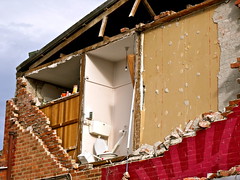
Addington Action.
Other, National Library of New Zealand
Group established to help residents after the February 2011 earthquake in Christchurch. Includes information about housing, fruit & vegetable cooperatives and clothing aid.
nz raw
Other, National Library of New Zealand
Blog by Mark Lincoln. Contains New Zealand news items and items of interest. One focus is the Christchurch earthquake and the rebuild.
Christchurch Cycle and Recreational Network.
Other, National Library of New Zealand
Provides feedback to CERA for input into planning cycle ways in the redesign of Christchurch following the earthquakes.
EQC fund to be wiped out by Canterbury earthquake claims.
Audio, Radio New Zealand
The Canterbury earthquakes will wipe out all the funds held in reserve to cover claims to the Earthquake Commission.
Ruth Gardner's Blog 20/01/2011: Another Earthquake
Articles, UC QuakeStudies
An entry from Ruth Gardner's blog for 20 January 2011 entitled, "Another Earthquake".
Christchurch Press Image: Stacy Squires, 2011:02:22 17:47:49
Images, UC QuakeStudies
Photograph captioned by Fairfax, "Earthquake damage in central Christchurch after a 6.3 earthquake. The Stonehurst Backpackers accommodation after the earthquake".
From the city that rocks, observations from post-earthquake Christchurch N…
Research papers, Lincoln University
At 4.35 a.m. on the 4th of September 2010 Christchurch residents were shaken awake by a magnitude 7.1 earthquake, the largest earthquake to hit urban New Zealand for nearly 80 years. It was a large earthquake. On average the world only has 17 earthquakes a year larger than magnitude seven. Haiti’s earthquake in January 2010 was magnitude 7.1 and Chile’s earthquake in February was magnitude 8.8. Although it was a big quake, Christchurch was lucky. In Haiti’s earthquake over 230,000 people were killed and in Chile 40,000 homes were destroyed. Happily this was not the situation in Christchurch, however the earthquake has caused considerable damage. The challenge for the Landscape Architecture community is to contribute to the city’s reconstruction in ways that will not only fix the problems of housing, and the city’s urban, suburban and neighbourhood fabric but that will do so in ways that will help solve the landscape problems that dogged the city before the earthquake struck.
Earthquake hazard and risk assessment study Stage 1 Part B: Probabilistic …
Articles, UC QuakeStudies
This study led on from Earthquake hazard and risk assessment study Stage 1 Part A: Earthquake source identification and characterisation (Pettinga et al, 1998). It used the location and characteristics of active faults in the Canterbury region, and the historic record of earthquakes to estimate levels of ground shaking (MM intensity, peak ground acceleration and spectral accelerations) across Canterbury for different return periods. The study also provided earthquake scenarios for selected towns and cities in Canterbury, and undertook detailed investigations into the largest historic earthquakes in Christchurch and parts of the Canterbury region. See Object Overview for background and usage information.
4pm Earthquake Bulletin
Audio, Radio New Zealand
Update of the Canterbury Earthquake.
6pm Earthquake Bulletin
Audio, Radio New Zealand
Update of the Canterbury Earthquake.
7pm Earthquake Bulletin
Audio, Radio New Zealand
Update of the Canterbury Earthquake.
8pm Earthquake Bulletin
Audio, Radio New Zealand
Update of the Canterbury Earthquake.
10pm Earthquake Bulletin
Audio, Radio New Zealand
Update of the Canterbury Earthquake.
5pm Earthquake Bulletin
Audio, Radio New Zealand
Update of the Canterbury Earthquake.
From This
Images, eqnz.chch.2010
Earthquake damage at the Arts Centre, Christchurch
Christchurch Earthquake - Lost It!
Images, eqnz.chch.2010
None
In Hereford St
Images, eqnz.chch.2010
None
Christchurch Press Image: Richard Cosgrove 2010:09:18 10:52:37
Images, UC QuakeStudies
Photograph captioned by Fairfax, "Earthquake damage following the 7.1 earthquake. Sign reads 'Survived Chinese imports, the recession, the earthquake. Reopens soon.'
Episodic table : the stuff of life, mostly Christchurch
Other, National Library of New Zealand
Images of Christchurch following the earthquake, showing the demolition of buildings, street art, art, community and cultural life.
Christchurch & Canterbury earthquake support
Other, National Library of New Zealand
Describes what you might feel and experience after going through the quake, and what you can do to help yourself and others.
Canterbury healthinfo.
Other, National Library of New Zealand
Provides health information to Christchurch residents in the aftermath of the Christchurch earthquakes of September 4, 2010 and February 22, 2011.
Canterbury Earthquake Recovery Authority : [web site].
Other, National Library of New Zealand
CERA is the public service department established by the Government to work with the people of Canterbury to rebuild Christchurch.
Magnetic South Micro-Forecast chain reactions
Other, National Library of New Zealand
Visual overview of ideas generated for the redevelopment of Christchurch following recent earthquakes, using the Magnetic South online discussion game.
Heroic Educated Kiwi Expatriates : HEKE.
Other, National Library of New Zealand
Site of Sir Paul Callaghan's project appealing to expat Kiwis to pay back their student loans following the Christchurch earthquake.
Adrienne Rewi Online.
Other, National Library of New Zealand
Blog of freelance journalist Adrienne Rewi who lives in Christchurch. She highlights Christchurch's historic cemeteries and covers the Christchurch earthquake among other things.
Deconstruction
Images, eqnz.chch.2010
Our neighbours house during its "Deconstruction" yesterday... It has to be rebuilt after the Christchurch Earthquakes.
Experts say larger earthquake could hit South Island
Audio, Radio New Zealand
Geologists say the South Island is likely to be hit with another, even larger, earthquake sometime in the next 50 years. Teams of earthquake experts are in Canterbury studying the previously undetected fault responsible for Saturday's 7.1 magnitude earthquake and dozens of aftershocks.
Lyttelton Harbour Review 13 May 2013
Articles, UC QuakeStudies
The "Lyttelton Harbour Review" newsletter for 13 May 2013, produced by the Lyttelton Harbour Information Centre.
Christchurch Earthquake - Liquefation Again at AMI Stadium
Images, eqnz.chch.2010
Christchurch Earthquake 23 December 2011 - Magnitude 5.8 then a 6.0.
Christchurch Earthquake - Hard-Hat Zone
Images, eqnz.chch.2010
A view after the 7.1 magnitude earthquake in Christchurch. ex-Thom Autoglass building south-east corner St Asaph St and Barbadoes Street