

Search
found 201 results
Images for [empty query]; more images...
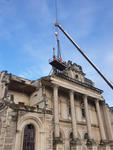
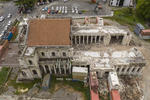
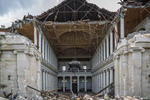
Christ Church Cathedral's day of restoration
Audio, Radio New Zealand
A momentous day in Christchurch as a huge steel frame was installed as part of the stabilisation work for Christ Church Cathedral. Karyn speaks with project director Keith Paterson about the plans to return the famed rose window extensively damage in the 2011 earthquake.
Christ Church Cathedral restoration: Massive steel frame being installed t…
Audio, Radio New Zealand
Moves towards returning the famed rose window to Christ Church Cathedral begin today. An eighteen-tonne steel frame is being installed onto the cathedral's west facade as part of restoration work. It will eventually housing the rose window. The cathedral was critically damaged in the Christchurch earthquake of 2011. Project director Keith Paterson is in Cathedral Square. He speaks to Susie Ferguson.
RECOVER Issue 5
Research papers, University of Canterbury Library
Welcome to the Recover newsletter Issue 5 from the Marine Ecology Research Group (MERG) of the University of Canterbury. Recover is designed to keep you updated on our MBIE-funded earthquake recovery project called RECOVER (Reef Ecology, Coastal Values & Earthquake Recovery). This 5th instalment covers the question of how much of the coast uplifted how much, recent lab work on seaweed responses to stressors, and more on our drone survey work to quantify earthquake impacts and recovery along 130 km of coastline in the intertidal zone!
Exploring the social capital of temporary Filipino migrant workers in Cant…
Research papers, University of Canterbury Library
Rising disaster losses, growth in global migration, migrant labour trends, and increasingly diverse populations have serious implications for disaster resilience around the world. These issues are of particular concern in New Zealand, which is highly exposed to disaster risk and has the highest proportion of migrant workers to national population in the OECD. Since there has been no research conducted into this issue in New Zealand to date, greater understanding of the social capital used by migrant workers in specific New Zealand contexts is needed to inform more targeted and inclusive disaster risk management approaches. A New Zealand case study is used to investigate the extent and types of social capital and levels of disaster risk awareness reported by members of three Filipino migrant workers organisations catering to dairy farm, construction and aged care workers in different urban and rural Canterbury districts. Findings from (3) semi-structured interviews and (3) focus groups include consistently high reliance on bonding capital and low levels of bridging capital across all three organisations and industry sectors, and in both urban and rural contexts. The transitory, precarious residential status conveyed by temporary work visas, and the difficulty of building bridging capital with host communities has contributed to this heavy reliance on bonding capital. Social media was essential to connect workers with family and friends in other countries, while Filipino migrant workers organisations provided members with valuable access to industry and district-specific networks of other Filipino migrant workers. Linking capital varied between the three organisations, with members of the organisation set up to advocate for dairy farm workers reporting the highest levels of linking capital. Factors influencing the capacity of workers organisations to develop linking capital appeared to include motivation (establishment objectives), length of time since establishment, support from government and industry groups, urban-rural context, income levels and gender. Although aware of publicity around earthquake and tsunami risk in the Canterbury region, participants were less aware of flood risk, and expressed fatalistic attitudes to disaster risk. Workers organisations offer a valuable potential interface between CDEM Group activities and migrant worker communities, since organisation leaders were interested in accessing government support to participate (with and on behalf of members) in disaster risk planning at district and regional level. With the potential to increase disaster resilience among these vulnerable, hard to reach communities, such participation could also help to build capacity across workers organisations (within Canterbury and across the country) to develop linking capital at national, as well as regional level. However, these links will also depend on greater government and industry commitment to providing more targeted and appropriate support for migrant workers, including consideration of the cultural qualifications of staff tasked with liaising with this community.
A neutal network for ground motion quality classification from New Zealand…
Research papers, University of Canterbury Library
High-quality ground motion records are required for engineering applications including response history analysis, seismic hazard development, and validation of physics-based ground motion simulations. However, the determination of whether a ground motion record is high-quality is poorly handled by automation with mathematical functions and can become prohibitive if done manually. Machine learning applications are well-suited to this problem, and a previous feed-forward neural network was developed (Bellagamba et al. 2019) to determine high-quality records from small crustal events in the Canterbury and Wellington regions for simulation validation. This prior work was however limited by the omission of moderate-to-large magnitude events and those from other tectonic environments, as well as a lack of explicit determination of the minimum usable frequency of the ground motion. To address these shortcomings, an updated neural network was developed to predict the quality of ground motion records for all magnitudes and all tectonic sources—active shallow crustal, subduction intraslab, and subduction interface—in New Zealand. The predictive performance of the previous feed-forward neural network was matched by the neural network in the domain of small crustal records, and this level of predictive performance is now extended to all source magnitudes and types in New Zealand making the neural network applicable to global ground motion databases. Furthermore, the neural network provides quality and minimum usable frequency predictions for each of the three orthogonal components of a record which may then be mapped into a binary quality decision or otherwise applied as desired. This framework provides flexibility for the end user to predict high-quality records with various acceptability thresholds allowing for this neural network to be used in a range of applications.
Disaster recovery of small and medium enterprises (SMEs) – a case of recov…
Research papers, University of Canterbury Library
The initial goal of this research was to explore how SME business models change in response to a crisis. Keeping this in mind, the business model canvas (Osterwalder & Pigneur, 2010) was used as a tool to analyse SME business models in the Canterbury region of New Zealand. The purpose was to evaluate the changes SMEs instituted in their business models after being hit by a series of earthquakes in 2010 and 2011. The idea was to conduct interviews with business owners and analyse them using grounded theory methods. As this method is iterative and requires simultaneous data collection and analysis, a tentative model was proposed after first phase of the data collection and analysis. However, as a result of this process, it became apparent that owner-specific characteristics, action orientation and networks were more prominent in the data than business model elements. Although the SMEs in this study experienced several operational changes in their business models, such as a change of location, modifications to their payment terms or expanded/restricted target markets, the suggested framework highlights how owner-specific attributes ensured the recovery of their businesses. After the initial framework was suggested, subsequent interviews were conducted to test, verify, and modify the tentative model. Three aspects of business recovery emerged: (a) cognitive coping – the business owner’s mind-set and motive; (b) adaptive coping – the ability of business owner to take corrective actions; and (c) social capital – the social network of a business owner, including formal and informal connections and their significance. Three distinct groups were identified; self-sufficient SMEs, socially-based SMEs and surviving SMEs. This thesis proposes a grounded theory of business recovery for SMEs following a disaster. Cognitive coping and social capital enabled the owners to take actions, which eventually led to the desired outcomes for the businesses.
The Rebuild 326-366
Images, eqnz.chch.2010
This is St Peters Riccarton. It was damaged in one of the two big Earthquakes to hit Christchurch in September 2010 and February 2011. Its taken a LONG time for work to really get going, but now that it is, they are also upgrading and extending the church with a modern annexe.
Digital Photograph: Cathedral of the Blessed Sacrament exterior angels sal…
Images, Canterbury Museum
One digital photograph showing a crane arm and workers in a cage during the salvage of the exterior angels from atop the Cathedral of the Blessed Sacrament. The large intact columns at the entrance of the Cathedral can be seen in the photograph. Taken by the Catholic Diocese of Christchurch in September 2020.
Digital Photograph: Cathedral of the Blessed Sacrament being demolished
Images, Canterbury Museum
One digital photograph taken by drone showing the Cathedral of the Blessed Sacrament partially demolished. Taken by the Catholic Diocese of Christchurch in 2020.
Digital Photograph: Cathedral of the Blessed Sacrament partially demolished
Images, Canterbury Museum
One digital photograph showing the Cathedral of the Blessed Sacrament partially demolished. The interior is visible and lined with intact columns. Taken by photographer Helen McLeod in October 2020.
Digital Photograph: Cathedral of the Blessed Sacrament being demolished by…
Images, Canterbury Museum
One digital photograph showing the Cathedral of the Blessed Sacrament being demolished with a yellow digger. Taken by photographer Helen McLeod in September 2020.
Digital Photograph: Cathedral of the Blessed Sacrament interior during dem…
Images, Canterbury Museum
One digital photograph showing the Cathedral of the Blessed Sacrament interior during demolition. The nave columns are still intact but debris lines the floor. Taken by photographer Helen McLeod in November 2020.
Digital Photograph: Cathedral of the Blessed Sacrament during demolition b…
Images, Canterbury Museum
One digital photograph showing the Cathedral of the Blessed Sacrament during demolition. A yellow digger arm and nibbler claw can be seen along with stone falling from an exterior wall. Taken by photographer Helen McLeod in December 2020.
Digital Photograph: Cathedral of the Blessed Sacrament exterior angels
Images, Canterbury Museum
One digital photograph showing the two angels atop the Cathedral of the Blessed Sacrament. The plinth that supports the cross stands empty between the angels. Taken by the Catholic Diocese of Christchurch in August 2020 before the angels were salvaged from the building.
Digital Photograph: Cathedral of the Blessed Sacrament exterior angels sal…
Images, Canterbury Museum
One digital photograph showing a crane and workers in a cage during the salvage of the exterior angels from atop the Cathedral of the Blessed Sacrament. Taken by the Catholic Diocese of Christchurch in August 2020.
Digital Photograph: Cathedral of the Blessed Sacrament exterior angels sal…
Images, Canterbury Museum
One digital photograph showing the salvage of the exterior angels from the Cathedral of the Blessed Sacrament. Two crane arms and strapping around one of the angels can be seen in the photograph. Taken by the Catholic Diocese of Christchurch in September 2020.
Digital Photograph: Cathedral of the Blessed Sacrament demolition
Images, Canterbury Museum
One digital photograph showing the demolition of the Cathedral of the Blessed Sacrament. A digger arm and nibbler claw can be seen in the photograph removing stone from the exterior, intact columns and ionic column capitals can be seen inside. Taken by the Catholic Diocese of Christchurch in September 2020.
FRONTLINE: The nexus of political documentary and alternative journalism:
Research papers, The University of Auckland Library
<jats:p>This article is a critical commentary of how political documentary embodies the traits and functions of alternative journalism. I explore this notion through Obrero (‘worker’) my independent documentary project about the labour migration of Filipino workers to Christchurch, Aotearoa New Zealand, after the earthquake in 2011. This article maps out the points at where the theories and practices of alternative media and documentary intersect. Analysing political documentary as a format of alternative journalism has links to the long tradition of film and video production as a tool for social critique. As a form of practice-based research, Obrero falls under the rubric of alternative journalism—able to represent the politically marginal sectors of the polity and report on issues underreported in the mainstream press. This article concludes that a distribution plan that is responsive to fragmenting audiences works best when alternative journalism no longer targets a niche but transborder audiences.</jats:p>
Strategies for earthquake strengthening vintage clay-brick unreinforced ma…
Research papers, The University of Auckland Library
This thesis describes the strategies for earthquake strengthening vintage clay bricks unreinforced masonry (URM) buildings. URM buildings are well known to be vulnerable to damage from earthquake-induced lateral forces that may result in partial or full building collapse. The 2010/2011 Canterbury earthquakes are the most recent destructive natural disaster that resulted in the deaths of 185 people. The earthquake events had drawn people’s attention when URM failure and collapse caused about 39 of the fatality. Despite the poor performance of URM buildings during the 2010/2011 Canterbury earthquakes, a number of successful case study buildings were identified and their details research in-depth. In order to discover the successful seismic retrofitting techniques, two case studies of retrofitted historical buildings located in Christchurch, New Zealand i.e. Orion’s URM substations and an iconic Heritage Hotel (aka Old Government Building) was conducted by investigating and evaluating the earthquake performance of the seismic retrofitting technique applied on the buildings prior to the 2010/2011 Canterbury earthquakes and their performance after the earthquakes sequence. The second part of the research reported in this thesis was directed with the primary aim of developing a cost-effective seismic retrofitting technique with minimal interference to the vintage clay-bricks URM buildings. Two retrofitting techniques, (i) near-surface mounted steel wire rope (NSM-SWR) with further investigation on URM wallettes to get deeper understanding the URM in-plane behaviour, and (ii) FRP anchor are reported in this research thesis
Seismic response of adjacent structures on dry and saturated sand
Research papers, The University of Auckland Library
Soil-structure interaction (SSI) has been widely studied during the last decades. The influence of the properties of the ground motion, the structure and the soil have been addressed. However, most of the studies in this field consider a stand-alone structure. This assumption is rarely justifiable in dense urban areas where structures are built close to one another. The dynamic interaction between adjacent structures has been studied since the early 1970s, mainly using numerical and analytical models. Even though the early works in this field have significantly contributed to understanding this problem, they commonly consider important simplifications such as assuming a linear behaviour of the structure and the soil. Some experimental works addressing adjacent structures have recently been conducted using geotechnical centrifuges and 1g shake tables. However, further research is needed to enhance the understanding of this complex phenomenon. A particular case of SSI is that of structures founded in fine loose saturated sandy soil. An iconic example was the devastating effects of liquefaction in Christchurch, New Zealand, during the Canterbury earthquake in 2011. In the case of adjacent structures on liquefiable soil, the experimental evidence is even scarcer. The present work addresses the dynamic interaction between adjacent structures by performing multiple experimental studies. The work starts with two-adjacent structures on a small soil container to expose the basics of the problem. Later, results from tests considering a more significant number of structures on a big laminar box filled with sand are presented. Finally, the response of adjacent structures on saturated sandy soil is addressed using a geotechnical centrifuge and a large 1g shake table. This research shows that the acceleration, lateral displacement, foundation rocking, damping ratio, and fundamental frequency of the structure of focus are considerably affected by the presence of neighbouring buildings. In general, adjacent buildings reduced the dynamic response of the structure of focus on dry sand. However, the acceleration was amplified when the structures had a similar fundamental frequency. In the case of structures on saturated sand, the presence of adjacent structures reduced the liquefaction potential. Neighbouring structures on saturated sand also presented larger rotation of the footing and lateral displacement of the top mass than that of the stand-alone case
Obrero (“worker”): Practising and theorising political documentary across …
Research papers, The University of Auckland Library
This thesis is a creative and critical exploration of how transmedia storytelling meshes with political documentary’s nature of representing social realities and goals to educate and promote social change. I explore this notion through Obrero (“worker”), my independently produced transmedia and transjournalistic documentary project that explores the conditions and context of the Filipino rebuild workers who migrated to Christchurch, New Zealand after the earthquake in 2011. While the project should appeal to New Zealanders, it is specifically targeted at an audience from the Philippines. Obrero began as a film festival documentary that co-exists with strategically refashioned Web 2.0 variants, a social network documentary and an interactive documentary (i-doc). Using data derived from the production and circulation of Obrero, I interrogate how the documentary’s variants engage with differing audiences and assess the extent to which this engagement might be effective. This thesis argues that contemporary documentary needs to re-negotiate established film aesthetics and practices to adapt in the current period of shifting technologies and fragmented audiences. Documentary’s migration to new media platforms also creates a demand for filmmakers to work with a transmedia state of mind—that is, the capacity to practise the old canons of documentary making while comfortably adjusting to new media production praxis, ethics, and aesthetics. Then Obrero itself, as the creative component of this thesis, becomes an instance of research through creative practice. It does so in two respects: adding new knowledge about the context, politics, and experiences of the Filipino workers in New Zealand; and offering up a broader model for documentary engagement, which I analyse for its efficacy in the digital age