
A photograph of the corner of Armagh Street and Oxford Terrace. Fencing and concrete blocks have been placed across Armagh Street. The Forsyth Barr building can be seen in the distance.

A photograph of the corner of Armagh Street and Oxford Terrace. Fencing and concrete blocks have been placed across Armagh Street. The Forsyth Barr building can be seen in the distance.

A photograph looking east down Lichfield Street. On the left is the badly-damaged bus exchange building. Coloured shipping containers can be seen stacked in front of MSC House.

A photograph looking east down Lichfield Street. On the left is the badly-damaged bus exchange building. Coloured shipping containers can be seen stacked in front of MSC House.

A photograph looking east down Lichfield Street. On the left is the badly-damaged bus exchange building. Coloured shipping containers can be seen stacked in front of MSC House.

A photograph looking north down Manchester Street. Coloured shipping containers are stacked on the corner of Lichfield Street and the Grand Chancellor building can be seen in the distance.

A photograph of a cleared building site between High Street and Lichfield Street. Part of a sculpture installation by Miranda Parkes can be seen on the right.

A photograph of the back of badly-damaged buildings on High Street, taken from St Asaph Street. The old Post Office building can be seen in the distance.

For the first time in November 2011, Christchurch residents finally had the opportunity to see the earthquake-damaged city centre on the Red Zone bus tours organised by CERA. Damage to buildings can be seen out the window.
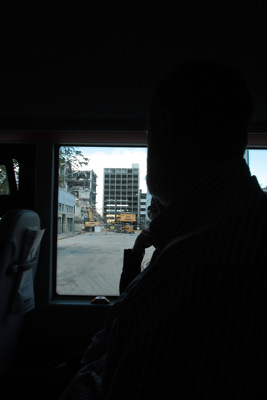
For the first time in November 2011, Christchurch residents finally had the opportunity to see the earthquake-damaged city centre on the Red Zone bus tours organised by CERA. Damage to buildings can be seen out the window.

For the first time in November 2011, Christchurch residents finally had the opportunity to see the earthquake-damaged city centre on the Red Zone bus tours organised by CERA. Damage to buildings can be seen out the window.

For the first time in November 2011, Christchurch residents finally had the opportunity to see the earthquake-damaged city centre on the Red Zone bus tours organised by CERA. Damage to buildings can be seen out the window.

For the first time in November 2011, Christchurch residents finally had the opportunity to see the earthquake-damaged city centre on the Red Zone bus tours organised by CERA. Damage to buildings can be seen out the window.
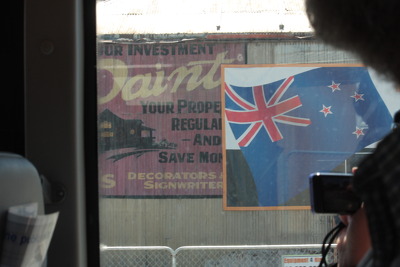
For the first time in November 2011, Christchurch residents finally had the opportunity to see the earthquake-damaged city centre on the Red Zone bus tours organised by CERA. Damage to buildings can be seen out the window.

For the first time in November 2011, Christchurch residents finally had the opportunity to see the earthquake-damaged city centre on the Red Zone bus tours organised by CERA. Damage to buildings can be seen out the window.

For the first time in November 2011, Christchurch residents finally had the opportunity to see the earthquake-damaged city centre on the Red Zone bus tours organised by CERA. Damage to buildings can be seen out the window.

For the first time in November 2011, Christchurch residents finally had the opportunity to see the earthquake-damaged city centre on the Red Zone bus tours organised by CERA. Damage to buildings can be seen out the window.
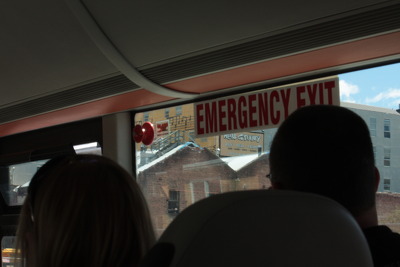
For the first time in November 2011, Christchurch residents finally had the opportunity to see the earthquake-damaged city centre on the Red Zone bus tours organised by CERA. Damage to buildings can be seen out the window.

For the first time in November 2011, Christchurch residents finally had the opportunity to see the earthquake-damaged city centre on the Red Zone bus tours organised by CERA. Damage to buildings can be seen out the window.

For the first time in November 2011, Christchurch residents finally had the opportunity to see the earthquake-damaged city centre on the Red Zone bus tours organised by CERA. Damage to buildings can be seen out the window.

For the first time in November 2011, Christchurch residents finally had the opportunity to see the earthquake-damaged city centre on the Red Zone bus tours organised by CERA. Damage to buildings can be seen out the window.

The front side of the Cathedral with the rose window removed and bracing supporting the wall. The broken tower can be seen to the left and fencing placed around the outside of the building.

The Butterfly Gap, where landowner Robyn wanted to activate the gap where a house she owned once stood. This is a Gap Filler project, a space where the public can request to hold markets or stalls

The Butterfly Gap, where landowner Robyn wanted to activate the gap where a house she owned once stood. This is a Gap Filler project, a space where the public can request to hold markets or stalls

Looking down Victoria Street, demolition site on the right and the Crowne Plaza Hotel at the end of the street. Flags in Canterbury colours, red and black can be seen on the street lights.

A photograph of a house on Worcester Boulevard, now a pile of rubble after the 4 September 2010 earthquake. Fire damage can be seen on the house next door.

A photograph of the date stone in the Cranmer Centre indicating the date the building was built (1880). Below, a stack of bricks can be seen in the garden.

A photograph looking west down Tuam Street. C1 Espresso can be seen on the right. On the left, construction hoarding and scaffolding surrounds the badly-damaged McKenzie & Willis building.

A gutter on Bracken Street in Avonside. Large cracks can be seen on the edges of the footpath above it as a result of the 4 September 2010 earthquake.

A photograph of scaffolding and bracing around the Isaac Theatre Royal on Gloucester Street. A shipping container can be seen on the road in front of the building.
