
A digitally manipulated image of printer's type, spelling out "Safe Dust". The photographer comments, "After the September 2010 Christchurch earthquake liquefaction poured out of the ground mostly in the East of Christchurch. This silt, which was a form of sand was declared safe and would not harm gardens if it was spread around in moderation. After the February 2011 quake as a result of even more liquefaction and the sewers being ruptured, the liquefaction was declared as toxic. People clearing it up should wear a mask, boots and gloves especially when it had dried up and become dusty. This just so happens to be the words found on an old printing press".

People walk and drive along Manchester Street shortly after the 22 February earthquake. Bricks from collapsed buildings litter the road. The photographer comments, "Just after the aftershock settled on Tuesday afternoon, myself and colleagues fled our Tuam Street office to absolute devastation outside. We couldn't see more than a block in either direction due to the clouds of dust that had arisen from buildings that had just collapsed ... From here, we picked up our vehicles from the CCC car park and headed out to get out of the chaos to a position where we could check on loved ones. Heading first along Manchester Street, buildings that were already heavily damaged were now completely written off".

A photograph captioned by BeckerFraserPhotos, "A worker tossing material out the window of Charles Luney House, into a skip on Armagh Street below".

A photograph of Professor Derrick Moot inspecting a dug-out soil pit on a farm near River Road in Lincoln. There is a thick layer of saturated sand between the topsoil and the subsoil where the grass roots end.

A photograph of Professor Derrick Moot inspecting a dug-out soil pit on a farm near River Road in Lincoln. There is a thick layer of saturated sand between the topsoil and the subsoil where the grass roots end.

A photograph of Professor Derrick Moot inspecting a dug-out soil pit on a farm near River Road in Lincoln. There is a thick layer of saturated sand between the topsoil and the subsoil where the grass roots end.

People walking amongst silt in Hagley Park shortly after the 22 February 2011 earthquake. These silt deposits were caused by the soil liquefying during the 22 February 2011 earthquake. The water flowed out, bringing sand with it.

Photograph captioned by Fairfax, "Aerial shot of the fault line that ruptured, causing Saturday's 7.1 earthquake. The fault runs through the front door and out the back of this property".

Photograph captioned by Fairfax, "Aerial shot of the fault line that ruptured, causing Saturday's 7.1 earthquake. The fault line went through the front door and out the back of this property".

Liquefaction piled on the sides of a road in north-east Christchurch. The liquefaction has been dug out of the properties and piled on the side of the road to be collected by road maintenance contractors.

A view of Hereford Street, looking east. On the road is a sprinkler system, used to spray rubble carried by trucks out of the CBD, in order to keep dust levels down.

A photograph of the cordon on the Gloucester Street bridge near Cambridge Terrace. Wire fencing has been placed across the bridges with signs reading, "Extreme danger, keep out" and "Warning, no public access beyond this point".

A photograph of CPIT students constructing an outdoor pizza oven for Gap Filler out of clay and bricks. The public workshop was part of FESTA 2012.

A photograph of CPIT students constructing an outdoor pizza oven for Gap Filler out of clay and bricks. The public workshop was part of FESTA 2012.

A photograph of CPIT students constructing an outdoor pizza oven for Gap Filler out of clay and bricks. The public workshop was part of FESTA 2012.

Mounds of liquefaction on the side of a residential road in eastern Christchurch. The liquefaction has been dug out of resident's gardens and placed on the road to be picked up by the City Council.

Photograph captioned by Fairfax, "Kaiapoi businesses and retail outlets are struggling post-earthquake leading into Christmas. The Rooster cafe operating out of a prefab building after their building was demolished".

Photograph captioned by Fairfax, "A big day of moving out of the caravan up the drive of their house to a rental home, for earthquake-stricken Kaiapoi mum and children".

A photograph captioned by BeckerFraserPhotos, "The front door of BNZ on London Street in Lyttelton with a yellow 'Restricted Use' sign on the glass. The BNZ is operating out of a portacom further up London Street".

A photograph of the earthquake-damaged output shaft from the top-plate of the Townsend Telescope's clock drive. The output shaft was bent out of shape during the 22 February 2011 earthquake.
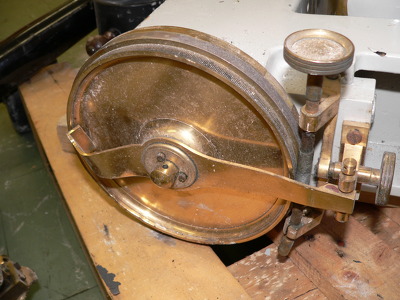
A photograph of the hour angle setting circle from the Townsend Telescope. The left side of the support arm was bent out of shape during the 22 February 2011 earthquake.

A photograph of a FESTA volunteer wearing a mask in the shape of a building. The volunteer has a stack of FESTA programmes to hand out to visitors.

A typical "sand volcano" caused by liquefaction where the soil loses its strength during the earthquake and the silt rises upwards, ejecting out of a hole like magma in a volcano.

A crane sitting beside the fence cordoning off the Cathedral of the Blessed Sacrament. In the foreground stones from the Christ Church Cathedral have been laid out on pallets.

An All Right? infographic designed for use as a web banner in March 2014. The infographic illustrates research carried out by All Right? about wellbeing in Canterbury.

An All Right? infographic designed for use as a web banner in March 2014. The infographic illustrates research carried out by All Right? about wellbeing in Canterbury.

A photograph of a pile of bricks, wood and a broken window on a property on Worcester Street. Tape reading, 'Danger Keep Out' has been placed across the entrance to the property.

An artwork in the walls of the Gap Filler Headquarters office building in Sydenham. The wall is made out of perspex which reveals recycled materials underneath.

An artwork in the walls of the Gap Filler Headquarters office building in Sydenham. The wall is made out of perspex which reveals recycled materials underneath.

Photograph captioned by Fairfax, "Aftermath of the Christchurch earthquake as residents start to clean up. Jo Mackwell digs out the garden of her parents from under the silt in Reaby Street, Burwood".
