
Search
found 826 results
Images for Canterbury earthquakes; more images...


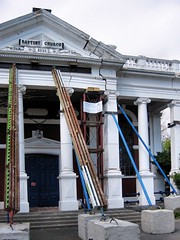
Damage to the Canterbury Public Library building
Images, eqnz.chch.2010
File reference: CCL-2011-08-12-CanterburyPublic Library pre-demolition-015 From the collection of Christchurch City Libraries.
Damage to the Canterbury Public Library building
Images, eqnz.chch.2010
File reference: CCL-2011-08-12-CanterburyPublic Library pre-demolition-009 From the collection of Christchurch City Libraries.
Damage to the Canterbury Public Library building
Images, eqnz.chch.2010
File reference: CCL-2011-08-12-CanterburyPublic Library pre-demolition-010 From the collection of Christchurch City Libraries.
Damage to the Canterbury Public Library building
Images, eqnz.chch.2010
File reference: CCL-2011-08-12-CanterburyPublic Library pre-demolition-018 From the collection of Christchurch City Libraries.
Damage to the Canterbury Public Library building
Images, eqnz.chch.2010
File reference: CCL-2011-08-12-CanterburyPublic Library pre-demolition-017 From the collection of Christchurch City Libraries.
Damage to the Canterbury Public Library building
Images, eqnz.chch.2010
File reference: CCL-2011-08-12-CanterburyPublic Library pre-demolition-008 From the collection of Christchurch City Libraries.
Damage to the Canterbury Public Library building
Images, eqnz.chch.2010
File reference: CCL-2011-08-12-CanterburyPublic Library pre-demolition-023 From the collection of Christchurch City Libraries.
Damage to the Canterbury Public Library building
Images, eqnz.chch.2010
File reference: CCL-2011-08-12-CanterburyPublic Library pre-demolition-013 From the collection of Christchurch City Libraries.
Damage to the Canterbury Public Library building
Images, eqnz.chch.2010
File reference: CCL-2011-08-12-CanterburyPublic Library pre-demolition-019 From the collection of Christchurch City Libraries.
Damage to the Canterbury Public Library building
Images, eqnz.chch.2010
File reference: CCL-2011-08-12-CanterburyPublic Library pre-demolition-011 From the collection of Christchurch City Libraries.
Damage to the Canterbury Public Library building
Images, eqnz.chch.2010
File reference: CCL-2011-08-12-CanterburyPublic Library pre-demolition-007 From the collection of Christchurch City Libraries.
Damage to the Canterbury Public Library building
Images, eqnz.chch.2010
File reference: CCL-2011-08-12-CanterburyPublic Library pre-demolition-021 From the collection of Christchurch City Libraries.
Damage to the Canterbury Public Library building
Images, eqnz.chch.2010
File reference: CCL-2011-08-12-CanterburyPublic Library pre-demolition-025 From the collection of Christchurch City Libraries.
Damage to the Canterbury Public Library building
Images, eqnz.chch.2010
File reference: CCL-2011-08-12-CanterburyPublic Library pre-demolition-012 From the collection of Christchurch City Libraries.
Christchurch Earthquake 22/02/11
Images, eqnz.chch.2010
Manchester Street looking south-ish, near the corner of Worcester Street. The is the Trinity Building, which housed a restaurant and live music venue called Octagon Live.
EXAMPLES OF RECOGNITION OF VULNERABILITY IN NATURAL DISASTER CONTEXTS (ESP…
Research papers, University of Canterbury Library
These research papers explore the concept of vulnerability in international human rights law. In the wake of the Christchurch earthquakes of 2010-2011, this research focuses on how "vulnerability" has been used and developed within the wider human rights discourse. They also examine jurisprudence of international human rights bodies, and how the concept of "vulnerability" has been applied. The research also includes a brief investigation into the experiences of vulnerable populations in disaster contexts, focusing primarily on the experiences of "vulnerable persons" in the Christchurch earthquakes and their aftermath.
Paul and Sam Corliss's Street Art Photograph (2009:10:12 02:19:28)
Images, UC QuakeStudies
A photograph of street art at the Addington Saleyards, taken before the Canterbury earthquakes.
Paul and Sam Corliss's Street Art Photograph (2009:10:12 02:17:30)
Images, UC QuakeStudies
A photograph of street art at the Addington Saleyards, taken before the Canterbury earthquakes.
Paul and Sam Corliss's Street Art Photograph (2009:10:12 02:00:12)
Images, UC QuakeStudies
A photograph of street art at the Addington Saleyards, taken before the Canterbury earthquakes.
Paul and Sam Corliss's Street Art Photograph (2009:10:12 02:15:44)
Images, UC QuakeStudies
A photograph of street art at the Addington Saleyards, taken before the Canterbury earthquakes.
Paul and Sam Corliss's Street Art Photograph (2009:10:12 02:00:32)
Images, UC QuakeStudies
A photograph of street art at the Addington Saleyards, taken before the Canterbury earthquakes.
Paul and Sam Corliss's Street Art Photograph (2009:10:12 02:18:52)
Images, UC QuakeStudies
A photograph of street art at the Addington Saleyards, taken before the Canterbury earthquakes.
On-going challenges in physics-based ground motion prediction and insights…
Research papers, University of Canterbury Library
This paper presents on-going challenges in the present paradigm shift of earthquakeinduced ground motion prediction from empirical to physics-based simulation methods. The 2010-2011 Canterbury and 2016 Kaikoura earthquakes are used to illustrate the predictive potential of the different methods. On-going efforts on simulation validation and theoretical developments are then presented, as well as the demands associated with the need for explicit consideration of modelling uncertainties. Finally, discussion is also given to the tools and databases needed for the efficient utilization of simulated ground motions both in specific engineering projects as well as for near-real-time impact assessment.
Di Madgin's Red Zone photograph 8
Images, UC QuakeStudies
A scanned copy of a photograph of Di Madgin's former home in the Red Zone, taken before the earthquakes.
NicksPlace Photograph 099
Images, UC QuakeStudies
A fence and Road Closed sign block off an earthquake-damaged road in rural Canterbury.
Shermine Kwok Photograph 84
Images, UC QuakeStudies
A photograph of the view from the office of CERA, the Canterbury Earthquake Recovery Authority.
Implications of the Canterbury earthquake sequence for Adelaide, South Aus…
Research papers, The University of Auckland Library
The city of Christchurch has experienced over 10,000 aftershocks since the 4th of September 2010 earthquake of which approximately 50 have been greater than magnitude 5. The damage caused to URM buildings in Christchurch over this sequence of earthquakes has been well documented. Due to the similarity in age and construction of URM buildings in Adelaide, South Australia and Christchurch (they are sister cities, of similar age and heritage), an investigation was conducted to learn lessons for Adelaide based on the Christchurch experience. To this end, the number of URM buildings in the central business districts of both cities, the extent of seismic strengthening that exists in both cities, and the relative earthquake hazards for both cities were considered. This paper will report on these findings and recommend strategies that the city of Adelaide could consider to significantly reduce the seismic risk posed by URM buildings in future earthquake.
BeckerFraserPhotos September 2011 photograph 125
Images, UC QuakeStudies
Photograph captioned by BeckerFraserPhotos, "Canterbury Museum re-opened to the public on the 1st anniversary of the September earthquake, 4 September, 2011".
Shirley Community Centre, Shirley
Images, eqnz.chch.2010
Shirley Community Centre, Shirley Road, Christchurch. File reference: CCL-2012-05-10-Around-Shirley-May-2012 DSC_02866.JPG From the collection of Christchurch City Libraries.
Shirley Community Centre, Shirley
Images, eqnz.chch.2010
Shirley Community Centre, Shirley Road, Christchurch. File reference: CCL-2012-05-10-Around-Shirley-May-2012 DSC_02862.JPG From the collection of Christchurch City Libraries.