
Search
found 507 results
Images for Canterbury earthquakes; more images...


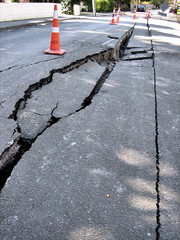
20100906-115142.jpg
Images, eqnz.chch.2010
None
20100906-115224.jpg
Images, eqnz.chch.2010
None
20100906-114141.jpg
Images, eqnz.chch.2010
None
20100906-120300.jpg
Images, eqnz.chch.2010
None
20100906-120331.jpg
Images, eqnz.chch.2010
None
20100906-120243.jpg
Images, eqnz.chch.2010
None
20100906-115607.jpg
Images, eqnz.chch.2010
None
20100906-115102.jpg
Images, eqnz.chch.2010
None
20100906-120216.jpg
Images, eqnz.chch.2010
None
20100906-114226.jpg
Images, eqnz.chch.2010
None
20100906-120228.jpg
Images, eqnz.chch.2010
None
20100906-120310.jpg
Images, eqnz.chch.2010
None
THE EXPERIENCES OF “OLDER PERSONS” IN POSTQUAKE CANTERBURY
Research papers, University of Canterbury Library
These research papers explore the concept of vulnerability in international human rights law. In the wake of the Christchurch earthquakes of 2010-2011, this research focuses on how "vulnerability" has been used and developed within the wider human rights discourse. They also examine jurisprudence of international human rights bodies, and how the concept of "vulnerability" has been applied. The research also includes a brief investigation into the experiences of vulnerable populations in disaster contexts, focusing primarily on the experiences of "vulnerable persons" in the Christchurch earthquakes and their aftermath.
Townsend Telescope Pre-Earthquake Photographs 04
Images, UC QuakeStudies
A photograph of the Townsend Telescope in the Observatory at the Christchurch Arts Centre. Graeme Kershaw, Technician at the University of Canterbury Department of Astronomy and Physics, is standing to the left. This image was used by Kershaw to identify the telescope's parts after the 22 February 2011 earthquake.
Women's place-making through craft in in post earthquake Canterbury
Research papers, University of Canterbury Library
INTRODUCTION: There is little research on the role of creative arts and craft in disaster recovery. This article reports findings about the emergent role of crafting from research conducted after the 2010–2011 series of earthquakes in Christchurch and surrounding districts in Aotearoa New Zealand. In particular, the article focuses on the significance and differing interpretations of the notion of place expressed by participants through their craftwork, in this case led by women and mediated by the post-earthquake geographic and temporal context. METHOD: This qualitative research included nine individual interviews and five focus group interviews with crafters from Christchurch and surrounding districts. There were 35 participants in total, 33 were women. Applied thematic analysis was used to code the data and identify themes. These themes included connection to place, the symbolism of craft, the healing experience of craft groups and places for women. The notion of place was evident across all three themes. FINDINGS: The findings from the research demonstrate differing ways in which the significance of place was reflected in the craftwork. Participants interpreted the concept of place in descriptive, symbolic, and therapeutic ways. IMPLICATIONS: More understanding about the way creative endeavours like crafting can be used to help ameliorate the impact of natural disasters is needed. Social work practitioners are encouraged to explore place-based wellbeing during their work with service users and to include aspects of artistry, craft and creativity.
Site-Specific Probabilistic Seismic Hazard Maps of New Zealand for 475 yea…
Research papers, University of Canterbury Library
The latest two great earthquake sequences; 2010- 2011 Canterbury Earthquake and 2016 Kaikoura Earthquake, necessitate a better understanding of the New Zealand seismic hazard condition for new building design and detailed assessment of existing buildings. It is important to note, however, that the New Zealand seismic hazard map in NZS 1170.5.2004 is generalised in effort to cover all of New Zealand and limited to a earthquake database prior to 2001. This is “common” that site-specific studies typically provide spectral accelerations different to those shown on the national map (Z values in NZS 1170.5:2004); and sometimes even lower. Moreover, Section 5.2 of Module 1 of the Earthquake Geotechnical Engineering Practice series provide the guidelines to perform site- specific studies.
Townsend Telescope Pre-Earthquake Photographs 06
Images, UC QuakeStudies
A photograph of the clock drive of the Townsend Telescope. The telescope is in the Observatory at the Christchurch Arts Centre. This image was used by Graeme Kershaw, Technician at the University of Canterbury Department of Physics and Astronomy, to identify the telescope's parts after the 22 February 2011 earthquake.
Townsend Telescope Pre-Earthquake Photographs 07
Images, UC QuakeStudies
A photograph of the middle section of the Townsend Telescope. The telescope is in the Observatory at the Christchurch Arts Centre. This image was used by Graeme Kershaw, Technician at the University of Canterbury Department of Physics and Astronomy, to identify the telescope's parts after the 22 February 2011 earthquake.
People in Disasters Conference - Canterbury Primary Care Response to Earth…
Videos, UC QuakeStudies
A video of a presentation by Dr Phil Schroeder, Managing Director of Rolleston Central Health, during the second plenary of the 2016 People in Disasters Conference. The presentation is titled, "Canterbury Primary Care Response to Earthquakes in 2010/2011".
20100906-151302.jpg
Images, eqnz.chch.2010
None
20100906-151248.jpg
Images, eqnz.chch.2010
None
20100906-124233.jpg
Images, eqnz.chch.2010
None
20100906-124053.jpg
Images, eqnz.chch.2010
None
20100906-124704.jpg
Images, eqnz.chch.2010
None
20100906-151327.jpg
Images, eqnz.chch.2010
None
20100906-124139.jpg
Images, eqnz.chch.2010
None
20100906-124228.jpg
Images, eqnz.chch.2010
None
20100906-124034.jpg
Images, eqnz.chch.2010
None
20100906-114914.jpg
Images, eqnz.chch.2010
None
20100906-113431.jpg
Images, eqnz.chch.2010
None