
Search
found 6322 results
Images for Canterbury earthquakes; more images...
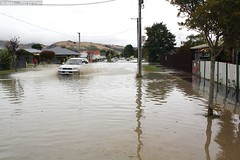
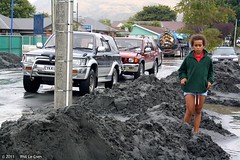

Photograph number UC 10-0498-103
Images, UC QuakeStudies
Staff working at the Emergency House after the September earthquakes.
Photograph number UC 10-0498-005
Images, UC QuakeStudies
Staff working at the Emergency House after the September earthquakes.
Photograph number UC 10-0498-121
Images, UC QuakeStudies
Staff working at the Emergency House after the September earthquakes.
Scholars call on Govt to rethink Canterbury earthquake law
Audio, Radio New Zealand
A group of legal scholars says the Government has set a dangerous precedent with its law to assist recovery from the Christchurch earthquake.
Illegal dumping of earthquake rubble investigated
Audio, Radio New Zealand
At least five companies are being investigated by the Canterbury Regional Council for dumping or burning earthquake demolition rubble illegally.
Chch community groups worried about quality of home repairs
Audio, Radio New Zealand
The Earthquake Commission has brought forward its deadline for repairing thousands of earthquake-damaged properties in Canterbury by 12 months.
Fairfax Video, May 2012 (10)
Videos, UC QuakeStudies
A video of an interview with Andreas Duenser, research scientist at the Human Interface Technology Laboratory, about an earthquake simulator at the University of Canterbury. The simulator was developed to help treat people suffering from post-traumatic stress disorder after the 2010 and 2011 Canterbury earthquakes. It allows people to relive their earthquake experiences in a safe environment to help them overcome their ordeals.
Christchurch Earthquake 22/02/11
Images, eqnz.chch.2010
Northeast corner of Kilmore and Colombo Streets.
Christchurch Earthquake 22/02/11
Images, eqnz.chch.2010
Armagh Street looking west from Cranmer Square.
Christchurch Earthquake 22/02/11
Images, eqnz.chch.2010
Christchurch Cathedral, Cathedral Square.
Christchurch Earthquake 22/02/11
Images, eqnz.chch.2010
Manchester and Gloucester Street corner
Christchurch Earthquake 22/02/11
Images, eqnz.chch.2010
Christchurch Cathedral, Cathedral Square.
Christchurch Earthquake 22/02/11
Images, eqnz.chch.2010
Montreal Street and Armagh Street, Cranmer Square.
Christchurch Earthquake 22/02/11
Images, eqnz.chch.2010
772 Colombo Street, opposite Victoria Square.
Christchurch Earthquake 22/02/11
Images, eqnz.chch.2010
Manchester and Gloucester Street corner
Christchurch earthquake
Images, eqnz.chch.2010
20100904_3309_1D3-24 Christchurch earthquake Wairoa Street Another web site used this image (with a link to this Flickr page), so the view count sky rocketed. CERA (Canterbury Earthquake Recovery Authority)/Tonkin & Taylor also used this image on page 13 of a Land Damage presentation on 23/06/11. This was also released as a PDF. A few mo...
Human response to earthquake shaking : analysis of video footage of the 20…
Research papers, University of Canterbury Library
Research on human behaviour during earthquake shaking has identified three main influences of behaviour: the environment the individual is located immediately before and during the earthquake, in terms of where the individual is and who the individual is with at the time of the earthquake; individual characteristics, such as age, gender, previous earthquake experience, and the intensity and duration of earthquake shaking. However, little research to date has systematically analysed the immediate observable human responses to earthquake shaking, mostly due to data constraints and/or ethical considerations. Research on human behaviour during earthquakes has relied on simulations or post-event, reflective interviews and questionnaire studies, often performed weeks to months or even years following the event. Such studies are therefore subject to limitations such as the quality of the participant's memory or (perceived) realism of a simulation. The aim of this research was to develop a robust coding scheme to analyse human behaviour during earthquake shaking using video footage captured during an earthquake event. This will allow systematic analysis of individuals during real earthquakes using a previously unutilized data source, thus help develop guidance on appropriate protective actions. The coding scheme was developed in a two-part process, combining a deductive and inductive approach. Previous research studies of human behavioral response during earthquake shaking provided the basis for the coding scheme. This was then iteratively refined by applying the coding scheme to a broad range of video footage of people exposed to strong shaking during the Canterbury earthquake sequence. The aim of this was to optimise coding scheme content and application across a broad range of scenarios, and to increase inter-coder reliability. The methodology to code data will enhance objective observation of video footage to allow cross-event analysis and explore (among others): reaction time, patterns of behaviour, and social, environmental and situational influences of behaviour. This can provide guidance for building configuration and design, and evidence-based recommendations for public education about injury-preventing behavioural responses during earthquake shaking.
Photo 094
Images, UC QuakeStudies
Cracks in the path of a residential property on Hood Avenue in Pines Beach after the September 4th earthquake.
Photo 093
Images, UC QuakeStudies
Cracks in the driveway of a residential property on Hood Avenue in Pines Beach after the September 4th earthquake.
Questions raised over earthquake victims insurance
Audio, Radio New Zealand
Canterbury earthquake victims say they've got new cause for anxiety - whether or not insurance companies will reinsure them.
Christchurch Press Image: John Kirk-Anderson 2010:09:06 13:09:17
Images, UC QuakeStudies
Photograph captioned by Fairfax, "Mayor Bob Parker following Canterbury's earthquake".
Christchurch Press Infographic: 28 December 2011 (2)
Images, UC QuakeStudies
An infographic listing the top ten Canterbury earthquakes by magnitude.
More damage to risky buildings in centre of Christchurch
Audio, Radio New Zealand
The Canterbury Earthquake Recovery Authority's manager of demolitions, Warwick Isaacs.
Christchurch Press Image: John Kirk-Anderson 2010:09:06 13:00:09
Images, UC QuakeStudies
Photograph captioned by Fairfax, "Mayor Bob Parker following Canterbury's earthquake".
Letter from Christchurch Mayor Bob Parker
Articles, UC QuakeStudies
Christchurch Mayor Bob Parker writes about the 2010 Canterbury Earthquake.
Christchurch Press Image: John Kirk-Anderson 2010:09:06 16:20:01
Images, UC QuakeStudies
Photograph captioned by Fairfax, "Mayor Bob Parker following Canterbury's earthquake".
Christchurch Press Image: John Kirk-Anderson 2010:09:06 13:54:51
Images, UC QuakeStudies
Photograph captioned by Fairfax, "Mayor Bob Parker following Canterbury's earthquake".
Photograph by Jocelyn Kinghorn 1966
Images, UC QuakeStudies
The New Brighton Pier still intact after the Canterbury earthquakes.
Photograph by Jocelyn Kinghorn 1967
Images, UC QuakeStudies
The New Brighton Pier still intact after the Canterbury earthquakes.
Christchurch Press Image: John Kirk-Anderson 2010:09:06 12:59:58
Images, UC QuakeStudies
Photograph captioned by Fairfax, "Mayor Bob Parker following Canterbury's earthquake".