

Search
found 531 results
Images for Post-earthquake Christchurch; more images...

Christchurch sitting on mental health 'time bomb'
Audio, Radio New Zealand
Dr Sue Bagshaw, the head of a youth health clinic Christchurch, fears the high rates of Post Traumatic Stress Disorder among children will skyrocket due to the earthquake.
The Dominion Post Image: Phil Reid 2011:02:25 11:01:45
Images, UC QuakeStudies
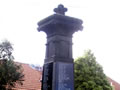
Photograph captioned by Fairfax, "Christchurch 6.3 earthquake aftermath. The clock tower on the old post office in Cathedral Square."
Brownlee's list of post-quake achievements received poorly
Audio, Radio New Zealand
Christchurch residents are pouring cold water on the Earthquake Recovery Minister's efforts to celebrate post-quake recovery in the city.
Powerless Christchurch CBD, NZ - Post February earthquake, 2011
Images, eqnz.chch.2010
Christchurch's CBD as seen from the Cashmere hills, south of the city. Much of the CBD is still cordoned off and without power (as you should be able to spot) as a result of the damage caused by February's deadly earthquake.
Christchurch Press Image: Kirk Hargreaves 2010:10:23 13:13:39
Images, UC QuakeStudies
Photograph captioned by Fairfax, "Band Together in Christchurch's Hagley Park as a post-earthquake party. Gillian Forsyth and son Andrew enjoy a day out together".
Powerless Christchurch CBD, NZ - Post February Earthquake
Images, eqnz.chch.2010
Much of the CBD will be cordoned off and without power (as you should be able to spot) for quite some time as a result of the damage caused by February's deadly earthquake.
Powerless Christchurch CBD, NZ - Post February Earthquake
Images, eqnz.chch.2010
Much of the CBD will be cordoned off and without power (as you should be able to spot) for quite some time as a result of the damage caused by February's deadly earthquake.
Christchurch, NZ - Cashel Mall Restart
Images, eqnz.chch.2010
The CBD is slowly being opened up and this is the post - earthquake result of Cashel Mall. A vibrant, fresh look with high end shopping in colourful container shops. A really good step forward for the city.
Christchurch, NZ - Cashel Mall Restart
Images, eqnz.chch.2010
The CBD is slowly being opened up and this is the post - earthquake result of Cashel Mall. A vibrant, fresh look with high end shopping in colourful container shops. A really good step forward for the city.
Christchurch, NZ - Cashel Mall Restart
Images, eqnz.chch.2010
The CBD is slowly being opened up and this is the post - earthquake result of Cashel Mall. A vibrant, fresh look with high end shopping in colourful container shops. A really good step forward for the city.
Christchurch, NZ - Cashel Mall Restart
Images, eqnz.chch.2010
The CBD is slowly being opened up and this is the post - earthquake result of Cashel Mall. A vibrant, fresh look with high end shopping in colourful container shops. A really good step forward for the city.
Christchurch, NZ - Cashel Mall Restart
Images, eqnz.chch.2010
The CBD is slowly being opened up and this is the post - earthquake result of Cashel Mall. A vibrant, fresh look with high end shopping in colourful container shops. A really good step forward for the city.
Christchurch, NZ - Cashel Mall Restart
Images, eqnz.chch.2010
The CBD is slowly being opened up and this is the post - earthquake result of Cashel Mall. A vibrant, fresh look with high end shopping in colourful container shops. A really good step forward for the city.
Helping, caring and learning: strengths in new entrants settling into and …
Research papers, University of Canterbury Library
Christchurch has experienced a series of over 13,500 earthquakes between September 2010 and January 2012. Some children who have been exposed to earthquakes may experience post-traumatic stress disorder symptoms (PTSD) including difficulty concentrating, feeling anxious, restlessness and confusion. Other children may be resilient to the effects of disaster. Western models of resilience relate to a child’s social support and their capacity to cope. The Māori model of wellbeing relates to whanau (family), wairua (spiritual connections), tinana (the physical body) and hinengaro (the mind and emotions). Children’s concepts of helping, caring and learning may provide insight into resilience without introducing the topic of earthquakes into the conversation, which in itself may provoke an episode of stress. Many researchers have studied the effects of earthquakes on children. However, few studies have examined positive outcomes and resilience or listened to the children’s voices. The objective of this study was to listen to the voices of children who experienced the Canterbury earthquake period in order to gain a deeper understanding of the ideas associated resilience. Individual interviews were conducted with 17 five-year-old participants during their first term of primary school. After the interviews, the teacher shared demographic information and reports on the children’s stress and coping. Six children were identified as New Zealand European and eleven children identified as New Zealand Māori. Children had different views of helping, caring and learning. Themes of resilience from Western and Kaupapa Māori models were identified in transcripts of the children's voices and drawings. Māori children voiced more themes of resilience associated with the Western model, and in the Tapa Whā model, Māori children's transcripts were more likely to be inclusive of all four components of well-being. How five-year-old children, having experienced an earthquake disaster during their preschool years, talk or draw pictures about helping, caring and learning can provide insight into resilience, especially in situations where it is not advisable to re-traumatise children by discussing the disaster event. Future research should interview parents/caregivers and whānau to gain further insights. Considering information from both a Western and a Tapa Whā perspective can also provide new insights into resilience in young children. A limitation of this study is that qualitative studies are not always free from a researcher’s interpretation and are, therefore, subjective.
Powerless Christchurch CBD, NZ - Post February earthquake
Images, eqnz.chch.2010
Much of the CBD is still cordoned off and without power (as you should be able to spot) as a result of the damage caused by February's deadly earthquake. This photo clearly shows the extent of the lean that the Hotel Grand Chancellor is now on. Apparently it is out by 1m at the top leaning east. Demolition will start about mid June and is expec...
Christchurch Press Image: Kirk Hargreaves 2010:10:23 11:44:38
Images, UC QuakeStudies
Photograph captioned by Fairfax, "Band Together in Christchurch's Hagley Park as a post-earthquake party. A member of Te Kotahitanga Kapa Haka group opening the show".
Christchurch Press Image: Iain McGregor 2010:10:23 04:06:28
Images, UC QuakeStudies
Photograph captioned by Fairfax, "Band Together concert in Hagley Park for earthquake relief. Jade Brown (11) from Hornby on top of the posts".
Investigating Burnout among University Students in a Post-Disaster Environ…
Research papers, University of Canterbury Library
Tertiary students, not just working populations, might be experiencing feelings of burnout following the Christchurch earthquakes of 2010 and 2011. In the aftermath of a major disaster, the gap between the resources available to handle pressures (e.g., support) and the demands inherent in the pursuit of an academic degree (e.g., heavy workload) may lead to feelings of burnout among students. This study hypothesised that burnout dimensions (emotional exhaustion and disengagement) would be related to students’ perceptions of immediate institutional support, extended institutional support, peer support, family support, and work overload. Additionally, it was proposed that institutional and social support would moderate the relationship between work overload and burnout. Two hundred and seventy one third and fourth year students were sampled using an online questionnaire. These particular students were expected to be at greater risk of emotional exhaustion and academic disengagement because they were at the earliest stage of their tertiary education when the major earthquakes first hit. Family support and extended institutional support were found to be associated with decreased levels of emotional exhaustion and disengagement. Meanwhile, work overload was found to be related to increased levels of emotional exhaustion and disengagement. Furthermore, both peer support and immediate institutional support were found to have a moderating effect on the relationship between work overload and disengagement. This study has exposed unique findings which contribute to burnout research especially in a post-disaster context, and raises the importance of providing the right types of support for individuals who are particularly dealing with the consequences of a natural disaster.
Christchurch Press Image: Kirk Hargreaves 2010:10:23 11:38:18
Images, UC QuakeStudies
Photograph captioned by Fairfax, "Band Together in Christchurch's Hagley Park as a post-earthquake party. A.K Comrie, aged 11 months, gets into the swing of things".
Priorities for the new Christchurch 'Disaster Czar'
Audio, Radio New Zealand
Roger Sutton, the chief executive of networks company Orion has taken up a five-year contract as the CEO of the Christchurch Earthquake Reconstruction Authority, the top bureaucrat in the post-quake city.
Christchurch homes sit empty
Audio, Radio New Zealand
Post-earthquake most people would say it was difficult to find housing in Christchurch. But reports suggest that the market has flattened. And terraced housing and apartments are sitting empty. Christchurch Council finance committee chairman, Councillor Raf Manji, discusses future developments like The East Frame.
Photograph number UC 12-0339-01
Images, UC QuakeStudies
Joanne Stevenson, PhD student in the Geography Department, who is studying the positive aspects of post-earthquake business growth in Christchurch.
Photograph number UC 12-0339-03
Images, UC QuakeStudies
Joanne Stevenson, PhD student in the Geography Department, who is studying the positive aspects of post-earthquake business growth in Christchurch.
Photograph number UC 12-0339-02
Images, UC QuakeStudies
Joanne Stevenson, PhD student in the Geography Department, who is studying the positive aspects of post-earthquake business growth in Christchurch.
Is EQC abandoning CHCH?
Audio, Radio New Zealand
Christchurch City Councillor Ali Jones talks about what the cull of EQC staff will mean for life in the post-earthquake city.
None
Images, eqnz.chch.2010
None
Project Management Internship in Post-Earthquake Christchurch: A review of…
Research papers, University of Canterbury Library
This report discusses the experiences gained and lessons learned during a project management internship in post-earthquake Christchurch as part of the construction industry and rebuild effort.
An all-Christchurch Chapter and Verse
Audio, Radio New Zealand
Canterbury novelist Joanna Orwin has a new, futurist story of a New Zealand changed by cataclysmic volcanoes and tsunami, Sacrifice. And we hear about some of the stories in a post-earthquake Christchurch anthology, Tales for Canterbury.
Christchurch Press Image: Kirk Hargreaves 2010:10:23 14:37:22
Images, UC QuakeStudies
Photograph captioned by Fairfax, "Band Together in Christchurch's Hagley Park as a post-earthquake party. John Key signs an autograph (one of thousands) for Tiana Hansen, aged 11".
Christchurch Press Image: Kirk Hargreaves 2010:10:30 14:53:58
Images, UC QuakeStudies
Photograph captioned by Fairfax, "Post-earthquake family fun for Quality Bakers staff at the Horticultural Centre in Hagley Park. City councillor Aaron Keown performing on stage".