
Search
found 6322 results
Images for Canterbury earthquakes; more images...

Modeling nonlinear site effects in physics-based ground motion simulation
Research papers, University of Canterbury Library
This study examines the performance of nonlinear total-stress wave-propagation site response analysis for modelling site effects in physics-based ground motion simulations of the 2010-2011 Canterbury, New Zealand earthquake sequence. This approach allows for explicit modeling of 3-dimensional ground motion phenomena at the regional scale, as well as detailed site effects and soil nonlinearity at the local scale. The approach is compared to a more commonly used empirical VS30 (30 m time-averaged shear wave velocity)-based method for computing site amplification as proposed by Graves and Pitarka (2010, 2015).
Modelling Nonlinear Site Effects in Physics-Based Ground Motion Simulation
Research papers, University of Canterbury Library
Background This study examines the performance of site response analysis via nonlinear total-stress 1D wave-propagation for modelling site effects in physics-based ground motion simulations of the 2010-2011 Canterbury, New Zealand earthquake sequence. This approach allows for explicit modeling of 3D ground motion phenomena at the regional scale, as well as detailed nonlinear site effects at the local scale. The approach is compared to a more commonly used empirical VS30 (30 m time-averaged shear wave velocity)-based method for computing site amplification as proposed by Graves and Pitarka (2010, 2015), and to empirical ground motion prediction via a ground motion model (GMM).
The Move to KB02 - Photograph 05
Images, UC QuakeStudies
Members of the University of Canterbury's Digital Media Group in their temporary office in KB02 in Kirkwood Village, the complex of prefabs set up after the earthquakes to provide temporary office and classroom space for the university. The photographer comments, "The e-learning group and the video conferencing team are now located in the Kirkwood Village at the University of Canterbury. It's a very impressive project, about 60 buildings arranged in various configurations with some used for teaching or computer labs, and others as staff offices. We will probably stay here for several years now. Looking back along the centre area from the doors. The e-learning advisers and Herbert Thomas, our team leader, sit along the south wall".
Around the motu : Jonathan Leask in Ashburton
Audio, Radio New Zealand
A local developer is looking to reshape Ashburton's triangle, the historic retail centre of the town. Robert Grice owns a number of buildings on Victoria Street that require earthquake strengthening and he wants to redevelop the existing shops into a new mixed use hospitality precinct named The Ash. Jonathan also discusses an attempt to add quarter of a million dollars to ECan's annual plan budget which has been labelled a "slap in the face" by Environment Canterbury councillor Ian Mackenzie. And a hold-up of plumbing parts and red tape at the border means the Staveley Ice Rink won't be open to skaters and curlers until at least mid-June. Local Democracy Reporter - Mid Canterbury c from the Ashburton Guardian
On the Relationship Between Geospatial Liquefaction-Model Performance and …
Research papers, University of Canterbury Library
Geospatial liquefaction models aim to predict liquefaction using data that is free and readily-available. This data includes (i) common ground-motion intensity measures; and (ii) geospatial parameters (e.g., among many, distance to rivers, distance to coast, and Vs30 estimated from topography) which are used to infer characteristics of the subsurface without in-situ testing. Since their recent inception, such models have been used to predict geohazard impacts throughout New Zealand (e.g., in conjunction with regional ground-motion simulations). While past studies have demonstrated that geospatial liquefaction-models show great promise, the resolution and accuracy of the geospatial data underlying these models is notably poor. As an example, mapped rivers and coastlines often plot hundreds of meters from their actual locations. This stems from the fact that geospatial models aim to rapidly predict liquefaction anywhere in the world and thus utilize the lowest common denominator of available geospatial data, even though higher quality data is often available (e.g., in New Zealand). Accordingly, this study investigates whether the performance of geospatial models can be improved using higher-quality input data. This analysis is performed using (i) 15,101 liquefaction case studies compiled from the 2010-2016 Canterbury Earthquakes; and (ii) geospatial data readily available in New Zealand. In particular, we utilize alternative, higher-quality data to estimate: locations of rivers and streams; location of coastline; depth to ground water; Vs30; and PGV. Most notably, a region-specific Vs30 model improves performance (Figs. 3-4), while other data variants generally have little-to-no effect, even when the “standard” and “high-quality” values differ significantly (Fig. 2). This finding is consistent with the greater sensitivity of geospatial models to Vs30, relative to any other input (Fig. 5), and has implications for modeling in locales worldwide where high quality geospatial data is available.
Drone Aided Machine-Learning Tool for Post-Earthquake Bridge Damage Reconn…
Research papers, University of Canterbury Library
After a high-intensity seismic event, inspections of structural damages need to be carried out as soon as possible in order to optimize the emergency management, as well as improving the recovery time. In the current practice, damage inspections are performed by an experienced engineer, who physically inspect the structures. This way of doing not only requires a significant amount of time and high skilled human resources, but also raises the concern about the inspector’s safety. A promising alternative is represented using new technologies, such as drones and artificial intelligence, which can perform part of the damage classification task. In fact, drones can safely access high hazard components of the structures: for instance, bridge piers or abutments, and perform the reconnaissance by using highresolution cameras. Furthermore, images can be automatically processed by machine learning algorithms, and damages detected. In this paper, the possibility of applying such technologies for inspecting New Zealand bridges is explored. Firstly, a machine-learning model for damage detection by performing image analysis is presented. Specifically, the algorithm was trained to recognize cracks in concrete members. A sensitivity analysis was carried out to evaluate the algorithm accuracy by using database images. Depending on the confidence level desired,i.e. by allowing a manual classification where the alghortim confidence is below a specific tolerance, the accuracy was found reaching up to 84.7%. In the second part, the model is applied to detect the damage observed on the Anzac Bridge (GPS coordinates -43.500865, 172.701138) in Christchurch by performing a drone reconnaissance. Reults show that the accuracy of the damage detection was equal to 88% and 63% for cracking and spalling, respectively.
People in Disasters Conference - Loss of Trust and other Earthquake Damage
Videos, UC QuakeStudies
A video of a presentation by Dr Duncan Webb, Partner at Lane Neave, during the third plenary of the 2016 People in Disasters Conference. The presentation is titled, "Loss of Trust and other Earthquake Damage".The abstract for this presentation reads as follows: It was predictable that the earthquakes which hit the Canterbury region in 2010 and 2011 caused trauma. However, it was assumed that recovery would be significantly assisted by governmental agencies and private insurers. The expectation was that these organisations would relieve the financial pressures and associated anxiety caused by damage to property. Some initiatives did exactly that. However, there are many instances where difficulties with insurance and related issues have exacerbated the adverse effects of the earthquakes on people's wellness. In some cases, stresses around property issues have become and independent source of extreme anxiety and have had significant impacts on the quality of people's lives. Underlying this problem is a breakdown in trust between citizen and state, and insurer and insured. This has led to a pervading concern that entitlements are being denied. While such concerns are sometimes well founded, an approach which is premised on mistrust is frequently highly conflicted, costly, and often leads to worse outcomes. Professor Webb will discuss the nature and causes of these difficulties including: the complexity of insurance and repair issues, the organisational ethos of the relevant agencies, the hopes of homeowners and the practical gap which commonly arises between homeowner expectation and agency response. Observations will be offered on how the adverse effects of these issues can be overcome in dealing with claimants, and how such matters can be managed in a way which promotes the wellness of individuals.
The effect of residential property redevelopment on urban forest dynamics …
Research papers, University of Canterbury Library
As a global phenomenon, many cities are undergoing urban renewal to accommodate rapid growth in urban population. However, urban renewal can struggle to balance social, economic, and environmental outcomes, whereby economic outcomes are often primarily considered by developers. This has important implications for urban forests, which have previously been shown to be negatively affected by development activities. Urban forests serve the purpose of providing ecosystem services and thus are beneficial to human wellbeing. Better understanding the effect of urban renewal on city trees may help improve urban forest outcomes via effective management and policy strategies, thereby maximising ecosystem service provision and human wellbeing. Though the relationship between certain aspects of development and urban forests has received consideration in previous literature, little research has focused on how the complete property redevelopment cycle affects urban forest dynamics over time. This research provides an opportunity to gain a comprehensive understanding of the effect of residential property redevelopment on urban forest dynamics, at a range of spatial scales, in Christchurch, New Zealand following a series of major earthquakes which occurred in 2010 – 2011. One consequence of the earthquakes is the redevelopment of thousands of properties over a relatively short time-frame. The research quantifies changes in canopy cover city-wide, as well as, tree removal, retention, and planting on individual residential properties. Moreover, the research identifies the underlying reasons for these dynamics, by exploring the roles of socio-economic and demographic factors, the spatial relationships between trees and other infrastructure, and finally, the attitudes of residential property owners. To quantify the effect of property redevelopment on canopy cover change in Christchurch, this research delineated tree canopy cover city-wide in 2011 and again in 2015. An object-based image analysis (OBIA) technique was applied to aerial imagery and LiDAR data acquired at both time steps, in order to estimate city-wide canopy cover for 2011 and 2015. Changes in tree canopy cover between 2011 and 2015 were then spatially quantified. Tree canopy cover change was also calculated for all meshblocks (a relatively fine-scale geographic boundary) in Christchurch. The results show a relatively small magnitude of tree canopy cover loss, city-wide, from 10.8% to 10.3% between 2011 and 2015, but a statistically significant change in mean tree canopy cover across all the meshblocks. Tree canopy cover losses were more likely to occur in meshblocks containing properties that underwent a complete redevelopment cycle, but the loss was insensitive to the density of redevelopment within meshblocks. To explore property-scale individual tree dynamics, a mixed-methods approach was used, combining questionnaire data and remote sensing analysis. A mail-based questionnaire was delivered to residential properties to collect resident and household data; 450 residential properties (321 redeveloped, 129 non- redeveloped) returned valid questionnaires and were identified as analysis subjects. Subsequently, 2,422 tree removals and 4,544 tree retentions were identified within the 450 properties; this was done by manually delineating individual tree crowns, based on aerial imagery and LiDAR data, and visually comparing the presence or absence of these trees between 2011 and 2015. The tree removal rate on redeveloped properties (44.0%) was over three times greater than on non-redeveloped properties (13.5%) and the average canopy cover loss on redeveloped properties (52.2%) was significantly greater than on non-redeveloped properties (18.8%). A classification tree (CT) analysis was used to model individual tree dynamics (i.e. tree removal, tree retention) and candidate explanatory variables (i.e. resident and household, economic, land cover, and spatial variables). The results indicate that the model including land cover, spatial, and economic variables had the best predicting ability for individual tree dynamics (accuracy = 73.4%). Relatively small trees were more likely to be removed, while trees with large crowns were more likely to be retained. Trees were most likely to be removed from redeveloped properties with capital values lower than NZ$1,060,000 if they were within 1.4 m of the boundary of a redeveloped building. Conversely, trees were most likely to be retained if they were on a property that was not redeveloped. The analysis suggested that the resident and household factors included as potential explanatory variables did not influence tree removal or retention. To conduct a further exploration of the relationship between resident attitudes and actions towards trees on redeveloped versus non-redeveloped properties, this research also asked the landowners from the 450 properties that returned mail questionnaires to indicate their attitudes towards tree management (i.e. tree removal, tree retention, and tree planting) on their properties. The results show that residents from redeveloped properties were more likely to remove and/or plant trees, while residents from non- redeveloped properties were more likely to retain existing trees. A principal component analysis (PCA) was used to explore resident attitudes towards tree management. The results of the PCA show that residents identified ecosystem disservices (e.g. leaf litter, root damage to infrastructure) as common reasons for tree removal; however, they also noted ecosystem services as important reasons for both tree planting and tree retention on their properties. Moreover, the reasons for tree removal and tree planting varied based on whether residents’ property had been redeveloped. Most tree removal occurred on redeveloped properties because trees were in conflict with redevelopment, but occurred on non- redeveloped properties because of perceived poor tree health. Residents from redeveloped properties were more likely to plant trees due to being aesthetically pleasing or to replace trees removed during redevelopment. Overall, this research adds to, and complements, the existing literature on the effects of residential property redevelopment on urban forest dynamics. The findings of this research provide empirical support for developing specific legislation or policies about urban forest management during residential property redevelopment. The results also imply that urban foresters should enhance public education on the ecosystem services provided by urban forests and thus minimise the potential for tree removal when undertaking property redevelopment.
Hubbard, James, 1949- :"The aftershock.. The shake-up. The waiting and anx…
Images, Alexander Turnbull Library
The cartoon shows the leader of the new Mana Party, Hone Harawira, in four frames that illustrate 'The aftershock', 'the shake-up', 'the waiting & anxiety!...' and in the last frame 'the liquefaction...' as he sinks up to his chest in 'Poll Street'. Context - In fact Hone Harawira won the Te Tai Tokerau by-election with a majority of 1,117 votes, followed fairly closely by Kelvin Davis (Labour). The Labour and Mana candidates seemed to be neck and neck just before the election on 26 June 2011. The cartoon uses earthquake imagery to illustrate the emotional roller-coaster for Hone Harawira. Quantity: 1 digital cartoon(s).
Advanced Soil Sampling of Silty Sands in Christchurch
Research papers, University of Canterbury Library
Current research in geotechnical engineering at the University of Canterbury includes a number of laboratory testing programmes focussed on understanding the behaviour of natural soil deposits in Christchurch during the 2010-2011 Canterbury Earthquake Sequence. Many soils found in Christchurch are sands or silty sands with little to no plasticity, making them very difficult to sample using established methods. The gel-push sampling methodology, developed by Kiso-Jiban Consultants in Japan, was developed to address some of the deficiencies of existing sampling techniques and has been deployed on two projects in Christchurch. Gel push sampling is carried out with a range of samplers which are modified versions of existing technology, and the University of Canterbury has acquired three versions of the tools (GP-S, GP-Tr, GP-D). Soil samples are extracted from the bottom of a freshly drilled borehole and are captured within a liner barrel, close to 1m in length. A lubricating polymer gel coats the outside of the soil sample as it enters the liner barrel. The frictional rubbing which normally occurs on the sides of the soil samples using existing techniques is eliminated by the presence of the polymer gel. The operation of the gel-push samplers is significantly more complicated than conventional push-tube samplers, and in the initial trials a number of operational difficulties were encountered, requiring changes to the sampling procedures. Despite these issues, a number of high quality soil samples were obtained on both projects using the GP-S sampler to capture silty soil. Attempts were made to obtain clean sands using a different gel-push sampler (GP-TR) in the Red Zone. The laboratory testing of these sands indicated that they were being significantly disturbed during the sampling and/or transportation procedures. While it remains too early to draw definitive conclusions regarding the performance of the gel-push samplers, the methodology has provided some promising results. Further trialling of the tools are required to refine operating procedures understand the full range of soil conditions which can be successfully sampled using the tools. In parallel with the gel-push trials, a Dames and Moore fixed-piston sampler has been used by our research partners from Berkeley to obtain soil samples at a number of sites within Christchurch. This sampler features relatively short (50cm), thin-walled liner barrels which is advanced into the ground under the action of hydraulic pressure. By reducing the overall length of the soil being captured, the disturbance to the soil as it enters the liner barrel is significantly reduced. The Dames and Moore sampler is significantly easier to operate than the gel-push sampler, and past experience has shown it to be successful in soft, plastic materials (i.e. clays and silty clays). The cyclic resistance of one silty clay obtained using both the gel-push and Dames & Moore samplers has been found to be very similar, and ongoing research aims to establish whether similar results are obtained for different soil types, including silty materials and clean sands.
The Panel with Rosemary MacLeod and Lisa Scott (Part 1)
Audio, Radio New Zealand
Topics - Hundreds of people have lost their lives in Egypt overnight, and it's expected the death toll will continue to rise. This comes after the military over threw the democratically elected leader last month, and has now forcibly closed down protester camps. Power company Orion - owned by Christchurch City Council and Selwyn District Council - is looking to hike its prices until 2019, to help recover revenue lost because of the Canterbury earthquakes.
Best of the Week - 9 September 2011
Audio, Radio New Zealand
Highlights from Radio New Zealand National's programmes for the week ending Friday 9 September. This week .... New Zealanders getting savvy about price discrimination, sorting the News from the TV programmes, studying coral reefs to save them from extinction, we remember sports braodcaster Graeme Moody, the World of Wearable Arts travels to Hong Kong, and we have a series of features and interviews from a weekend of commemorating a year of earthquakes in Canterbury.
Best of the Week - 16 December 2011
Audio, Radio New Zealand
Highlights from Radio New Zealand National's programmes for the week ending Friday 16 December. This week .... This week...another housing boom as property prices increase, the current state of Maori journalism, two stories from Canterbury's earthquake - a victim's recovery and a musician's return, a look back at the life of an albatross genius, the DNA of food, performing Shakespeare in te reo Maori and 200 years of wedding fashion on exhibition at Te Papa.
Photograph by Jocelyn Kinghorn 2671
Images, UC QuakeStudies
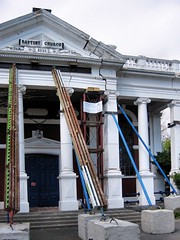
A information board on the fence around the Homestead at Mona Vale. It says 'This hertiage building is managed by the Christchurch City Council on behalf of the city's residents. Until recently it served as a restaurant and function centre. This building was damaged in the 2010/2011 Canterbury earthquakes and ongoing aftershocks. Propping walls and other support is designed to keep the building weather-proof until a decision about its future can be made'.
The heightened flood risk for Christchurch after the quakes
Audio, Radio New Zealand
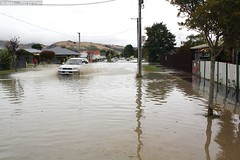
Gerry Brownlee is the Canterbury Earthquake Recovery Minister. Hugo Kristinsson is a South Brighton resident who stood for mayor last year on the issue of flood risk and land damage. David Stringer is the spokesperson for the community lobby group Insurance Watch - which has been seeking answers from the council since 2011 about the flood risk to the city. Nine to Noon speaks with all three about the recent flooding in Christchurch.
Validation of ground motion simulations via response history analysis of s…
Research papers, University of Canterbury Library
The aim of this poster is to examine the seismic response of two structural systems when subjected to observed and simulated ground motions (GMs) for the 22 February 2011 (22Feb2011) Christchurch earthquake (Razafindrakoto et al. (2018)) via an automated workflow. The layout and technical details of the automated workflow are described at Motha et. al. (2019).
New Brighton businesses urge council to help revive town
Audio, Radio New Zealand
Businesses in the Christchurch suburb of New Brighton say something needs to be done urgently to pull the area out of an economic slump. The seaside town has struggled since the Canterbury Earthquakes, with thousands of people - and customers - leaving the area due to land damage under their homes. And they're pointing the fingers at city leaders like the Christchurch City Council and its rebuild agency, Development Christchurch. Logan Church spoke to New Brighton business owner Nigel Gilmore.
Extra time for 4 March 2011
Audio, Radio New Zealand
In the programme this week - the former New Zealand cricket captain Stephen Fleming talks about plans for a charity cricket match to raise funds for victims of the Canterbury earthquake. We hear about the role of sports chaplaincy in New Zealand sports teams, Blyth Tait talks about his return to top level Equestrian competition after a seven year absence and one of the country's premier mountain biking events, the Karapoti Classic, near Wellington is underway again.
Miniature models of the Christchurch that was
Audio, Radio New Zealand
Christchurch artist Mike Beer creates miniature models of Christchurch buildings that were lost in the Canterbury earthquakes. Through these tiny models Mike hopes to remind people of the buildings that once shaped the city - and bring back the feelings and memories associated with them. Mike, who goes by the name Ghostcat, says It's all about the connections people have with a time, and place. His models are to be displayed at Fiksate Gallery in Christchuch from April 9.
First Up - The Podcast, Thursday 14 November
Audio, Radio New Zealand
On today's First Up pod: The fallout from the resignation of the Archbishop of Canterbury continues - Henry Riley joined First Up from London, an overnight earthquake and the world's worst pollution - Anas Mallick reports from Pakistan, Waikato is our neighbourhood this week - Natalie Akoorie is RNZ's eyes and ears in Hamilton, and Treaty of Waitangi expert Dr Aroha Harris tells Nathan Rarere that Treaty Principles have been around since our founding document was signed. First Up - Voice of the Nathan!
Coronavirus: Business owner caught by small print in lease
Audio, Radio New Zealand
A Taranaki business owner is warning leaseholders to read the fine print of their contracts after being asked to pay his rent in full despite a clause in his lease allowing for a rent cut if he couldn't legally access the property. Clause 27.5 was included in the Auckland District Law Society commercial lease in 2012 in response to the Canterbury earthquakes, when many leaseholders were barred from their businesses. RNZ reporter Robin Martin has more.
Business advisor on home detention for corruption
Audio, Radio New Zealand
A business owner wants more stringent background checks for people creating professional online profiles after discovering a potential business advisor is currently on home detention for corruption. Gerard Gallagher was convicted in June after trying to personally profit from information obtained while working for the Canterbury Earthquake Recovery Authority and Ōtākaro Limited between 2014 and 2017. Online, he promotes himself as a Business Advisor despite still serving a sentence of 12 months' home detention. Niva Chittock reports.
Icon of Lyttelton set to re-open after years of being quake damaged
Audio, Radio New Zealand
An icon of Whakaraupō Lyttelton Harbour is set to re-open tomorrow, after being damaged in the Canterbury Earthquakes. The Governors Bay jetty, locally known for its extraordinary length and unofficial jetty jump competitions, has been closed since 2015. Now, it's back to its former glory, just in time for summer. Niva Chittock went for a sneak peek ahead of the official opening. [embed] https://players.brightcove.net/6093072280001/default_default/index.html?videoId=6338047392112
Christchurch Press 18 August 2012: Section A, Page 5 (South Island Edition)
Articles, UC QuakeStudies
Page 5 of Section A of the South Island edition of the Christchurch Press, published on Saturday 18 August 2012.
Christchurch Press 11 December 2012: Section A, Page 4
Articles, UC QuakeStudies
Page 4 of Section A of the Christchurch Press, published on Tuesday 11 December 2012.
Engaging youth on their own terms? an actor-network theory account of hip-…
Research papers, University of Canterbury Library
With origins in the South Bronx area of New York in the early 1970s, hip-hop culture is now produced and consumed globally. While hip-hop activities can be varied, hip-hop is generally considered to have four forms or “elements”: DJing, MCing, b-boying/b-girling, and graffiti. Although all four elements of hip-hop have become a part of many youth work initiatives across the globe, public debate and controversy continue to surround hip-hop activities. Very little research and literature has explored the complexities involved in the assembling of hip-hop activities in youth work sites of practice using these hip-hop elements. This study attends to the gap in hip-hop and human service literature by tracing how hip-hop activities were assembled in several sites of youth work activity in Christchurch, New Zealand. Actor-network theory (ANT) is the methodological framework used to map the assemblage of hip-hop-youth work activities in this study. ANT follows how action is distributed across both human and non-human actors. By recognising the potential agency of “things”, this research traces the roles played by human actors, such as young people and youth workers, together with those of non-human actors such as funding documents, social media, clothing, and youth venue equipment. This ethnographic study provides rich descriptions or “snapshots” of some of the key socio-material practices that shaped the enactment of hip-hop-youth work activities. These are derived from fieldwork undertaken between October 2009 and December 2011, where participant observation took place across a range of sites of hip-hop-youth work activity. In addition to this fieldwork, formal interviews were undertaken with 22 participants, the majority being youth workers, young people, and youth trust administrators. The ANT framework reveals the complexity of the task of assembling hip-hop in youth work worlds. The thesis traces the work undertaken by both human and non-human actors in generating youth engagement in hip-hop-youth work activities. Young people’s hip-hop interests are shown to be varied, multiple, and continually evolving. It is also shown how generating youth interest in hip-hop-youth work activities involved overcoming young people’s indifference or lack of awareness of the hip-hop resources a youth trust had on offer. Furthermore, the study highlights where hip-hop activities were edited or “tinkered” with to avoid hip-hop “bads”. The thesis also unpacks how needed resources were enlisted, and how funders’ interests were translated into supporting hip-hop groups and activities. By tracing the range of actors mobilised to enact hip-hop-youth work activities, this research reveals how some youth trusts could avoid having to rely on obtaining government funds for their hip-hop activities. The thesis also includes an examination of one youth trust’s efforts to reconfigure its hip-hop activities after the earthquakes that struck Christchurch city in 2010 and 2011. Working both in and on the world, the text that is this thesis is also understood as an intervention. This study constitutes a deliberate attempt to strengthen understandings of hip-hop as a complex, multiple, and fluid entity. It therefore challenges traditional media and literature representations that simplify and thus either stigmatise or celebrate hip-hop. As such, this study opens up possibilities to consider the opportunities, as well as the complexities of assembling hip-hop in youth work sites of practice.
A high-resolution shear wave velocity model for near-surface soils in Chri…
Research papers, University of Canterbury Library
This paper summarizes the development of a high-resolution surficial shear wave velocity model based on the combination of the large high-spatial-density database of cone penetration test (CPT) logs in and around Christchurch, New Zealand and a recently-developed Christchurch-specific empirical correlation between soil shear wave velocity and CPT. This near-surface shear wave velocity model has applications for site characterization efforts via the development of maps of time-averaged shear wave velocities over specific depths, as well as use in site response analysis and ground motion simulation.
Hubbard, James, 1949- :"I wanted to retrieve all my spending tools, but, s…
Images, Alexander Turnbull Library
Finance Minister Bill English holds a large axe that represents the 'budget' and says 'I wanted to retrieve all my spending tools, but, sadly, with allotted time short, I could only grab this!..' He is standing outside the barrier that surrounds the Christchurch CBD. Context - The Christchurch central business district has been largely out of bounds to anyone but those dealing with the after-effects of the earthquake of February 22 but business owners have been allowed restricted access to retrieve gear and belongings. The 2011 budget looks as though it will be focused on paring everything down because of the sad state of New Zealand's economy at present (made worse by the need to rebuild Christchurch), hence the axe. Quantity: 1 digital cartoon(s).
Exploring the social capital of temporary Filipino migrant workers in Cant…
Research papers, University of Canterbury Library
Rising disaster losses, growth in global migration, migrant labour trends, and increasingly diverse populations have serious implications for disaster resilience around the world. These issues are of particular concern in New Zealand, which is highly exposed to disaster risk and has the highest proportion of migrant workers to national population in the OECD. Since there has been no research conducted into this issue in New Zealand to date, greater understanding of the social capital used by migrant workers in specific New Zealand contexts is needed to inform more targeted and inclusive disaster risk management approaches. A New Zealand case study is used to investigate the extent and types of social capital and levels of disaster risk awareness reported by members of three Filipino migrant workers organisations catering to dairy farm, construction and aged care workers in different urban and rural Canterbury districts. Findings from (3) semi-structured interviews and (3) focus groups include consistently high reliance on bonding capital and low levels of bridging capital across all three organisations and industry sectors, and in both urban and rural contexts. The transitory, precarious residential status conveyed by temporary work visas, and the difficulty of building bridging capital with host communities has contributed to this heavy reliance on bonding capital. Social media was essential to connect workers with family and friends in other countries, while Filipino migrant workers organisations provided members with valuable access to industry and district-specific networks of other Filipino migrant workers. Linking capital varied between the three organisations, with members of the organisation set up to advocate for dairy farm workers reporting the highest levels of linking capital. Factors influencing the capacity of workers organisations to develop linking capital appeared to include motivation (establishment objectives), length of time since establishment, support from government and industry groups, urban-rural context, income levels and gender. Although aware of publicity around earthquake and tsunami risk in the Canterbury region, participants were less aware of flood risk, and expressed fatalistic attitudes to disaster risk. Workers organisations offer a valuable potential interface between CDEM Group activities and migrant worker communities, since organisation leaders were interested in accessing government support to participate (with and on behalf of members) in disaster risk planning at district and regional level. With the potential to increase disaster resilience among these vulnerable, hard to reach communities, such participation could also help to build capacity across workers organisations (within Canterbury and across the country) to develop linking capital at national, as well as regional level. However, these links will also depend on greater government and industry commitment to providing more targeted and appropriate support for migrant workers, including consideration of the cultural qualifications of staff tasked with liaising with this community.
Shadowy futures : the effect of turbidity on yellow-eyed mullet (Aldrichet…
Research papers, University of Canterbury Library
Worldwide turbidity is a huge concern for the health of aquatic ecosystems. Human activities on the land such as construction, deforestation, agriculture, and mining all have impacts on the amount of particulate solids that enter the world’s waterways. These particulate solids can pose a number of risks to aquatic life, but primary among them is the turbidity that they create in the water column. The way suspended solids interact with light creates cloudiness in the water which interferes with the vision, and visually mediated behaviours of aquatic organisms, particularly fish. The Avon-Heathcote estuary of Christchurch, New Zealand, is one such body of water that is subject to tremendous variation in turbidity, no doubt exacerbated by the destruction of Christchurch in the 2010 and 2011 earthquakes, as well as the subsequent ongoing rebuild. The yellow eyed mullet, Aldrichetta Forsteri, is one species that is common with the estuary, and uses it as a habitat for breeding. Though very common throughout New Zealand, and even a part of the catch of commercial fisheries, the yellow eyed mullet is a largely unstudied organism, with virtually no published scientific enquiry based on the species. The present work assesses how several behaviours of the yellow eyed mullet are effected by acute turbidity at 10, 50, 90, 130 and 170 NTU, finding that: 1) The optomotor response of mullet to 2.5 mm stripes drops to insignificant levels between 10 and 50 NTU, 2) The swimming activity of the yellow eyed mullet is highest at 10 NTU and drops to a significantly lower level at higher turbidities, 3) The grouping behaviour of small groups of yellow eyed mullet are unchanged by increasing turbidity levels, 4) that yellow eyed mullet do not exhibit significantly different behavioural response to a simulated predator at any of the tested turbidities, and 5) that yellow eyed mullet to do significantly alter their oxygen consumption during exposure to the turbidities in an increasing series. The results presented in these studies indicate that turbidites above 50 NTU pose a significant risk to the lifestyle of the yellow eyed mullet, potentially impacting their ability to perceive their surroundings, feed, school, and avoid predation. Future work has a lot of ground to cover to more precisely determine the relationship between yellow eyed mullet behaviour and physiology, and the turbidity of their environment. In particular, future work should focus more closely on the turbidities between 10 and 50 NTU, as well as looking to field work to see what the predominant predators of the mullet are, and specifically whether turbidity increases or decreases the risk of mullet being subject to avian predation. There is also considerable scope for studies on the effects of chronic turbidity upon mullet, which will add understand to the predicament of escalating turbidity and its effects upon this common and yet mysterious native fish.