
Search
found 6322 results
Images for Canterbury earthquakes; more images...
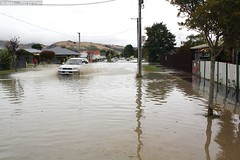
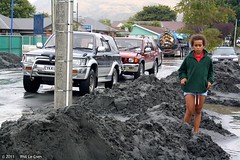

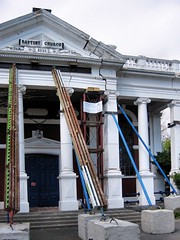
Christchurch: The Transitional City Pt IV, pages 280-281: Temporary Housing
Articles, UC QuakeStudies
A PDF copy of pages 280-281 of the book Christchurch: The Transitional City Pt IV. The pages document the transitional project 'Temporary Housing'. Photos: Tessa Peach
Christchurch Press 26 June 2012: Section A, Page 2
Articles, UC QuakeStudies
Page 2 of Section A of the Christchurch Press, published on Tuesday 26 June 2012.
The Star 10 August 2012
Articles, UC QuakeStudies
A PDF copy of The Star newspaper, published on Friday 10 August 2012.
The Big Recovery Picture - Address by Hon. Nicky Wagner
Videos, UC QuakeStudies
A video of an address by Hon. Nicky Wagner, Associate Minister for the Canterbury Earthquake Recovery, at the 2015 Seismics and the City forum. In this talk, Minister Wagner shares her take on the progress of the rebuild, positive signs of advancement and what's in the pipeline; and how the main obstacles can be resolved.
US Embassy Photograph 29
Images, UC QuakeStudies
Prime Minister John Key talking to Al Dwyer, the leader of the USAID Disaster Assistance Response Team Leader (DART), outside the US headquarters in Latimer Square. John Key is visiting to thank DART for their efforts in the aftermath of the 22 February 2011 earthquake. Canterbury Recovery Minister Gerry Brownlee is standing beside him.
Shaking ground and shifting collectives: Understanding community resilien…
Research Papers, Lincoln University
At 00:02 on 14 November, 2016 a destructive 7.8 Mw earthquake struck the North Canterbury region of New Zealand’s South Island. Prior to and following the earthquake, natural and social scientists conducted a significant amount of research on the resilience processes and recovery efforts in North Canterbury. This thesis examines community resilience in Kaikōura, a small town and district greatly impacted by the earthquake. Community resilience has been widely used in disaster risk reduction research, policy, and practice to describe how a group of individuals within a boundary respond to events, hazards, and shifts in their everyday life. Using exploratory inquiry, this thesis adopts qualitative research methods including document analysis, 24 semi-structured interviews, and participant observation to explore the idea that the recent scholarly emphasis on resilience has come at the expense of critical engagement with the complexities of communities. I draw on the idea of ‘collectives’ (comprising community-based organisations or less formal social networks with a shared purpose) as a lens to consider how, when unexpected life events happen, collectives can be regarded as a resource for change or constancy. The examination of collectives following a disaster can lend insight into the many elements of community as they bring people together in collaboration or drive them apart in conflict. This thesis therefore contributes to an enhanced practical and theoretical understanding of both community and resilience.
The China-NZ ROBUST Friction Building Shaking Table Testing Overview
Research papers, University of Canterbury Library
Shaking table testing of a full-scale three storey resilient and reparable complete composite steel framed building system is being conducted. The building incorporates a number of interchangeable seismic resisting systems of New Zealand and Chinese origin. The building has a steel frame and cold formed steel-concrete composite deck. Energy is dissipated by means of friction connections. These connections are arranged in a number of structural configurations. Typical building non-skeletal elements (NSEs) are also included. Testing is performed on the Jiading Campus shaking table at Tongji University, Shanghai, China. This RObust BUilding SysTem (ROBUST) project is a collaborative China-New Zealand project sponsored by the International Joint Research Laboratory of Earthquake Engineering (ILEE), Tongji University, and a number of agencies and universities within New Zealand including the BRANZ, Comflor, Earthquake Commission, HERA, QuakeCoRE, QuakeCentre, University of Auckland, and the University of Canterbury. This paper provides a general overview of the project describing a number of issues encountered in the planning of this programme including issues related to international collaboration, the test plan, and technical issues.
Post-earthquake decision-making on sewer recovery and the roles of damage …
Research papers, University of Canterbury Library
Decision making on the reinstatement of the Christchurch sewer system after the Canterbury (New Zealand) earthquake sequence in 2010–2011 relied strongly on damage data, in particular closed circuit television (CCTV). This paper documents that process and considers how data can influence decision making. Data are analyzed on 33,000 pipes and 13,000 repairs and renewals. The primary findings are that (1) there should be a threshold of damage per pipe set to make efficient use of CCTV; (2) for those who are estimating potential damage, care must be taken in direct use of repair data without an understanding of the actual damage modes; and (3) a strong correlation was found between the ratio of faults to repairs per pipe and the estimated peak ground velocity. Taken together, the results provide evidence of the extra benefit that damage data can provide over repair data for wastewater networks and may help guide others in the development of appropriate strategies for data collection and wastewater pipe decisions after disasters.
Performance comparison of standard and seismic glazing systems
Research papers, University of Canterbury Library
Glazing systems are non-structural elements in a building that, more often than not, appear to be given little consideration in seismic design. Recent experimental work into glazing systems at the University of Canterbury, however, has shown that glazing systems can be very susceptible to serviceability damage, defined as loss of water-tightness. The focus of this paper is to highlight the difference in vulnerability of standard and seismic glazing systems and consider the implications of this for future repair costs and losses. The paper first describes the damage states chosen for glazing units according to the repair strategies required and expected repair costs. This includes three damage states: DS1: Water Leakage, DS2: Gasket Failure and DS3: Frame/Glass Failure. Implementing modern performance-based earthquake engineering, the paper proceeds to highlight a case study comparing costs and expected losses of a standard glazing unit and a seismic glazing unit installed on a case study building. It is shown that the use of seismic glazing units is generally beneficial over time, due to the early onset of serviceability damage in standard glazing units. Finally, the paper provides suggestions for designers aimed at reducing costs related to earthquake induced repairs of glazing.
Observatory Tower Photograph 20
Images, UC QuakeStudies
A photograph of staff from the Department of Physics and Astronomy examining the rubble of the Observatory tower in the South Quad of the Christchurch Arts Centre. The tower collapsed during the 22 February 2011 earthquake. A digger was used to clear the rubble away from the building. Scaffolding around the tower has also collapsed and is amongst the rubble.
Observatory Tower Photograph 19
Images, UC QuakeStudies
A photograph of the rubble from the Observatory tower in the South Quad of the Christchurch Arts Centre. The tower collapsed during the 22 February 2011 earthquake. A digger was used to clear the rubble away from the building. Scaffolding constructed around the tower has also collapsed and is amongst the rubble. The roof of the tower and a ladder can also be seen.
Observatory Tower Photograph 22
Images, UC QuakeStudies
A photograph of the base of the Townsend Telescope, still attached to a piece of rubble. The rubble is from the Observatory tower at the Christchurch Arts Centre. The tower collapsed during the 22 February 2011 earthquake and the rubble spilled into the courtyard in front. A digger was used to clear the rubble away from the building.
Disaster Waste Management: a systems approach
Research papers, University of Canterbury Library
Depending on their nature and severity, disasters can create large volumes of debris and waste. Waste volumes from a single event can be the equivalent of many times the annual waste generation rate of the affected community. These volumes can overwhelm existing solid waste management facilities and personnel. Mismanagement of disaster waste can affect both the response and long term recovery of a disaster affected area. Previous research into disaster waste management has been either context specific or event specific, making it difficult to transfer lessons from one disaster event to another. The aim of this research is to develop a systems understanding of disaster waste management and in turn develop context- and disaster-transferrable decision-making guidance for emergency and waste managers. To research this complex and multi-disciplinary problem, a multi-hazard, multi-context, multi-case study approach was adopted. The research focussed on five major disaster events: 2011 Christchurch earthquake, 2009 Victorian Bushfires, 2009 Samoan tsunami, 2009 L’Aquila earthquake and 2005 Hurricane Katrina. The first stage of the analysis involved the development of a set of ‘disaster & disaster waste’ impact indicators. The indicators demonstrate a method by which disaster managers, planners and researchers can simplify the very large spectra of possible disaster impacts, into some key decision-drivers which will likely influence post-disaster management requirements. The second stage of the research was to develop a set of criteria to represent the desirable environmental, economic, social and recovery effects of a successful disaster waste management system. These criteria were used to assess the effectiveness of the disaster waste management approaches for the case studies. The third stage of the research was the cross-case analysis. Six main elements of disaster waste management systems were identified and analysed. These were: strategic management, funding mechanisms, operational management, environmental and human health risk management, and legislation and regulation. Within each of these system elements, key decision-making guidance (linked to the ‘disaster & disaster waste’ indicators) and management principles were developed. The ‘disaster & disaster waste’ impact indicators, the effects assessment criteria and management principles have all been developed so that they can be practically applied to disaster waste management planning and response in the future.
Maori experiences and expressions of leadership through the Christchurch O…
Research Papers, Lincoln University
The 2010 and 2011 earthquakes of Canterbury have had a serious and ongoing effect on Maori in the city (Lambert, Mark-Shadbolt, Ataria, & Black, 2012). Many people had to rely on themselves, their neighbours and their whanau for an extended period in 2011, and some are still required to organise and coordinate various activities such as schooling, health care, work and community activities such as church, sports and recreation in a city beset by ongoing disruption and distress. Throughout the phases of response and recovery, issues of leadership have been implicitly and explicitly woven through both formal and informal investigations and debates. This paper presents the results of a small sample of initial interviews of Maori undertaken in the response and early recovery period of the disaster and discusses some of the implications for Maori urban communities.
Body, Guy Keverne, 1967-:The Week - US Republican Party, Dubrovnick and Ki…
Images, Alexander Turnbull Library
Four cameos on events of the week. The struggle for the US Republican Party to find a suitable presidential candidate. A Croatian tourism official has been sacked over comments about "drunk and crazy" New Zealand and Australian tourists. 'Mother Nature' is an 'unfit mother' in Christchurch because of the earthquakes. Quantity: 1 digital cartoon(s).
UC Civil and Natural Resources Engineering Photograph 204
Images, UC QuakeStudies
A photograph of the earthquake damage to the old Registry Building on the corner of Worcester and Montreal Streets. The masonry of the Worcester Street gable has crumbled and is lying on the street in front. Wire fencing has been used to cordon off the building.
Photograph by Neil Macbeth 190
Images, UC QuakeStudies
A view down Colombo Street of a team of Fire Service and Search and Rescue personnel using a crane to check the Forsyth Barr building for people trapped by the 22 February 2011 earthquake. Behind them the broken tower of the Christ Church Cathedral can be seen.
Evans, Malcolm Paul, 1945- :[Shoulder-tapped Chinese Architect]. 8 April 2…
Images, Alexander Turnbull Library
Shows John Key phoning Canterbury Earthquake Recovery Minister Gerry Brownlee during his recent visit to China. Key tells Gerry he has found an architect friend in China who can design the new Christchurch Cathedral. Wider context refers to the debate over the 3 plans recently released for the Cathedral, but also refers to media debate concerning Key's involvement in instances of preferential appointments - in particular, his claim to have forgotten a phone call to his friend Ian Fletcher in which Key suggested Fletcher should apply to become director of the Government Communications Security Bureau. See Stuff, 3 April 2013. Colour and black and white versions available Quantity: 2 digital cartoon(s).
The case of the vulnerable persons interagency emergency response team: Le…
Research papers, University of Canterbury Library
Interagency Emergency Response Teams (IERTs) play acrucial role in times of disasters. Therefore it is crucial to understand more thoroughly the communication roles and responsibilities of interagency team members and to examine how individual members communicate within a complex, evolving, and unstable environment. It is also important to understand how different organisational identities and their spatial geographies contribute to the interactional dynamics. Earthquakes hit the Canterbury region on September, 2010 and then on February 2011 a more devastating shallow earthquake struck resulting in severe damage to the Aged Residential Care (ARC) sector. Over 600 ARC beds were lost and 500 elderly and disabled people were displaced. Canterbury District Health Board (CDHB) set up an interagency emergency response team to address the issues of vulnerable people with significant health and disability needs who were unable to access their normal supports due to the effects of the earthquake. The purpose of this qualitative interpretive study is to focus on the case study of the response and evacuation of vulnerable people by interagencies responding to the event. Staff within these agencies were interviewed with a focus on the critical incidents that either stabilised or negatively influenced the outcome of the response. The findings included the complexity of navigating multiple agencies communication channels; understanding the different hierarchies and communication methods within each agency; data communication challenges when infrastructures were severely damaged; the importance of having the right skills, personal attributes and understanding of the organisations in the response; and the significance of having a liaison in situ representing and communicating through to agencies geographically dispersed from Canterbury. It is hoped that this research will assist in determining a future framework for interagency communication best practice and policy.
Employee learning in a transient alliance: Exploring learning enablers, fa…
Research papers, University of Canterbury Library
The aim of this study is to explore the main contributors and obstacles to employee learning in the context of an alliance using the framework of a complex embedded multiple-case study. The two participant alliance partner organisations (APOs) are natural competitors that have joined to respond to urgent community needs of the city of Christchurch following the major earthquakes in September 2010 and February 2011. At the moment of the in-depth interviews, it had been about four years since those events occurred. There are continuous, unexpected circumstances that still require attention. However, the alliance has an expiry date, thus reinforcing the uncertain work environment. The main enablers found were participative, collaborative learning encouraged by leaders who embraced the alliance’s “learning organisational culture”. Employees generated innovations mostly in social interaction with others, while taking on responsibility for their learning by learning from mistakes. The main obstacle found is competition, as inhibitor of collaboratively sharing their knowledge out of fear of losing their competitiveness.
Hubbard, James, 1949- :[Rugby World Cup for Christchurch?] 15 March 2011
Images, Alexander Turnbull Library
Prime Minister John Key sits on a huge crushing ball that represents the 'IRB' (International Rugby Board) and says 'Don't listen to rumour. It's not a fait accompli yet!' The ball swings towards crumbling land which represents 'Christchurch World Cup Rights'. Context - The Government has repeatedly said its preference is to keep cup games in Christchurch and Mr Key said yesterday that it would send a "powerful message" about Christchurch, although the Government had to be realistic. "The IRB are the ultimate arbiter ... they hold their own insurance policies and they'll have their own discussions with their insurers. There's only so far New Zealand can take this." (Stuff 12 March 2011) Quantity: 1 digital cartoon(s).
The Breathe Urban Village competition: Why did it fail to deliver?
Research Papers, Lincoln University
Successful urban regeneration projects generate benefits that are realised over a much longer timeframe than normal market developments and benefits well beyond those that can be uplifted by a market developer. Consequently there is substantial evidence in the literature that successful place-making and urban regeneration projects are usually public-private partnerships and involve a funder, usually local or central government, willing to contribute ‘patient’ capital. Following the 2010 and 2011 earthquakes that devastated the centre of Christchurch, there was an urgent need to rebuild and revitalise the heart of the city, and increasing the number of people living in or near the city centre was seen as a key ingredient of that. In October 2010, an international competition was launched to design and build an Urban Village, a project intended to stimulate renewed residential development in the city. The competition attracted 58 entrants from around world, and in October 2013 the winning team was chosen from four finalists. However the team failed to secure sufficient finance, and in November 2015 the Government announced that the development would not proceed. The Government was unwilling or unable to recognise that an insistence on a pure market approach would not deliver the innovative sustainable village asked for in the competition brief, and failed to factor in the opportunity cost to government, local government, local businesses and the wider Christchurch community of delaying by many years the residential development of the eastern side of the city. As a result, the early vision of the vitality that a thriving residential neighbourhood would bring to the city has not yet been realised.
Expanding the conversational terrain: Using a choice experiment to assess …
Research Papers, Lincoln University
The Canterbury region of New Zealand was shaken by major earthquakes on the 4th September 2010 and 22nd February 2011. The quakes caused 185 fatalities and extensive land, infrastructure and building damage, particularly in the Eastern suburbs of Christchurch city. Almost 450 ha of residential and public land was designated as a ‘Red Zone’ unsuitable for residential redevelopment because land damage was so significant, engineering solutions were uncertain, and repairs would be protracted. Subsequent demolition of all housing and infrastructure in the area has left a blank canvas of land stretching along the Avon River corridor from the CBD to the sea. Initially the Government’s official – but enormously controversial – position was that this land would be cleared and lie fallow until engineering solutions could be found that enabled residential redevelopment. This paper presents an application of a choice experiment (CE) that identified and assessed Christchurch residents’ preferences for different land use options of this Red Zone. Results demonstrated strong public support for the development of a recreational reserve comprising a unique natural environment with native fauna and flora, healthy wetlands and rivers, and recreational opportunities that align with this vision. By highlighting the value of a range of alternatives, the CE provided a platform for public participation and expanded the conversational terrain upon which redevelopment policy took place. We conclude the method has value for land use decision-making beyond the disaster recovery context.
Rebuild of Christchurch: supporting resilient staff while responding with …
Research Papers, Lincoln University
4th September 2010 a 7.1 magnitude earthquake strikes near Christchurch, New Zealand’s second largest city of approximately 370,000 people. This is followed by a 6.3 magnitude quake on 22nd February 2011 and a 6.4 on 13th June. In February 181 people died and a state of national emergency was declared from 23 February to 30th April. Urban Search and Rescue teams with 150 personnel from New Zealand and 429 from overseas worked tirelessly in addition to Army, Police and Fire services. Within the central business district 1,000 buildings (of 4,000) are expected to be demolished. An estimated 10,000 houses require demolition and over 100,000 were damaged. Meanwhile the over 7,000 aftershocks have become part of the “new normal” for us all. During this time how have libraries supported their staff? What changes have been made to services? What are the resourcing opportunities? This presentation will provide a personal view from Lincoln University, Te Whare Wanaka o Aoraki, Library Teaching and Learning. Lincoln is New Zealand's third oldest university having been founded in 1878. Publicly owned and operated it is New Zealand's specialist land-based university. Lincoln is based on the Canterbury Plains, 22 kilometres south of Christchurch. On campus there was mostly minor damage to buildings while in the Library 200,000 volumes were thrown from the shelves. I will focus on the experiences of the Disaster Team and on our experiences with hosting temporarily displaced staff and students from the Christchurch Polytechnic Institute of Technology, Library, Learning & Information Services. Experiences from two other institutions will be highlighted: Christchurch City Libraries, Ngā Kete Wānanga-o-Ōtautahi. Focusing on the Māori Services Team and the Ngā Pounamu Māori and Ngāi Tahu collections. The Central library located within the red zone cordon has been closed since February, the Central library held the Ngā Pounamu Māori and Ngai Tahu collections, the largest Māori collections in the Christchurch public library network. The lack of access to these collections changed the way the Māori Services Team, part of the larger Programmes, Events and Learning Team at Christchurch City Libraries were able to provide services to their community resulting in new innovative outreach programmes and a focus on promotion of online resources. On 19th December the “temporary” new and smaller Central library Peterborough opened. The retrieved Ngā Pounamu Māori and Ngai Tahu collections "Ngā rakau teitei e iwa”, have since been re-housed and are once again available for use by the public. Te Rūnanga o Ngāi Tahu. This organisation, established by the Te Rūnanga o Ngāi Tahu Act 1996, services the statutory rights for the people of Ngāi Tahu descent and ensures that the benefits of their Treaty Claim Settlement are enjoyed by Ngāi Tahu now and in the future. Ngāi Tahu are the indigenous Māori people of the southern islands of New Zealand - Te Waipounamu. The iwi (people) hold the rangatiratanga or tribal authority to over 80 per cent of the South Island. With their headquarters based in the central business they have also had to be relocated to temporary facilities. This included their library/archive collection of print resources, art works and taonga (cultural treasures).
Resilience – A case study: Somerfield School, Christchurch
Research Papers, Lincoln University
The topic of ‘resilience’ thinking seems of late to have superseded that of ‘sustainability’ thinking. Sustainability means simply that which sustains and lasts but has taken on many different subtle nuances over the last 20 years since it came into common parlance with the Bruntland Report of 1987, which sought to clarify the definition. However, resilience ‘speak’ has become hot property now, especially highlighted since Christchurch experienced a natural disaster in the form of several large earthquakes from Sep 2010 until most recently in December 2011. Many people comment on how resilient people have been, how resilient the city has been, so it seems timely to investigate what resilience actually means and importantly, resilient to what and of what? (Lorenz, 2010). This essay will look at the concept of systems and resilience, definitions and theories will be explored generally and then these concepts will be more closely defined within the context of a particular system, that of Somerfield School located in the western suburbs of Christchurch.
The undrained cyclic strength of undisturbed and reconstituted Christchurc…
Research papers, University of Canterbury Library
This paper presents insights from recent advanced laboratory testing of undisturbed and reconstituted specimens of Christchurch silty-sands. The purpose of the testing was to establish the cyclic strength of silty-sands from sites in the Central Business District (CBD), where liquefaction was observed in 4 September 2010, 22 February 2011, and 13 June 2011. Similar overall strengths were obtained from undisturbed and reconstituted tests prepared at similar densities, albeit with higher variability for the reconstituted specimens. Reconstituted specimens exhibited distinctly different response in terms of lower compressibility during initial loading cycles, and exhibited a more brittle response when large strains were mobilised, particularly for samples with high fines content. Given the lower variability in natural sample response and the possibility of age-related strength to be significant for sites not subjected to earthquakes, high quality undisturbed samples are recommended over the use of reconstituted specimens to establish the cyclic strength of natural sands.
Innovative seismic solutions for multi-storey LVL timber buildings
Research papers, University of Canterbury Library
Describes an extensive experimental program at the University of Canterbury, for the development of new structural systems and connections for multi-storey laminated veneer lumber (LVL) timber buildings in earthquake-prone areas. The proposed innovative ductile timber connections are conceptually similar to recent seismic solutions successfully developed for precast concrete multi- storey buildings. The paper gives an overview of the research program, and the results of quasi-static cyclic tests on frame subassemblies, including exterior beam-column joints and cantilever columns, as well as pseudo-dynamic tests on cantilever columns. The experimental results showed significant dissipation of hysteretic energy, good self-centering capacity and no appreciable damage of the structural elements, confirming the expected enhanced performance of the proposed structural systems.
Elizabeth Ackermann Photograph 333
Images, UC QuakeStudies
A photograph of three drawings stuck to a bus timetable in the Christchurch central city. The drawings depict Roger Sutton, the CEO of CERA, with a band-aid over his mouth; Warwick Isaacs, the Deputy Chief Executive of CERA, with hearing protection over his ears; and Gerry Brownlee, Minister for Canterbury Earthquake Recovery, with a blindfold over his eyes.
Photograph by Neil Macbeth 528
Images, UC QuakeStudies
University of Canterbury Vice-Chancellor Rod Carr addressing students inside the UCSA's "Big Top" tent. The tent was erected in the UCSA car park to provide support for students in the aftermath of the 22 February 2011 earthquake. The students have spent the day clearing liquefaction from Christchurch properties as part of the Student Volunteer Army.
Three Wise Men Photograph 2
Images, UC QuakeStudies
A photograph of a paste-up depicting Roger Sutton, the CEO of CERA, with a band-aid over his mouth; Warwick Isaacs, the Deputy Chief Executive of CERA, with hearing protection over his ears; and Jerry Brownlee, Minister for Canterbury Earthquake Recovery, with a blindfold over his eyes. The paste-up has been stuck on a bus stop timetable.