
Search
found 6322 results
Images for Canterbury earthquakes; more images...

20131231_8485_EOS M-22 Quake City exhibit
Images, eqnz.chch.2010
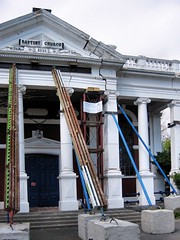
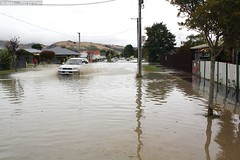
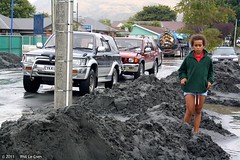
Another city walk around, this time with my brother-in-law from Auckland. Also went to the Quake City exhibition in the city organised by the Canterbury Museum. First fine day for a while.
Brother of quake victim says 10th anniversary is an emotional, but importa…
Audio, Radio New Zealand
At 12.51pm it will be 10 years since a devastating 6.2 earthquake struck Ōtautahi Christchurch, bringing down buildings and killing 185 people. A National service will get underway at half-past-12 at the city's Canterbury Earthquake Memorial site, to mark the anniversary. Maurice Gardiner's sister, Donna Manning, died in the CTV building collapse. Mr Gardiner told Māni Dunlop that at the Avonhead Cemetery this morning, he and his family joined others who have whānau buried there for a private service, where they remembered those they lost 10 years ago.
Move to Library Level 5 - Photograph 14
Images, UC QuakeStudies
Members of the University of Canterbury's E-Learning team Susan Tull and Nick Ford in their temporary office in the James Hight building. The photographer comments, "Yet another change of workplace for our E-Learning group, as the University juggles people and buildings to carry out earthquake repairs. Susan and Nick settle in".
Trends in resourcing and employment practice of Canterbury construction or…
Research papers, The University of Auckland Library
Five years on since the first major earthquake struck the Canterbury region, the reconstruction is well advanced. Christchurch is a city in transition. This report considers trends in resourcing and employment practice of Canterbury construction organisations in response to the projected market changes (2015-2016). The report draws on the interviews with 18 personnel from 16 construction organisations and recovery agencies in October 2015. It provides a summary of perceived changes in the construction market in Canterbury, evidence of what steps construction businesses have been taking, how they have prepared for likely changes in the reconstruction sector, as well as the perceived alignment of public policies with the industry response.
UC Civil and Natural Resources Engineering Photograph 019
Images, UC QuakeStudies
A photograph of a section of road lying on the Greendale Fault line which has cracked due to the 4 September 2010 earthquake. In the distance, police tape and cones have been used to close off the road.
UC Civil and Natural Resources Engineering Photograph 022
Images, UC QuakeStudies
A photograph of people examining a section of road lying on the Greendale Fault line which has large cracks caused by the 4 September 2010 earthquake. Police tape and cones have been used to close off the road.
UC Civil and Natural Resources Engineering Photograph 059
Images, UC QuakeStudies
A photograph of the earthquake damage to a church in Christchurch. The gable and top of the side wall have crumbled, and the bricks have fallen onto the pavement below. Police tape has been draped around the building.
UC Civil and Natural Resources Engineering Photograph 029
Images, UC QuakeStudies
A photograph of people examining a section of road lying on the Greendale Fault line which has large cracks caused by the 4 September 2010 earthquake. Police tape and cones have been used to close off the road.
UC Civil and Natural Resources Engineering Photograph 024
Images, UC QuakeStudies
A photograph of people examining a section of road lying on the Greendale Fault line which has large cracks caused by the 4 September 2010 earthquake. Police tape and cones have been used to close off the road.
UC Civil and Natural Resources Engineering Photograph 023
Images, UC QuakeStudies
A photograph of people examining a section of road lying on the Greendale Fault line which has large cracks caused by the 4 September 2010 earthquake. Police tape and cones have been used to close off the road.
BeckerFraserPhotos March 2013 photograph 122
Images, UC QuakeStudies
An aerial photograph looking west over the Arts Centre and Christ's College towards Hagley Park. The photograph has been captioned by BeckerFraserPhotos, "At the centre of this photo is a group of heritage stone buildings. Canterbury Museum and Christ's College were extensively earthquake strengthened prior to the EQs and re-opened to the public relatively quickly. The Arts Centre is undergoing extensive renovations. Hagley Park and the Botanic Gardens provide a richly colourful surrounding to these historic buildings".
Performance of Masonry Buildings and Churches in the 22 February 2011 Chri…
Research papers, The University of Auckland Library
As part of the 'Project Masonry' Recovery Project funded by the New Zealand Natural Hazards Research Platform, commencing in March 2011, an international team of researchers was deployed to document and interpret the observed earthquake damage to masonry buildings and to churches as a result of the 22nd February 2011 Christchurch earthquake. The study focused on investigating commonly encountered failure patterns and collapse mechanisms. A brief summary of activities undertaken is presented, detailing the observations that were made on the performance of and the deficiencies that contributed to the damage to approximately 650 inspected unreinforced clay brick masonry (URM) buildings, to 90 unreinforced stone masonry buildings, to 342 reinforced concrete masonry (RCM) buildings, to 112 churches in the Canterbury region, and to just under 1100 residential dwellings having external masonry veneer cladding. In addition, details are provided of retrofit techniques that were implemented within relevant Christchurch URM buildings prior to the 22nd February earthquake and brief suggestions are provided regarding appropriate seismic retrofit and remediation techniques for stone masonry buildings. http://www.nzsee.org.nz/publications/nzsee-quarterly-bulletin/
Kia Manawaroa: Surviving disaster: Experiences of Tangata Whaiora through …
Research Papers, Lincoln University
This report presents research on the affects of the Ōtautahi/Christchurch earthquakes of 2010 to 2012 on the city’s Tangata Whaiora community, ‘people seeking health’ as Māori frame mental health clients. Drawing on the voices of 39 participants of a Kaupapa Māori provider (Te Awa o te Ora), this report presents extended quotes from Tangata Whaiora, their support staff (many of whom are Tangata Whaiora), and managers as they speak of the events, their experiences, and support that sustained them in recoveries of well-being through the worse disaster in Aotearoa/New Zealand in three generations. Ōtautahi contains a significant urban Māori population, many living in suburbs that were seriously impacted by the earthquakes that began before dawn on September 4th, 2010, and continued throughout 2011 and 2012. The most damaging event occurred on February 22nd, 2011, and killed 185 people and severely damaged the CBD as well as many thousands of homes. The thousands of aftershocks delayed the rebuilding of homes and infrastructure and exacerbated the stress and dislocation felt by residents. The tensions and disorder continue for numerous residents into 2014 and it will be many years before full social and physical recovery can be expected. This report presents extended excerpts from the interviews of Tangata Whaiora and their support staff. Their stories of survival through the disaster reinforce themes of community and whānau while emphasising the reality that a significant number of Tangata Whaiora do not or cannot draw on this supports. The ongoing need for focused responses in the area of housing and accommodation, sufficiently resourced psycho-social support, and the value of Kaupapa Māori provision for Māori and non-Māori mental health clients cannot be overstated. The report also collates advice from participants to other Tangata Whaiora, their whānau, providers and indeed all residents of places subject to irregular but potentially devastating disaster. Much of this advice is relevant for more daily challenges and should not be underestimated despite its simplicity.
The financial implication of the three design guidelines used during the C…
Research papers, University of Canterbury Library
With the occurrence of natural disasters on the increase, major cities around the world face the potential of complete loss of infrastructure due to design guidelines that do not consider resilience in the design. With the February 22nd, 2011 earthquake in Christchurch, being the largest insured event, lessons learnt from the rebuild will be vital for the preparation of future disasters. Therefore the objective of this research is to understand the financial implications of the changes to the waste water design guidelines used throughout the five year rebuild programme of works. The research includes a study of the SCIRT alliance model selected for the delivery that is flexible enough to handle changes in the design with minimal impact on the direct cost of the rebuild works. The study further includes the analysis and compares the impact of the three different guidelines on maintenance and replacement cost over the waste water pipe asset life. The research concludes that with the varying ground conditions in Christchurch and also the wide variety of materials in use in the waste water network up to the start of the CES, the rebuild was not a ‘one size fits all’ approach.
Liquefaction hazard in Hurunui District
Articles, UC QuakeStudies
This study determined areas of different liquefaction susceptibility in Hurunui District based mainly on geological data, with some limited borehole strata interpretation. Geotechnical data was not analysed. This was the same method used in the earthquake hazard assessments for engineering lifelines in other districts in Canterbury. Hurunui District was the first district that a hazard assessment for engineering lifelines was undertaken for (in 2000) and it did not include a liquefaction susceptibility map like the other district earthquake hazard assessments did. There are no recommendations associated with this report. See Object Overview for background and usage information.
The Week in Review - week ending 14 October 2011
Audio, Radio New Zealand
A review of the week's headline news including the unfolding environmental disaster in the Bay of Plenty, the Earthquake Commission expected to face tough questioning on its handling of the Canterbury earthquakes, the finance minister says more belt tightening on the way, Labour refusing to accept the Prime Minister's explanation of his Standard and Poors comments, the Greens sceptical of claims that insurgents caught by the SAS in Afghanistan have not been tortured, the only All Black team to win the Rugby World Cup gathers for the first time in 24 years and business confidence plunges.
Seeing sanitation:a social scientific account of Christchurch’s post-quake…
Research papers, University of Canterbury Library
This thesis is about many things, not least of all the September 4th 2010 and February 22nd 2011 earthquakes that shook Christchurch, New Zealand. A city was shaken, events which worked to lay open the normally invisible yet vital objects, processes and technologies which are the focus of inquiry: the sewers, pipes, pumps, the digital technologies, the land and politics which constitute the Christchurch wastewater networks. The thesis is an eclectic mix drawing together methods and concepts from Bruno Latour, John Law, Giles Deleuze and Felix Guattari, Nigel Thrift, Donna Haraway and Patrick Joyce. It is an exploration of how the technologies and objects of sanitation perform the city, and how such things which are normally hidden and obscured, are made visible. The question of visibility is also turned toward the research itself: how does one observe, and describe? How are sociological visibilities constructed? Through the research, the encountering of objects in the field, the processes of method, the pedagogy of concepts, and the construction of risk, the thesis comes to be understood as a particular kind of social scientific artefact which assembles four different accounts: the first regards the construction of visibility; the second explores Christchurch city from the control room where the urban sanitary infrastructures are monitored; the third chapter looks at the formatted and embodied practices which emerge with the correlation of the city and sanitation; the fourth looks at the changing politics of a city grappling with severely damaged essential services, land and structures. The final chapter considers how the differences between romantic and baroque sensibilities mean that these four accounts elicit knowing not through smoothness or uniformity, but in partiality and non-coherence. This thesis is about pipes, pump stations, and treatment plants; about the effluent of a city; about the messiness of social science when confronted by the equally messy world of wastewater.
Christchurch Press Image: Carys Monteath 2010:09:13 14:21:38
Images, UC QuakeStudies
Photograph captioned by Fairfax, "New Zealand's Governor-General Anand Satyanand and his wife Susan Satyanand visited sites around earthquake stricken Canterbury today. Selwyn District Council put a BBQ lunch for their staff and the Governor-General during his visit to their Rolleston offices. Satyanand talks to building consent officer Jeffrey Gordon".
Pericolosita' da liquefazione valutata mediante analisi statistica di geod…
Research papers, University of Canterbury Library
La pericolosità associata ad un dato fenomeno costituisce uno dei fattori più importanti e difficili da quantificare nelle analisi di rischio, a maggior ragione quando si tratta di fenomeni complessi come nel caso della liquefazione sismica. Il presente lavoro illustra sinteticamente uno studio della pericolosità indotta al suolo da liquefazione basato su un caso campione statistico particolarmente significativo, il terremoto (Mw 6.2) che ha colpito Christchurch, Nuova Zelanda, del 2011. La notevole mole di dati disponibili, relativi alle caratteristiche geotecniche del sottosuolo, unitamente al rilievo dei danni ha consentito innanzitutto di caratterizzare la suscettibilità a liquefazione dell’area, indipendentemente dall’evento sismico, quindi di correlare statisticamente le diverse grandezze e di derivare delle curve di vulnerabilità del suolo.
The development of parents' capacity to self-regulate while participating …
Research papers, University of Canterbury Library
Previous research has found that the capacity to self-regulate is associated with a number of positive life outcomes and deficits in self-regulation have been linked with poorer life outcomes. Therefore, parent and child self-regulation is an important focus of the Positive Parenting Program for Teenagers (Teen Triple P). The aim of this study was to investigate if Group Teen Triple P was effective in promoting parental self-regulation and adolescent behaviour change in families affected by the earthquakes in Canterbury NZ between 2010 and 2012. METHOD: Five families with teenagers aged 12-16 years were recruited from among families participating in a Group Teen Triple P program specifically implemented by the education authorities for parents self-reporting long-term negative effects of the earthquakes on their family. A single-case multiple-baseline across participants design was used to examine change in target teenager behaviour. Measures of self-regulation skill acquisition were taken using a coding scheme devised for the study from transcripts of three telephone consultations and from three family discussions at pre-intervention, mid-intervention, and post-intervention. Parents and their child also completed questionnaires addressing adolescent functioning, the parent-adolescent relationship and parenting at pre- and post-intervention. RESULTS: The multiple-baseline data showed that parents were successful at changing targeted behaviour for their child. Analysis of the telephone consultations and family discussions showed that parents increased their self-regulation skills over the therapy period and there was positive change in adolescent behavior reported on the Strengths and Difficulties Questionnaire. Additionally, the results suggested that higher rates and levels of self-regulation in the parents were associated with greater improvements in adolescent behaviour. CONCLUSION: This study demonstrated that the Group Teen Triple P -Program was effective in promoting self-regulation in parents and behaviour change in adolescents, specifically in a post-disaster context.
Seismic Design of Post-Tensioned Timber Frame and Wall Buildings
Research papers, University of Canterbury Library
Currently there is a worldwide renaissance in timber building design. At the University of Canterbury, new structural systems for commercial multistorey timber buildings have been under development since 2005. These systems incorporate large timber sections connected by high strength post-tensioning tendons, and timber-concrete composite floor systems, and aim to compete with existing structural systems in terms of cost, constructability, operational and seismic performance. The development of post-tensioned timber systems has created a need for improved lateral force design approaches for timber buildings. Current code provisions for seismic design are based on the strength of the structure, and do not adequately account for its deformation. Because timber buildings are often governed by deflection, rather than strength, this can lead to the exceedence of design displacement limitations imposed by New Zealand codes. Therefore, accurate modeling approaches which define both the strength and deformation of post-tensioned timber buildings are required. Furthermore, experimental testing is required to verify the accuracy of these models. This thesis focuses on the development and experimental verification of modeling approaches for the lateral force design of post-tensioned timber frame and wall buildings. The experimentation consisted of uni-direcitonal and bi-directional quasi-static earthquake simulation on a two-thirds scale, two-storey post-tensioned timber frame and wall building with timber-concrete composite floors. The building was subjected to lateral drifts of up to 3% and demonstrated excellent seismic performance, exhibiting little damage. The building was instrumented and analyzed, providing data for the calibration of analytical and numerical models. Analytical and numerical models were developed for frame, wall and floor systems that account for significant deformation components. The models predicted the strength of the structural systems for a given design performance level. The static responses predicted by the models were compared with both experimental data and finite element models to evaluate their accuracy. The frame, wall and floor models were then incorporated into an existing lateral force design procedure known as displacement-based design and used to design several frame and wall structural systems. Predictions of key engineering demand parameters, such as displacement, drift, interstorey shear, interstorey moment and floor accelerations, were compared with the results of dynamic time-history analysis. It was concluded that the numerical and analytical models, presented in this thesis, are a sound basis for determining the lateral response of post-tensioned timber buildings. However, future research is required to further verify and improve these prediction models.
UC Civil and Natural Resources Engineering Photograph 050
Images, UC QuakeStudies
A photograph of an earthquake-damaged building on the corner of Montreal Street and Moorhouse Avenue. The top of the brick facade has crumbled onto the footpath below. Wire fencing has been placed around the building as a cordon.
Simon Bridges accuses govt of spending blowout
Audio, Radio New Zealand
Opposition leader Simon Bridges is accusing the government of a spending blowout. He says the government plans to increase borrowing by $17 billion over the next four years. Mr Bridges tells Gyles Beckford the total is about what National had to borrow to steer the country through the Global Financial Crisis and the Canterbury earthquakes.
Top Stories for Tuesday 5 July 2011
Audio, Radio New Zealand
More pressure on interested bidders in the Pike River mine to recover the bodies, from both the government and unions. The government's new plan to strengthen infrastructure after the Canterbury earthquakes, it's already criticised for not going far enough and the AA again attacks petrol companies for not cutting prices, despite falling oil prices.
Cyclic Undrained DSS Testing of Christchurch Sandy Silty Soils
Research papers, University of Canterbury Library
Earthquake-triggered soil liquefaction caused extensive damage and heavy economic losses in Christchurch during the 2010-2011 Canterbury earthquakes. The most severe manifestations of liquefaction were associated with the presence of natural deposits of clean sands and silty sands of fluvial origin. However, liquefaction resistance of fines-containing sands is commonly inferred from empirical relationships based on clean sands (i.e. sands with less than 5% fines). Hence, existing evaluation methods have poor accuracy when applied to silty sands. The liquefaction behaviour of Christchurch fines-containing (silty) sands is investigated through a series of Direct Simple Shear (DSS) tests. This type of test better resembles earthquake loading conditions in soil deposits compared to cyclic triaxial tests. Soil specimens are reconstituted in the laboratory with the water sedimentation technique. This preparation method yields soil fabrics similar to those encountered in fluvial soil deposits, which are common in the Christchurch area. Test results provide preliminary indications on how void ratio, relative density, preparation method and fines content influence the cyclic liquefaction behaviour of sand-silt mixtures depending on the properties of host sand and silt.
ROBUST friction building shaking table testing overview
Research papers, University of Canterbury Library
Shaking table testing of a full-scale three storey resilient and reparable complete composite steel framed building system is being conducted. The building incorporates a number of interchangeable seismic resisting systems of New Zealand and Chinese origin. The building has a steel frame and cold formed steel-concrete composite deck. Energy is dissipated by means of friction connections. These connections are arranged in a number of structural configurations. Typical building nonskeletal elements (NSEs) are also included. Testing is performed on the Jiading Campus shaking table at Tongji University, Shanghai, China. This RObust BUilding SysTem (ROBUST) project is a collaborative China-New Zealand project sponsored by the International Joint Research Laboratory of Earthquake Engineering (ILEE), Tongji University, and a number of agencies and universities within New Zealand including BRANZ, Comflor, Earthquake Commission, HERA, QuakeCoRE, QuakeCentre, University of Auckland, and the University of Canterbury. This paper provides a general overview of the project describing a number of issues encountered in the planning of this programme including issues related to international collaboration, the test plan, and technical issues.
Liquefaction resistance of Christchurch sandy soil deposits obtained from …
Research papers, University of Canterbury Library
Results from cyclic undrained direct simple shear tests on reconstituted specimens of two sands from Christchurch are compared against the liquefaction resistance inferred from CPT-based empirical liquefaction triggering methods. Limitations in existing empirical triggering relationships to capture important effects related to processes which originated test soils are highlighted and discussed.
New Zealand Defence Force photograph 517
Images, UC QuakeStudies
The Taiwanese Search and Rescue team (USAR) being farewelled at the Christchurch International Airport after helping out with the emergency response to the Canterbury Earthquake. In the centre is Rob Saunders from the New Zealand Fire Department, and on the right is Kao Wei, Team Leader of the Taiwan USAR team.
US Embassy Photograph 45
Images, UC QuakeStudies
Prime Minister John Key talking to members of the USAID Disaster Assistance Response Team (DART) outside the US headquarters in Latimer Square. John Key is visiting to thank DART for their efforts in the aftermath of the 22 February 2011 earthquake. Canterbury Recovery Minister Gerry Brownlee is standing behind him.
The Space Between Words - Exhibition Panel 13: Sophie Walton
Articles, UC QuakeStudies
A pdf copy of panel 13 of Guy Frederick's 'The Space Between Words' exhibition. The panel includes text from an interview with Sophie Walton about her experiences of the 2010 and 2011 Canterbury earthquakes. Above this is an image of Walton on the walkway from Taylor's Mistake to Boulder Bay.