
Search
found 6322 results
Images for Canterbury earthquakes; more images...
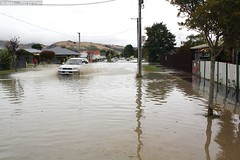
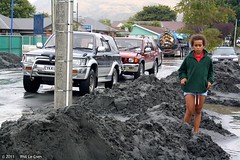

Cleaning Up
Images, eqnz.chch.2010
Canterbury Earthquake 04/09/10 Christchurch New Zealand
Directing Traffic
Images, eqnz.chch.2010
Canterbury Earthquake 04/09/10 Christchurch New Zealand
Air Force Helicopter
Images, eqnz.chch.2010
Canterbury Earthquake 04/09/10 Christchurch New Zealand
Broken Window
Images, eqnz.chch.2010
Canterbury Earthquake 04/09/10 Christchurch New Zealand
Smith Cranes
Images, eqnz.chch.2010
Canterbury Earthquake 04/09/10 Christchurch New Zealand
Restricted Use
Images, eqnz.chch.2010
Canterbury Earthquake 04/09/10 Christchurch New Zealand
Cramner Courts II
Images, eqnz.chch.2010
Canterbury Earthquake 04/09/10 Christchurch New Zealand
Digital Photograph: Earthquake Damage to Lyttelton Times Building, Gladsto…
Images, Canterbury Museum
One landscape colour digital photograph taken on 3 March 2011 showing earthquake damage to the Lyttelton Times Building on Gladstone Quay. Also visible on the left of the photograph is the side of the adjoining British Hotel. Three years after the 2010-2011 earthquakes there are still many uncertainties about which buildings can or will be ret...
Still standing on her head http://poetrychook.blogspot.com/
Other, National Library of New Zealand
Blog of Christchurch poet Catherine Fitchett. Includes her thoughts about poetry and life, and photographs, including the Christchurch earthquake.
12:51 : a year on.
Other, National Library of New Zealand
Commemorates 1 year after the Christchurch Earthquake. In the Press newspaper section of the Fairfax New Zealand Stuff.co.nz news site.
Jenny May's Story
Articles, UC QuakeStudies
Summary of oral history interview with Jenny May about her experiences of the Canterbury earthquakes.
Canterbury Earthquake - Effect on the sharemarket
Audio, Radio New Zealand
The earthquake has also affected financial markets. The New Zealand dollar has tumbled, and the stockmarket has extended its losses.
Fire after earthquake.
Research papers, University of Canterbury Library
Fire following earthquakes have caused the largest single loss due to earthquakes and in most cases have caused more damage than the quake itself. This problem is regarded very seriously in Japan and in some parts of the United States of America (San Francisco), but is not very seriously considered in other earthquake prone countries, yet the potential for future conflagrations following earthquakes is enormous. Any discussion of post earthquake fire must take into account structural and non-structural damages, initial and spreading fire, wind, water availability, and emergency responses. In this paper we will look at initial fire ignitions, growth and spread and life and property damage. Prevention methods will also be discussed. We will also discuss as examples some case studies: - San Francisco 1989 - Napier 1931 -Christchurch (scenario)
Christchurch earthquake kills 185
Articles, Manatū Taonga, the Ministry for Culture and Heritage
At 12.51 p.m. on Tuesday 22 February 2011, a magnitude 6.3 earthquake caused severe damage in Christchurch and Lyttelton, killing 185 people and injuring several thousand.
Digital Photograph: Earthquake damage on corner of Canterbury and London S…
Images, Canterbury Museum
One landscape colour digital photograph taken on 25 February 2011 showing earthquake damage to the premises of Ground Delicatessen on the corner of Canterbury and London Streets. The photograph shows the building's Canterbury Street façade. This building was initially built around 1864 as the Albion Hotel. After many modifications and changes ...
UC progressive re-start.
Other, National Library of New Zealand
Provides information for students and staff of University of Canterbury in relation to the Canterbury earthquake of 22nd February 2011. Contains re-start timetable, transport options, latest announcements, FAQs, video and photo galleries, messages of support and sections devoted to the Library and the College of Education.
earthquake damage
Images, eqnz.chch.2010
Damage from the Christchurch 7.1 earthquake on 4th Sept 2010
Architectural Feature: Corner Bracket
Images, Canterbury Museum
One carved wooden corner bracket from Hadleigh House. Owner of Hadleigh House 1904-1921
Earthquake damage - gas station
Images, eqnz.chch.2010
Aftermath of September 4th Earthquake in Canterbury (area covers Christchurch City) NZ. Empty fuel tanks lifted out of forecourt at petrol station on Pages Road.
Earthquake minister outlines government's response
Audio, Radio New Zealand
The Canterbury Earthquake Recovery Minister, Gerry Brownlee, is leading the government's response to the latest round of earthquakes.
Book: My 26 Hours in a Concrete Coffin
Images, Canterbury Museum
Soft cover 57 page publication detailing the experience and rescue of Ann Bodkin from the Pyne Gould Corporation building following the 22 February 2011 earthquake. Account of her experiences of being trapped post 22 February 2011 earthquake.
Analysing cascading hazard impacts and recovery at farm level : Hurunui Di…
Research papers, University of Canterbury Library
Farming and urban regions are impacted by earthquake disasters in different ways, and feature a range of often different recovery requirements. In New Zealand, and elsewhere, most earthquake impact and recovery research is urban focused. This creates a research deficit that can lead to the application of well-researched urban recovery strategies in rural areas to suboptimal effect. To begin to reduce this deficit, in-depth case studies of the earthquake impacts and recovery of three New Zealand farms severely impacted by the 14th November 2016, M7.8 Hurunui-Kaikōura earthquake were conducted. The initial earthquake, its aftershocks and coseismic hazards (e.g., landslides, liquefaction, surface rupture) affected much of North Canterbury, Marlborough and the Wellington area. The three case study farms were chosen to broadly represent the main types of farming and topography in the Hurunui District in North Canterbury. The farms were directly and indirectly impacted by earthquakes and related hazards. On-farm infrastructure (e.g., woolsheds, homesteads) and essential services (e.g., water, power), frequently sourced from distributed networks, were severely impacted. The earthquake occurred after two years of regional drought had already stressed farm systems and farmers to restructuring or breaking point. Cascading interlinked hazards stemming from the earthquakes and coseismic hazards continued to disrupt earthquake recovery over a year after the initial earthquake. Semi-structured interviews with the farmers were conducted nine and fourteen months after the initial earthquake to capture the timeline of on-going impacts and recovery. Analysis of both geological hazard data and interview data resulted in the identification of key factors influencing farm level earthquake impact and recovery. These include pre-existing conditions (e.g., drought); farm-specific variations in recovery timelines; and resilience strategies for farm recovery resources. The earthquake recovery process presented all three farms with opportunities to change their business plans and adapt to mitigate on-going and future risk.
Digital Photograph: Demolition of the Former Convent of Our Lady of Mercy,…
Images, Canterbury Museum
One landscape colour digital photograph taken on 6 September 2011 showing demolition of the former Convent of Our Lady of Mercy. St Mary's School, run by the Sisters of Mercy, was also housed in this building. At the time of the 4 September 2010 earthquake the building was a private residence. Three years after the 2010-2011 earthquakes there a...
SPCA Canterbury Photograph 26
Images, UC QuakeStudies
A photograph of SPCA Wellington vehicles parked on the intersection of Lichfield and Manchester Streets after the 22 February 2011 earthquake. In the background, the earthquake damage to the Tower Chambers building can be seen.
Church Gable - corner Montreal & Kilmore
Images, eqnz.chch.2010
Canterbury Earthquake 04/09/10 Christchurch New Zealand
The latest from Canterbury Earthquake Recovery Authority
Audio, Radio New Zealand
The head of the Canterbury Earthquake Recovery Authority Roger Sutton is with us now.
Canterbury region earthquake source identification and characterisation
Articles, UC QuakeStudies
This study updated and superseded Earthquake hazard and risk assessment study Stage 1 Part A: Earthquake source identification and characterisation (Pettinga et al, 1998). It compiled and tabulated all relevant available information on earthquake sources in Canterbury and updated the active faults database with new fault locations and information. See Object Overview for background and usage information.
Belinda Grant's Story
Articles, UC QuakeStudies
Summary of oral history interview with Belinda Grant about her experiences of the Canterbury earthquakes.
Kirsten Rennie's Story
Articles, UC QuakeStudies
Summary of oral history interview with Kirsten Rennie about her experiences of the Canterbury earthquakes.
Anna Mowat's Story
Articles, UC QuakeStudies
Summary of oral history interview with Anna Mowat about her experiences of the Canterbury earthquakes.