
Search
found 3861 results
Images for Canterbury earthquakes; more images...


Relationship between observed liquefaction at Kaiapoi following the 2010 D…
Research papers, The University of Auckland Library
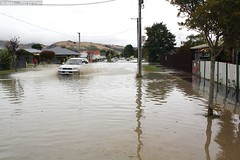
The Darfield earthquake caused widespread damage in the Canterbury region of New Zealand, with the majority of damage resulting from liquefaction and lateral spreading. One of the worst hit locations was the small town of Kaiapoi north of Christchurch, an area that has experienced liquefaction during past events and has been identified as highly susceptible to liquefaction. The low lying town sits on the banks of the Kaiapoi River, once a branch of the Waimakariri, a large braided river transporting gravelly sediment. The Waimakariri has been extensively modified both by natural and human processes, consequently many areas in and around the town were once former river channels.
Assessing collapse capacity and risk in subsequent ground motions using SH…
Research papers, University of Canterbury Library
Predicting building collapse due to seismic motion is critical in design and more so after a major event. Damaged structures can appear sound, but collapse under following major events. There can thus be significant risk in decision making after a major seismic event concerning the safe occupation of a building or surrounding areas, versus the unknown impact of unknown major aftershocks. Model-based pushover analyses are effective if the structural properties are well understood, which is not valid post-event when this risk information is most useful. This research combines Hysteresis Loop Analysis (HLA) structural health monitoring (SHM) and Incremental Dynamic Analysis (IDA) methods to determine collapse capacity and probability of collapse for a specific structure, at any time, a range of earthquake excitations to ensure robustness. The nonlinear dynamic analysis method presented enables constant updating of building performance predictions using post-event SHM results. The resulting combined methods provide near real-time updating of collapse fragility curves as events progress, quantifying the change of collapse probability or seismic induced losses for decision-making - a novel, higher resolution risk analysis than previously available. The methods are not computationally expensive and there is no requirement for a validated numerical model. Results show significant potential benefits and a clear evolution of risk. They also show clear need for extending SHM toward creating improved predictive models for analysis of subsequent events, where the Christchurch series of 2010-2011 had significant post-event aftershocks after each main event. Finally, the overall method is generalisable to any typical engineering demand parameter.
It’s not what we are drinking, it’s how we are planning
Research Papers, Lincoln University
The devastating earthquakes of September 2010 and February 2011 have without question upset the Christchurch City way of life for all. Families and businesses, as well as the natural and built environments have been directly affected, and our social landscapes have since evolved to accommodate the visible changes. Though not perhaps seen as a priority, the Christchurch nightlife has been profoundly altered by the quakes and the once popular CBD clubbing scene has ceased to exist. The concern highlighted in this article is the way in which this has put pressure on suburban bars and the the implications of this for local residents.
Greendale Fault: investigation of surface rupture characteristics for faul…
Articles, UC QuakeStudies
The previously unknown Greendale Fault ruptured to the ground surface, causing up to 5 metres horizontal and 1 metre vertical permanent offset of the ground, during the September 2010 Darfield (Canterbury) earthquake. Environment Canterbury commissioned GNS Science, with help from the University of Canterbury, to define a fault avoidance zone and to estimate the fault recurrence interval. There is little evidence for past movement on the fault in the past 16,000 years. However, because of the uncertainties involved, a conservative approach was taken and the fault has been categorised as a Recurrence Interval Class IV fault (a recurrence interval of between 5,000 and 10,000 years). A PhD study by a University of Canterbury student will work towards refining the Recurrence Interval Class over the next three years. Taking a risk-based approach, the Ministry for the Environment Active Fault Guidelines recommend that normal residential development be allowed within the fault avoidance zone for faults of this Recurrence Interval Class, but recommends restrictions for larger community buildings or facilities with post-disaster functions. The report is assisting Selwyn District Council in granting consents for rebuilding houses on or near the Greendale Fault that were damaged by permanent distortion of the ground due to the fault rupture in the September 2010 earthquake. The report provides specific recommendations for building on or close to the Greendale Fault, which are being implemented by Selwyn District Council. See Object Overview for background and usage information.
20131231_8511_EOS M-22 Forsyth Barr building for sale, under the archway
Images, eqnz.chch.2010
20131231_8511_EOS M-22 Forsyth Barr building for sale, under the archway Another city walk around, this time with my brother-in-law from Auckland. Also went to the Quake City exhibition in the city organised by the Canterbury Museum. First fine day for a while. #4507
The Hutt News Image: Michael Kopp 2010:10:16 13:41:41
Images, UC QuakeStudies
Photograph captioned by Fairfax, " At the Love and Harmony benefit concert for Canterbury earthquake relief, Chaz Cummings and his sister Kalsey, of Naenae, jive it up in rock 'n' roll fashion for a crowd of one hundred at Naenae Community Centre. They are members of the Hutt Valley Rock 'n' Roll Club, and Chaz was the winner of New Zealand's Got Talent in 2008".
Evans, Malcolm Paul, 1945-: "Worried about holidaying in New Zealand - wel…
Images, Alexander Turnbull Library
A couple sits in a Travel Agency discussing places to go for a holiday. The travel agent says 'Worried about holidaying in New Zealand - well how about...' and she turns to the display of countries to visit on the wall behind her. Each of the countries is illustrated with a very negative image; e.g. 'Japan' with a nuclear symbol, 'Thailand' with a pile of human ashes, 'Sth Africa' with two arms raised in desperate supplication... Context - The couple do not want to visit New Zealand because of the Canterbury earthquakes and there seem to be an awful lot of natural disasters or wars or high expense etc. recently. Colour and black and white versions available Quantity: 2 digital cartoon(s).
Exploring the concept of Christchurch as a ‘super city’ from a sustainabil…
Research Papers, Lincoln University
Group case study report prepared for lecturers Ton Buhrs and Roy Montgomery by students of ERST 635 at Lincoln University, 2013.The New Zealand Government’s decision to establish a unitary authority in the Auckland Region has provided much of the context and impetus for this review of current governance arrangements in the Canterbury region, to determine whether or not they are optimal for taking the communities of greater Christchurch into the future. A number of local governance academics, as well as several respected political pundits, have prophesised that the Auckland ‘Super City’ reforms of 2009 will have serious implications and ramifications for local governance arrangements in other major cities, particularly Wellington and Christchurch. Wellington councils have already responded to the possibility of change by undertaking a series of reports on local governance arrangements, as well as a major review led by Sir Geoffrey Palmer, to investigate options for governance reform. Alongside these developments, the Christchurch earthquakes beginning in September 2010 have raised a myriad of new and complex governance issues, which may or may not be able to be addressed under the status quo, while the replacement of Regional Councillors’ with centrally-appointed Commissioners is suggestive of government dissatisfaction with current arrangements. With these things in mind, the research group has considered local government in Canterbury and the greater Christchurch area in the wider governance context. It does not limit discussion to only the structure of local government in Canterbury but rather, as the brief (Appendix 1) indicates, considers more broadly the relationship between central, regional, and local tiers of government, as well as the relationship between local government and local communities.
Shaking table testing of a three-storey steel frame building incorporating…
Research papers, University of Canterbury Library
Recent severe earthquakes, such as Christchurch earthquake series, worldwide have put emphasis on building resilience. In resilient systems, not only life is protected, but also undesirable economic effects of building repair or replacement are minimized following a severe earthquake. Friction connections are one way of providing structure resilience. These include the sliding hinge joint with asymmetric friction connections (SHJAFCs) in beam-to-column connections of the moment resisting steel frames (MRSFs), and the symmetric friction connections (SFCs) in braces of the braced frames. Experimental and numerical studies on components have been conducted internationally. However, actual building performance depends on the many interactions, occurring within a whole building system, which may be difficult to determine accurately by numerical modelling or testing of structural components alone. Dynamic inelastic testing of a full-scale multi-storey composite floor building with full range of non-structural elements (NSEs) has not yet been performed, so it is unclear if surprises are likely to occur in such a system. A 9 m tall three-storey configurable steel framed composite floor building incorporating friction-based connections is to be tested using two linked bi-directional shake tables at the International joint research Laboratory of Earthquake Engineering (ILEE) facilities, Shanghai, China. Beams and columns are designed to remain elastic during an earthquake event, with all non-linear behaviour occurring through stable sliding frictional behaviour, dissipating energy by SHJAFCs used in MRFs and SFCs in braced frames, with and without Belleville springs. Structural systems are configurable, allowing different moment and braced frame structural systems to be tested in two horizontal directions. In some cases, these systems interact with rocking frame or rocking column system in orthogonal directions subjected to unidirectional and bidirectional horizontal shaking. The structure is designed and detailed to undergo, at worst, minor damage under series of severe earthquakes. NSEs applied include precast-concrete panels, glass curtain walling, internal partitions, suspended ceilings, fire sprinkler piping as well as some other common contents. Some of the key design considerations are presented and discussed herein
Shattered dreams – inner city revitalisation, gentrification and the Chris…
Research Papers, Lincoln University
The major earthquakes of 2010 and 2011 brought to an abrupt end a process of adaptive reuse, revitalisation and gentrification that was underway in the early 20th century laneways and buildings located in the south eastern corner of the Christchurch Central Business District. Up until then, this location was seen as an exemplar of how mixed use could contribute to making the central city an attractive and viable alternative to the suburban living experience predominant in New Zealand. This thesis is the result of a comprehensive case study of this “Lichfield Lanes” area, which involved in depth interviews with business owners, observation of public meetings and examination of documents and the revitalisation research literature. Findings were that many of the factors seen to make this location successful pre-earthquakes mirror the results of similar research in other cities. These factors include: the importance of building upon historic architecture and the eclectic spaces this creates; a wide variety of uses generating street life; affordable rental levels; plus the dangers of uniformity of use brought about by focussing on business types that pay the most rent. Also critical is co-operation between businesses to create and effectively market and manage an identifiable precinct that has a coherent style and ambience that differentiates the location from competing suburban malls. In relation to the latter, a significant finding of this project was that the hospitality and retail businesses key to the success of Lichfield Lanes were not typical and could be described as quirky, bohemian, chaotic, relatively low rent, owner operated and appealing to the economically important “Creative Class” identified by Richard Florida (2002) and others. In turn, success for many of these businesses can be characterised as including psychological and social returns rather than simply conventional economic benefits. This has important implications for inner city revitalisation, as it contrasts with the traditional focus of local authorities and property developers on physical aspects and tenant profitability as measures of success. This leads on to an important conclusion from this research, which is that an almost completely inverted strategy from that applied to suburban mall development, may be most appropriate for successful inner city revitalisation. It also highlights a disconnection between the focus and processes of regulatory authorities and the outcomes and processes most acceptable to the people likely to frequent the central city. Developers are often caught in the middle of this conflicted situation. Another finding was early commitment by businesses to rebuild the case study area in the same style, but over time this waned as delay, demolition, insurance problems, political and planning uncertainty plus other issues made participation by the original owners and tenants impossible or uneconomic. In conclusion, the focus of inner city revitalisation is too often on buildings rather than the people that use them and what they now desire from the central city.
From darkness comes light: music as a reflection of the lived experience o…
Research papers, University of Canterbury Library
Context of the project: On 4 September 2010, 22 February 2011, 13 June 2011 and 23 December 2011 Christchurch suffered major earthquakes and aftershocks (well over 10,000) that have left the central city in ruins and many of the eastern suburbs barely habitable even now. The earthquakes on 22 February caused catastrophic loss of life with 185 people killed. The toll this has taken on the residents of Christchurch has been considerable, not least of all for the significant psychological impact and disruption it has had on the children. As the process of rebuilding the city commenced, it became clear that the arts would play a key role in maintaining our quality of life during difficult times. For me, this started with the children and the most expressive of all the art forms – music.
Evans, Malcolm Paul, 1945- :"The shake which lasted 75 minutes and caused …
Images, Alexander Turnbull Library
A television announcer sits at his desk reading the news. He says 'The shake which lasted 75 minutes and caused widespread damage in living rooms all over the country measured 5.18 on the rugby scale and was centred on Port Elizabeth in South Africa'. Context: The All Blacks lost to the Springboks 5-18 in a tri-nations test match in South Africa only a few days before the World Cup kick-off. Fans have been warned not to panic. Colour and black and white versions available Quantity: 2 digital cartoon(s).
Development of an expanded earthquake and ground motion catalogue for New …
Research papers, University of Canterbury Library
In the last two decades, New Zealand (NZ) has experienced significant earthquakes, including the 2010 M 7.2 Darfield, 2011 M 6.2 Christchurch, and 2016 M 7.8 Kaikōura events. Amongst these large events, tens of thousands of smaller earthquakes have occurred. While previous event and ground-motion databases have analyzed these events, many events below M 4 have gone undetected. The goal of this study is to expand on previous databases, particularly for small magnitude (M<4) and low-amplitude ground motions. This new database enables a greater understanding of regional variations within NZ and contributes to the validity of internationally developed ground-motion models. The database includes event locations and magnitude estimates with uncertainty considerations, and tectonic type assessed in a hierarchical manner. Ground motions are extracted from the GeoNet FDSN server and assessed for quality using a neural network classification approach. A deep neural network approach is also utilized for picking P and S phases for determination of event hypocentres. Relative hypocentres are further improved by double-difference relocation and will contribute toward developing shallow (< 50 km) seismic tomography models. Analysis of the resulting database is compared with previous studies for discussion of implications toward national hazard prediction models.
When the shaking stops, the thinking starts : a grounded theory of turnove…
Research papers, University of Canterbury Library
Voluntary turnover has been the subject of scholarly inquiry for more than 100 years and much is understood about the drivers of turnover, and the decision-making processes involved. To date most models of voluntary turnover have assumed a rational and sequential decision process, initiated primarily by dissatisfaction with the job and the perceived availability of alternatives. Operating within a strong predictive research agenda, countless studies have sought to validate, extend and refine these traditional models through the addition of distal antecedents, mediators, moderators, and proximal antecedents of turnover. The net result of this research is a large body of empirical support for a somewhat modest relationship between job dissatisfaction, perceived alternatives, turnover intentions, job search behaviour and actual turnover. Far less scholarly attention has been directed at understanding shock-induced turnover that is not necessarily derived from dissatisfaction. Moreover, almost no consideration has been given to understanding how a significant and commonly experienced extra-organisational shock, such as natural disaster, might impact turnover decision making. Additionally, the dynamic and cumulative impacts of multiple shocks on turnover decision making have to date not been examined by turnover researchers. In addressing these gaps this thesis presents a leaver-centric theory of employee turnover decision making that is grounded in the post-disaster context. Data for the study were collected from in-depth interviews with 31 leavers in four large organisations in Christchurch, New Zealand; an area that experienced a major natural disaster in the form of the Canterbury earthquake sequence. This context provided a unique setting in which to study turnover as the primary shock was followed by a series of smaller shocks, resulting in a period of sustained disruption to the pre-shock status quo. Grounded theory methods are used to develop a typology of leaving which describes four distinct patterns of turnover decision making that follow a significant extra-organisational shock. The proposed typology not only addresses the heterogeneous and complex nature of turnover decision making, but also provides a more nuanced explanation of the turnover process explicating how the choice of decision path followed is influenced by four contextual factors which emerged from the data: (1) pre-shock motivational state; (2) decision difficulty; (3) experienced shock magnitude; and (4) the availability of resources. The research findings address several shortcomings in the extant literature on employee turnover, and offer practical recommendations for managers seeking to retain employees in a post-disaster setting.
The effects of managed retreat (red zoning) on the relocated households in…
Research papers, University of Canterbury Library
The question of whether forced relocation is beneficial or detrimental to the displaced households is a controversial and important policy question. After the 2011 earthquake in Christchurch, the government designated some of the worst affected areas as Residential Red Zones. Around 20,000 people were forced to move out of these Residential Red Zone areas, and were compensated for that. The objective of this paper is twofold. First, we aim to estimate the impact of relocation on the displaced households in terms of their income, employment, and their mental and physical health. Second, we evaluate whether the impact of relocation varies by the timing of to move, the destination (remaining within the Canterbury region or moving out of it) and demographic factors (gender, age, ethnicity). StatisticsNZ’s Integrated Data Infrastructure (IDI) from 2008 to 2017, which includes data on all households in Canterbury, and a difference-in-difference (DID) technique is used to answer these questions. We find that relocation has a negative impact on the income of the displaced household group. This adverse impact is more severe for later movers. Compared to the control group (that was not relocated), the income of relocated households was reduced by 3% for people who moved immediately after the earthquake in 2011, and 14% for people who moved much later in 2015.
Evans, Malcolm Paul, 1945- :'John! - the schools we plan to merge are figh…
Images, Alexander Turnbull Library
A worried Hekia Parata, Minister of Education, tells John Key, the Prime Minister, that schools in Canterbury are resisting being merged. John Key replies that the government will go through a 'consultation process' and then 'do what we like'. However the schools are claiming marae status and thus protection under the Treaty of Waitangi. The 'Hui report' which the Prime Minister is holding confirms this fear. The Ministry of Education, given the excuse of the Canterbury earthquakes, announced that many schools there will be merged or closed. Threatened schools, particularly the two Maori language schools, lodged complaints with the Waitangi Tribunal. 'Hui reports' refers to the claims and resulting hui over the water rights of the proposed partial privatisation of state assets. Colour and black and white versions available Quantity: 2 digital cartoon(s).
The Timaru Herald: John Bisset 2010:09:10 15:08:23
Images, UC QuakeStudies
Photograph captioned by Fairfax, "Members of the Red Cross civil defence response team and South Canterbury Police have been in Christchurch helping with the earthquake clean up. Pictured from left are Trooper Jesse Gaffney (ex-Timaru), St Andrews Police Constable Tim Hartnell and Constable Cath Hone of Timaru. They have been posted around Christchurch road blocks over the last week. They are pictured at the Manchester and Tuam cordon".
Restoration and Loss after Disaster: Applying the Dual Process Model of Co…
Research papers, University of Canterbury Library
The article asks whether disasters that destroy life but leave the material infrastructure relatively intact tend to prompt communal coping focussing on loss, while disasters that destroy significant material infrastructure tend to prompt coping through restoration / re-building. After comparing memorials to New Zealand’s Christchurch earthquake and Pike River mine disasters, we outline circumstances in which collective restorative endeavour may be grassroots, organised from above, or manipulated, along with limits to effective restoration. We conclude that bereavement literature may need to take restoration more seriously, while disaster literature may need to take loss more seriously.
New Zealand Media Law Update
Research papers, University of Canterbury Library
Media law developments have continued across many areas in the period to mid-2013. In defamation, the New Zealand courts have begun to consider the issue of third party liability for publication on the internet, with cases involving Google searches and comments on a Facebook page. A parliamentary inquiry into a case that restricted parliamentary privilege has recommended a Parliamentary Privilege Act containing a definition of ‘proceedings in Parliament’. A satirical website increased its popularity when it fought off threatened defamation proceedings. In breach of confidence, a government body, the Earthquake Commission, obtained an interim injunction prohibiting publication of information accidentally released that dealt with the repair of earthquake-damaged properties in Christchurch, and a blogger made the information available online in breach of the order.
20160307_6619_7D2-125 Covering up
Images, eqnz.chch.2010
One of the most beautiful pieces of wall art (added to the blank walls after buildings were demolished following the earthquakes) in Christchurch, is now being hidden by a new building in front of it. www.flickr.com/photos/johnstewartnz/15499321681/in/...
A technical and economic feasibility study for the integration of GSHP tec…
Research papers, University of Canterbury Library
Mr Wayne Tobeck, Director of Southrim Group (SRG), sponsored this 2013 MEM Project titled; A Technical and Economic Feasibility Study for the Integration of GSHP Technology in the Christchurch Rebuild. Following the recent Christchurch earthquakes, a significant amount of land has become too unstable to support traditional building foundations. This creates an opportunity to implement new and unique foundation designs previously unconsidered due to high costs compared to traditional methods. One such design proposes that an Injection Micro-Piling technique could be used. This can also be coupled with HVAC technology to create a Ground Source Heat Pump (GSHP) arrangement in both new buildings and as retrofits for building requiring foundation repair. The purpose of this study was to complete a feasibility study on the merits of SRG pursuing this proposed product. A significant market for such a product was found to exist, while the product was also found to be technically and legally feasible. However, the proposed product was found to not be economically feasible with respect to Air Source Heat Pumps due to the significantly higher capital and installation costs required. Further analysis suggests GSHPs may become more economically attractive in operating temperatures lower than -9oC, though the existence of markets with this climate in NZ has not been studied. It is therefore suggested that SRG do not proceed with plans to develop a GSHP coupled foundation solution for the Christchurch rebuild.
Hubbard, James, 1949- : "Severe aftershocks continue.." 28 March 2011
Images, Alexander Turnbull Library
In four frames a man watches the news on TV. He hears that 'Severe aftershocks continue as the demolition crew move into the red zone.. amidst the badly damaged infrastructure..' His wife offers him a cup of tea and assumes the report is about Christchurch but it is not, it is about 'Phil Goff & Labour' Context - Christchurch continues to have aftershocks following the February 22 earthquake and the Labour Party is suffering one bodyblow after another - the last being the Darren Hughes affair. This is disastrous for Labour because the 2011 election is in November. Quantity: 1 digital cartoon(s).
Risks & Realities: A Multi-disciplinary Approach to the Vulnerability of L…
Research papers, University of Canterbury Library
This book is the result of an investigation into the vulnerability of the infrastructure serving metropolitan Christchurch (including Lyttelton). The work was undertaken by the Christchurch Engineering Lifelines Group and the objectives are: to identify the vulnerability of engineering lifeline services to damage from earthquakes, flooding, tsunami and meteorological hazards; to identify practical engineering strategies for reducing the risk or impact of such damage and for providing for reinstatement following such events; and to communicate the issues to people involved in the management of these services and to raise the awareness of the public to their importance.
Navigating collective identity in a temporary coopetitive post-disaster re…
Research papers, University of Canterbury Library
Collective identity construction in organisations engaged in an inter-organisational collaboration (IOC), especially temporary IOCs set up in disaster situations, has received scant attention in the organisational studies literature yet collective identity is considered to be important in fostering effective IOC operations. This doctoral study was designed to add to our understanding about how collective identity is constituted throughout the entire lifespan of a particular temporary coopetitive (i.e., simultaneously collaborative and competitive) IOC formed in a post-disaster environment. To achieve this purpose, a qualitative case study of the Stronger Christchurch Infrastructure Rebuild Team (SCIRT), a time-bound coopetition formed to repair the horizontal infrastructure in Christchurch, New Zealand after the devastating 2011 Canterbury earthquakes, was undertaken. Using data from semi-structured interviews, field observations, and organisational documents and other artefacts, an inductive analytic method was employed to explore how internal stakeholders engaged with and co- constructed a collective SCIRT identity and reconciled this with their home organization identity. The analysis revealed that the SCIRT collective identity was an ongoing process, involving the interweaving of social, temporal, material and geospatial dimensions constructed through intersecting cycles of senior managers’ sensegiving and employees’ sensemaking across SCIRT’s five and a half years of existence. Senior management deliberately undertook identity work campaigns that used organisational rituals, artefacts, and spatial design to disseminate and encourage a sense of “we are all SCIRT”. However, there was no common sense of “we-ness”. Identification with SCIRT was experienced differently among different groups of employees and across time. Employees’ differing senses of collective identity were accounted for by their past, present, and anticipated future relationships with their home organisation, and also (re)shaped by the geosocial environments in which they worked. The study supports previous research claiming that collective identity is a process of recursive sensegiving and sensemaking between senior managers and employees. However, it extends the literature by revealing the imbricated nature of collective identity, how members’ sense of “who we are” can change across the entire lifetime of a temporary IOC, and how sociomateriality, temporality, and geosocial effects strongly intervene in employees’ emerging senses of collective identity. Moreover, the study demonstrates how the ongoing identity work can be embedded in a time-space frame that further accentuates the influence of temporality, especially the anticipated future, organisational rituals, artefacts, and the geosocial environment. The study’s primary contribution to theory is a processual model of collective identity that applies specifically to a temporary IOC involving coopetition. In doing so, it represents a more finely nuanced and situational model than existing models. At a practical level, this model suggests that managers need to appreciate that organisational artefacts, rituals, and the prevailing organisational geosocial environment are inextricably linked in processes that can be manipulated to enhance the construction of collective identity.
The glass scaffold : women in construction responding to industry conditio…
Research papers, University of Canterbury Library
Exploring women’s experiences of entering, working in, or leaving the Christchurch construction industry between 2010 and 2018 led to the creation of the theory of “deferential tailoring.” Deferential tailoring explains how women shape their responses to industry conditions as an intentional behavioural adjustment process. Most importantly, this theory provides insight into women’s unseen efforts to build positive workplace relationships, their capability to advance, and challenges to existing views of gender roles in this context. Research on women in construction focusses primarily on identifying and explaining barriers that impact on women’s entry, progression, and retention in the industry. There is an absence of process studies that explain the actions women take to manage industry conditions in business-as-usual, let alone post-disaster contexts. In the eight years following the 2010 Canterbury (New Zealand) earthquakes, rapid changes to the construction industry meant women had unprecedented access and new opportunities in this historically male-dominated domain. This setting provided a unique context within which to investigate how women respond to industry opportunities and challenges. The aim of this interpretive research was to construct a response theory, particular to women working in the Christchurch construction industry. Applying a constructivist grounded theory approach, theoretical sampling, coding and memo writing allowed for the collection and comparative analysis of 36 semi-structured interviews conducted with women working in a cross-section of industry occupations. Three inter- related categories were built: capitalising on opportunity, building capability and token tolerance, which together constitute the deferential tailoring process. Akin to building an invisible glass scaffold, women intentionally regulate their behaviours to successfully seize opportunities and manage social challenges. In building this scaffold, women draw heavily on personal values and positive, proactive attributes as a response to industry conditions. In contrast to previous research, which suggests that women conform to the male-dominated norms of the industry, the theory of deferential tailoring proposes that women are prepared to regulate their behaviour to address the gendered norms that impact on their work experiences. This research contributes towards an evolving body of knowledge that aims to understand how women’s entry into the construction industry, retention, and workplace relationships can be improved. By expanding the view of how women respond to industry conditions over time, this research has generated knowledge that addresses gaps in construction industry literature relating to the management of coping strategies, capitalising on opportunities, and building positive workplace relationships. Knowledge and concepts generated from this research could be integrated into recruitment and training programmes to enhance women’s professional development, shift perceptions of women’s work, and address cultural norms that impact on women’s retention in the construction industry.
Impact assessment of a far-field tsunami scenario on Christchurch City inf…
Research papers, University of Canterbury Library
Tsunami have the potential to cause significant disruptions to society, including damage to infrastructure, critical to the every-day operation of society. Effective risk management is required to reduce the potential tsunami impacts to them. Christchurch city, situated on the eastern coast of New Zealand’s South Island, is exposed to a number of far-field tsunami hazards. Although the tsunami hazard has been well identified for Christchurch city infrastructure, the likely impacts have not been well constrained. To support effective risk management a credible and realistic infrastructure impact model is required to inform risk management planning. The objectives of this thesis are to assess the impacts on Christchurch city infrastructure from a credible, hypothetical far-field tsunami scenario. To achieve this an impact assessment process is adopted, using tsunami hazard and exposure measures to determine asset vulnerability and subsequent impacts. However, the thesis identified a number of knowledge gaps in infrastructure vulnerability to tsunami. The thesis addresses this by using two approaches: a tsunami damage matrix; and the development of tsunami fragility functions. The tsunami damage matrix pools together tsunami impacts on infrastructure literature, and post-event field observations. It represents the most comprehensive ‘look-up’ resource for tsunami impacts to infrastructure to date. This damage matrix can inform the assessment of tsunami impacts on Christchurch city infrastructure by providing a measure of damage likelihood at various hazard intensities. A more robust approach to tsunami vulnerability of infrastructure are fragility functions, which are also developed in this thesis. These were based on post-event tsunami surveys of the 2011 ‘Tohoku’ earthquake tsunami in Japan. The fragility functions are limited to road and bridge infrastructure, but represent the highest resolution measure of vulnerability for the given assets. As well as providing a measure of damage likelihood for a given tsunami hazard intensity, these also indicate a level of asset damage. The impact assessment process, and synthesized vulnerability measures, are used to run tsunami impact models for Christchurch infrastructure to determine the probability of asset damage occurring and to determine if impact will reach or exceed a given damage state. The models suggest that infrastructure damage is likely to occur in areas exposed to tsunami inundation in this scenario, with significant damage identified for low elevation roads and bridges. The results are presented and discussed in the context of the risk management framework, with emphasis on using risk assessment to inform risk treatment, monitoring and review. In summary, this thesis A) advances tsunami vulnerability and impact assessment methodologies for infrastructure and B) provides a tsunami impact assessment framework for Christchurch city infrastructure which will inform infrastructure tsunami risk management for planners, emergency managers and lifelines groups.
Youth engagement with Anzac in New Zealand : a Christchurch Case study.
Research papers, University of Canterbury Library
This thesis explores the discussions and perspectives of Christchurch secondary school students in regards to their particular experiences and engagement with Anzac. In this thesis I seek to rigorously and robustly examine these viewpoints through semi-structured focus group interviews and thematic analysis. I seek to situate these youth perspectives within wider debates around Anzac mythology and Anzac resurgence in New Zealand which often do not represent the youth outlook. These debates are seen, on the one hand, to present a resurgence of youth engagement with Anzac and, on the other hand, to present the idea that Anzac has become an exclusionary myth which distorts Australians’ and New Zealanders’ understanding of wider Anzac experiences and educates them in a narrow, militarised way. Youth engagement with Anzac was not something which could be solely situated under either of these debates and, instead, it was seen to be multifaceted and made up of unique ideas and elements. The youth in my study acknowledged that their Anzac education did have mythic elements which made it hard for them to engage with Anzac despite the fact that they were actually interested in learning and understanding it. These mythic elements were the idea that Anzac is taught as a ‘simple narrative’ which does not allow room for critique, that it emphasises a link between Anzac and national identity, that it disregards many alternative Anzac experiences and that it presents a particular New Zealand identity to internalise. These students responded to their mythic Anzac education in a very active way, and instead of accepting it as truth, they were able to have constructive and critical conversations about their education and push against parts of it which they found to be too narrow or skewed in particular directions based on gender, ethnicity and national identity. The students were not passive vessels which internalised their Anzac education as fact; instead, they were able to acknowledge the mythic elements of their education and its negative influence in the classroom. This thesis went further in exploring what factors were seen to enhance this active process of critique and provide students with alternative knowledge and perspectives about Anzac. These factors were ancestral ties to Anzac, research into personal Anzac stories and experiences, unassessed educational units, centenary discussions, an understanding of hardship through the earthquakes and alternative perspectives of the Anzac experience through access to the internet. These factors presented a broader understanding of Anzac perspectives and experiences and students believed that if the mythic elements of their education could be revised and these elements encouraged then their engagement with Anzac would continue long into the future.
Generating actionable intelligence and meaningful data from a Smart Cities…
Research papers, University of Canterbury Library
Smart cities utilise new and innovative technology to improve the function of the city for governments, citizens and businesses. This thesis offers an in-depth discussion on the concept of the smart city and sets the context of smart cities internationally. It also examines how to improve a smart city through public engagement, as well as, how to implement participatory research in a smart city project to improve the level of engagement of citizens in the planning and implementation of smart projects. This thesis shows how to incentivise behaviour change with smart city technology and projects, through increasing participation in the planning and implementation of smart technology in a city. Meaningful data is created through this process of participation for citizens in the city, by engaging the citizens in the creation of the data, therefore the information created through a smart city project is created by and for the citizens themselves. To improve engagement, a city must understand its specific context and its residents. Using Christchurch, New Zealand, and the Christchurch City Council (CCC) Smart City Project as a case study, this research engages CCC stakeholders in the Smart City Project through a series of interviews, and citizens in Christchurch through a survey and focus groups. A thorough literature review has been conducted, to illuminate the different definitions of the smart city in academia, business and governments respectively, and how these definitions vary from one another. It provides details of a carefully selected set of relevant smart cities internationally and will discuss how the Christchurch Earthquake Sequence of 2010 and 2011 has affected the CCC Smart City Project. The research process, alongside the literature review, shows diverse groups of citizens in the city should be acknowledged in this process. The concept of the smart city is redefined to incorporate the context of Christchurch, its citizens and communities. Community perceptions of smart cities in Christchurch consider the post-disaster environment and this event and subsequent rebuild process should be a focus of the smart city project. The research identified that the CCC needs to focus on participatory approaches in the planning and implementation of smart projects, and community organisations in Christchurch offer an opportunity to understand community perspectives on new smart technology and that projects internationally should consider how the context of the city will affect the participation of its residents. This project offers ideas to influence the behaviour change of citizens through a smart city project. Further research should consider other stakeholders, for instance, innovation and technology-focused business in the city, and to fully engage citizens, future research must continue the process of participatory engagement, and target diverse groups in the city, including but not limited to minority groups, older and younger generations, and those with physical and mental disabilities.
Modeling nonlinear site effects in physics-based ground motion simulation
Research papers, University of Canterbury Library
This study examines the performance of nonlinear total-stress wave-propagation site response analysis for modelling site effects in physics-based ground motion simulations of the 2010-2011 Canterbury, New Zealand earthquake sequence. This approach allows for explicit modeling of 3-dimensional ground motion phenomena at the regional scale, as well as detailed site effects and soil nonlinearity at the local scale. The approach is compared to a more commonly used empirical VS30 (30 m time-averaged shear wave velocity)-based method for computing site amplification as proposed by Graves and Pitarka (2010, 2015).
Around the motu : Jonathan Leask in Ashburton
Audio, Radio New Zealand
A local developer is looking to reshape Ashburton's triangle, the historic retail centre of the town. Robert Grice owns a number of buildings on Victoria Street that require earthquake strengthening and he wants to redevelop the existing shops into a new mixed use hospitality precinct named The Ash. Jonathan also discusses an attempt to add quarter of a million dollars to ECan's annual plan budget which has been labelled a "slap in the face" by Environment Canterbury councillor Ian Mackenzie. And a hold-up of plumbing parts and red tape at the border means the Staveley Ice Rink won't be open to skaters and curlers until at least mid-June. Local Democracy Reporter - Mid Canterbury c from the Ashburton Guardian